Artwork
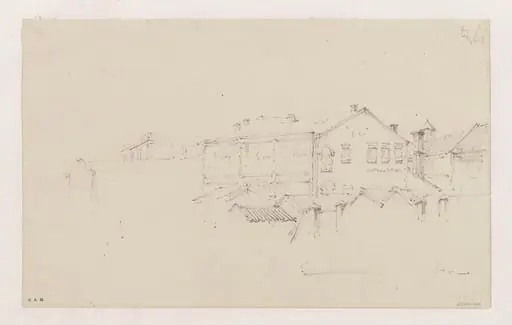
Minqua's house, and entrance to China Street, Canton
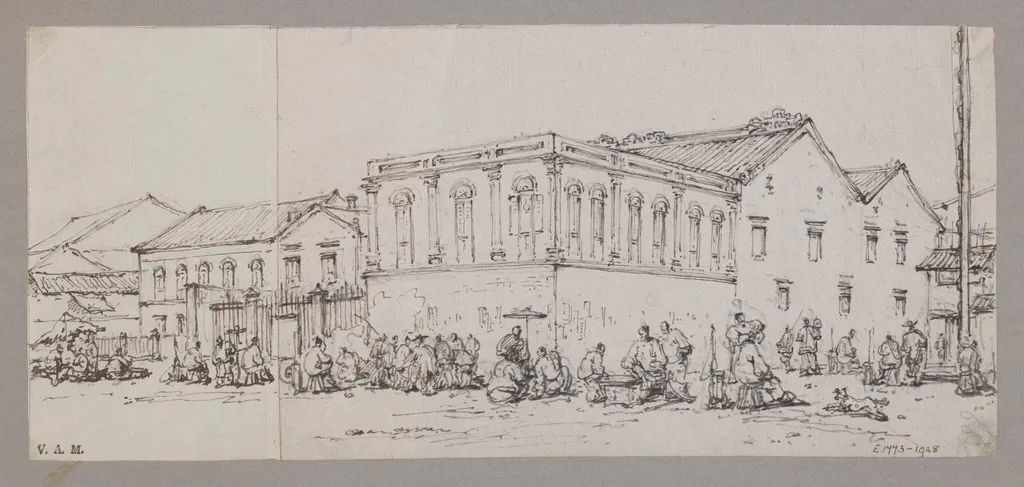
Minqua's house, and entrance to China Street, Canton is a drawing by the Romanticist artist George Chinnery. It dates from 19 and is held in the collection of the Victoria and Albert Museum.
About this work
The scene shows Mingqua’s building after another trader’s business closed.
This drawing shows a busy trading area in Canton. It’s a quiet, detailed look at big buildings where merchants worked. George Chinnery made it in 1825.
The scene shows Mingqua’s building after another trader’s business closed. A small pavilion was later removed from the roof. The artist captured daily life in this place.
The paper itself is worn but the lines stay sharp. Look next at George Chinnery.
Overview
This 1825 drawing by George Chinnery depicts a section of the foreign trading enclave in Canton, known as the hongs. It focuses on the commercial buildings lining the Pearl River, with particular attention to the structure recently taken over by the merchant Mingqua following the financial collapse of his predecessor, Chungqua. The scene captures the architectural character of the foreign trade quarter during a period of regulated commerce between China and Western merchants.
Subject & Meaning
The drawing records a moment of transition in Canton’s mercantile landscape. With Chungqua’s bankruptcy, Mingqua assumed occupancy of the principal building, signaling shifts in local trade leadership. The presence of a now-removed pavilion on the roof hints at prior ownership and status markers. The composition reflects the quiet functionality of the hongs—spaces where commerce, not spectacle, defined daily activity.
Technique & Style
Chinnery rendered the scene in fine, precise pencil lines, emphasizing architectural detail over atmospheric effect. The paper shows signs of age and handling, yet the contours remain clear, suggesting careful execution and preservation. His approach is observational rather than romanticized, capturing the solidity of brickwork, rooflines, and spatial relationships with documentary clarity.
History & Provenance
Created in 1825, the drawing predates the First Opium War and the eventual dismantling of the Canton system. It documents the hongs before major political and commercial upheavals. The pavilion atop Chungqua’s former building, later removed, is a subtle indicator of changing ownership and status. The work entered institutional collections as part of a broader archive of Chinnery’s Canton studies.
Context
Canton was the sole legal port for Western trade with China under the Qing dynasty’s restrictive system. The hongs housed foreign merchants and their Chinese partners, operating under strict regulations. Chinnery’s drawing reflects the physical layout of this controlled environment, where architecture mirrored the rigid boundaries between Chinese and foreign commercial interests.
Legacy
As one of many drawings Chinnery made during his years in southern China, this work contributes to a visual record of pre-colonial Canton. It preserves details of merchant architecture and urban organization that were later altered or lost. Its value lies in its unembellished testimony to a specific moment in Sino-Western trade relations, before the system collapsed under external pressures.
Artist & collection
Artist
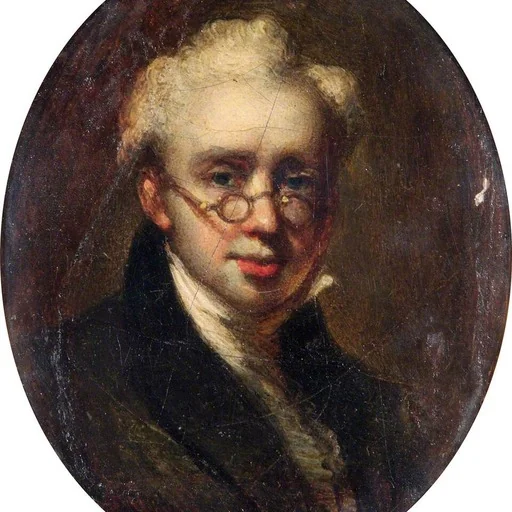
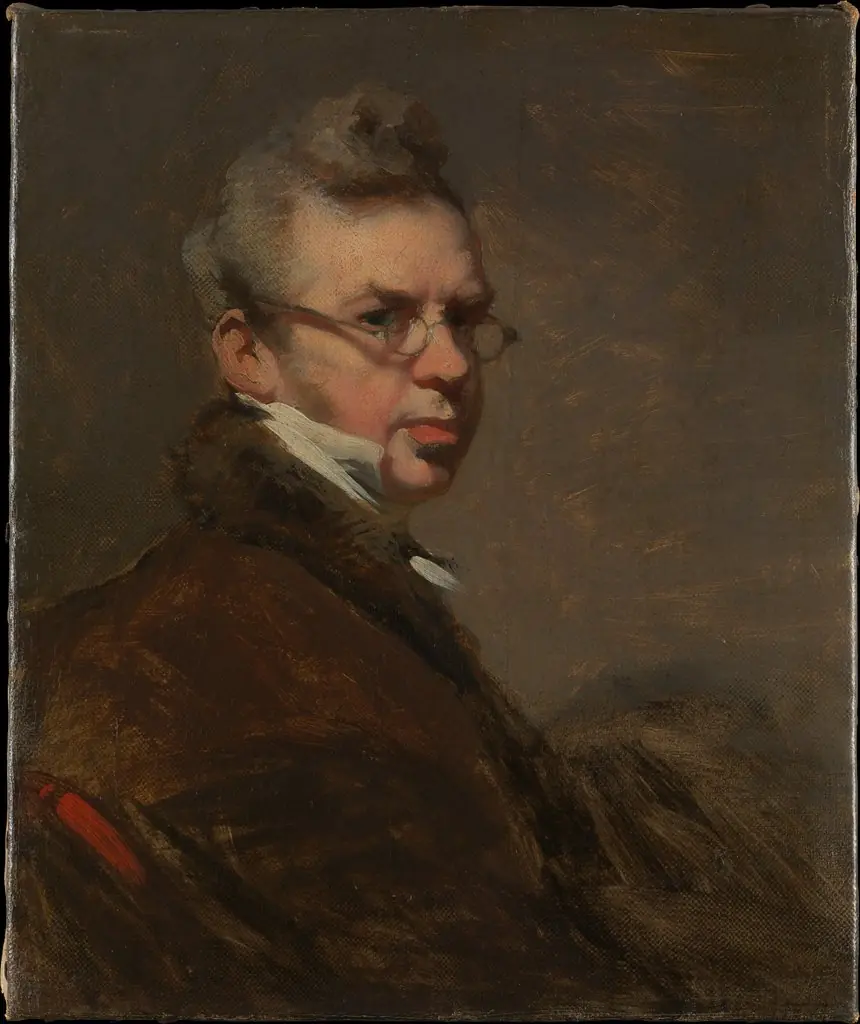
George Chinnery (Chinese: 錢納利; 5 January 1774 – 30 May 1852) was an English painter who spent most of his life in Asia, especially India and southern China.

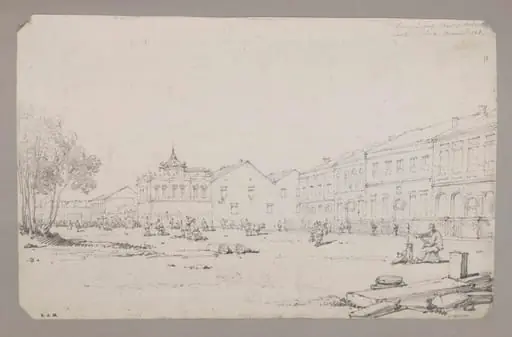 Chinqua's House & part of the Factories, Canton, China. March 1st 1828
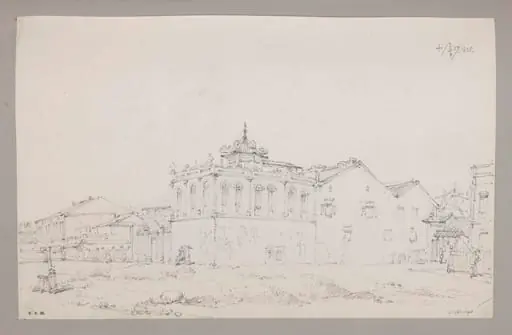 Chinqua's house, with entrance to China Street, Canton
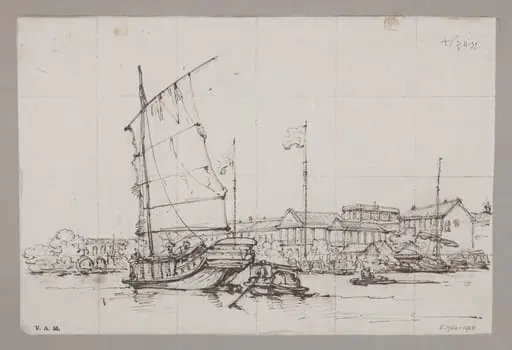 Chinese shipping
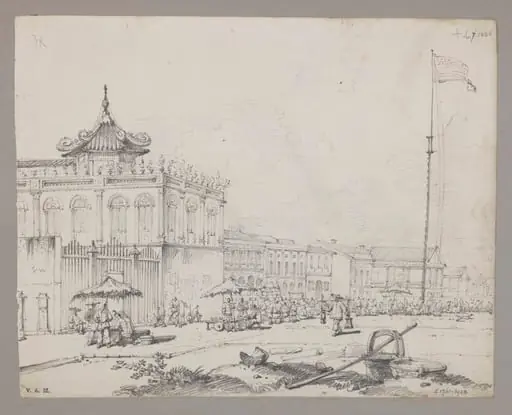 The Great Square before the Factories, Canton
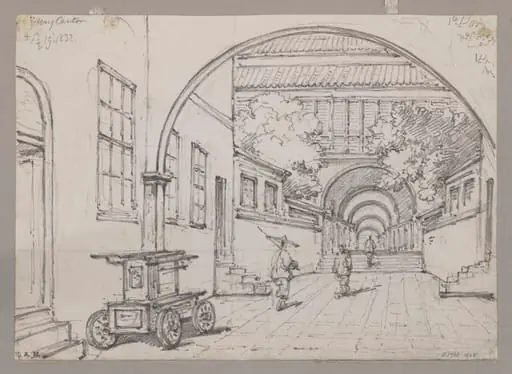 The East India Company's Hong, Canton
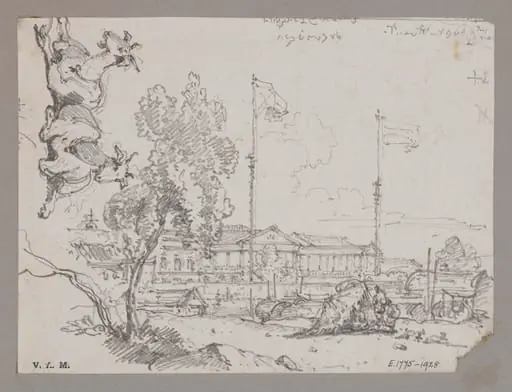 The East India Company's Factory, Canton
 Chinese buildings, probably in Guangzhou (Canton)