Artwork
The East India Company's Hong, Canton
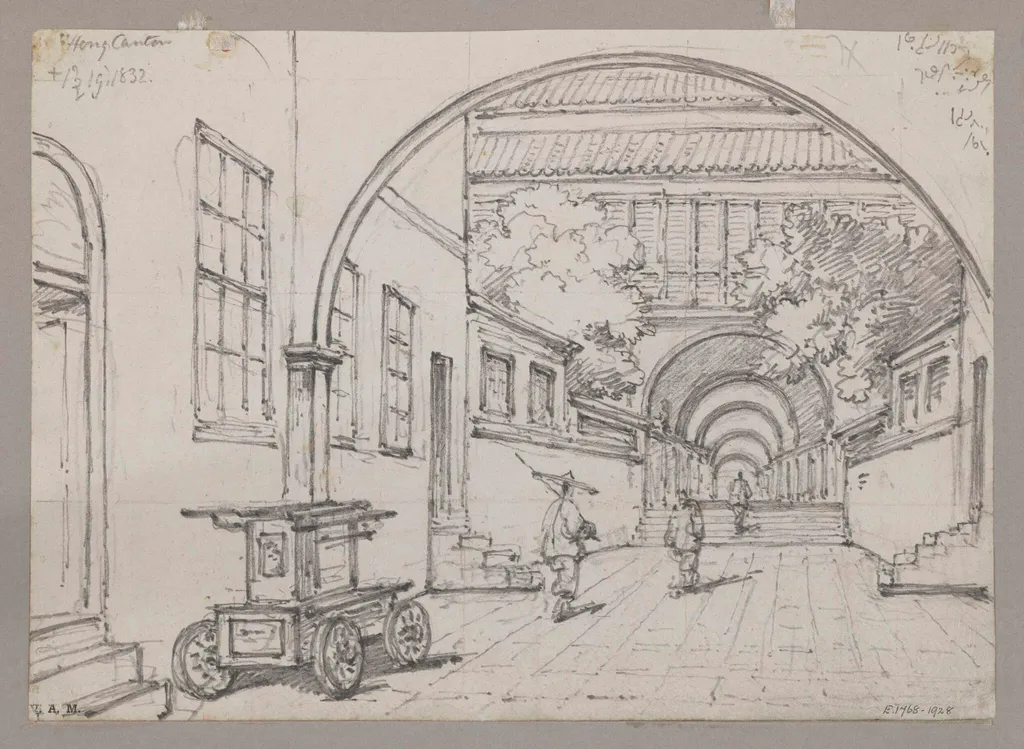
The East India Company's Hong, Canton is a drawing by the Romanticist artist George Chinnery. It dates from 14 and is held in the collection of the Victoria and Albert Museum. The drawing, executed in 1832, depicts the interior of the East India Company’s Canton trading compound, known as a hong or English factory.
About this work
George Chinnery’s 1832 drawing shows the inside of the East India Company’s trading base in Canton. Rooms circle around courtyards connected by a long hallway. A British fire engine sits on the left side.
Only one year later, the company lost its China trade monopoly. The space feels orderly, yet busy with British gear against Chinese walls.
Look up the Romanticism movement next.
Overview
The drawing, executed in 1832, depicts the interior of the East India Company’s Canton trading compound, known as a hong or English factory. The composition presents a series of rooms arranged around multiple courtyards, linked by a long central passage that runs the full depth of the complex.
Subject & Meaning
The work records the spatial organization of the British commercial enclave within Guangzhou, highlighting the juxtaposition of British equipment—most notably a fire engine—against the surrounding Chinese architecture. It offers a visual account of the mercantile environment just before the Company’s monopoly on China trade ended in 1833.
Technique & Style
Rendered as a detailed drawing, the piece relies on precise line work to convey architectural elements and interior furnishings. The emphasis on clear, measured perspective reflects the pragmatic observational approach common among early‑nineteenth‑century travel sketches.
History & Provenance
Created by George Chinnery, an artist who lived and worked in the region, the drawing was produced a year before the East India Company lost its exclusive trading rights with China. Chinnery later painted the same subject in oil, a work now held at Asia House in London.
Context
The hong functioned as the British hub for trade in Canton, a city that served as the sole legal port for foreign merchants under the Canton System. The layout shown—courtyards surrounded by offices and warehouses—mirrored the need for both security and efficient handling of goods such as tea, silk, and porcelain.
Artist & collection
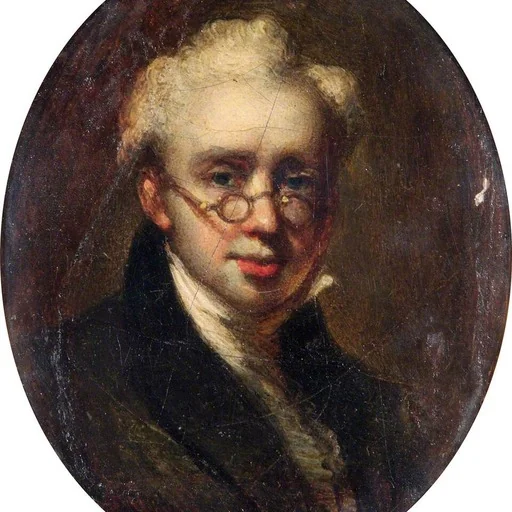
Artist
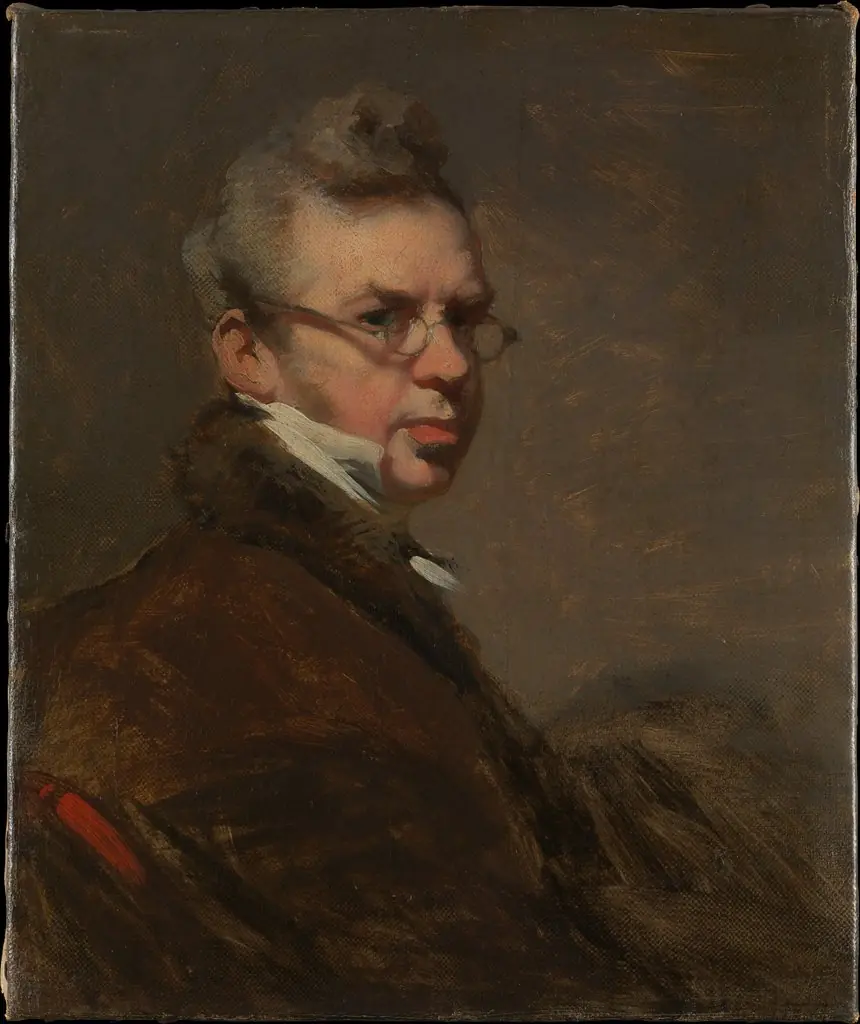
George Chinnery (Chinese: 錢納利; 5 January 1774 – 30 May 1852) was an English painter who spent most of his life in Asia, especially India and southern China.

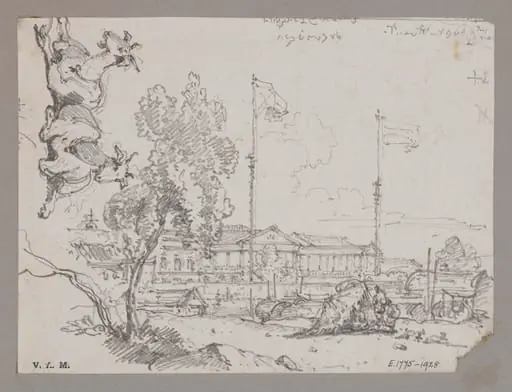 The East India Company's Factory, Canton
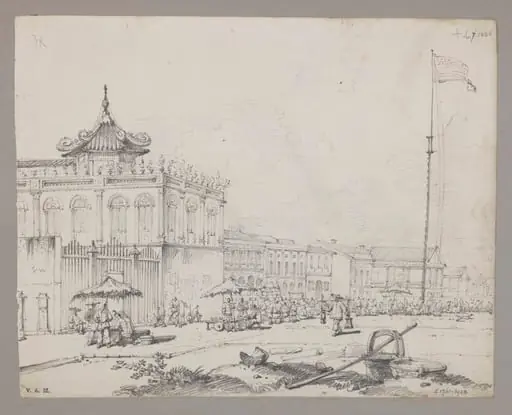 The Great Square before the Factories, Canton
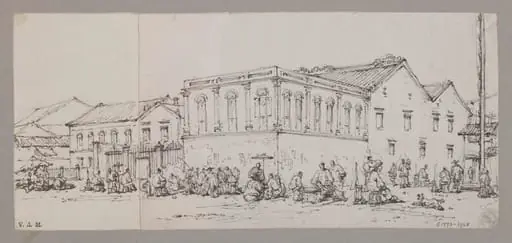 Minqua's house, and entrance to China Street, Canton
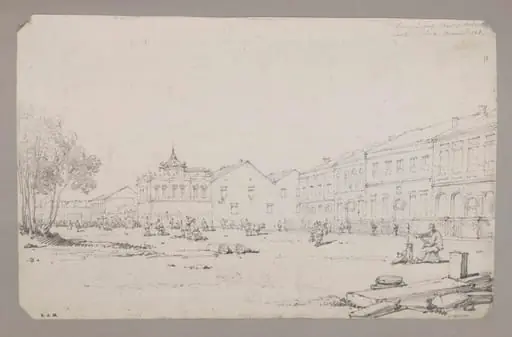 Chinqua's House & part of the Factories, Canton, China. March 1st 1828
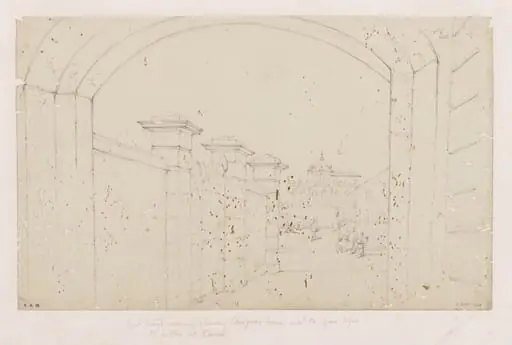 Chungqua's premises seen from the portico of the East India Company's 'factory' at Guangzhou (Canton)
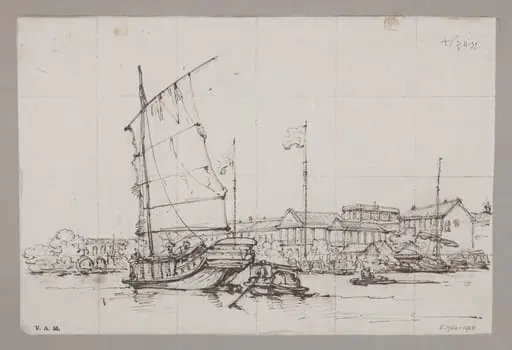 Chinese shipping
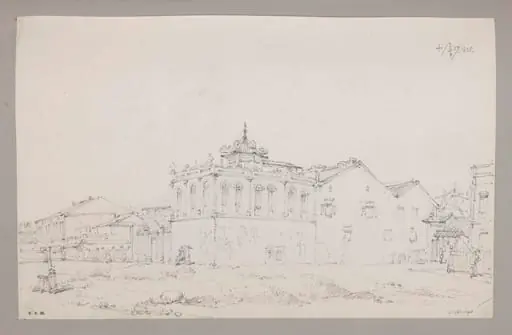 Chinqua's house, with entrance to China Street, Canton
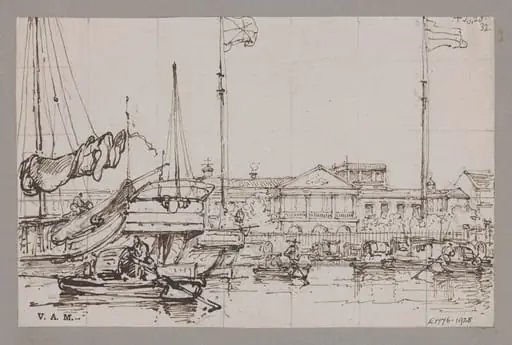 View of East India Company's Factory, Canton