Artwork
Pagoda halfway between Canton and Whampoa
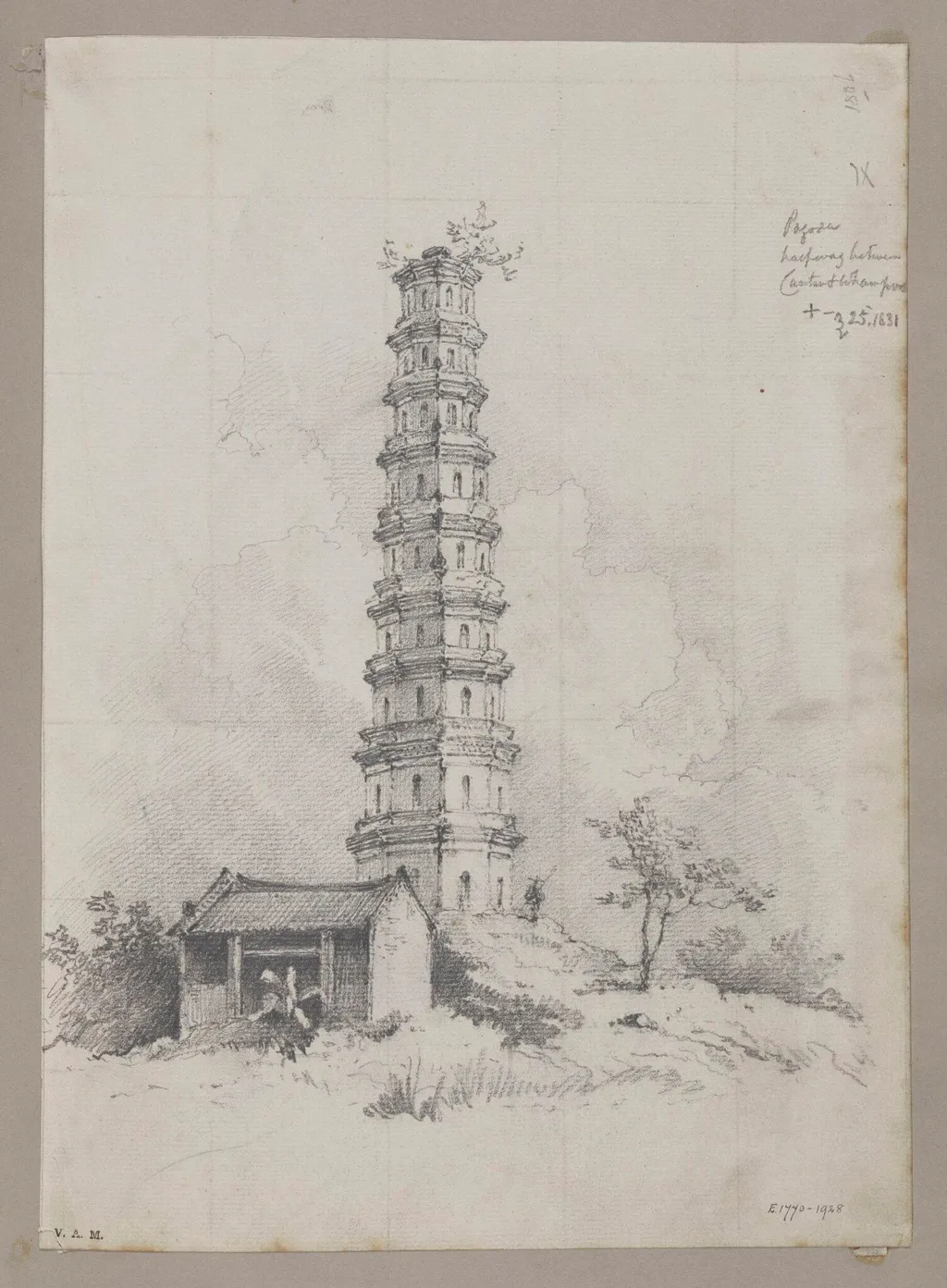
Pagoda halfway between Canton and Whampoa is a drawing by the Romanticist artist George Chinnery. It dates from 18 and is held in the collection of the Victoria and Albert Museum.
About this work
George Chinnery drew the Pagoda halfway between Canton and Whampoa in 1831.
It shows a tower on paper, not oil on canvas.
This tower marked the halfway point for Western traders between their river forts and the ships at Whampoa. No other pagoda like it stood in that exact spot.
Look up the Victoria and Albert Museum to see more Chinnery drawings.
Overview
Executed in ink or pencil on paper, it records a landmark familiar to Western merchants as a navigational marker.
This 1831 drawing by George Chinnery depicts the Chigang Pagoda, a structure located along the Pearl River between the foreign trading factories in Canton and the anchorage at Whampoa. Executed in ink or pencil on paper, it records a landmark familiar to Western merchants as a navigational marker. Unlike painted works, this piece belongs to a series of observational sketches Chinnery made during his time in southern China, capturing everyday topography with quiet precision.
Subject & Meaning
The Chigang Pagoda served as a physical and psychological midpoint for foreign traders traveling between their commercial compounds and the ships waiting downstream. Its presence in the drawing reflects its role not as a religious monument, but as a functional waypoint in the rhythm of trade. Chinnery’s focus on the structure underscores its significance in the daily lives of Western merchants, who relied on such landmarks to gauge distance and time along the river.
Technique & Style
Chinnery rendered the pagoda with delicate linear precision, using fine pen or pencil strokes to define its tiered form and surrounding landscape. The composition is restrained, avoiding dramatic lighting or embellishment. Atmospheric depth is suggested through subtle tonal gradations and sparse foliage, reflecting the artist’s preference for direct observation over romanticized interpretation. The work exemplifies the topographical clarity characteristic of his sketchbook practice.
History & Provenance
Created during Chinnery’s residency in Guangzhou, the drawing was likely made on-site during one of his river excursions. It entered the collection of the Victoria and Albert Museum, where it remains part of a larger archive of his Chinese sketches. These works were never intended for public exhibition but served as personal records, later preserved for their documentary value in documenting foreign presence in early 19th-century China.
Context
In the 1830s, Western traders operated under strict Qing regulations, confined to specific areas along the Pearl River. The Chigang Pagoda, standing near the boundary of these zones, became a familiar reference point. Chinnery’s drawing captures a moment when foreign merchants navigated a complex cultural and geographic landscape, using local architecture as a guide in a foreign environment governed by restrictive trade policies.
Legacy
Chinnery’s sketches, including this one, offer a rare visual record of the Pearl River’s commercial corridor from the perspective of a Western resident. They provide insight into the material and spatial realities of Sino-Western trade before the Opium Wars. While not widely known in his lifetime, his drawings now serve as important historical documents, preserving the appearance of structures and landscapes that have since changed or vanished.
Artist & collection
Artist
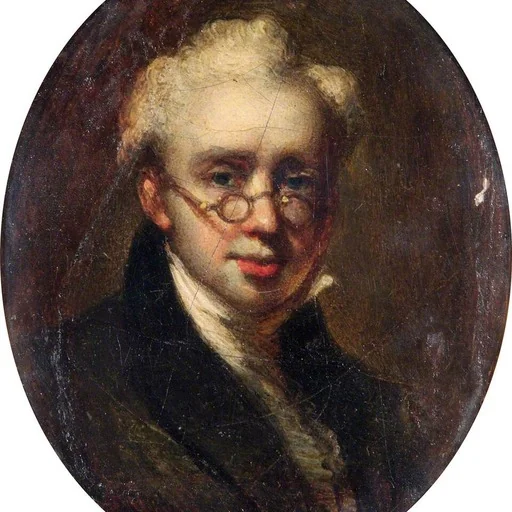
George Chinnery (Chinese: 錢納利; 5 January 1774 – 30 May 1852) was an English painter who spent most of his life in Asia, especially India and southern China.

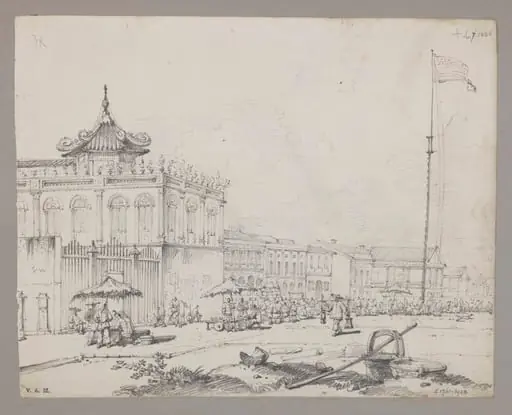 The Great Square before the Factories, Canton
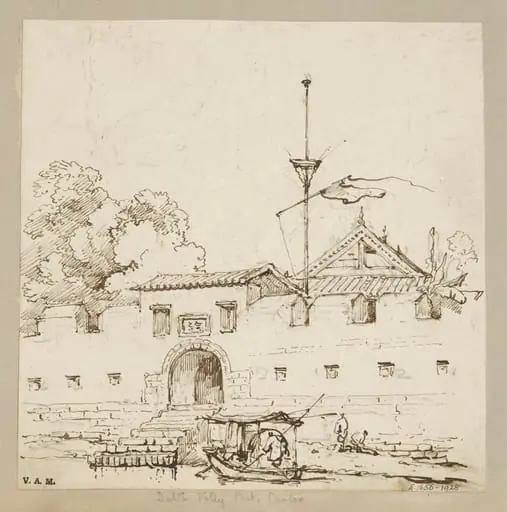 The 'Dutch Folly Fort', Canton
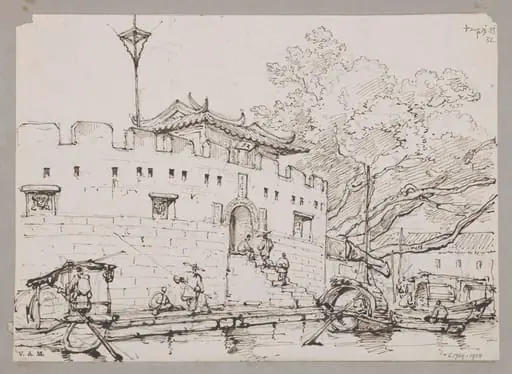 Small Fort on the River opposite the Factories, Canton
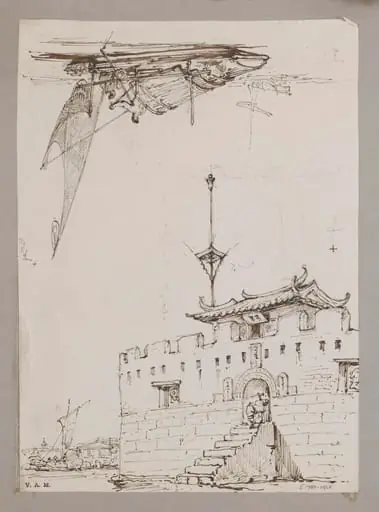 Part of a small fort opposite Canton; Chinese sailing vessel
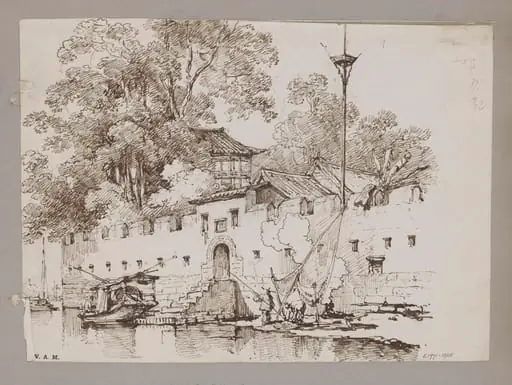 Part of the Dutch Folly, near Canton
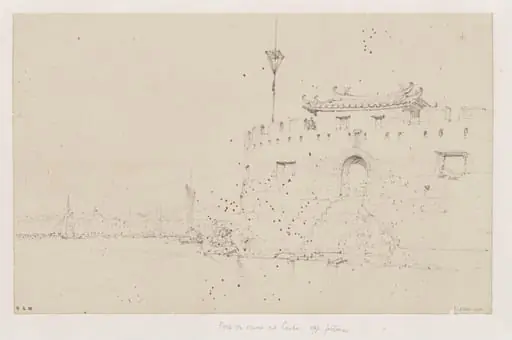 The 'Red Fort' on the river at Guangzhou (Canton)
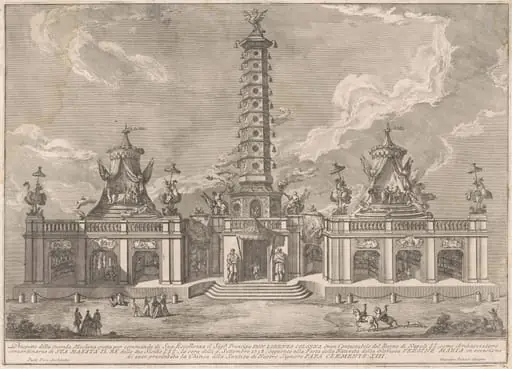 The Seconda Macchina for the Chinea of 1758: The Porcelain Tower of Nanjing
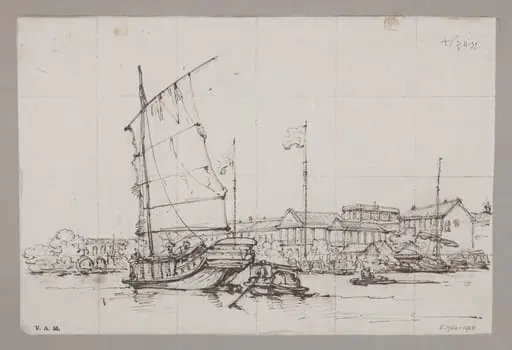 Chinese shipping