Artwork
The Seconda Macchina for the Chinea of 1758: The Porcelain Tower of Nanjing
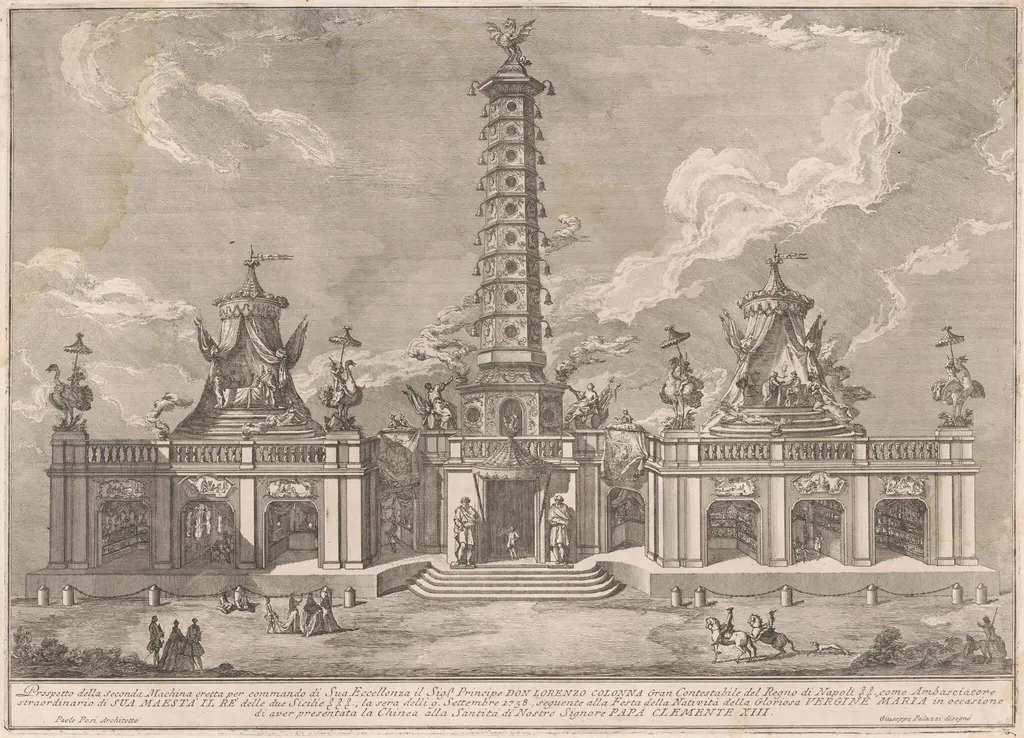
The Seconda Macchina for the Chinea of 1758: The Porcelain Tower of Nanjing is an ink print by the Romanticist artist Giuseppe Pozzi. It dates from 1758 and is held in the collection of the National Gallery of Art.
About this work
Overview
This 1758 etching by Giuseppe Pozzi, titled The Seconda Macchina for the Chinea of 1758: The Porcelain Tower of Nanjing, visually represents a grandiose, ornate architectural scene. A central tall tower dominates the composition, set against a cloudy sky.
Subject & Meaning
The depicted structure is inspired by the Porcelain Tower of Nanjing, a renowned Chinese landmark. The etching showcases the tower's grandeur, adorned with statues and decorative elements, with figures in the foreground, likely conveying the wonder of Eastern architectural achievements in a European context.
Technique & Style
The etching demonstrates meticulous detail, with intricate designs and textures of the structure meticulously rendered. Effective use of shading and contrast enhances the image's depth and dimensionality, characteristic of precise Baroque-era printmaking techniques.
History & Provenance
Created in 1758 by Giuseppe Pozzi, this etching was designed as the Seconda Macchina for the Chinea, a ceremonial event. The current location and full provenance of the etching are not specified in the provided information.
Context
While the etching's style aligns with Baroque printmaking, its subject matter reflects 18th-century European fascination with Eastern cultures. Note that the mentioned 'Romanticism movement' is anachronistic, as Romanticism emerged later; this work is more closely tied to Baroque and Orientalist interests.
Legacy
The legacy of this specific etching by Pozzi is not detailed in the provided sources. However, as a representation of the Porcelain Tower, it contributes to the Western artistic record of this Chinese landmark, potentially influencing subsequent depictions or interests in Eastern architecture.
Artist & collection


 The Prima Macchina for the Chinea of 1757: The Colonnade of the Athenian Lyceum
 The Prima Macchina for the Chinea of 1757: The Colonnade of the Athenian Lyceum
 The Prima Macchina for the Chinea of 1756: A Triumphal Arch between Mount Etna and Mount Vesuvius
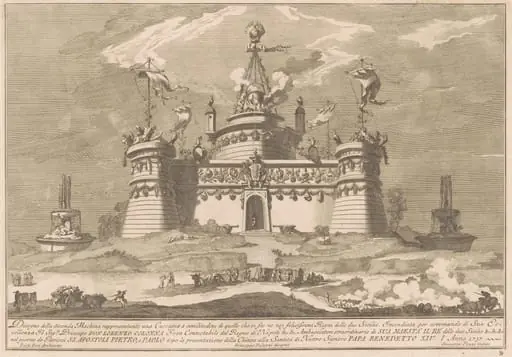 The Seconda Macchina for the Chinea of 1757: The Fortress of Cockaigne
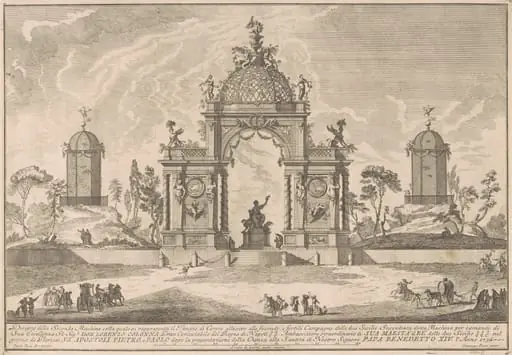 The Seconda Macchina for the Chinea of 1756: The Temple of Ceres
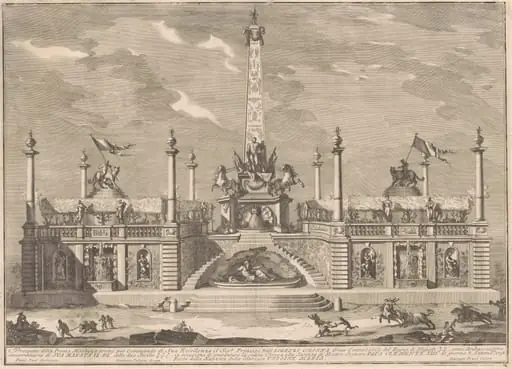 The Prima Macchina for the Chinea of 1758: A "Deliziosa" with Hanging Gardens
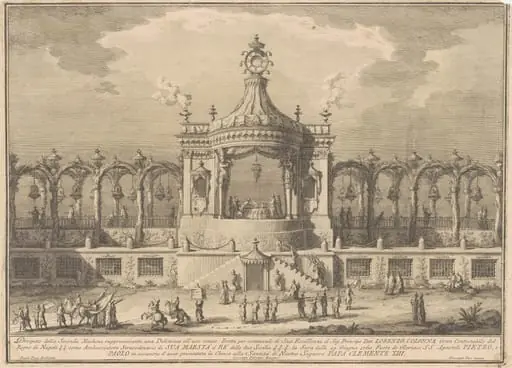 The Seconda Macchina for the Chinea of 1760: A Chinoiserie Pavilion
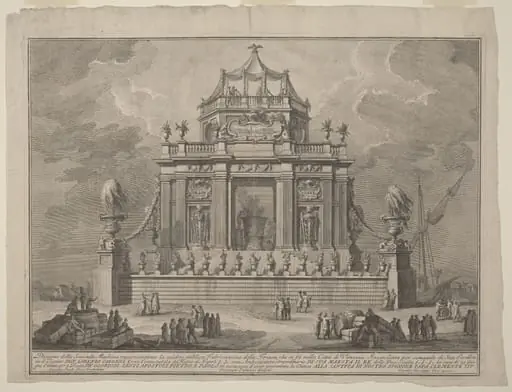 The Seconda Macchina for the Chinea of 1773: The Preparation of Theriac in Venice
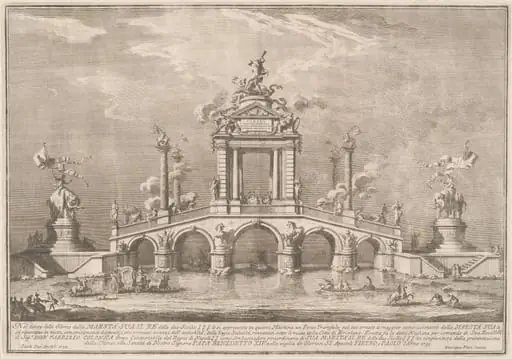 The Prima Macchina for the Chinea of 1755: A Triumphal Bridge with Antiquities from Herculaneum
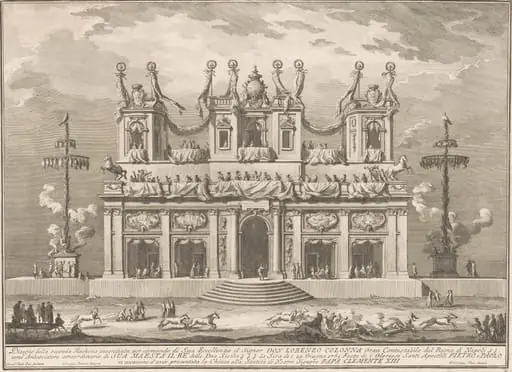 The Seconda Macchina for the Chinea of 1765: A Decorated Building with Cockaigne Poles
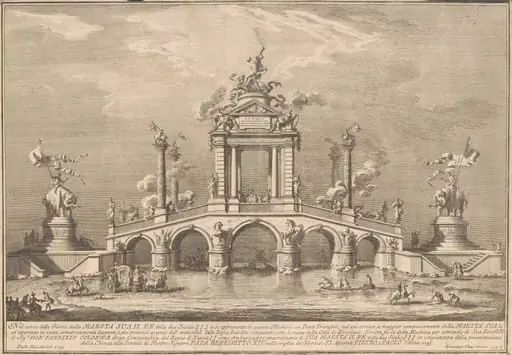 The Prima Macchina for the Chinea of 1755: A Triumphal Bridge with Antiquities from Herculaneum
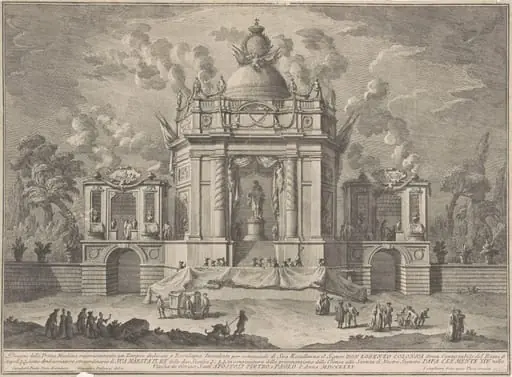 The Prima Macchina for the Chinea of 1771: The Temple of Asclepius
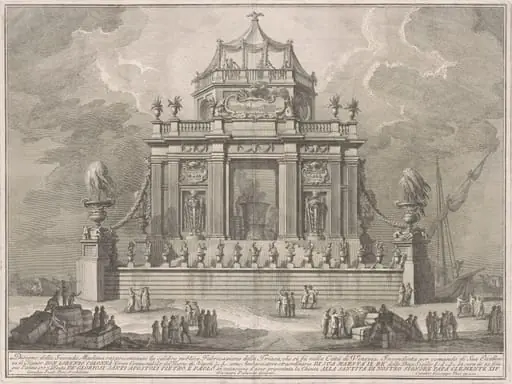 The Seconda Macchina for the Chinea of 1773: The Preparation of Theriac in Venice
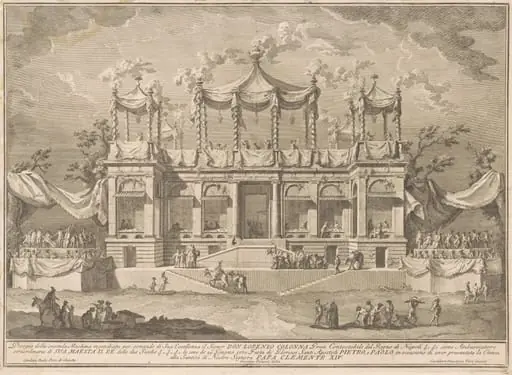 The Seconda Macchina for the Chinea of 1770: The Fish Market Portico
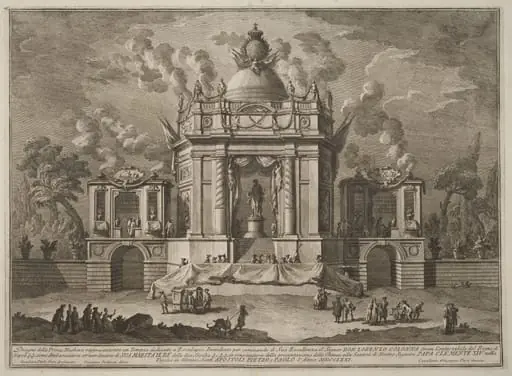 The Prima Macchina for the Chinea of 1771: The Temple of Asclepius
 The Prima Macchina for the Chinea of 1772: A Building Dedicated to Chinese Philosophy
 The Seconda Macchina for the Chinea of 1754: An Allegory of Waterworks