Artwork
The 'Dutch Folly Fort', Canton
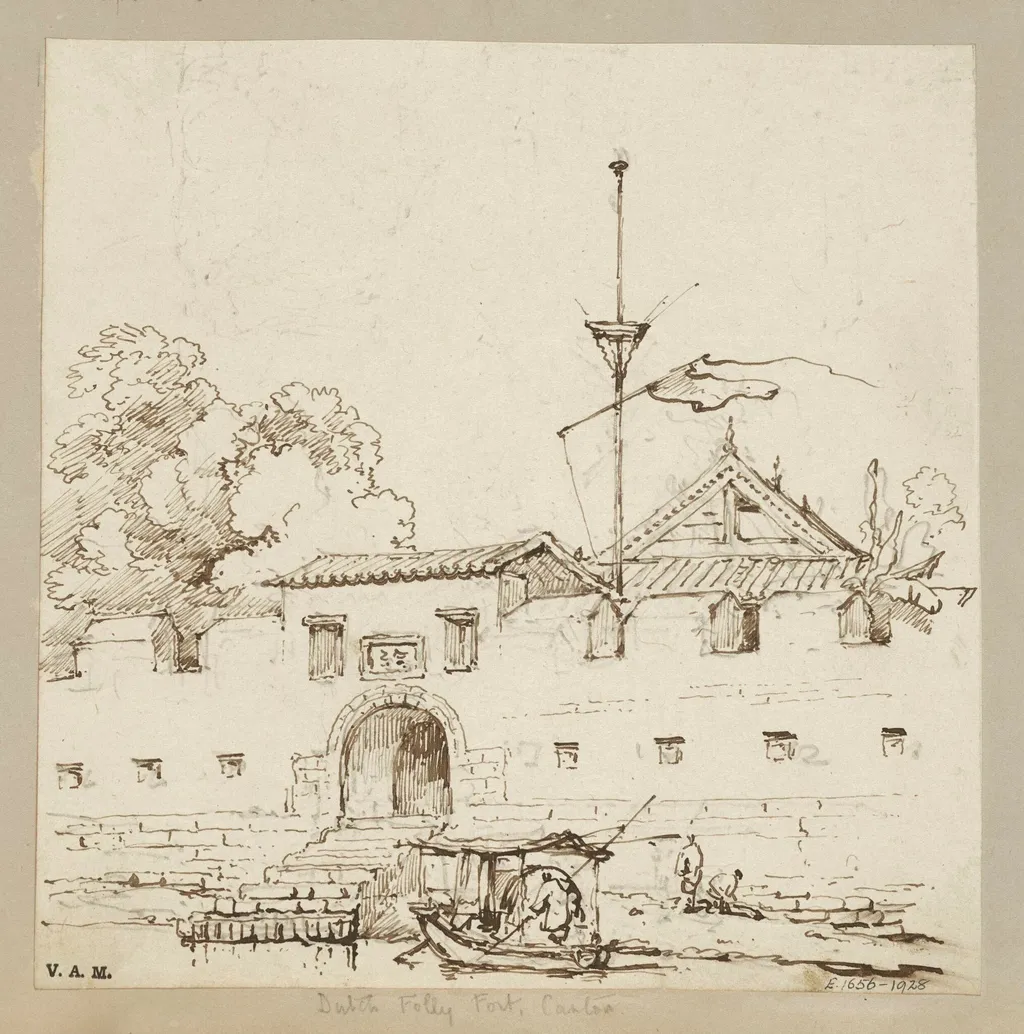
The 'Dutch Folly Fort', Canton is a drawing by the Romanticist artist George Chinnery. It dates from 19 and is held in the collection of the Victoria and Albert Museum.
About this work
This sketch shows a historic river fort called the Dutch Folly Fort in Canton. Artist George Chinnery drew it between 1825 and 1852. The work is part of Romanticism.
The fort sat near Western trading posts known as the Factories. On the back, Chinnery sketched a barber instead.
Check out the Victoria and Albert Museum for more drawings by this artist.
Overview
This drawing by George Chinnery depicts the Haizhu Fort, a Chinese river defense structure near the Western trading compounds in Canton.
This drawing by George Chinnery depicts the Haizhu Fort, a Chinese river defense structure near the Western trading compounds in Canton. Created between 1825 and 1852, it is one of many observational sketches Chinnery made during his time in southern China. The work is executed in ink and wash, capturing the fort’s architectural presence against the riverbank. Its reverse side bears a separate, informal sketch of a barber, suggesting the artist’s habit of reusing paper.
Subject & Meaning
The Haizhu Fort, known to Westerners as the 'Dutch Folly,' was a local military installation built to regulate foreign trade and assert sovereignty. Chinnery’s depiction focuses on its physical form rather than its political role, reflecting his interest in everyday scenes of Canton. The fort’s presence opposite the foreign Factories underscores the tension between Chinese authority and foreign commercial activity, though the drawing itself remains observational rather than critical.
Technique & Style
Chinnery employed loose ink washes and delicate line work to convey the fort’s structure and surrounding environment. The drawing lacks overt romantic embellishment, instead favoring direct observation and tonal modulation to suggest light and volume. The sketch on the reverse, of a barber, is rendered with similar immediacy, revealing Chinnery’s practice of capturing fleeting moments and ordinary figures with minimal detail.
History & Provenance
The drawing was made during Chinnery’s decades-long residence in Canton, where he documented local life and architecture. It entered the Victoria and Albert Museum’s collection as part of a larger group of his works, acquired after his death. The piece’s survival reflects its value as a primary visual record of 19th-century Canton, particularly from a Western artist’s perspective during a period of restricted foreign access.
Context
In the early 19th century, foreign merchants in Canton operated under strict Qing regulations, confined to the Factories along the Pearl River. The Haizhu Fort, positioned nearby, symbolized imperial oversight of this controlled trade environment. Chinnery’s sketch, made from a vantage point accessible to foreigners, offers a rare visual account of this regulated zone, capturing a structure that was both functional and politically charged.
Legacy
Chinnery’s drawings, including this one, remain key sources for understanding the material culture and urban landscape of Canton during the late Qing period. Though not widely exhibited, they provide insight into the daily interactions between Chinese and foreign communities. The dual-sided nature of the sheet also illustrates the practical habits of itinerant artists working under constrained conditions.
Artist & collection
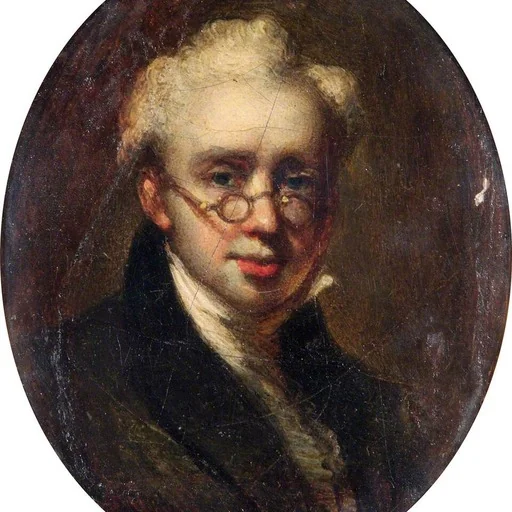
Artist
George Chinnery (Chinese: 錢納利; 5 January 1774 – 30 May 1852) was an English painter who spent most of his life in Asia, especially India and southern China.



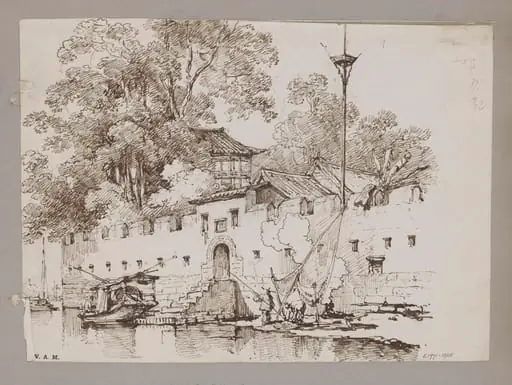 Part of the Dutch Folly, near Canton
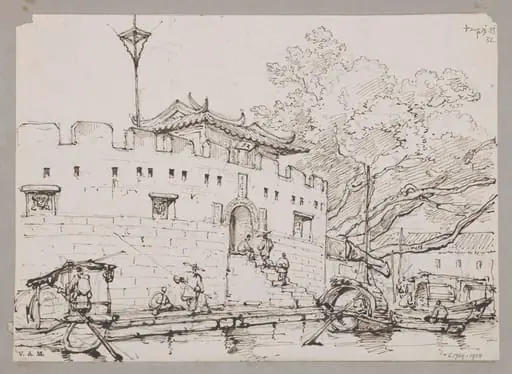 Small Fort on the River opposite the Factories, Canton
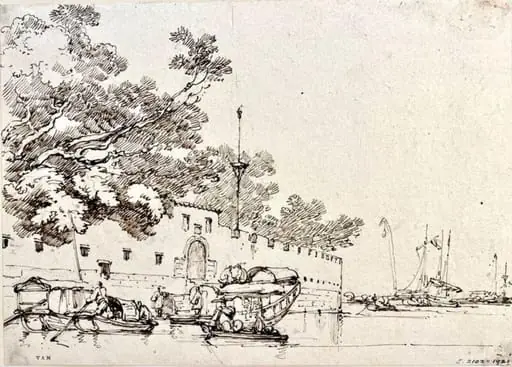 Junks and Tanka boats by a river fort, Canton (Guangzhou)
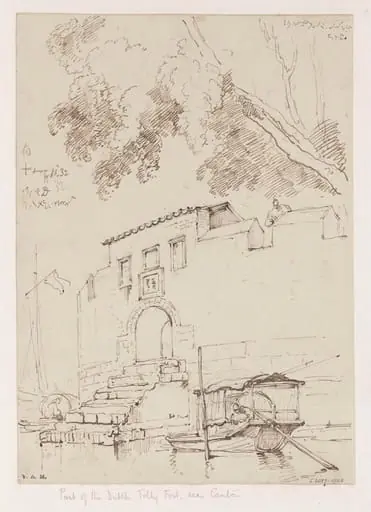 The 'Dutch folly fort', Canton (Guangzhou)
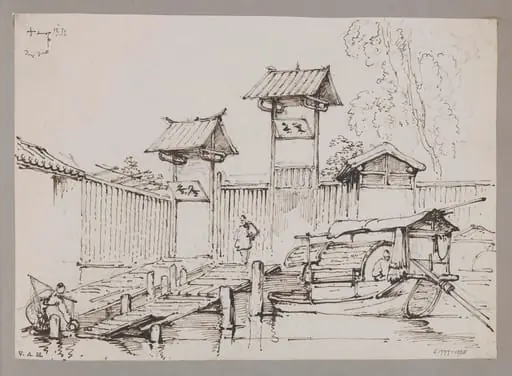 Gateways on the riverside, Canton
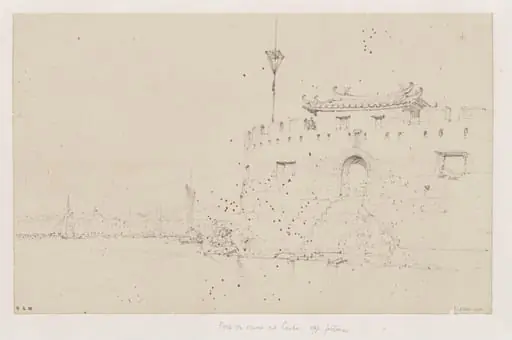 The 'Red Fort' on the river at Guangzhou (Canton)
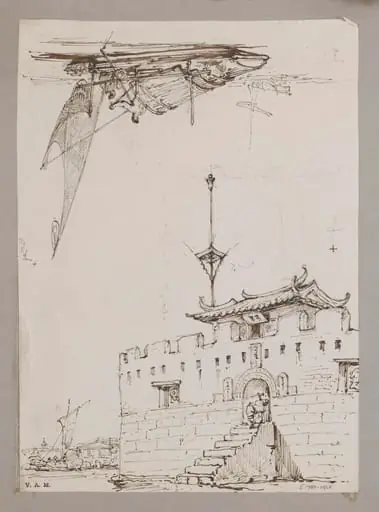 Part of a small fort opposite Canton; Chinese sailing vessel
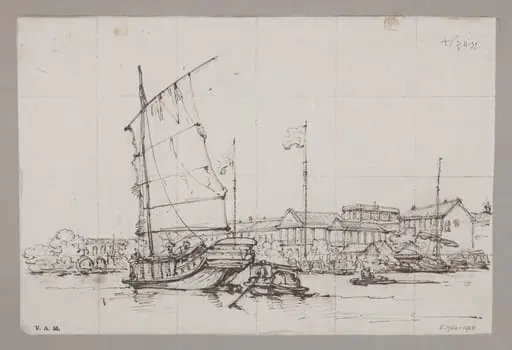 Chinese shipping
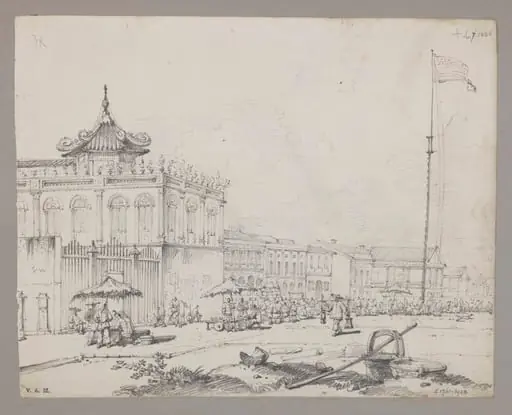 The Great Square before the Factories, Canton
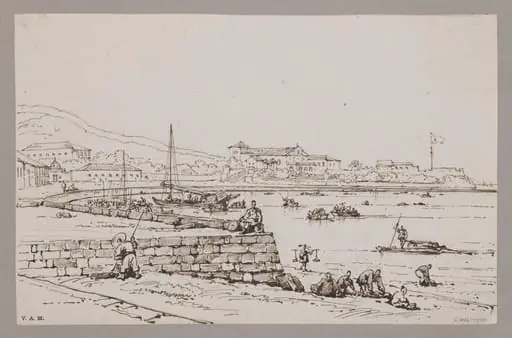 The bay, Macau, with the church and fort of S. Francisco