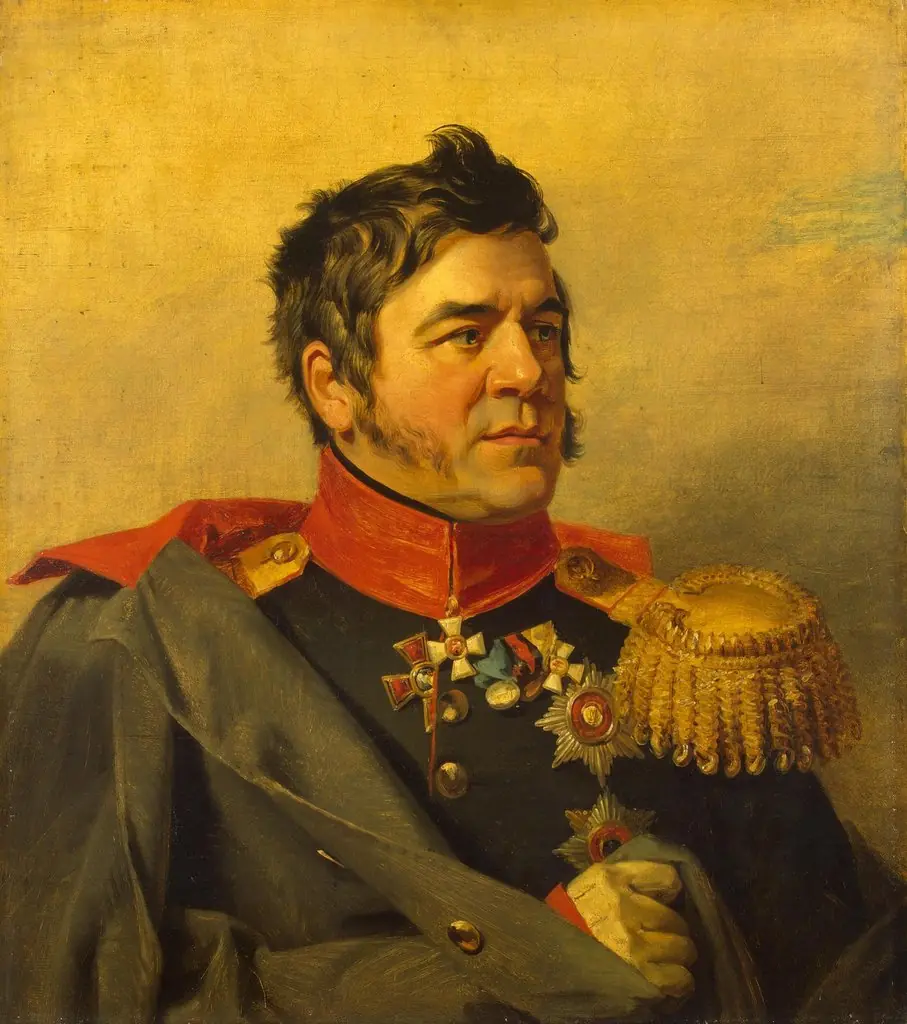
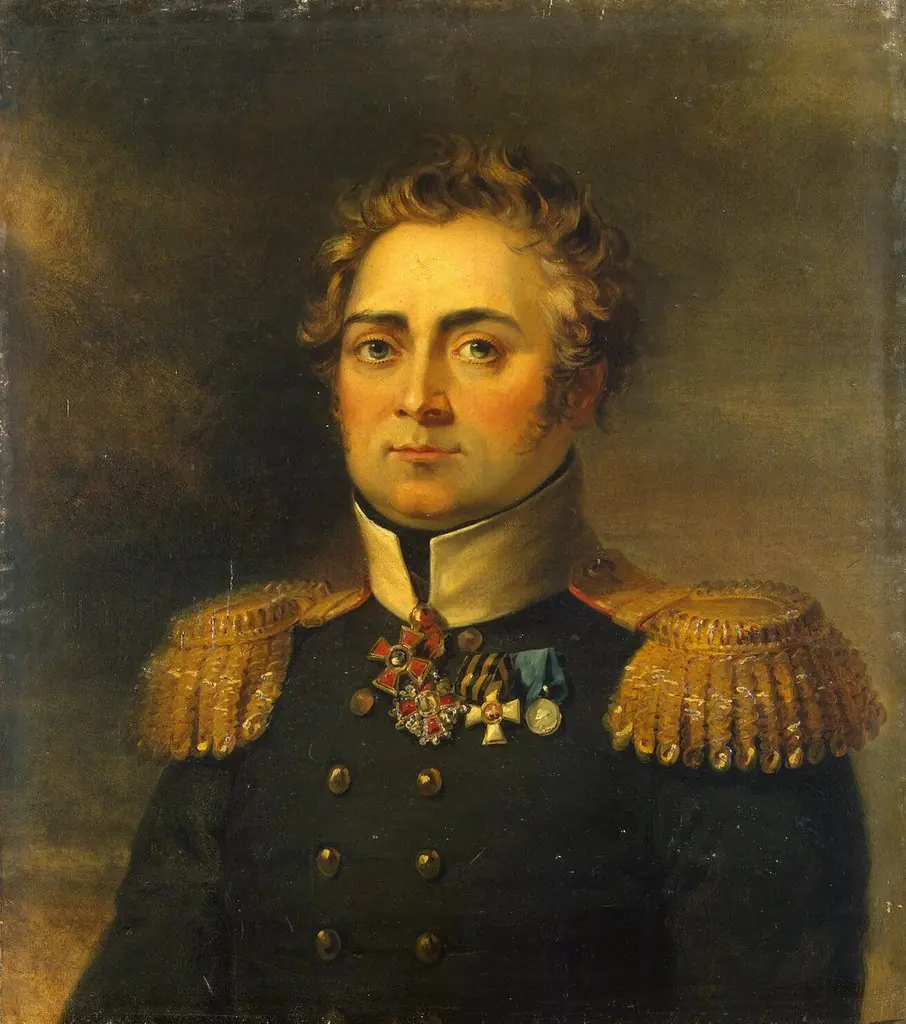
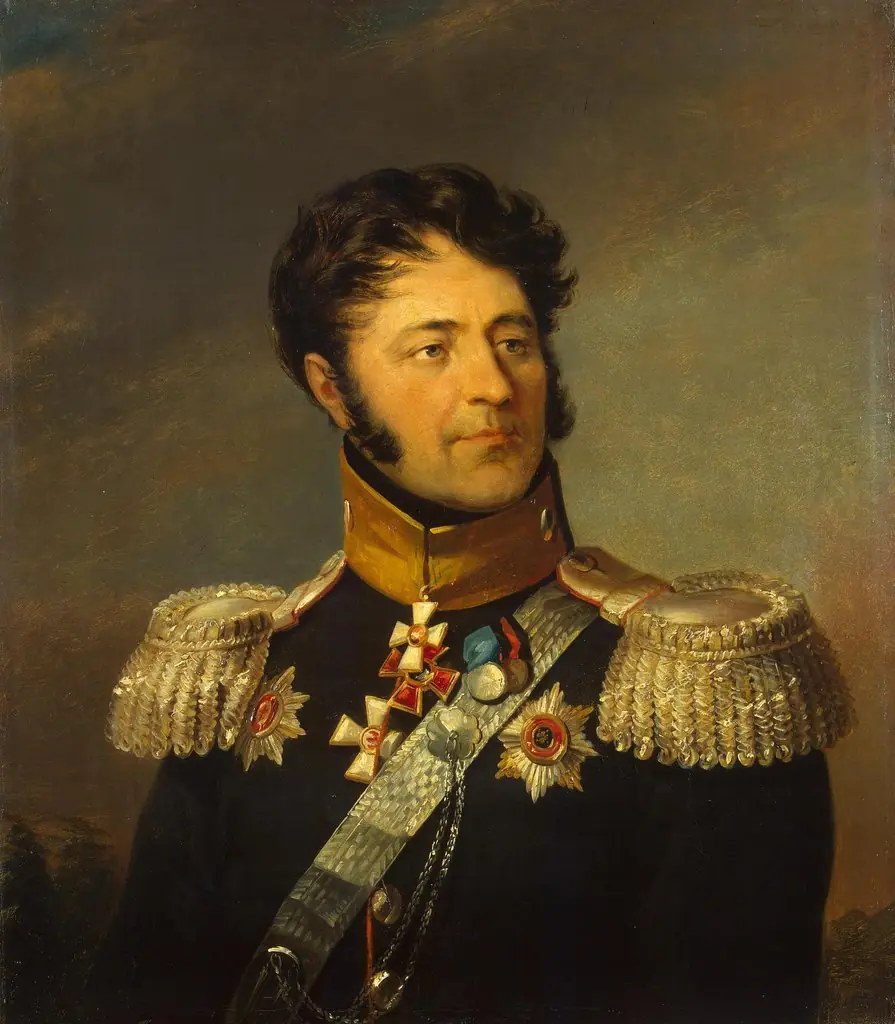
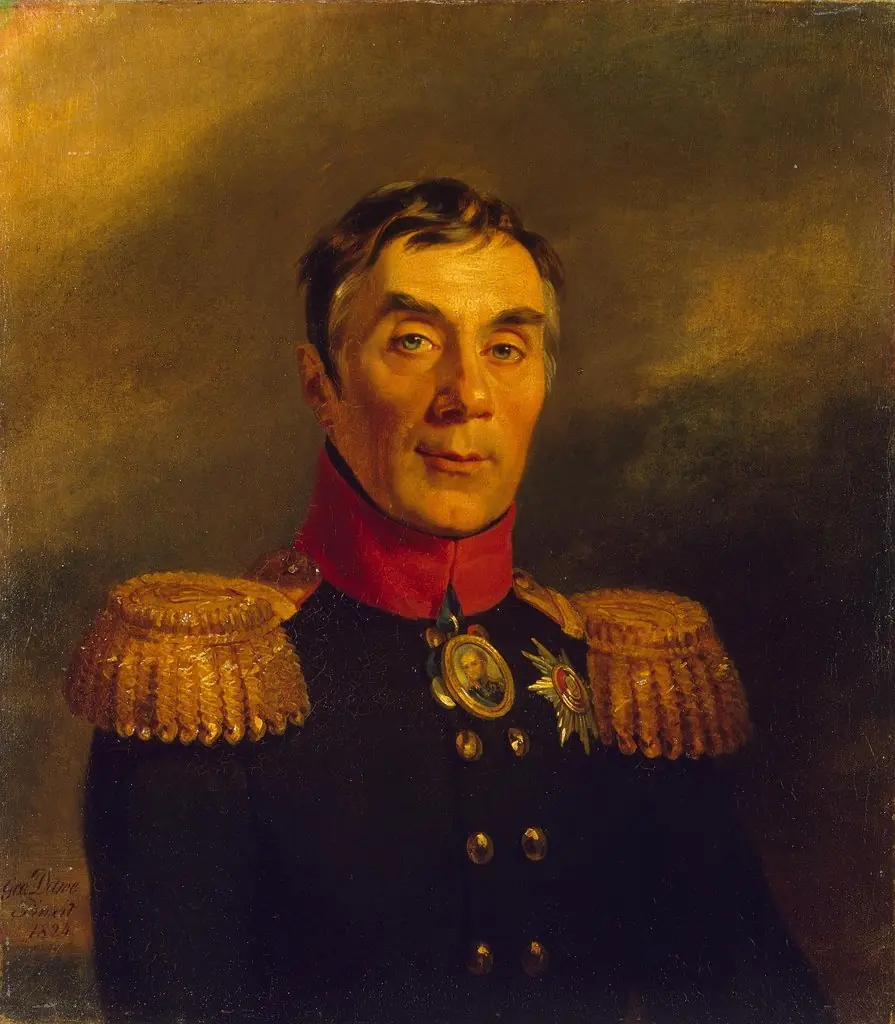
Artwork
Portrait of Anton S. Chalikov (1754-1821)
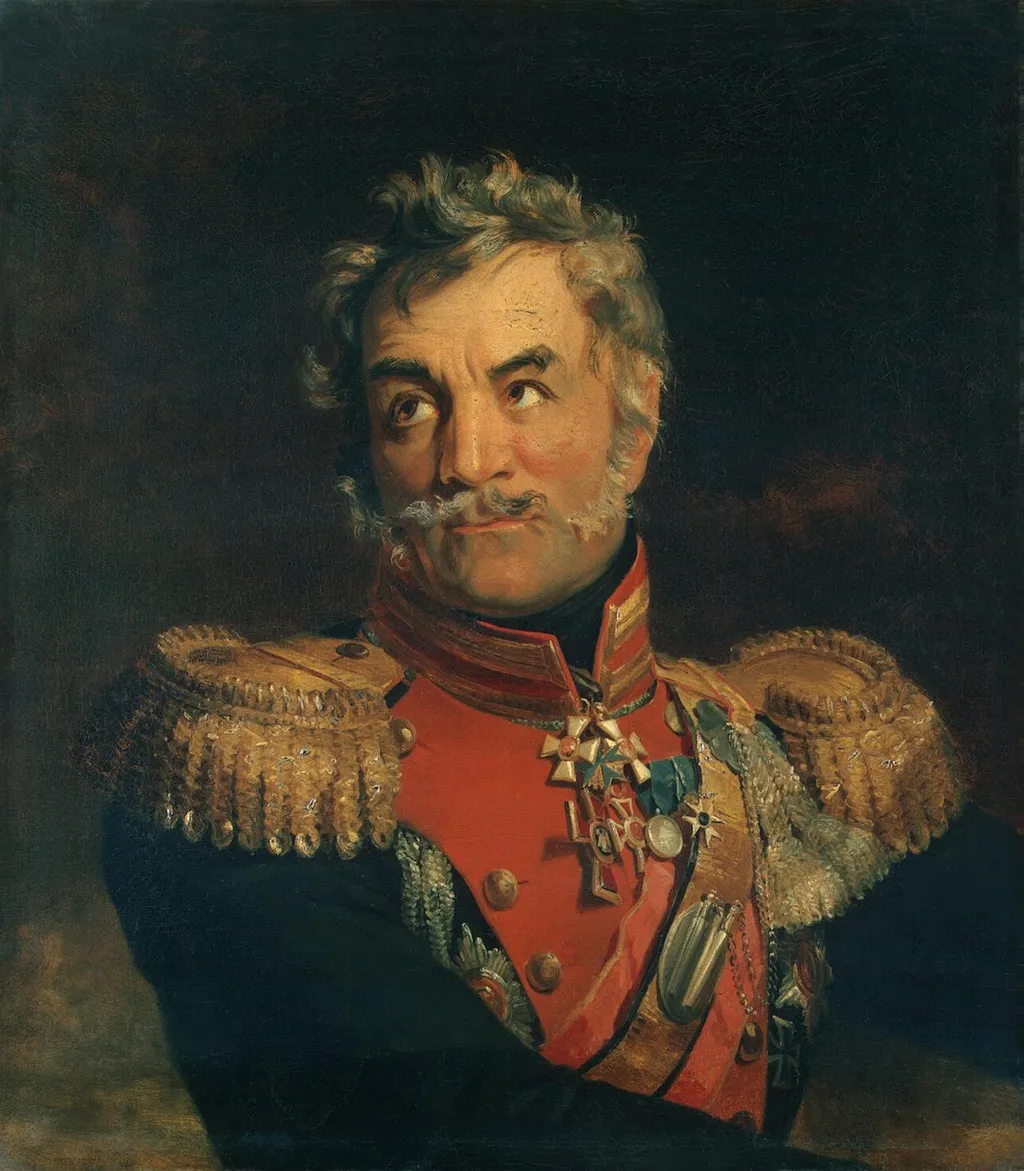
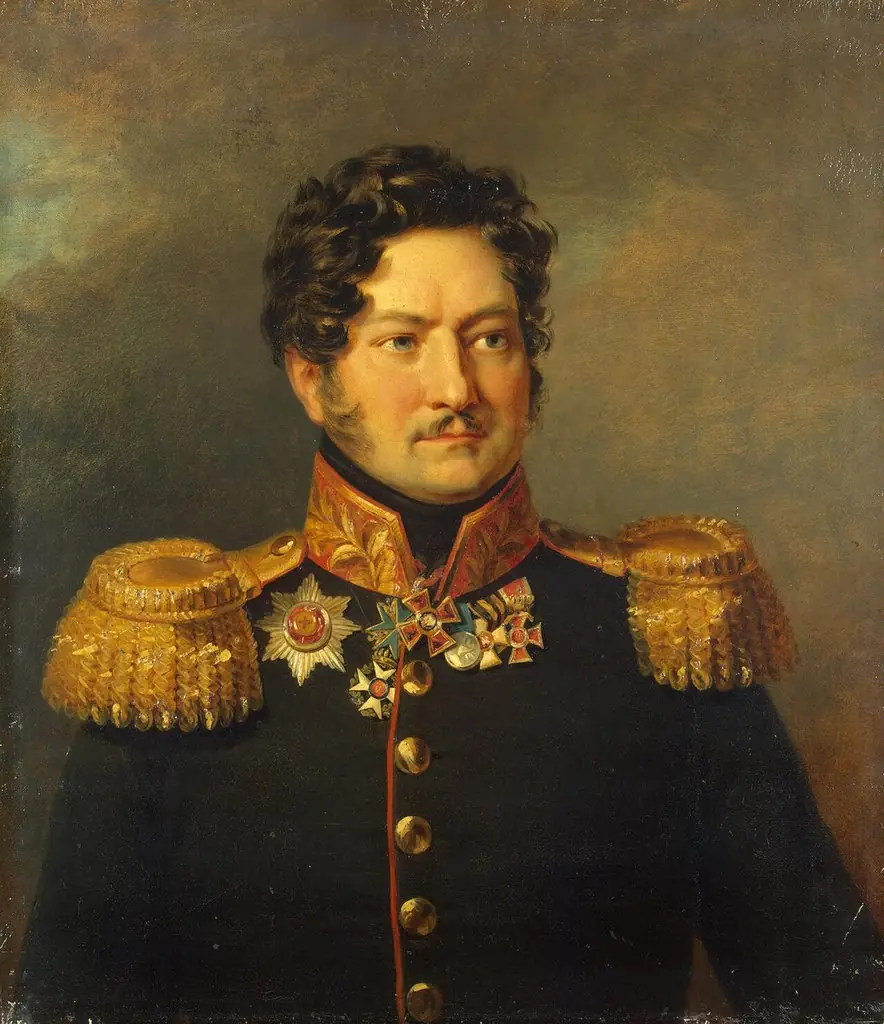
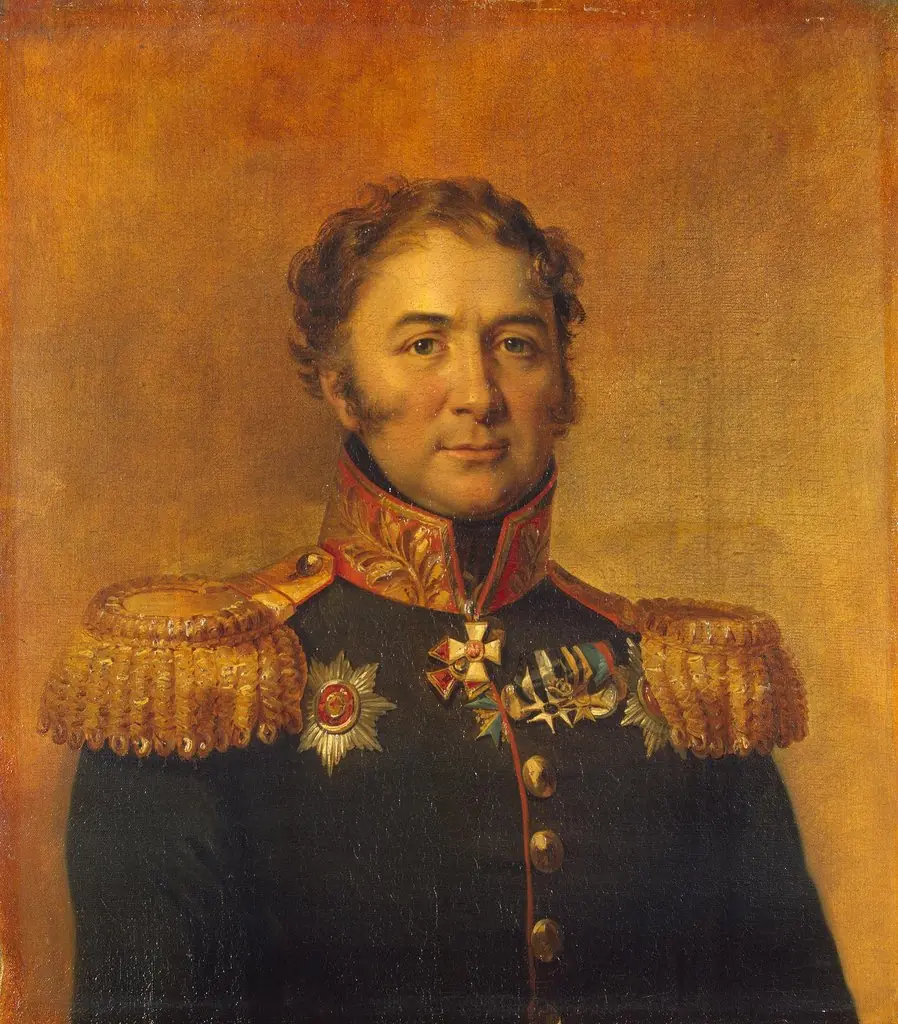
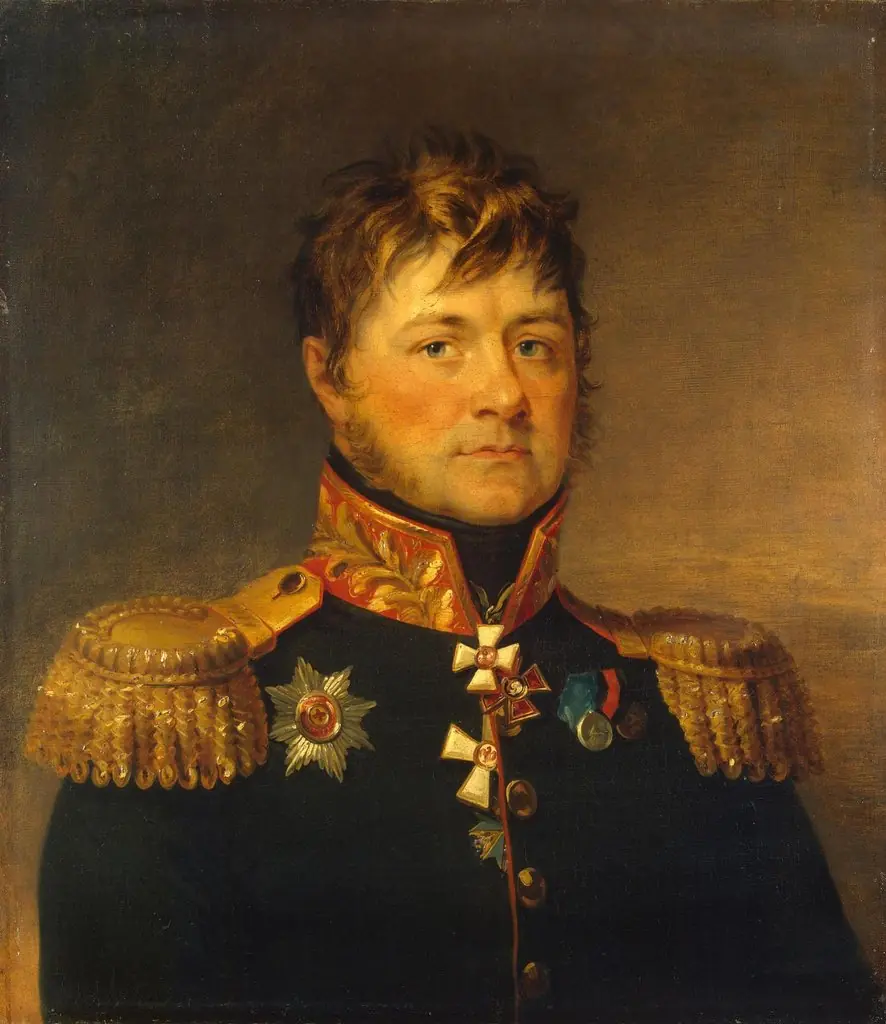
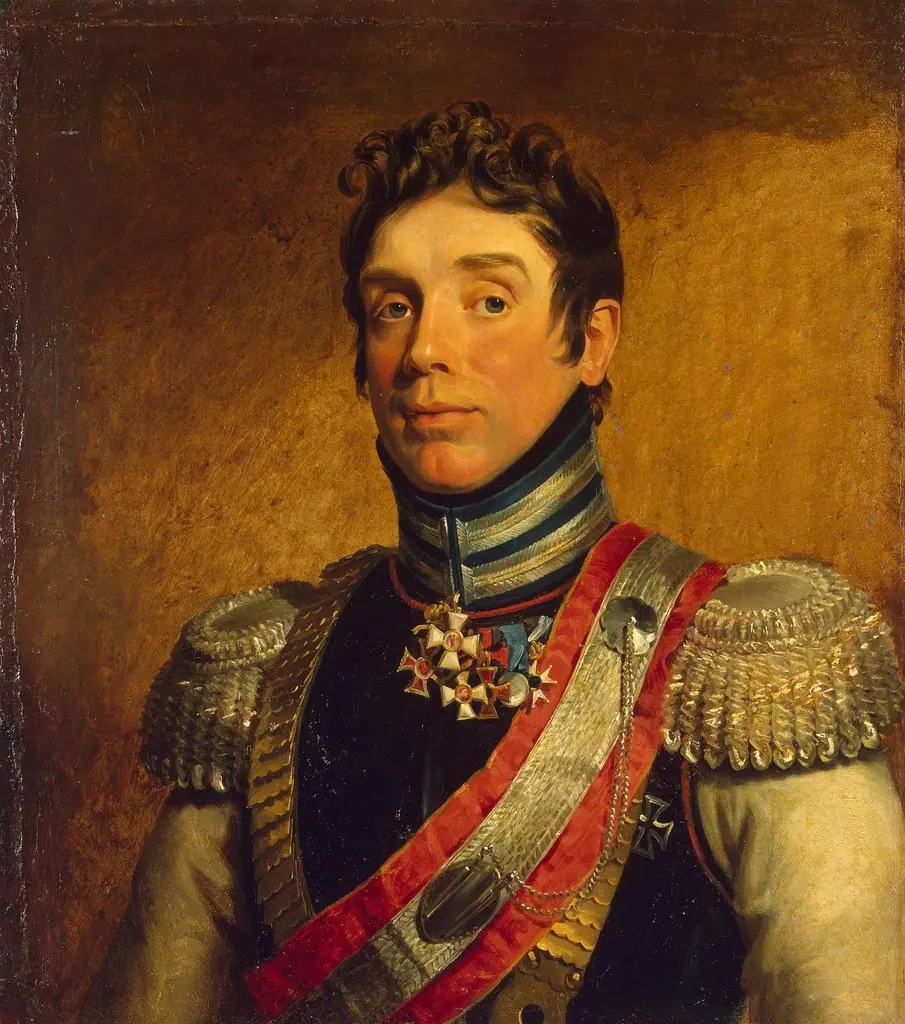
Portrait of Anton S. Chalikov (1754-1821) is an oil painting by George Dawe. It dates from 1829 and is held in the collection of the Hermitage Museum.
About this work
Overview
Painted in 1829 by the English artist George Dawe, this oil portrait captures Anton S. Chalikov, a Russian military figure of the early 19th century. Dawe, who moved to Saint Petersburg in 1819, was commissioned to portray prominent Russian officers. The painting is held in the State Hermitage Museum, where it remains part of a larger series documenting military leaders of the Napoleonic era.
Subject & Meaning
Anton Chalikov is depicted in full military regalia, his bright red coat adorned with medals and gold buttons, signaling high rank and service. The pipe in his hand suggests a moment of quiet reflection, contrasting with the formality of his uniform. His powdered wig and detailed facial features convey age and experience, emphasizing his status as a seasoned officer rather than a youthful hero.
Technique & Style
Dawe employed chiaroscuro to model Chalikov’s face and uniform against a dark, unbroken background, enhancing three-dimensionality and focus. The rendering of skin texture, wrinkles, and the sheen of metal buttons demonstrates close observation. The composition avoids ornamentation, directing attention to the subject’s expression and attire through controlled lighting and precise brushwork.
History & Provenance
George Dawe arrived in Russia in 1819 under imperial commission to paint generals of the Napoleonic Wars. Chalikov, though less widely known than others in the series, was included as a decorated officer. The portrait entered the Hermitage’s collection shortly after completion and has remained there since, preserved as part of a state-sponsored effort to memorialize military leadership.
Context
In early 19th-century Russia, portraiture served both personal and political ends. Dawe’s series was part of Tsar Alexander I’s initiative to honor veterans of the war against Napoleon. These portraits reinforced national identity and military pride, blending Western artistic conventions with Russian imperial ideology, positioning officers as symbols of loyalty and sacrifice.
Legacy
Dawe’s portraits, including this one, remain key records of Russian military elites during a transformative period. While not widely exhibited outside Russia, they offer insight into the visual language of authority in post-Napoleonic Europe. The work reflects the international nature of artistic patronage and the role of portraiture in institutional memory.
Artist & collection
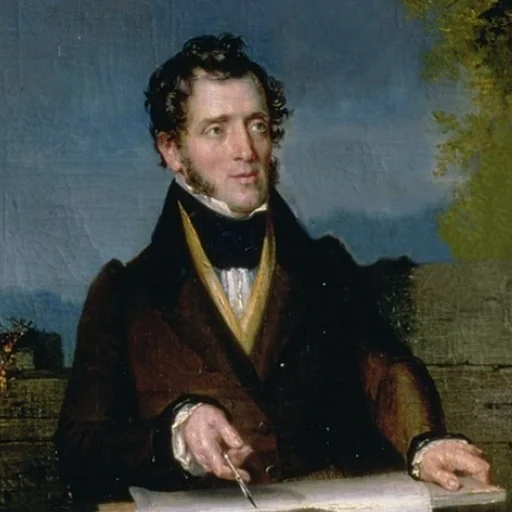
Artist
George Dawe (6 February 1781 – 15 October 1829) was an English portraitist who painted 329 portraits of Russian generals active during Napoleon's invasion of Russia for the Military Gallery of the Winter Palace.

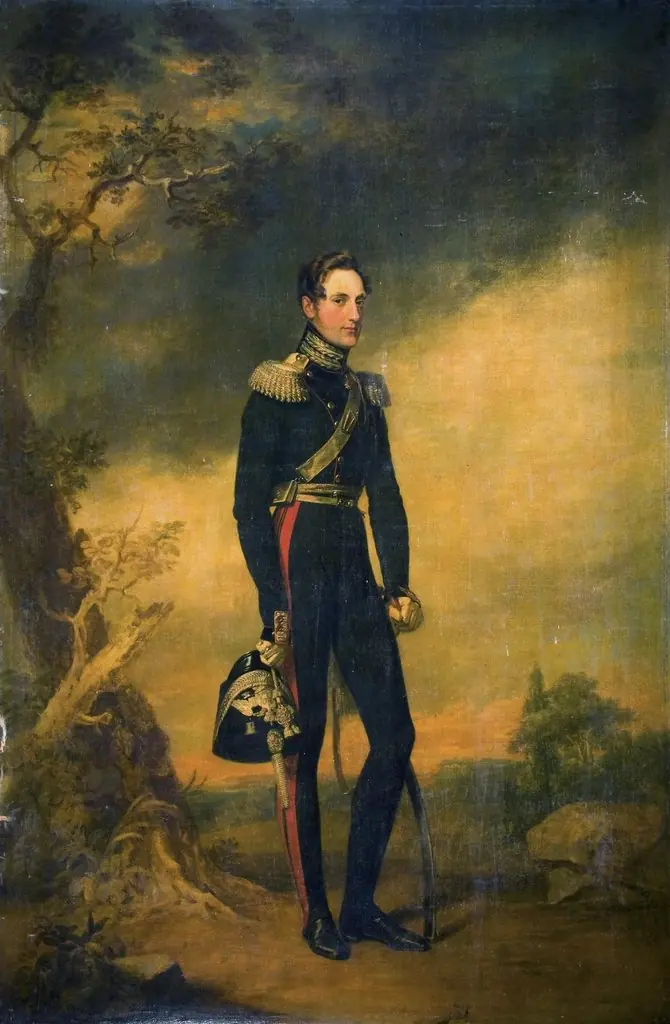 Portrait of Grand Duke Nikolai Pavlovich
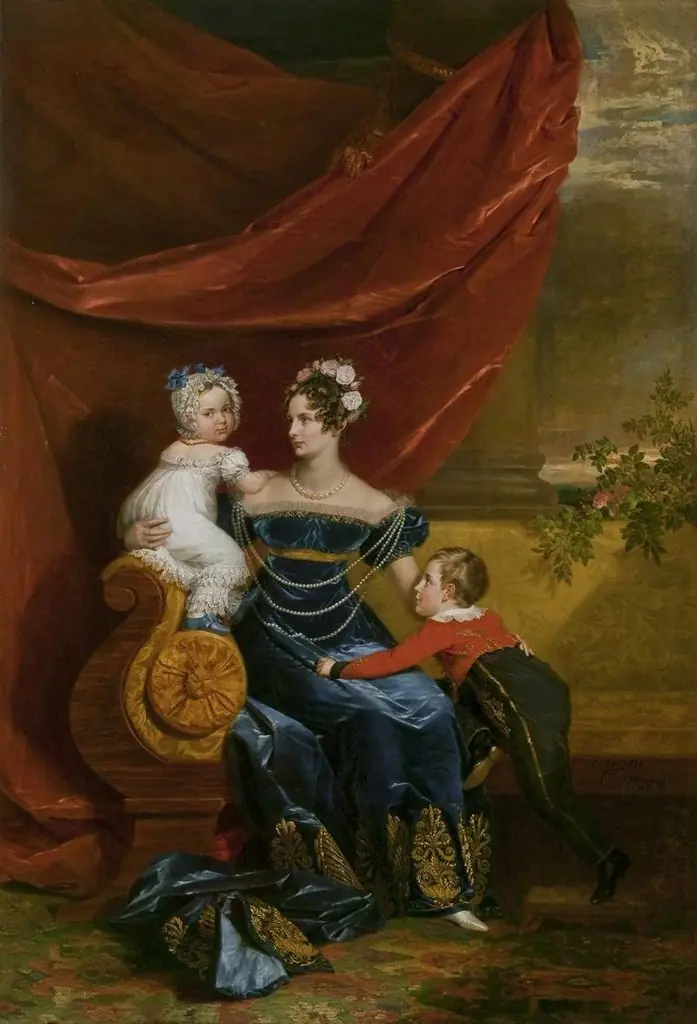 Portrait of Grand Duchess Alexandra Fiodorovna with Children
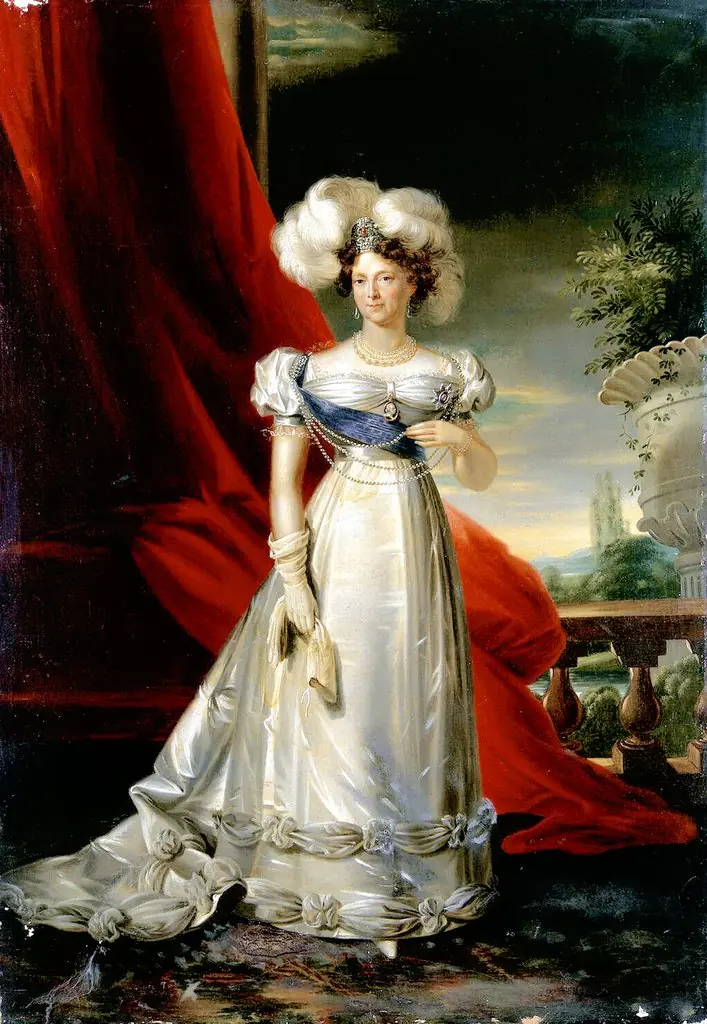 Portrait of the Empress Dowager Maria Feodorovna
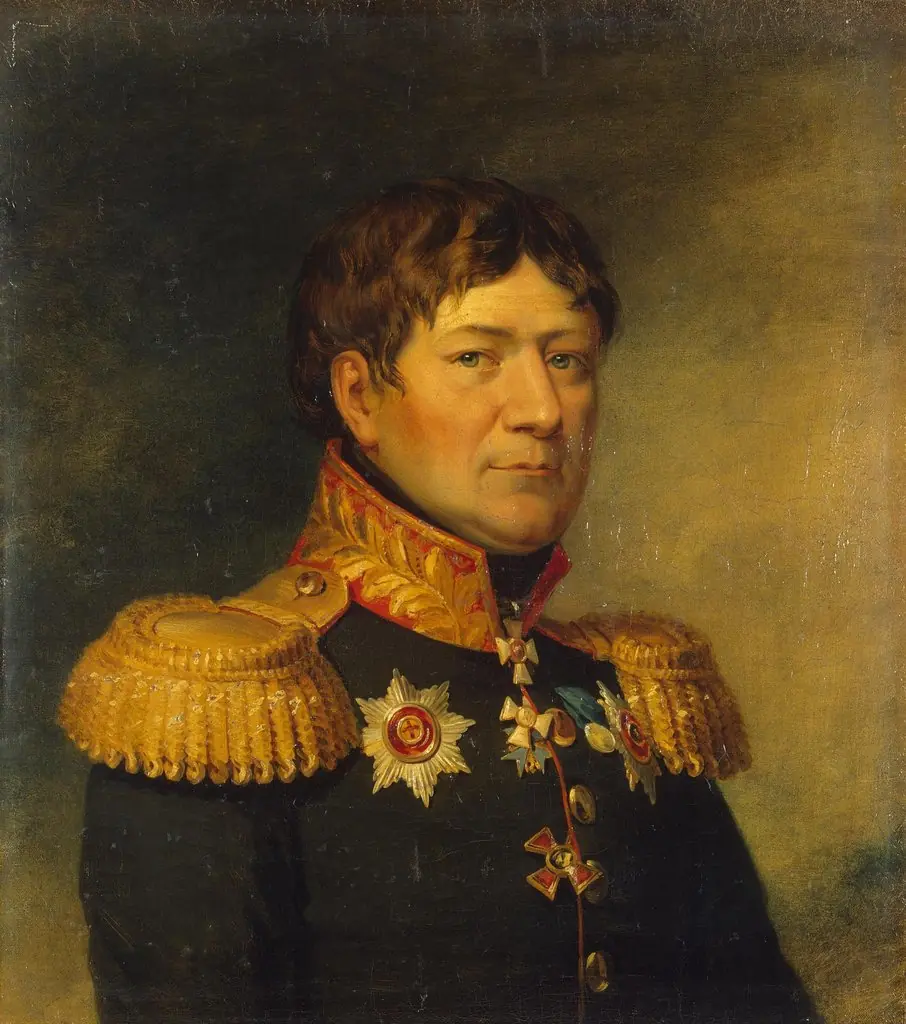 Portrait of Yegor M. Pillar (1767-1830)
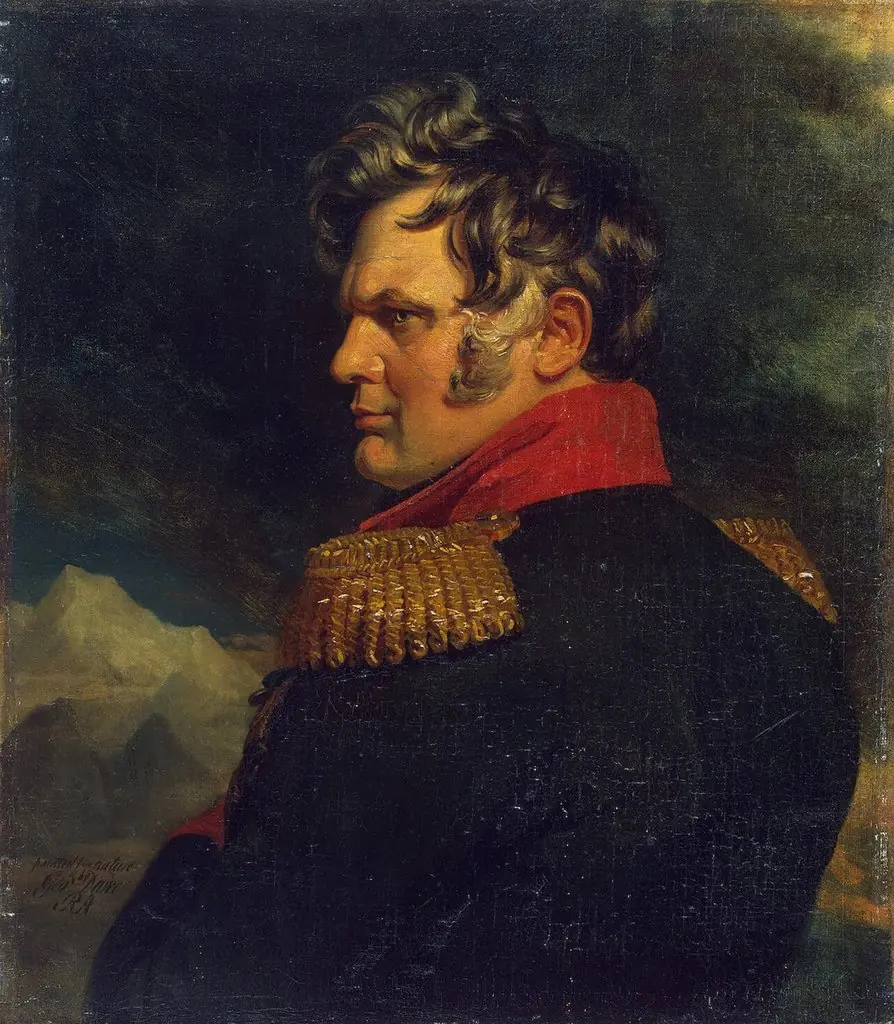 Portrait of Alexei P. Yermolov (1772/77-1861)
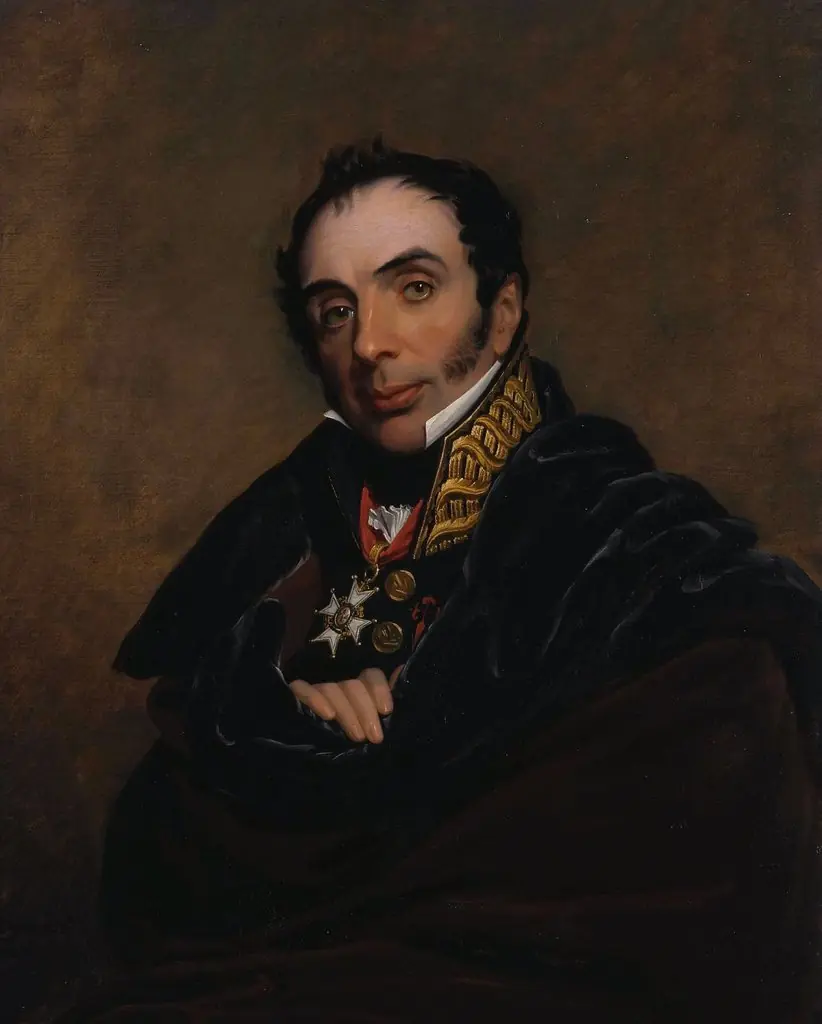 Portrait of Miguel Ricardo de Alava
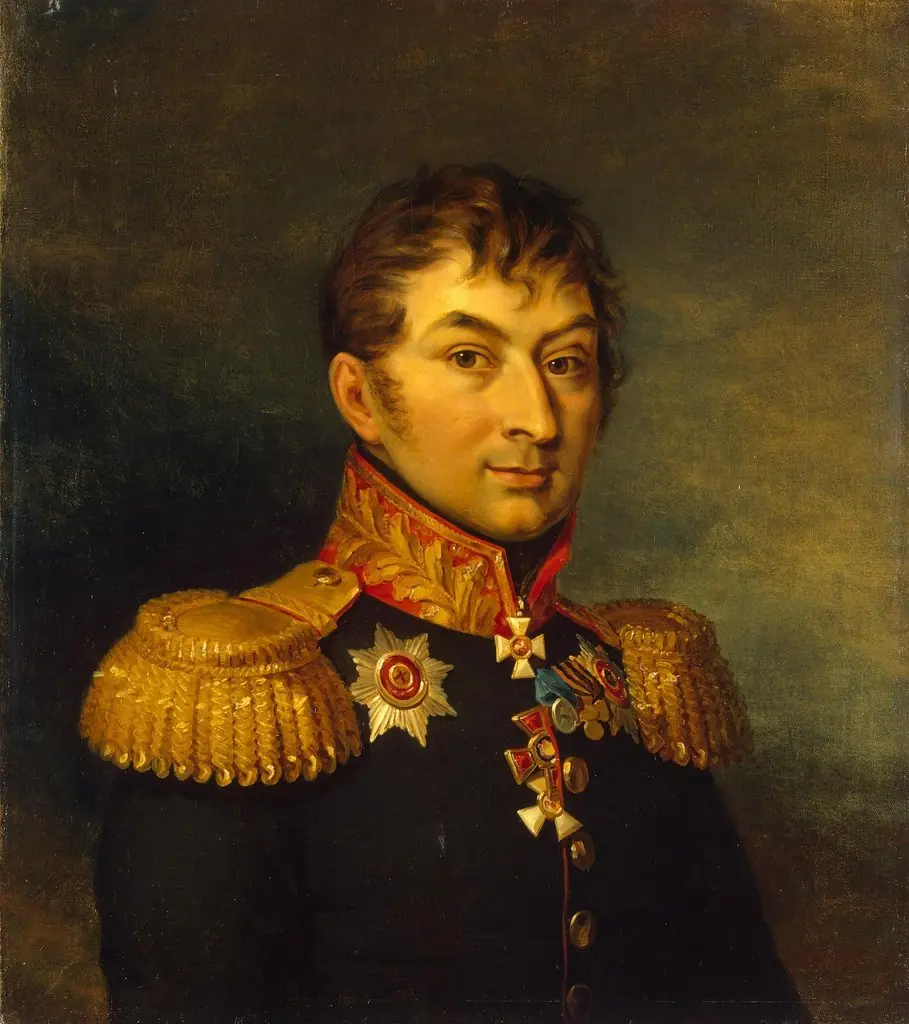 Portrait of Ivan D. Panchulidzev (1759-1815) (1st)
 Portrait of Karl V. Budberg (1774-1829)