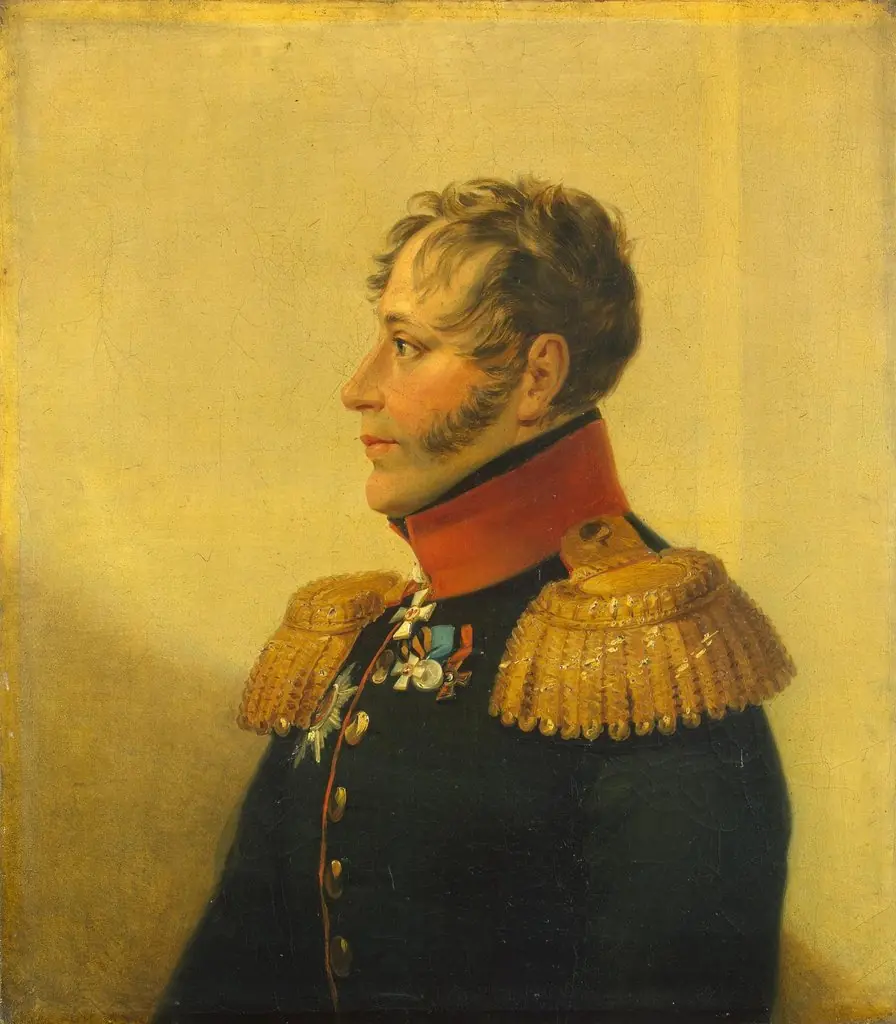
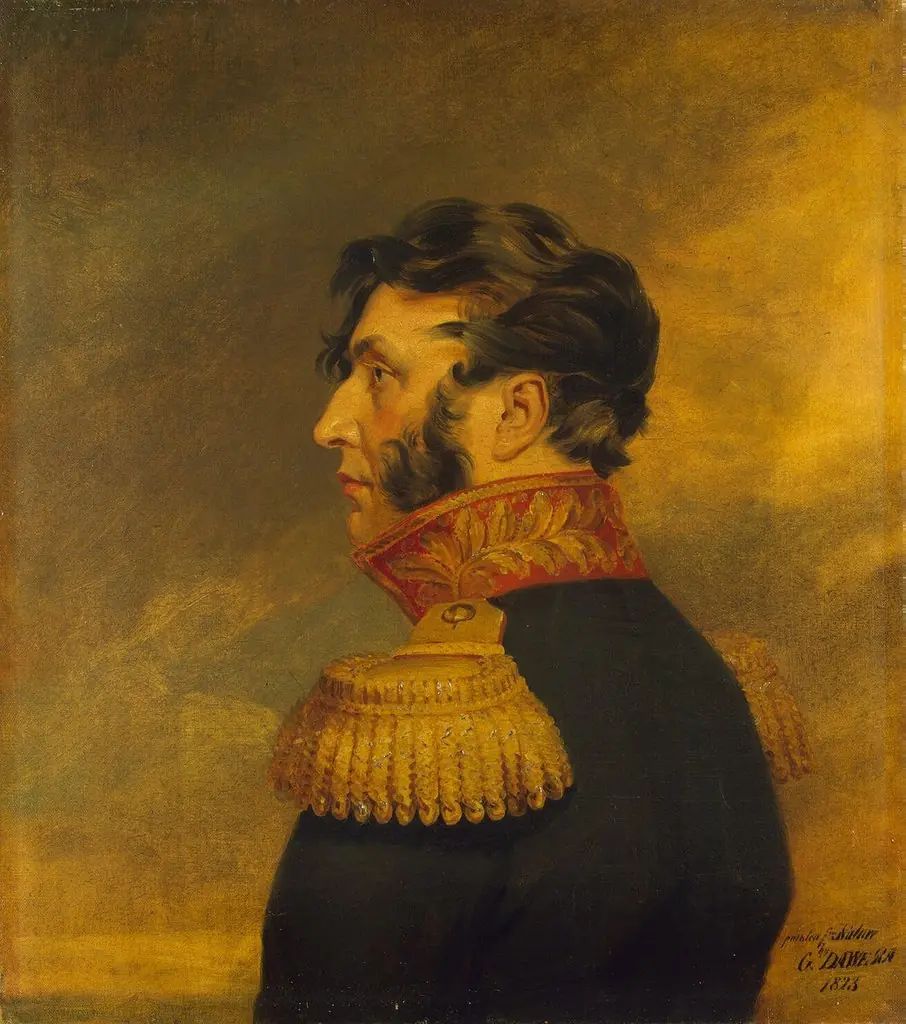
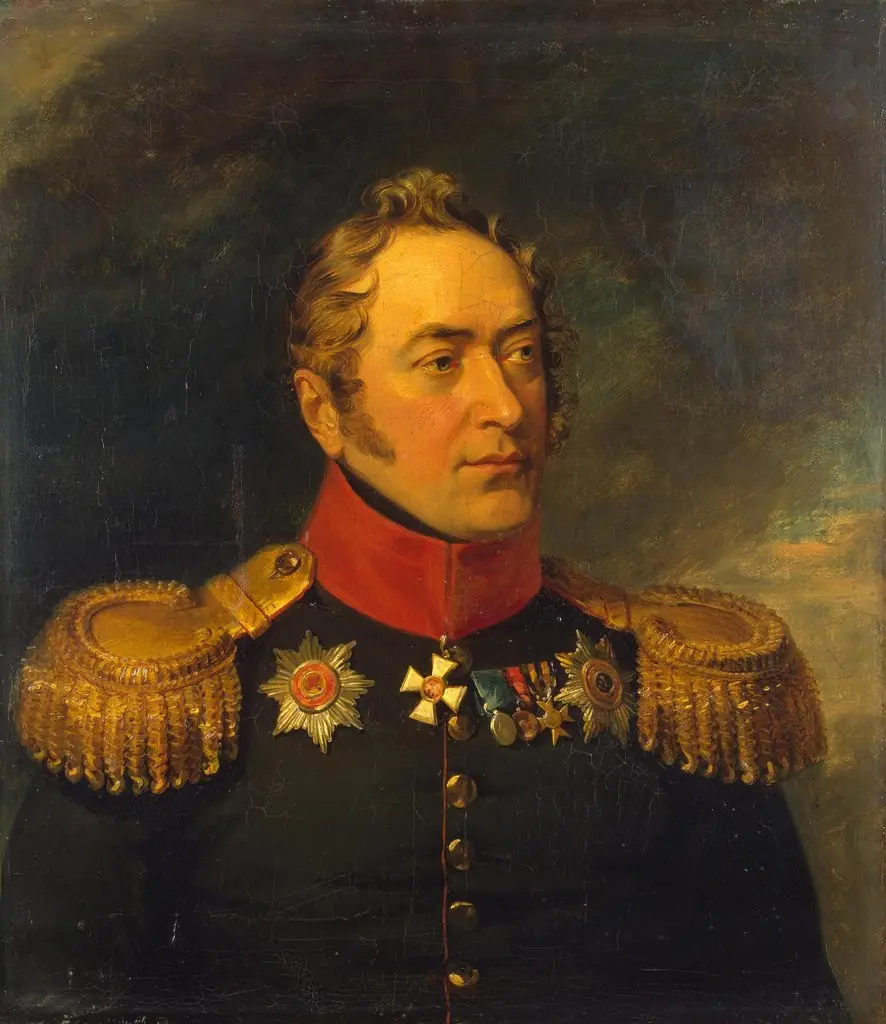
Artwork
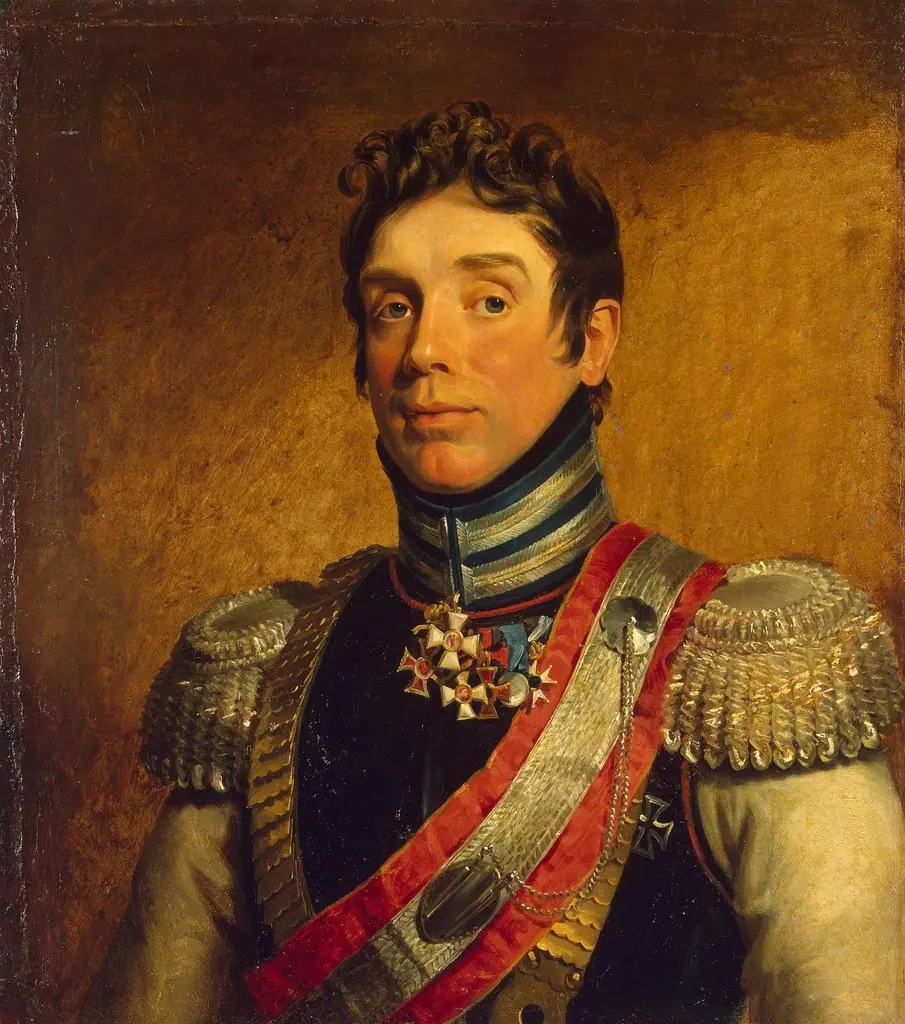
Portrait of Dmitry Ye. Kuteynikov (1766-1844)
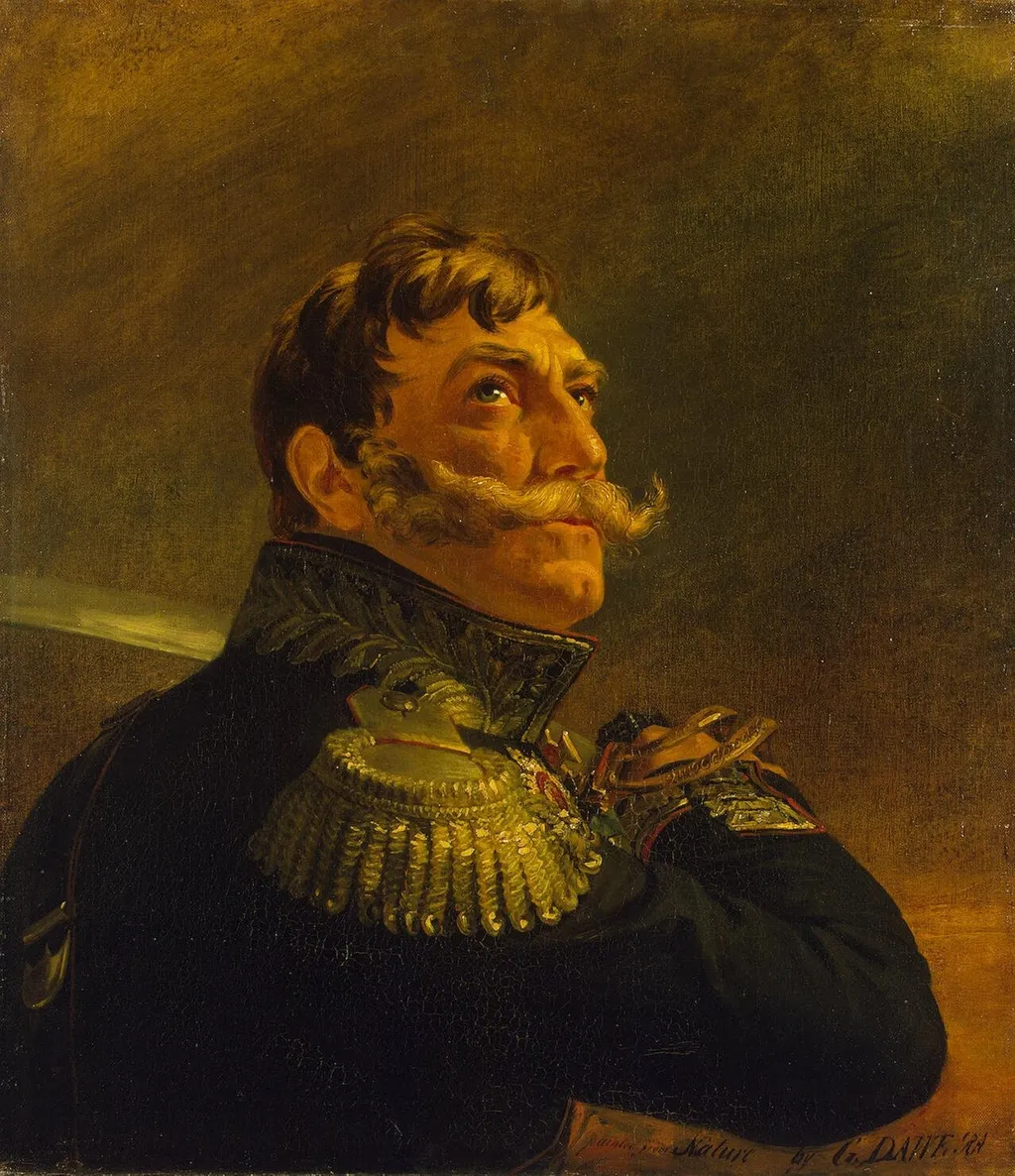
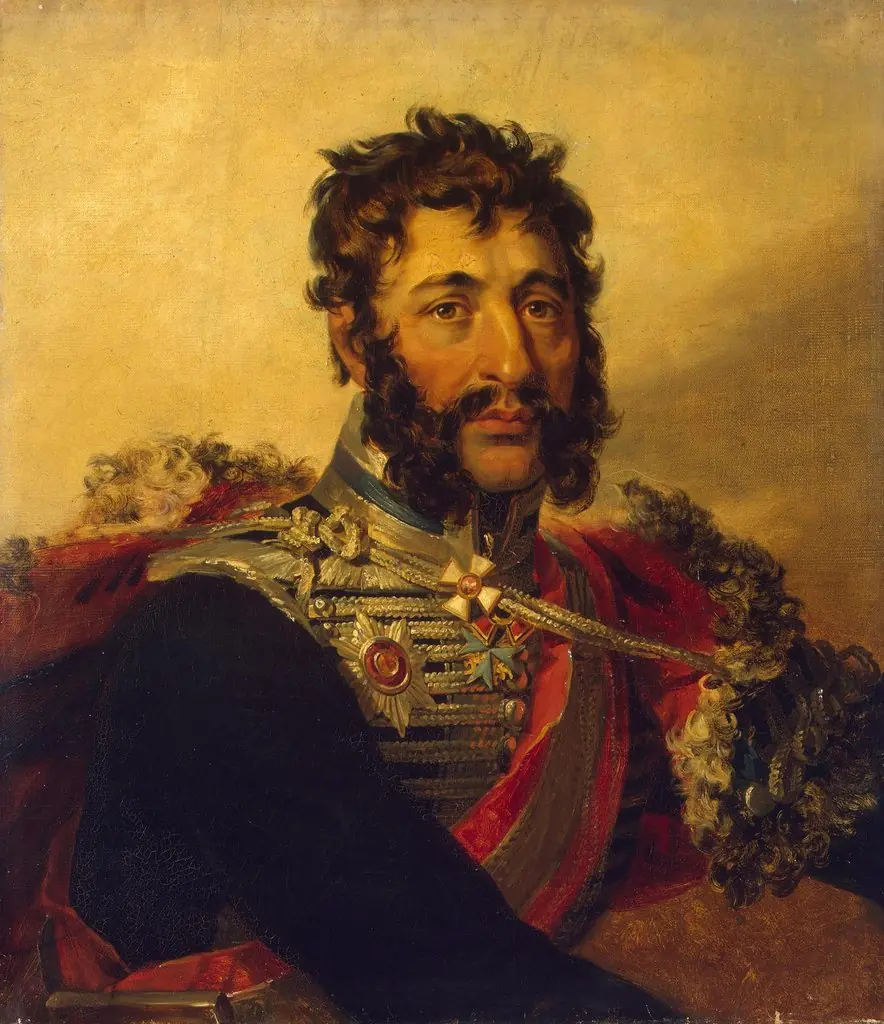
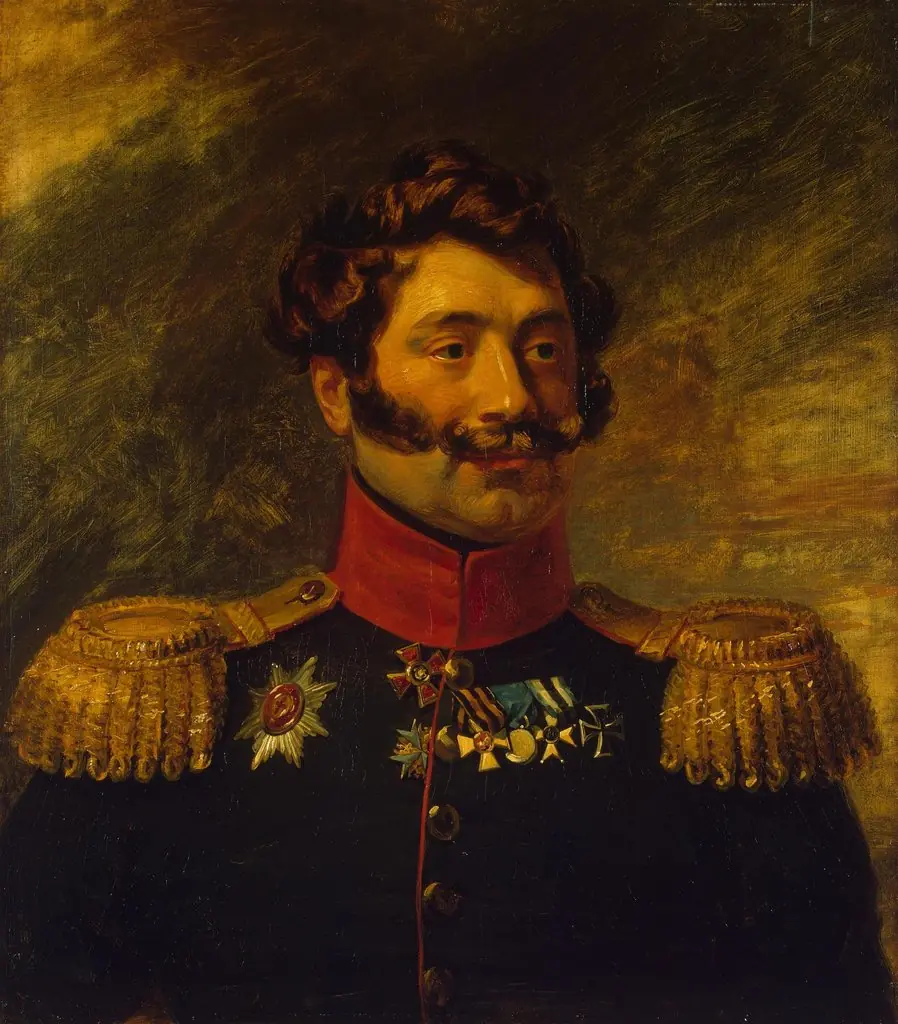
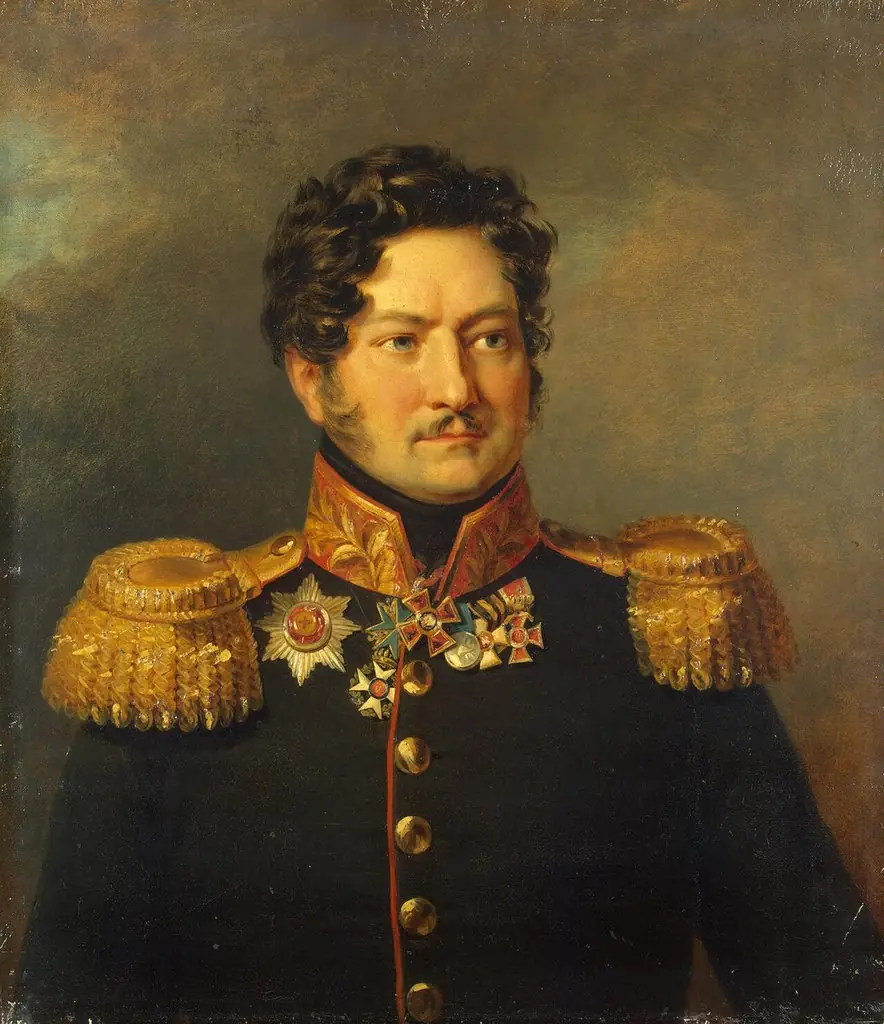
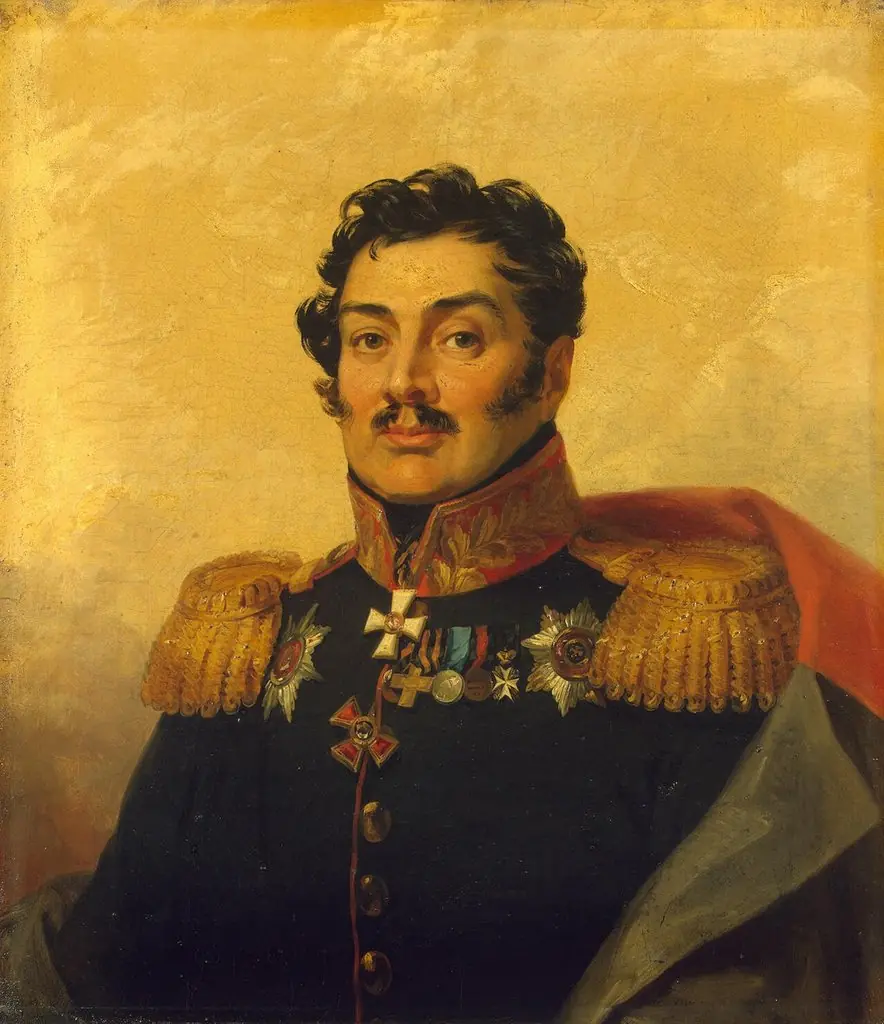
Portrait of Dmitry Ye. Kuteynikov (1766-1844) is an oil painting by George Dawe. It dates from 1822 and is held in the collection of the Hermitage Museum.
About this work
Overview
Painted in 1822 by the English artist George Dawe, this oil portrait depicts Dmitry Ye. Kuteynikov, a Russian military officer. Dawe, who settled in Saint Petersburg in 1819, was commissioned to portray prominent figures of the Russian Empire. The work is part of the State Hermitage Museum’s collection, where it remains as one of many official portraits documenting the era’s leadership class.
Subject & Meaning
Dmitry Kuteynikov served during the Napoleonic Wars, a period of intense national upheaval in Russia. The portrait captures him not as a battlefield commander but as a dignified officer, his posture and attire signaling rank and composure. His gaze, directed away from the viewer, suggests introspection or duty-bound focus, aligning with the era’s ideal of restrained military virtue.
Technique & Style
Dawe employed precise brushwork to render the textures of Kuteynikov’s uniform, particularly the stiff, gold-trimmed collar that catches light like metal.
Dawe employed precise brushwork to render the textures of Kuteynikov’s uniform, particularly the stiff, gold-trimmed collar that catches light like metal. The dark background isolates the figure, emphasizing facial detail and the sheen of fabric. Subtle chiaroscuro models the face, creating depth without theatricality. The style reflects academic portraiture, prioritizing clarity and social presence over emotional expression.
History & Provenance
Commissioned during Dawe’s tenure in Saint Petersburg, the portrait was likely created as part of a broader project to document Russian military leaders. It entered the Hermitage’s holdings shortly after completion, preserved among other state portraits. Dawe’s reputation among Russian elites ensured his works were systematically collected by imperial institutions.
Context
In the 1820s, Russia’s imperial court sought to visually consolidate its post-Napoleonic identity. Dawe, as a foreign artist trusted by the monarchy, produced hundreds of portraits of officers who had served in the war. These images functioned as both personal commemoration and state propaganda, reinforcing loyalty and hierarchy through formal representation.
Legacy
Dawe’s portraits, including this one, remain key visual records of early 19th-century Russian military aristocracy. Though his style was later deemed conservative, his systematic documentation of officers provided a lasting archive. The portrait of Kuteynikov continues to inform historical understanding of how rank, identity, and duty were visually constructed in imperial Russia.
Artist & collection
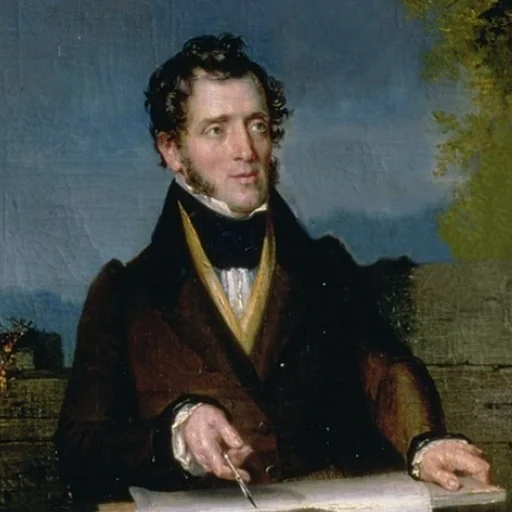
Artist
George Dawe (6 February 1781 – 15 October 1829) was an English portraitist who painted 329 portraits of Russian generals active during Napoleon's invasion of Russia for the Military Gallery of the Winter Palace.

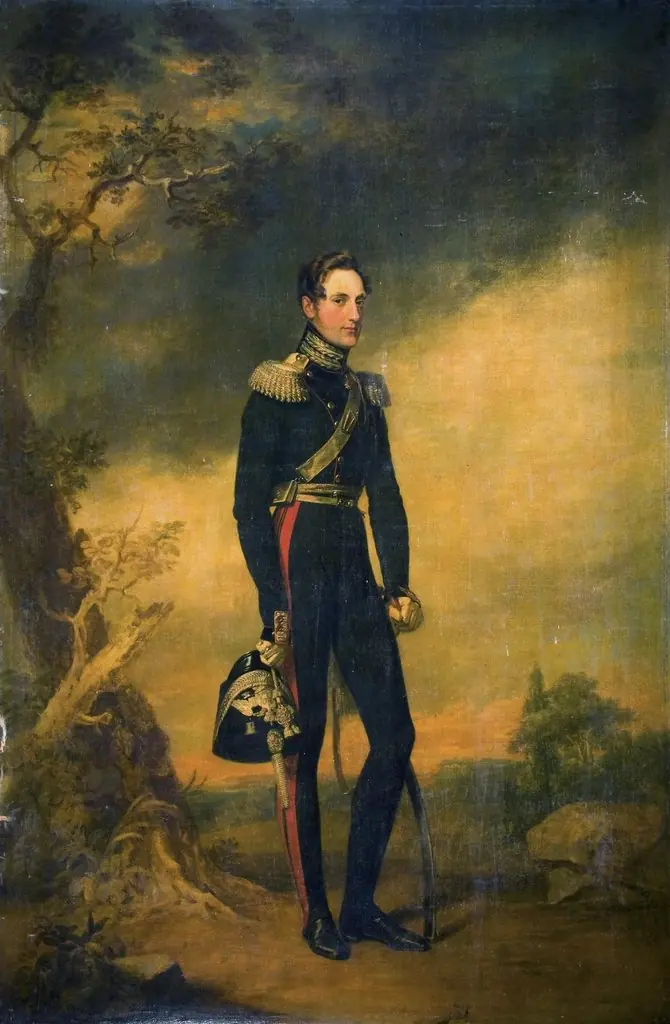 Portrait of Grand Duke Nikolai Pavlovich
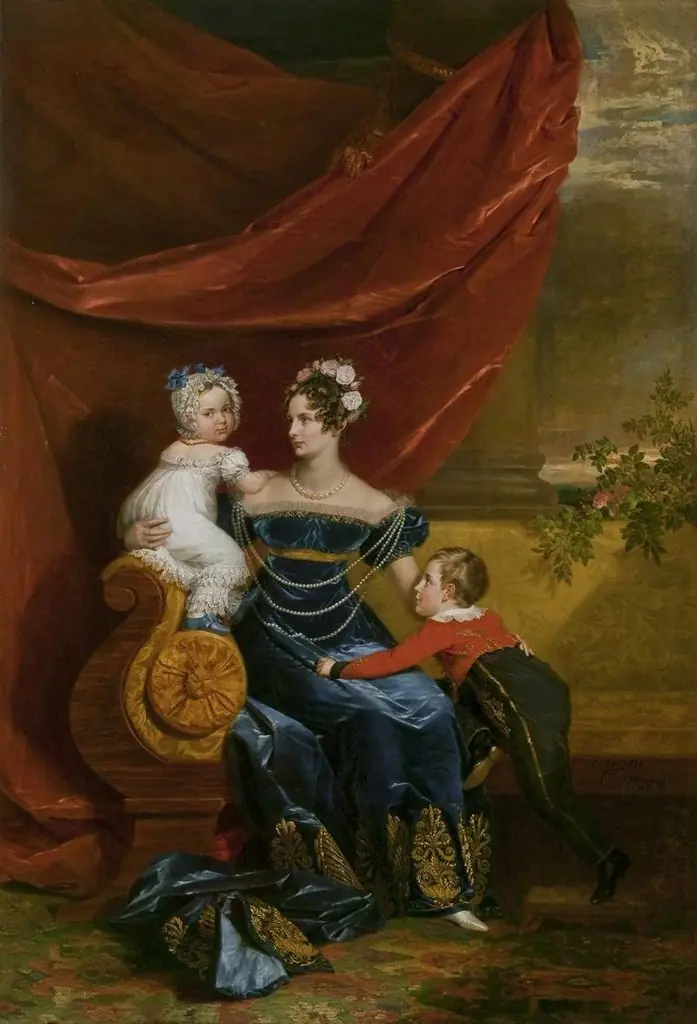 Portrait of Grand Duchess Alexandra Fiodorovna with Children
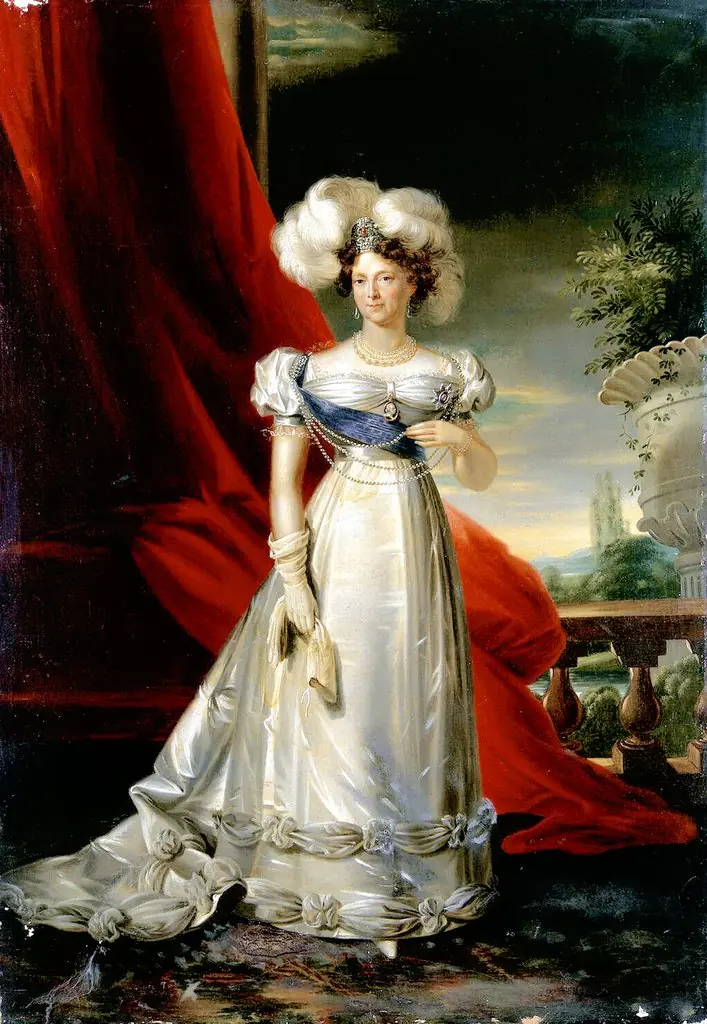 Portrait of the Empress Dowager Maria Feodorovna
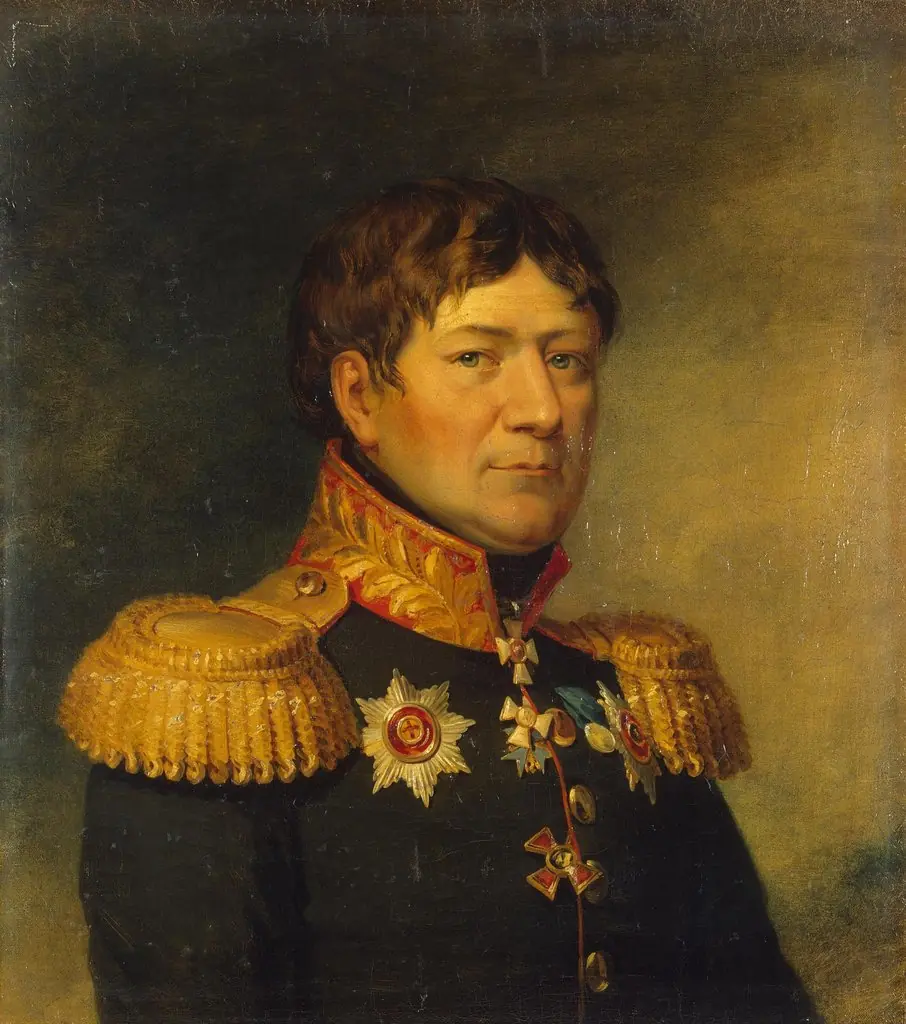 Portrait of Yegor M. Pillar (1767-1830)
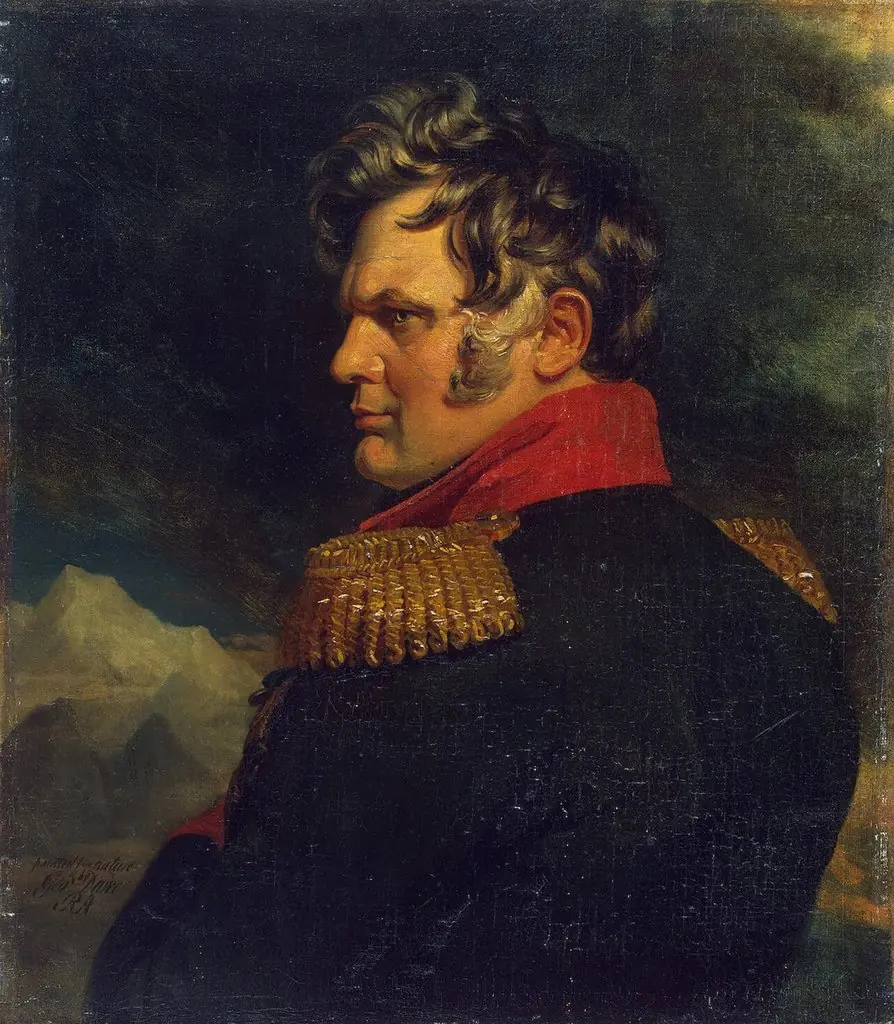 Portrait of Alexei P. Yermolov (1772/77-1861)
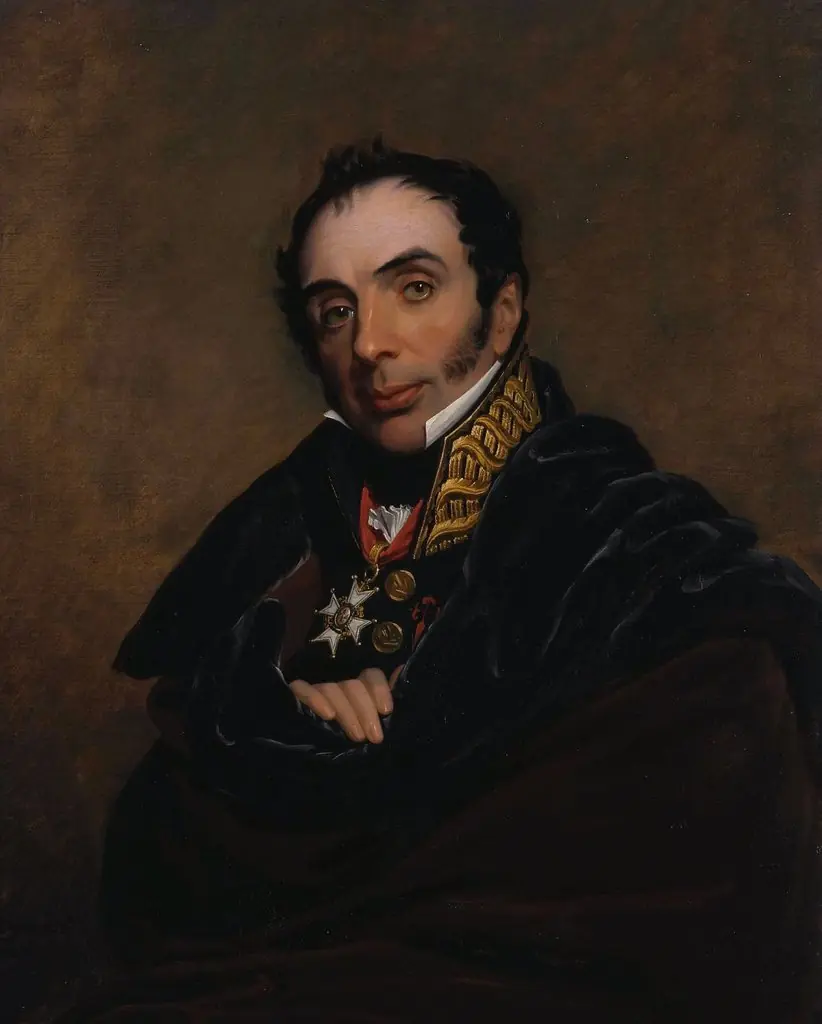 Portrait of Miguel Ricardo de Alava
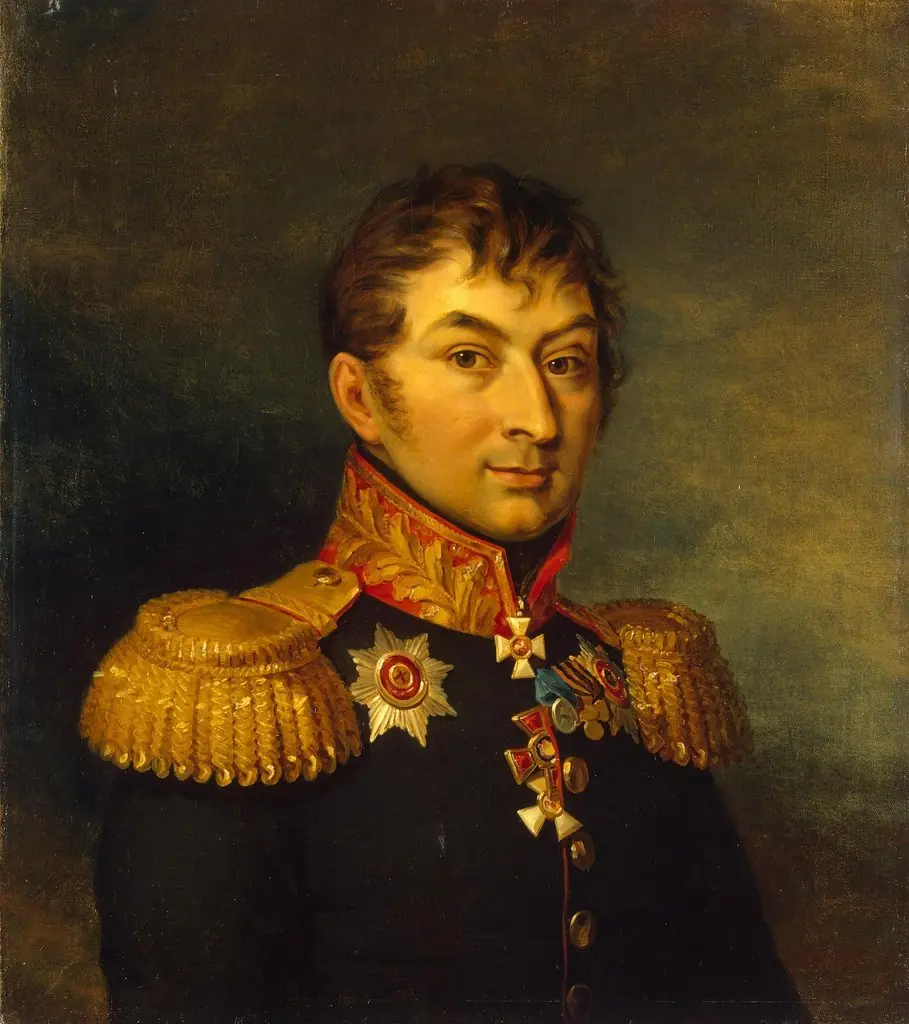 Portrait of Ivan D. Panchulidzev (1759-1815) (1st)
 Portrait of Karl V. Budberg (1774-1829)