Artwork
Portrait of Eugene, Prince of Wurttemberg (1787/88-1857)
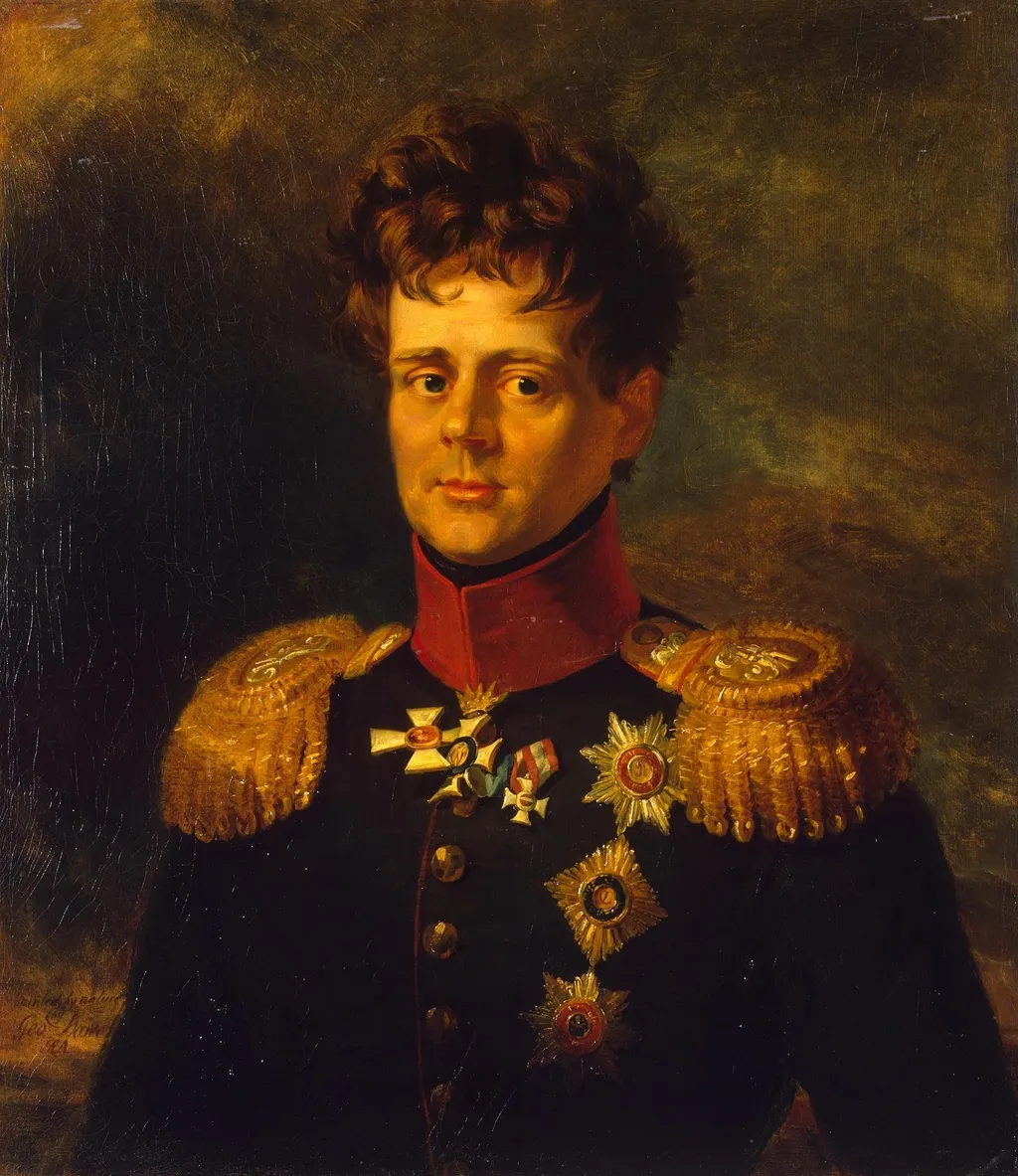
Portrait of Eugene, Prince of Wurttemberg (1787/88-1857) is an oil painting by George Dawe. It dates from 1825 and is held in the collection of the Hermitage Museum.
About this work
Overview
Gold buttons, a prominent star‑shaped medal, and red‑trimmed cuffs dominate the surface, drawing attention to his rank and the ceremonial nature of the work.
George Dawe’s oil portrait, executed in 1825, presents Duke Eugen of Württemberg in full military regalia. The composition isolates the sitter against a dark, unadorned backdrop, emphasizing his stern gaze, curled hair, and the rich textures of his uniform. Gold buttons, a prominent star‑shaped medal, and red‑trimmed cuffs dominate the surface, drawing attention to his rank and the ceremonial nature of the work.
Subject & Meaning
The portrait captures Eugen, a Württemberg duke who served in the Russian military during the post‑Napoleonic period. His decorated attire and solemn expression convey authority and loyalty, reflecting the close ties between German aristocracy and the Russian Empire after the 1812 campaign. The emphasis on medals underscores his service and the prestige associated with his position.
Technique & Style
Dawe employs a restrained chiaroscuro, allowing light to model the duke’s face and the glossy fabric while the background recedes into shadow. The meticulous rendering of metallic surfaces and the vivid red of the collar contrast with the subdued tones, showcasing the artist’s skill in depicting texture and material. The overall effect is a realistic yet formal representation typical of early‑19th‑century portraiture.
History & Provenance
Created while Dawe was active in Saint Petersburg, the painting entered the State Hermitage Museum’s collection, where it remains on view. Dawe’s reputation in Russia was bolstered by his extensive commission for the Winter Palace’s Military Gallery, where he produced over three hundred portraits of Russian generals, situating this work within his broader output for imperial patrons.
Context
The portrait belongs to a period when the Russian court frequently honored foreign nobles who served its military. Following the defeat of Napoleon, many German officers, including Eugen, were integrated into the Russian hierarchy. Dawe’s work reflects this cross‑cultural patronage, documenting the visual language of rank and allegiance in the early 1800s.
Own this work as a print
Artist & collection
Artist
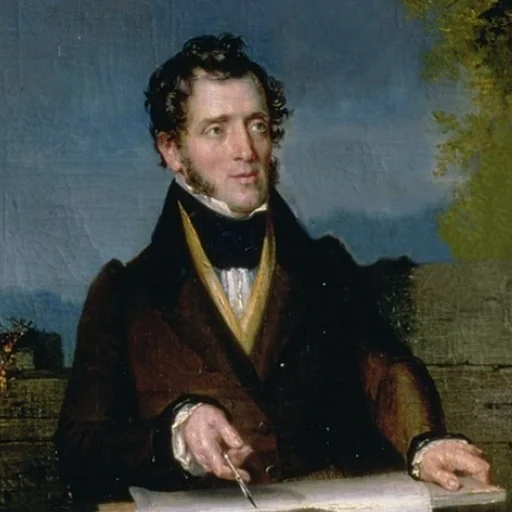
George Dawe (6 February 1781 – 15 October 1829) was an English portraitist who painted 329 portraits of Russian generals active during Napoleon's invasion of Russia for the Military Gallery of the Winter Palace.

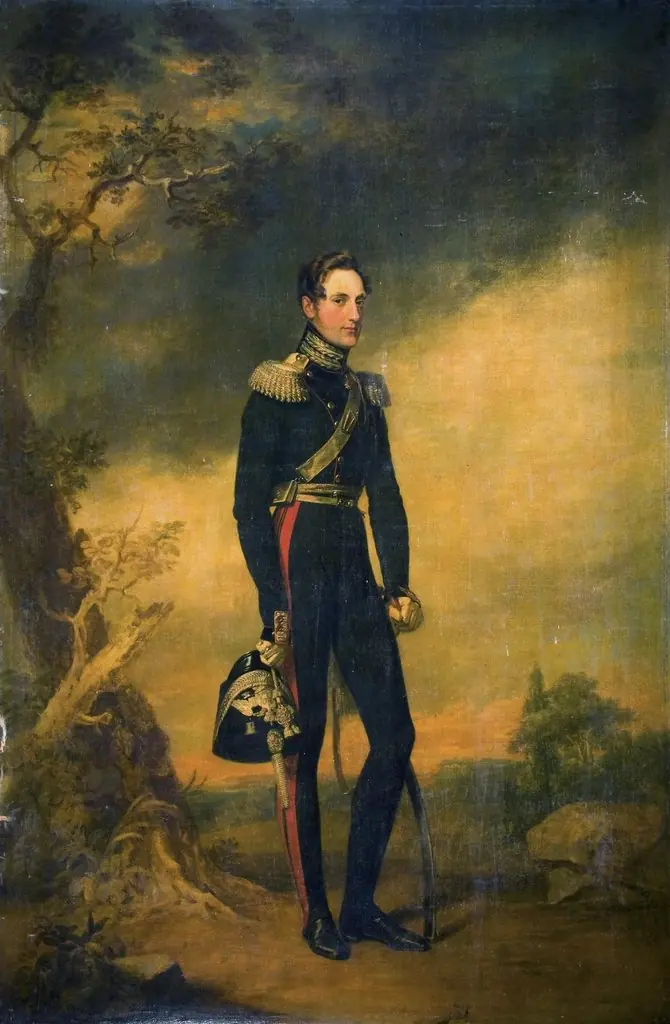 Portrait of Grand Duke Nikolai Pavlovich
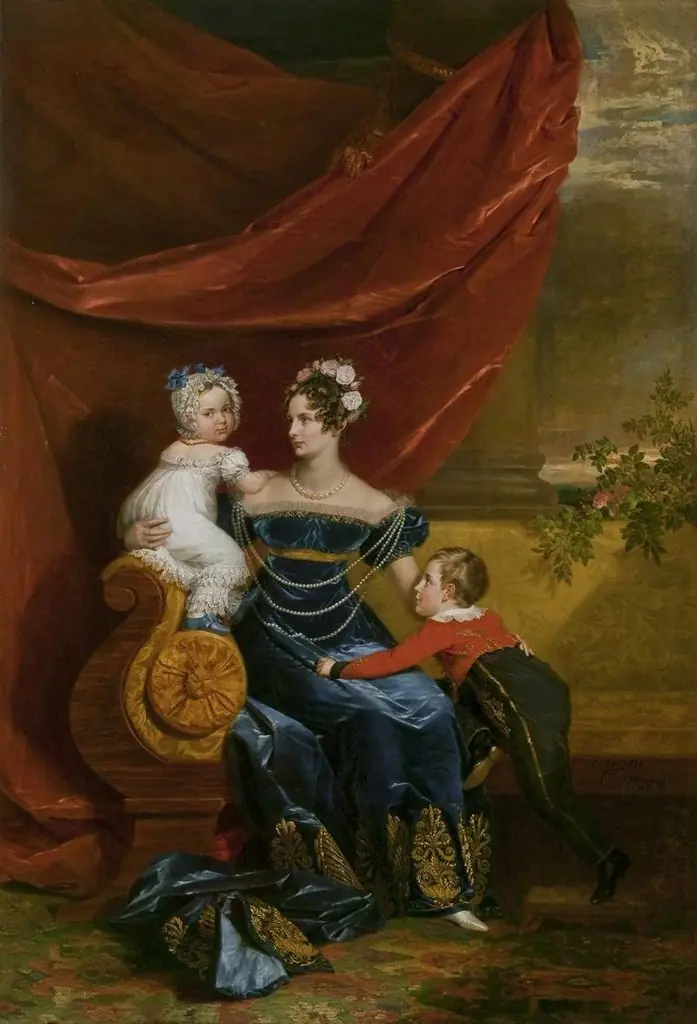 Portrait of Grand Duchess Alexandra Fiodorovna with Children
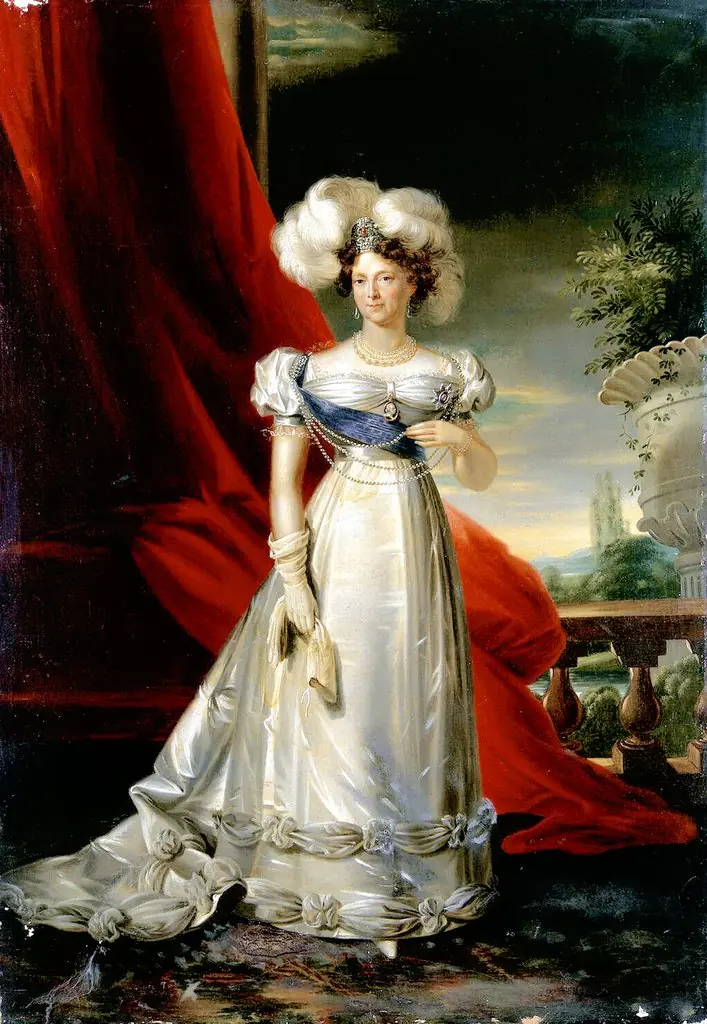 Portrait of the Empress Dowager Maria Feodorovna
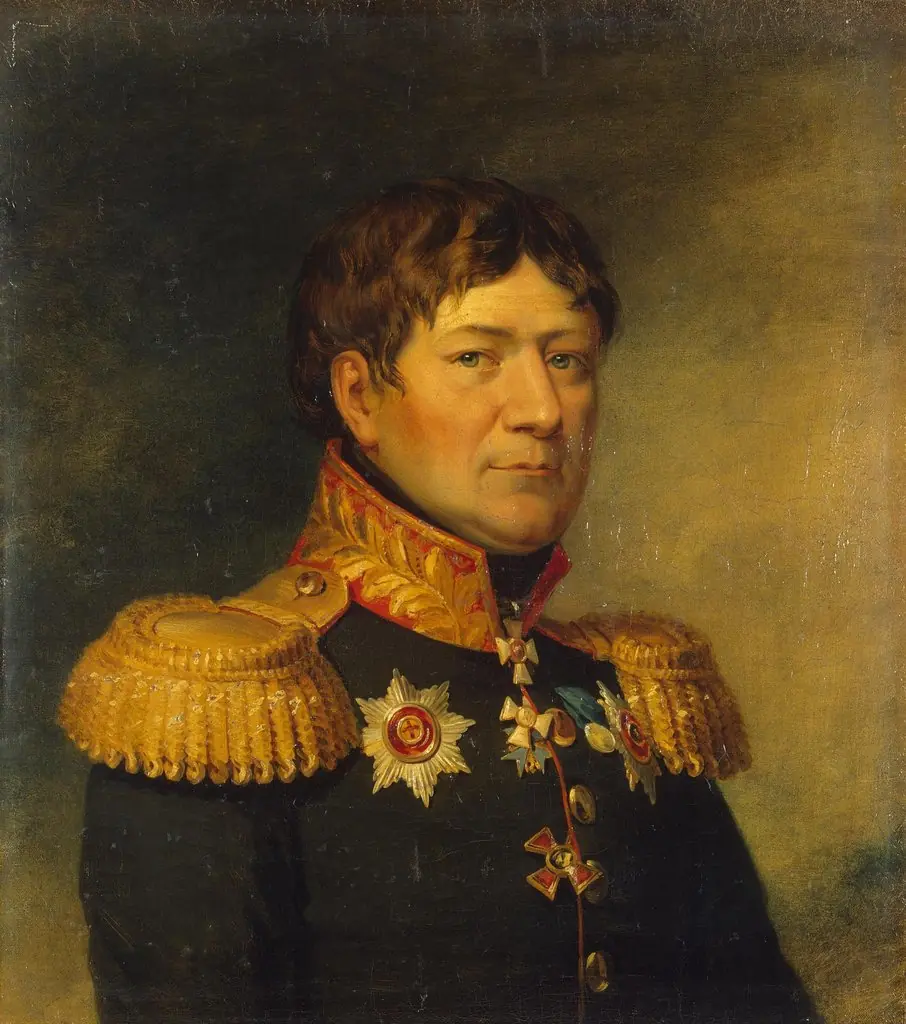 Portrait of Yegor M. Pillar (1767-1830)
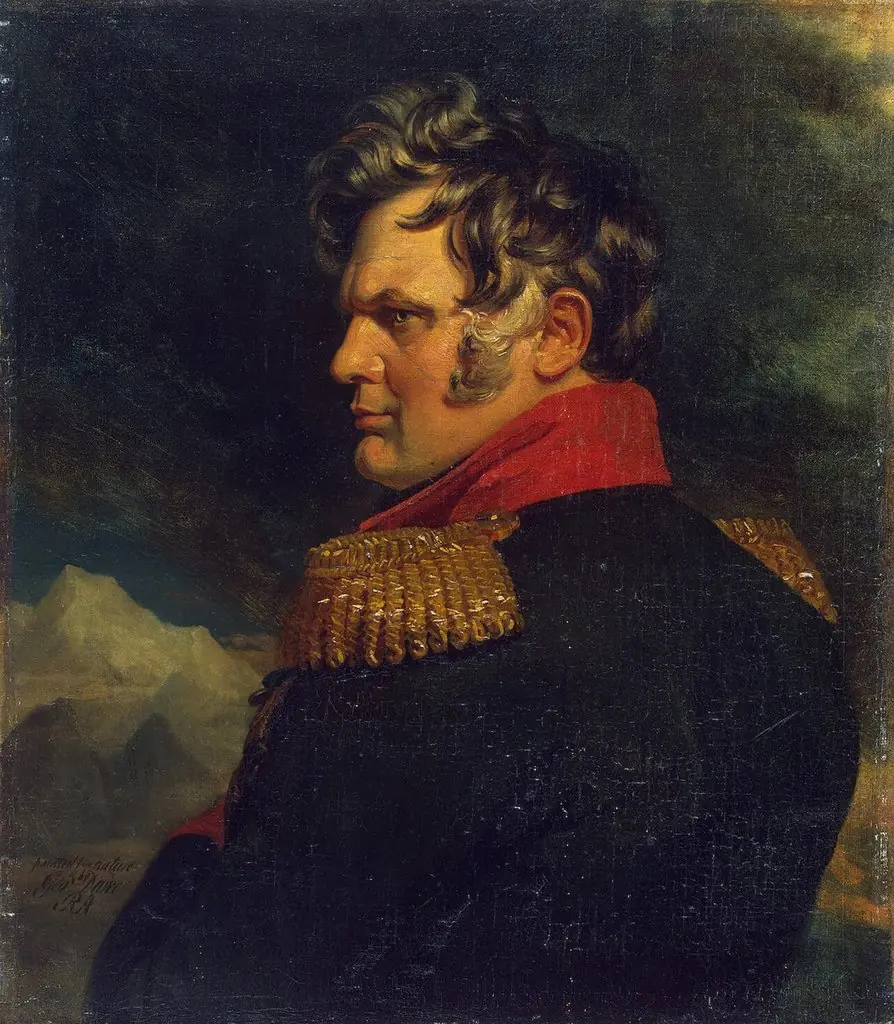 Portrait of Alexei P. Yermolov (1772/77-1861)
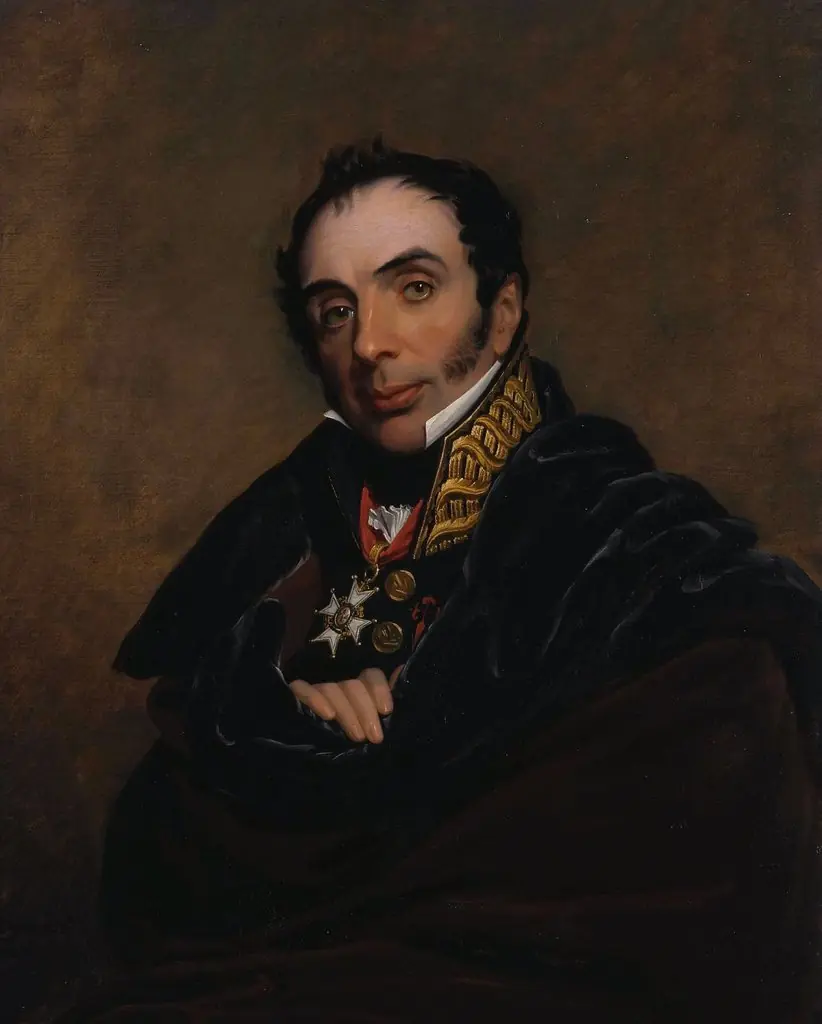 Portrait of Miguel Ricardo de Alava
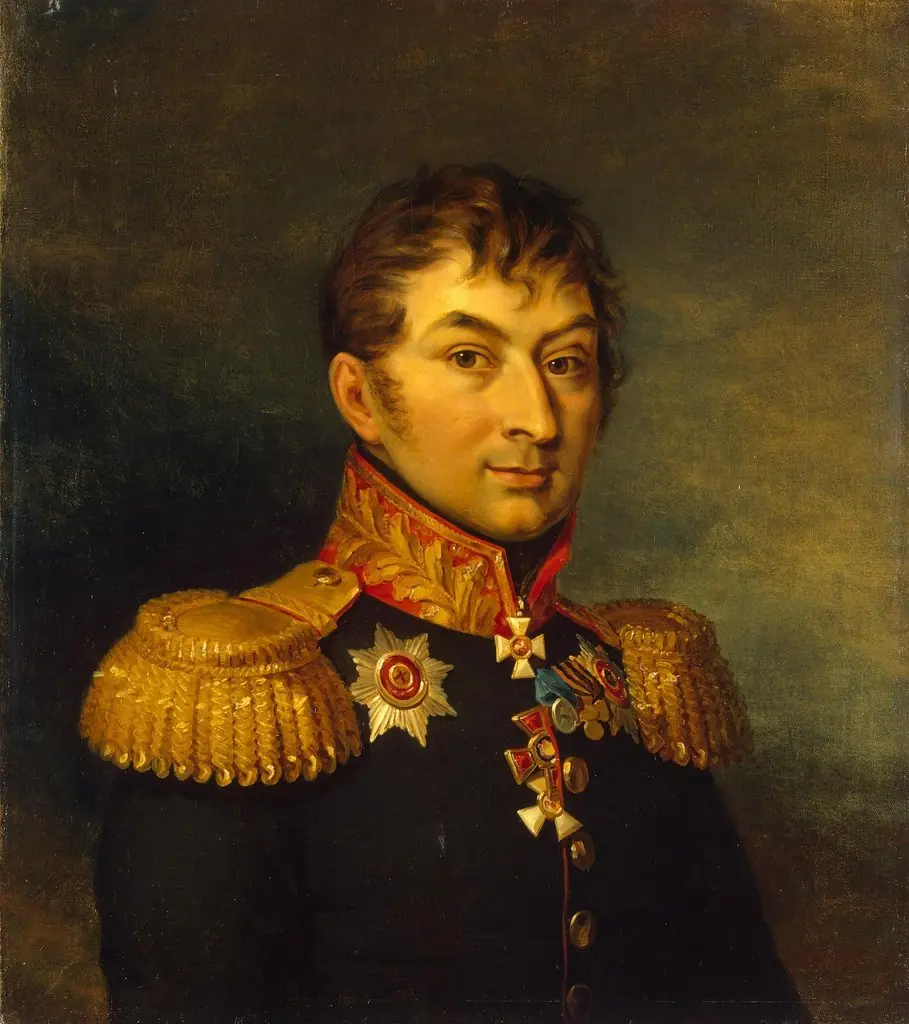 Portrait of Ivan D. Panchulidzev (1759-1815) (1st)
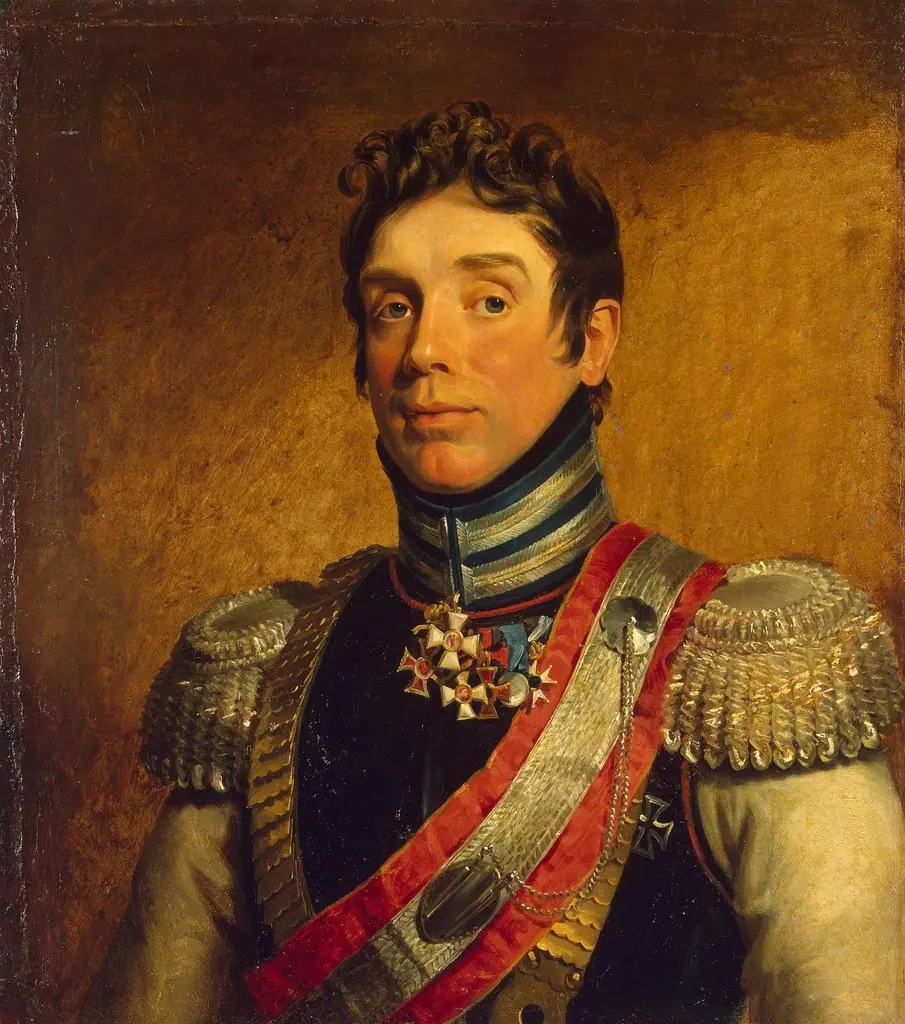 Portrait of Karl V. Budberg (1774-1829)
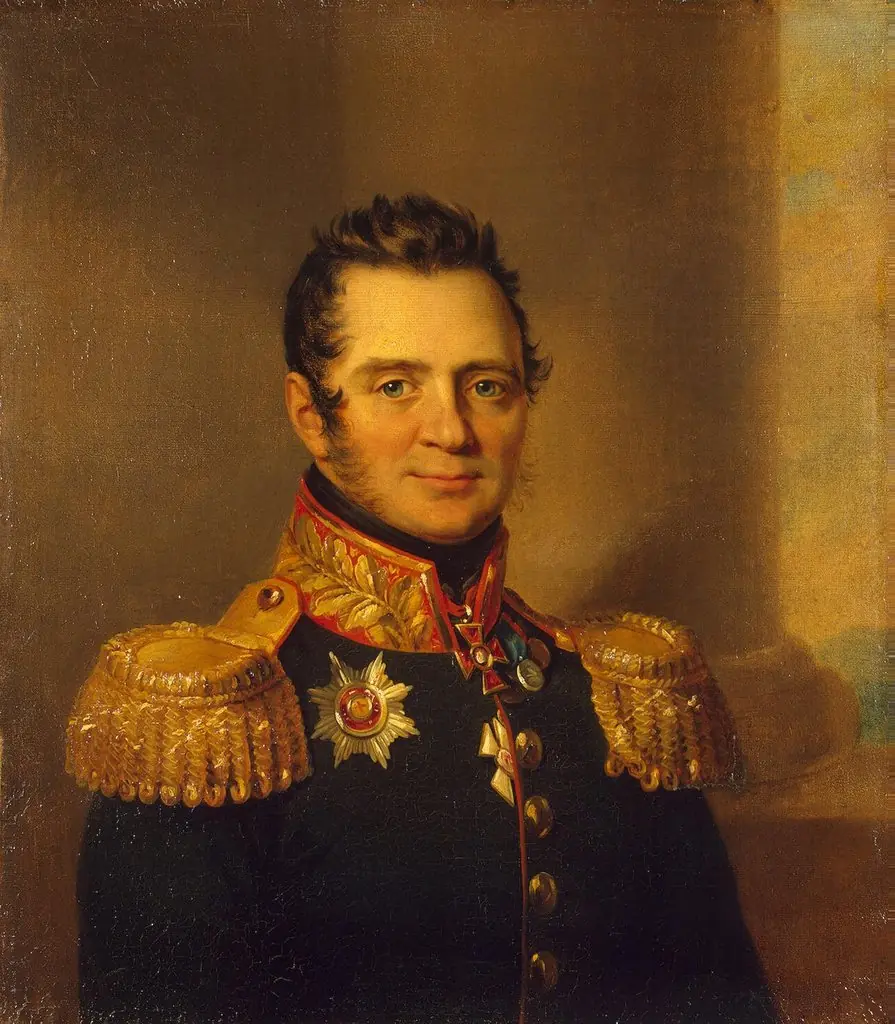 Portrait of Alexander P. Urusov (1768-1835)
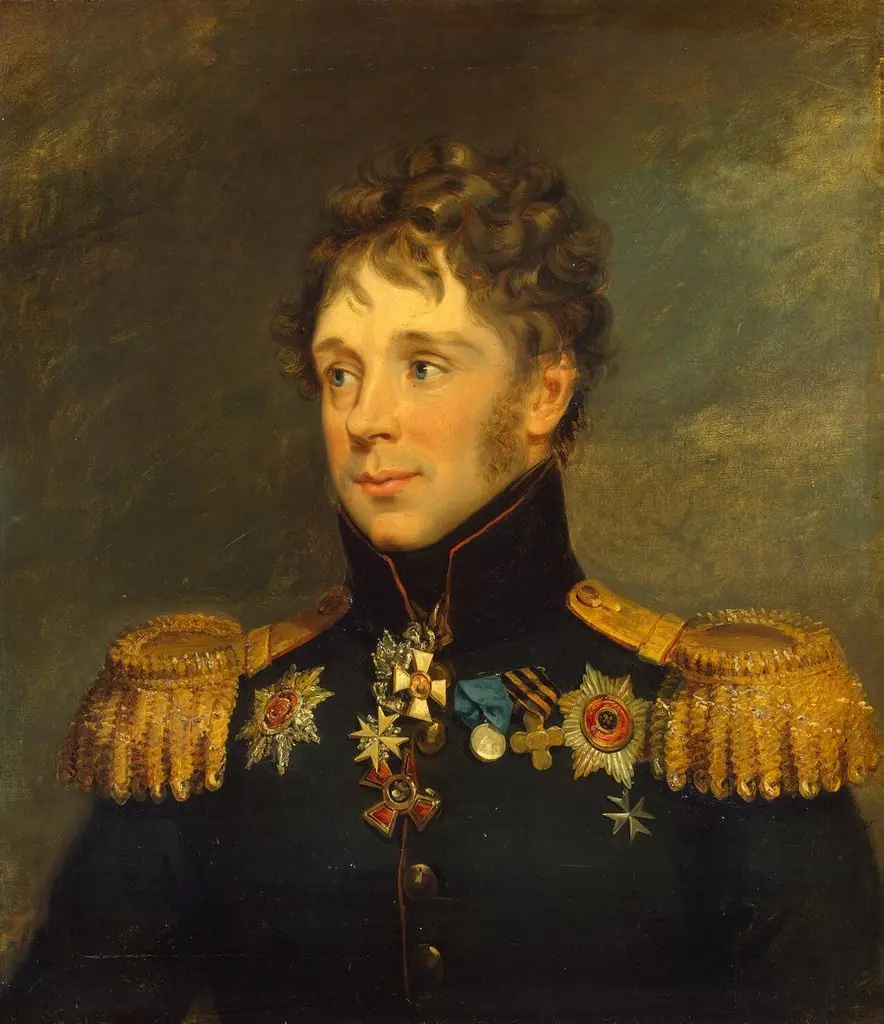 Portrait of Dmitry P. Rezvy (1762-1823)
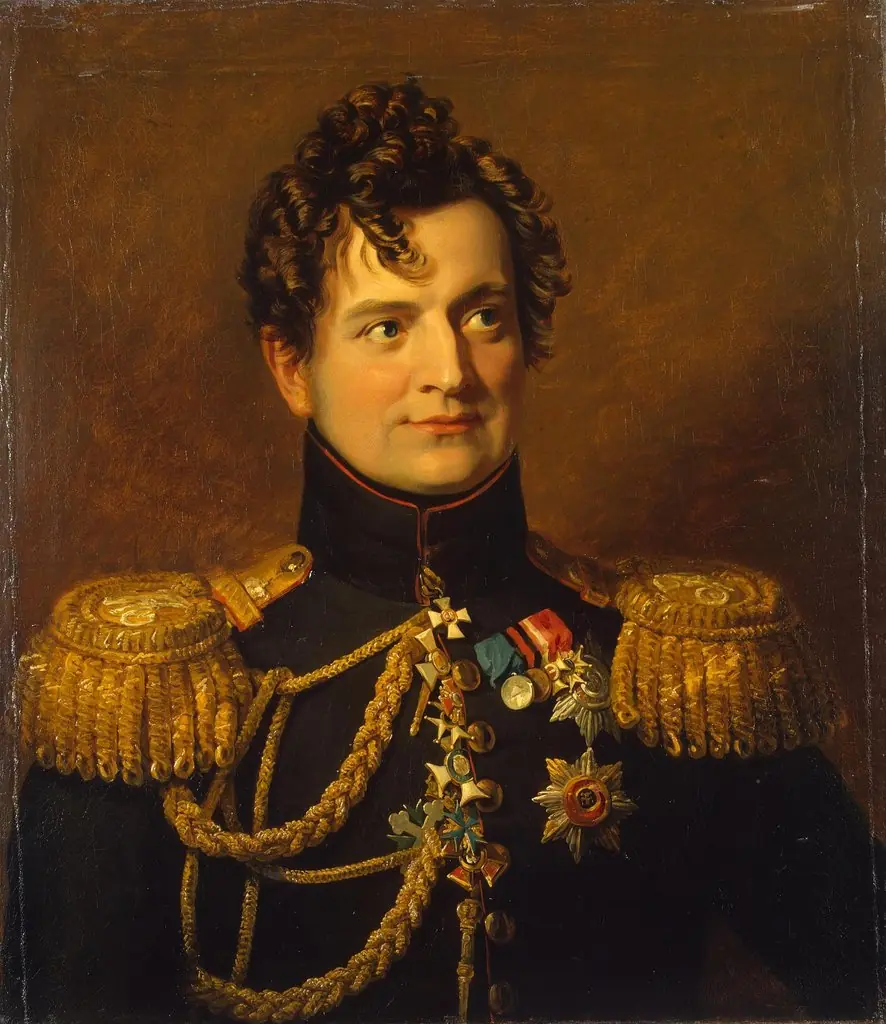 Portrait of Adam P. Ozharovsky (1776-1855)
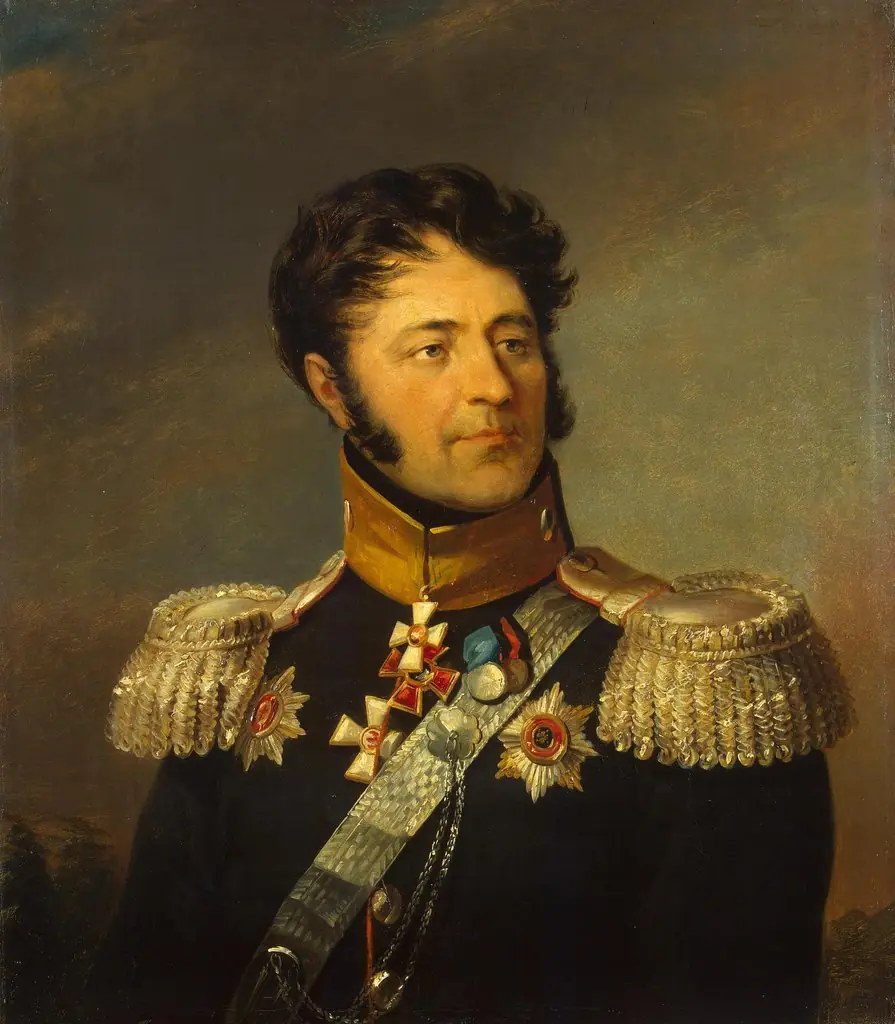 Portrait of Luka A. Denisyev (1762-1846)
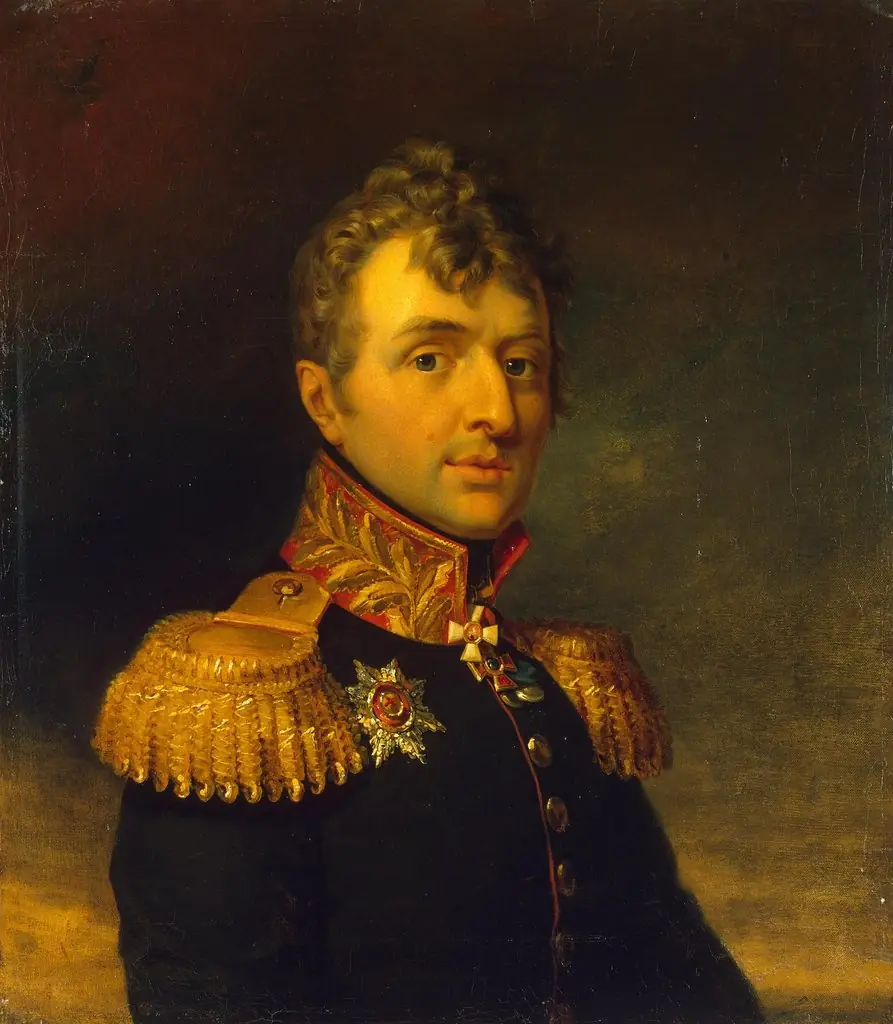 Portrait of Ivan V. Manteuffel (1771-1813)
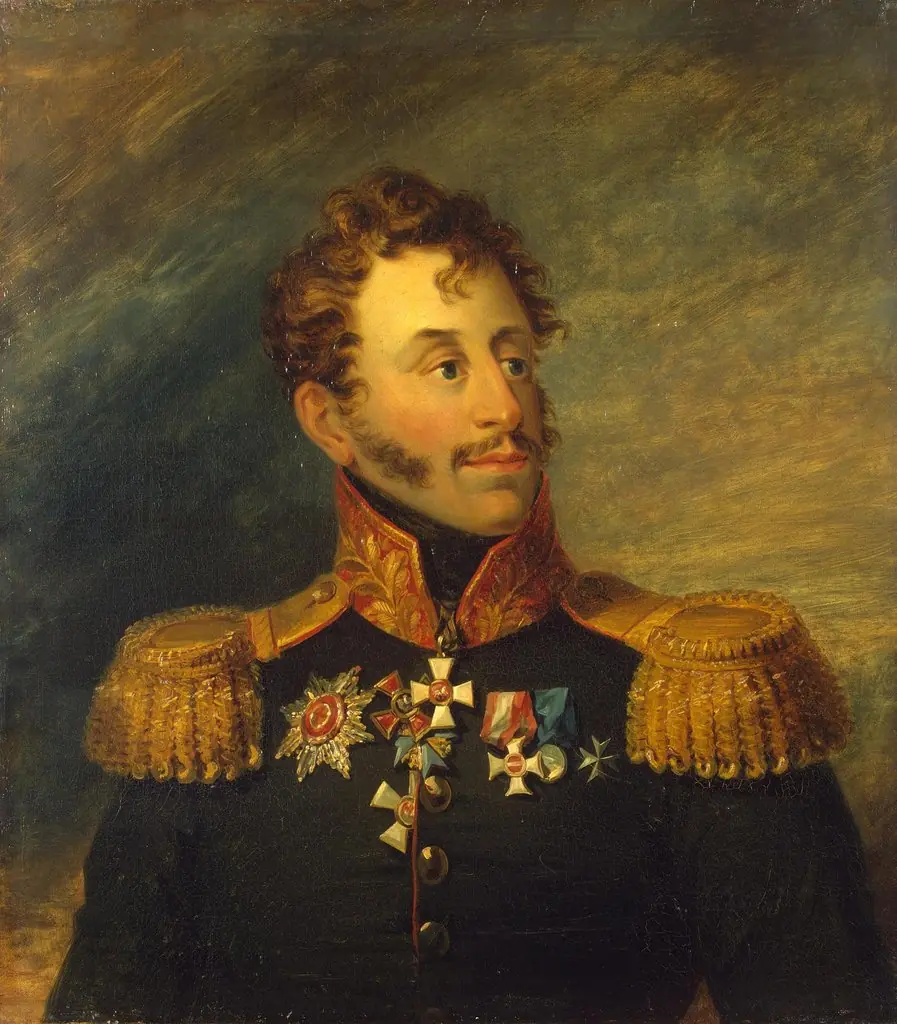 Portrait of Karl B. von Knorring (1774-1817) (3rd)
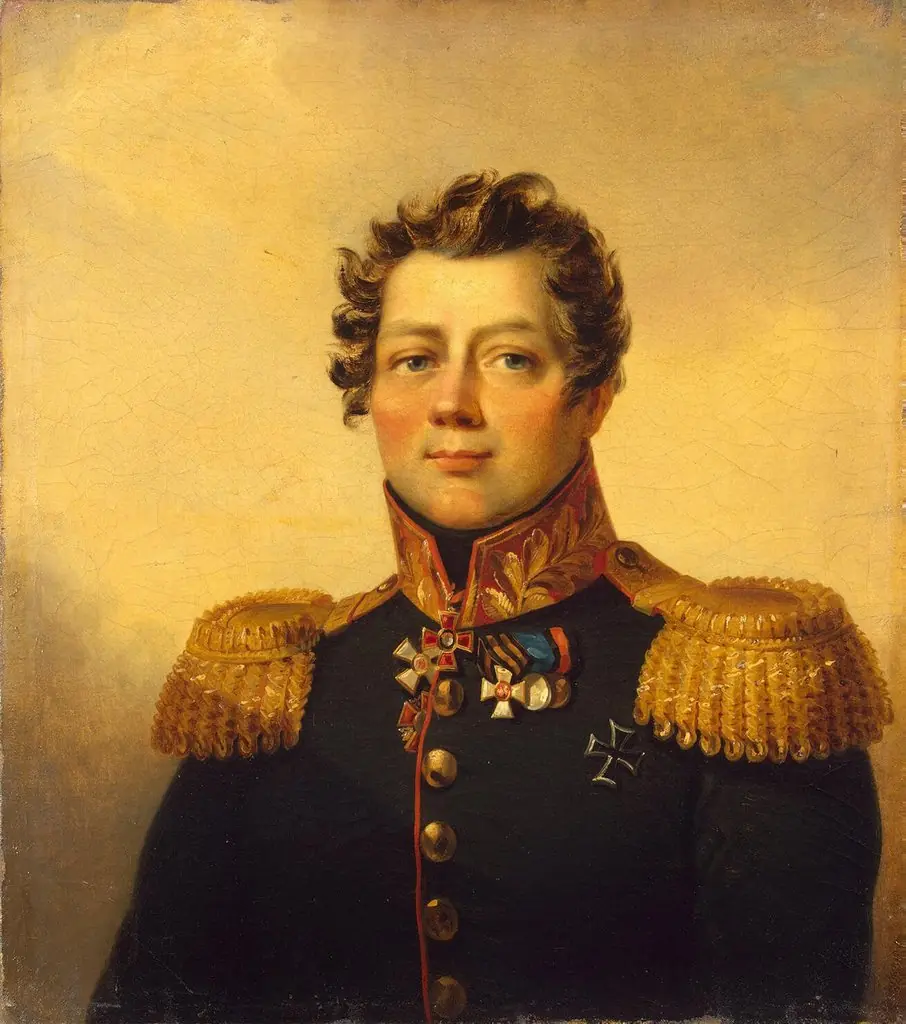 Portrait of Alexey A. Protasov (1780-1833)
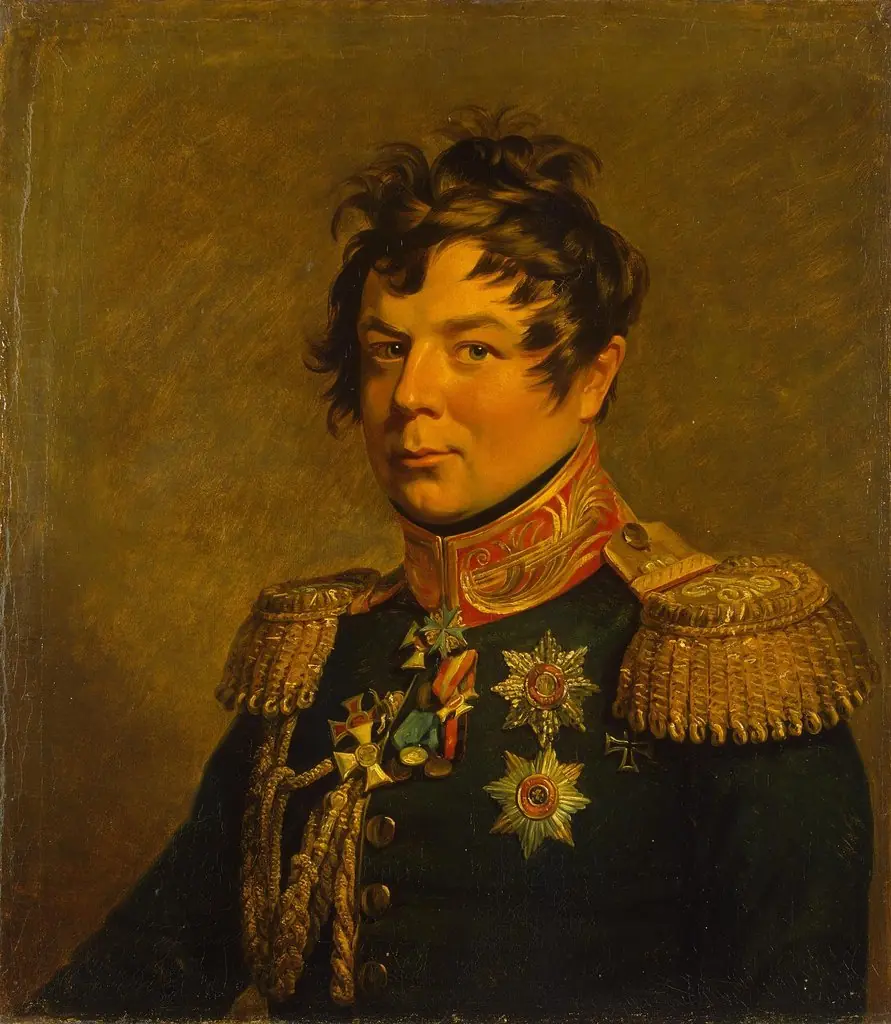 Portrait of Ivan I. Diebitsch-Zabalkansky (1785-1831)
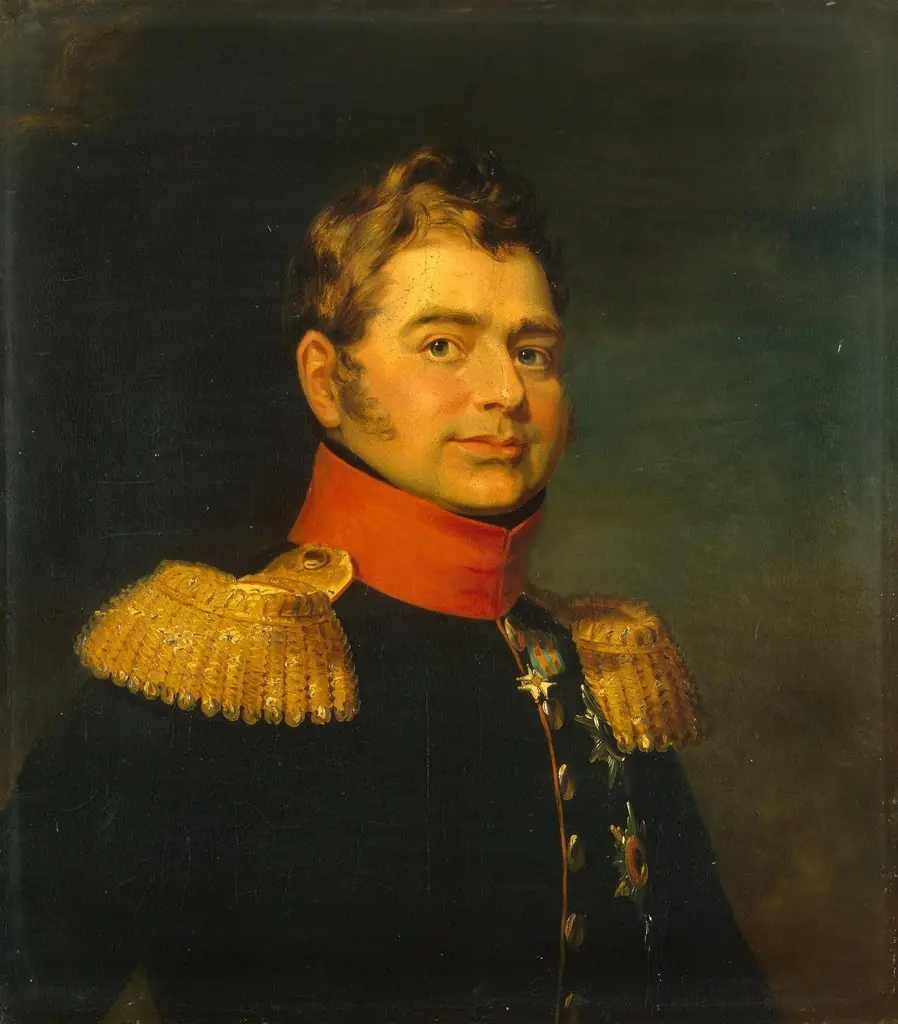 Portrait of Sergey Ya. Repninsky (1775-1818) (2nd)
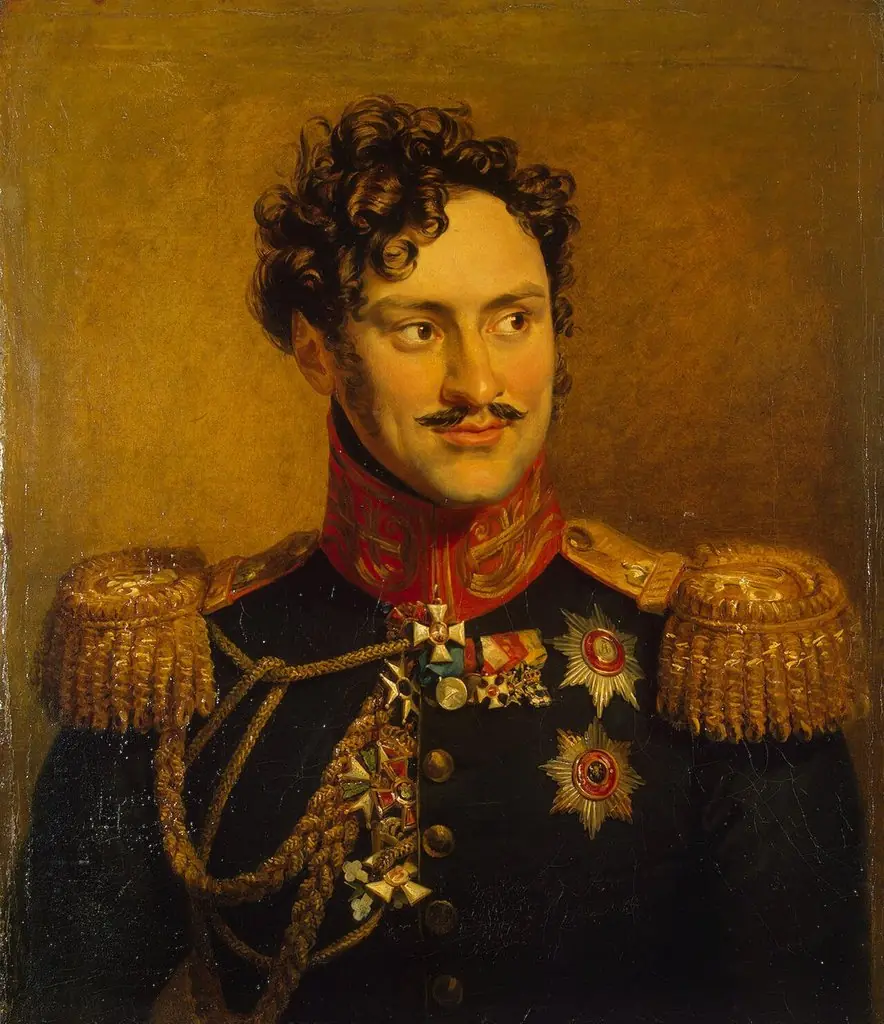 Portrait of Alexander I. Chernyshov (1785/86-1857)