Artwork
Portrait of Fyodor F. (Theodore) d'Auvray (1764/66-1846)
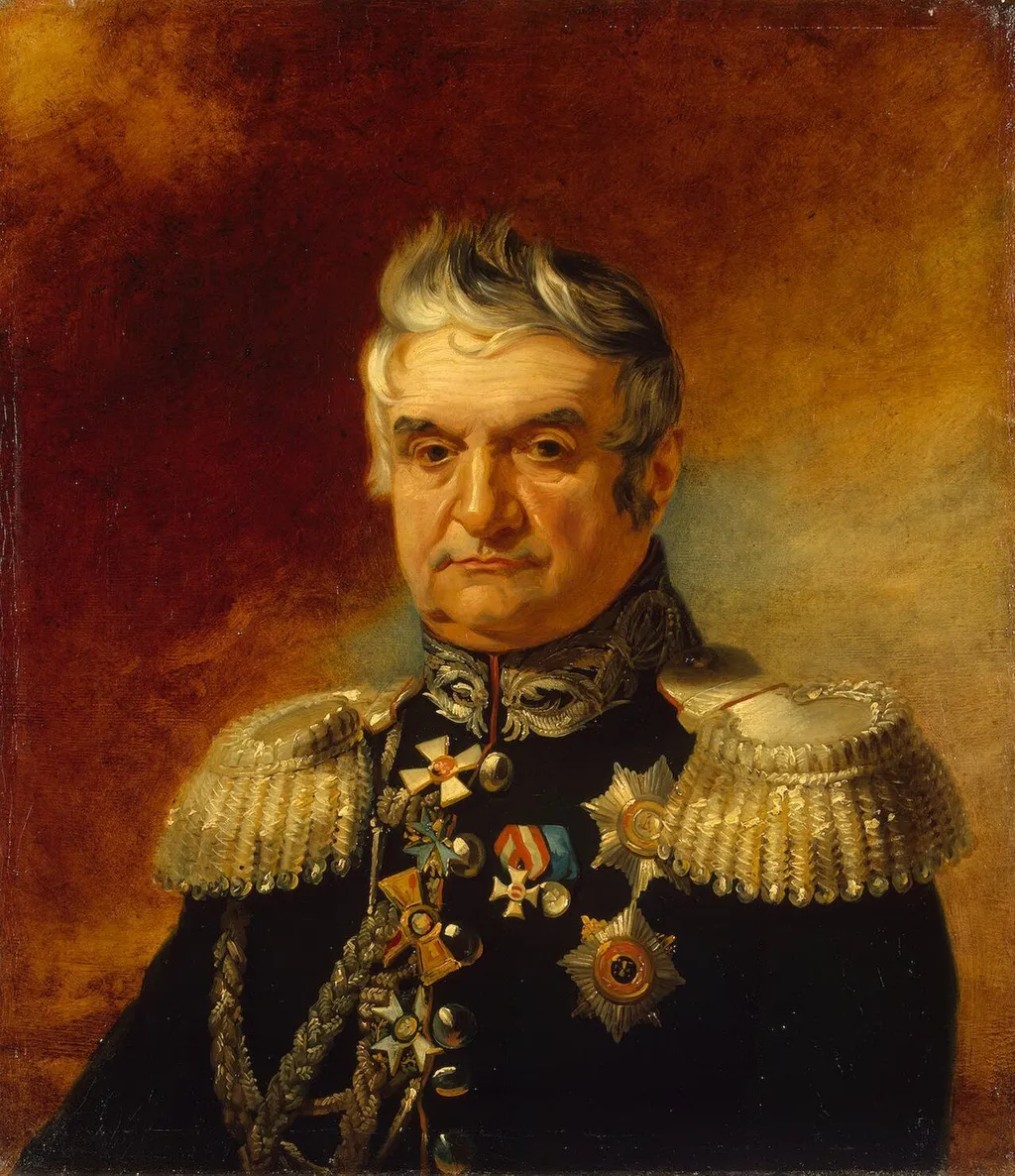
Portrait of Fyodor F. (Theodore) d'Auvray (1764/66-1846) is an oil painting by George Dawe. It dates from 1827 and is held in the collection of the Hermitage Museum.
About this work
Overview
Dawe, who settled in Saint Petersburg in 1819, was commissioned to document the empire’s senior commanders.
Painted in 1827 by English artist George Dawe, this oil portrait depicts Fyodor F. d'Auvray, a Russian military officer. Dawe, who settled in Saint Petersburg in 1819, was commissioned to document the empire’s senior commanders. The work is part of the State Hermitage Museum’s collection and reflects Dawe’s role in creating a visual archive of Russia’s military leadership during the Napoleonic era.
Subject & Meaning
Fyodor d'Auvray is portrayed in full military regalia, his dark jacket adorned with gold epaulets and numerous colorful medals, signaling high rank and distinguished service. His direct gaze and composed expression convey authority and solemnity. The absence of narrative elements focuses attention on his status and personal bearing, aligning with the portrait’s function as an official record of military achievement rather than a personal likeness.
Technique & Style
Dawe employed a controlled, precise technique typical of early 19th-century academic portraiture. The rendering of metallic medals and fabric textures is meticulous, while the background’s muted red and gold tones provide contrast without distraction. Lighting is even and frontal, emphasizing clarity and formality. The brushwork remains restrained, prioritizing dignified representation over expressive flourish.
History & Provenance
The portrait was created as part of Dawe’s larger commission for the Military Gallery of the Winter Palace, where he painted nearly 330 portraits of Russian generals between 1820 and 1837. D'Auvray’s inclusion reflects his service during the Napoleonic Wars. The painting remained in imperial collections after its completion and was later transferred to the Hermitage, where it has been held since the 19th century.
Context
George Dawe’s work in Russia emerged during a period of state-sponsored cultural consolidation following the defeat of Napoleon. Portraits like this one served both commemorative and propagandistic purposes, reinforcing the legitimacy and prestige of the imperial military hierarchy. Dawe’s English training brought a neoclassical clarity to Russian official portraiture, bridging Western and imperial aesthetic traditions.
Legacy
Dawe’s Military Gallery remains one of the most extensive collective portraits of military leaders in European history. While individual works like this one are not widely exhibited outside the Hermitage, they collectively document a generation of officers who shaped Russia’s role in early 19th-century Europe. His approach influenced later state portraiture in the Russian Empire, establishing a visual language of rank and duty.
Artist & collection
Artist
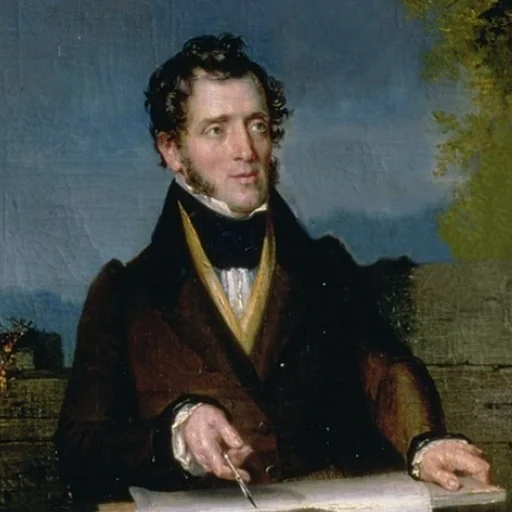
George Dawe (6 February 1781 – 15 October 1829) was an English portraitist who painted 329 portraits of Russian generals active during Napoleon's invasion of Russia for the Military Gallery of the Winter Palace.

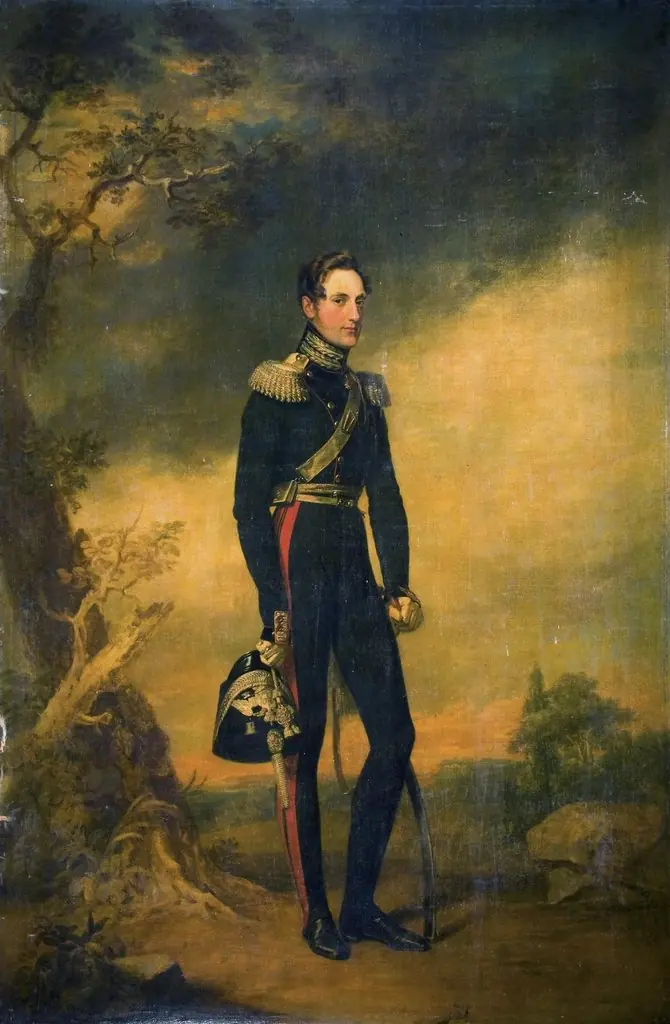 Portrait of Grand Duke Nikolai Pavlovich
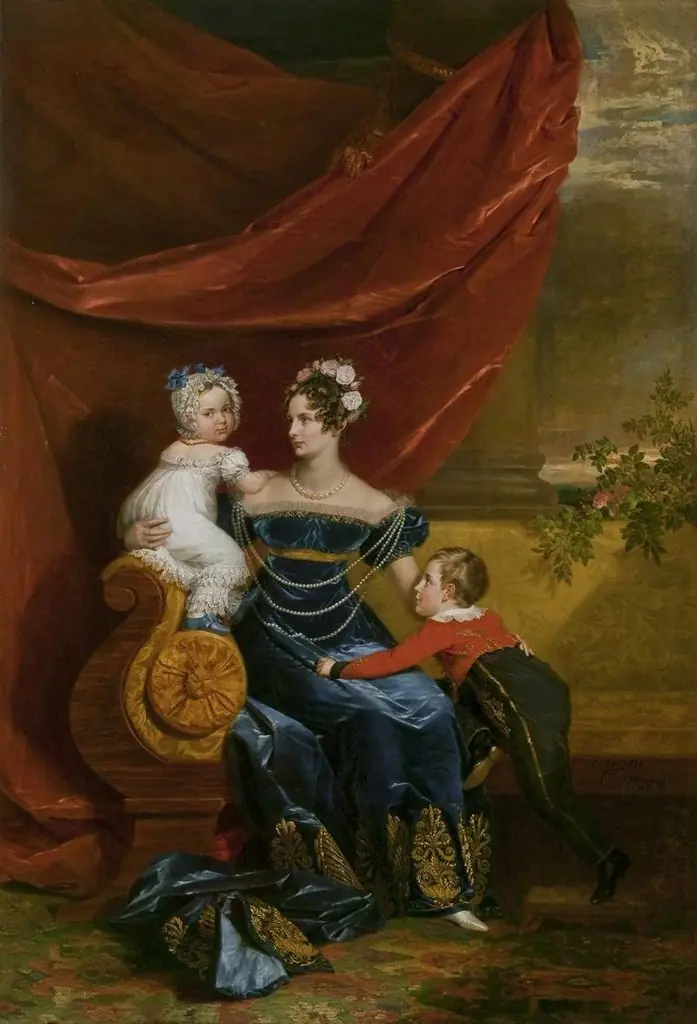 Portrait of Grand Duchess Alexandra Fiodorovna with Children
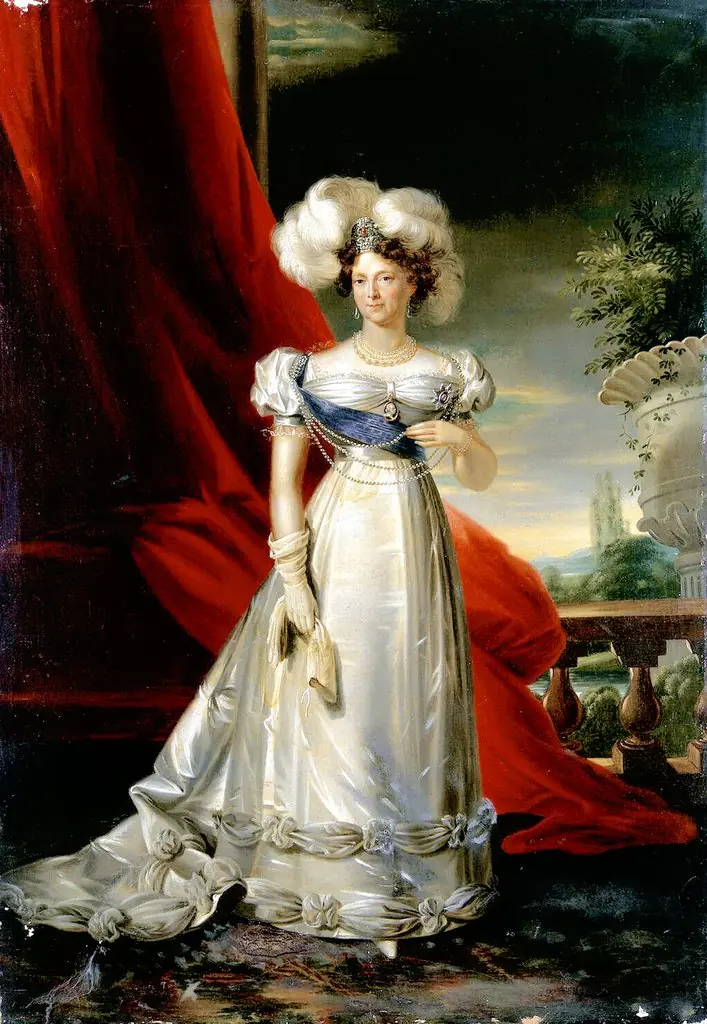 Portrait of the Empress Dowager Maria Feodorovna
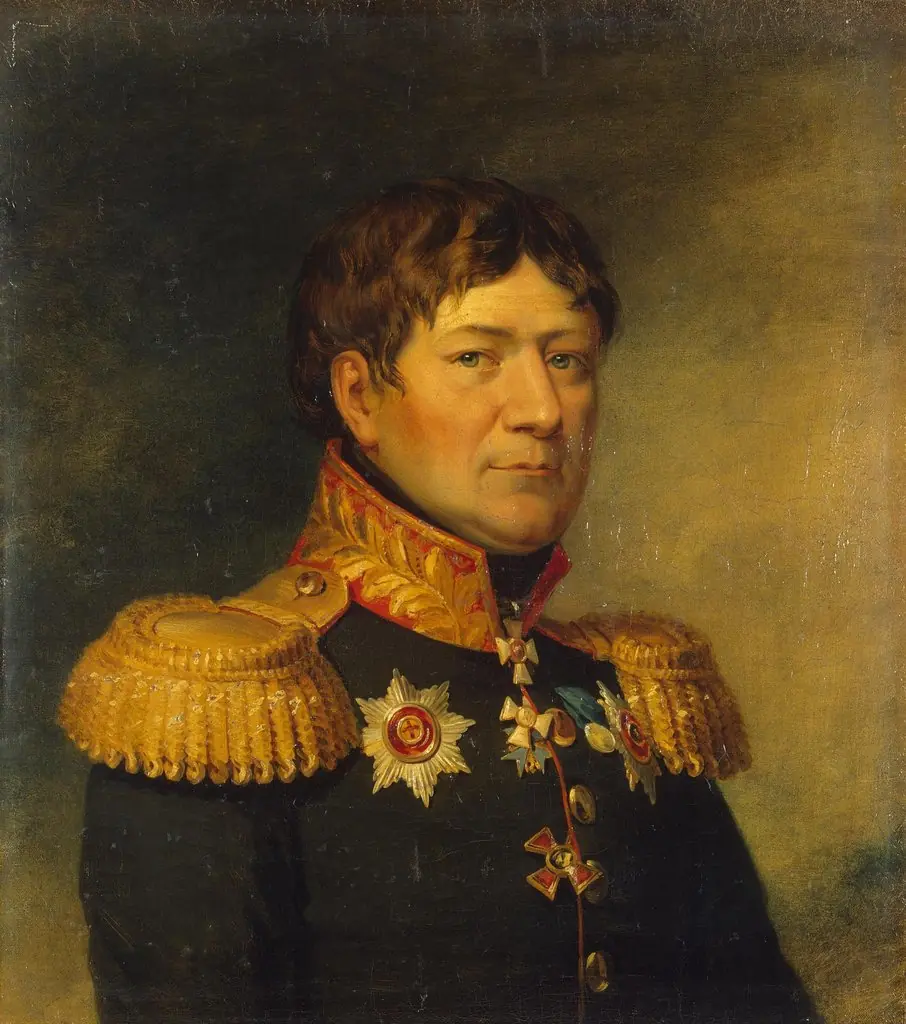 Portrait of Yegor M. Pillar (1767-1830)
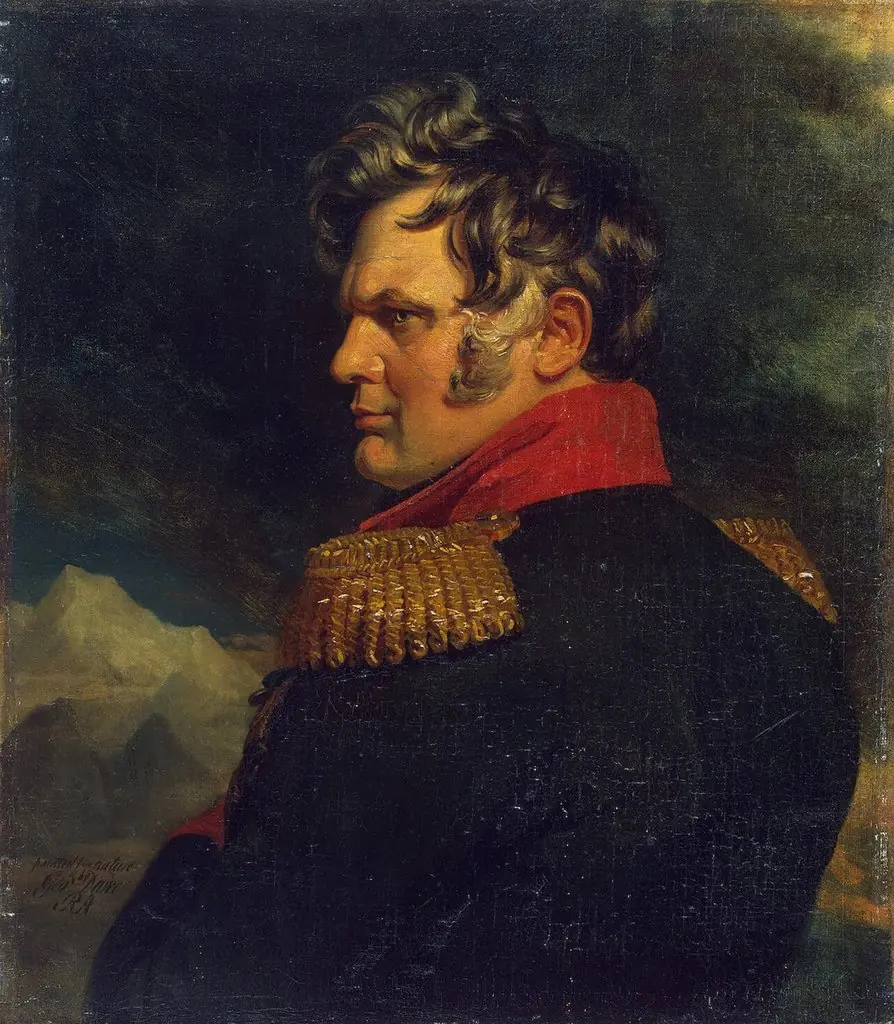 Portrait of Alexei P. Yermolov (1772/77-1861)
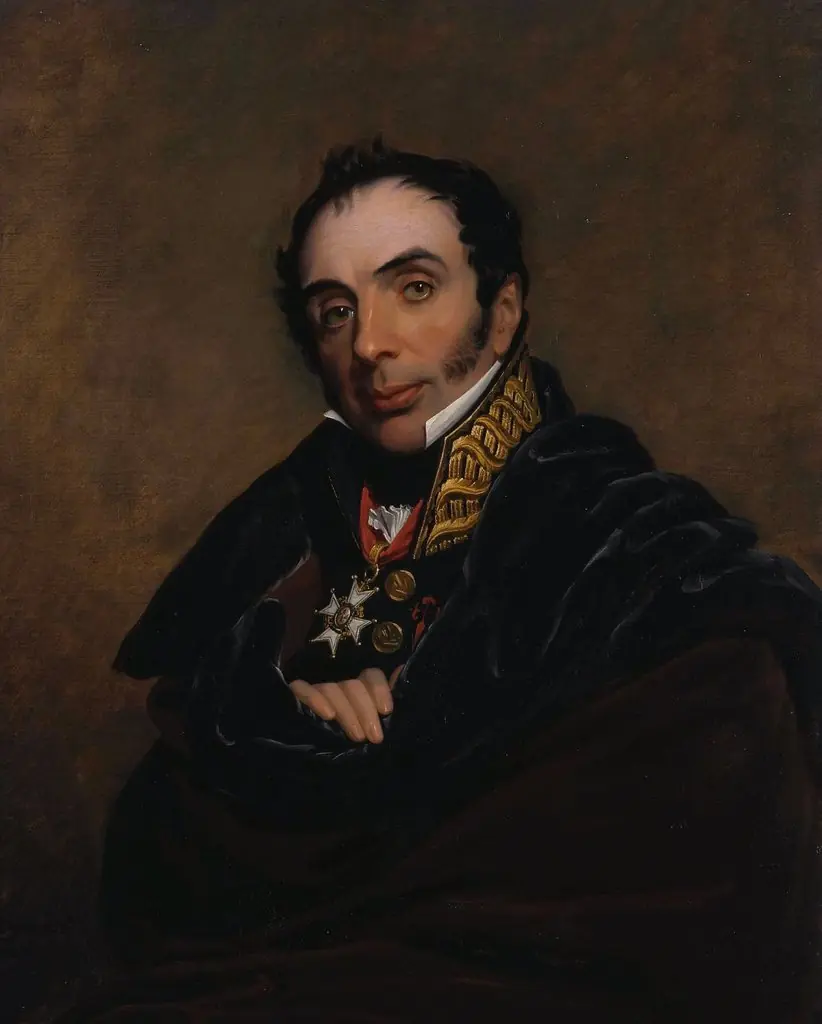 Portrait of Miguel Ricardo de Alava
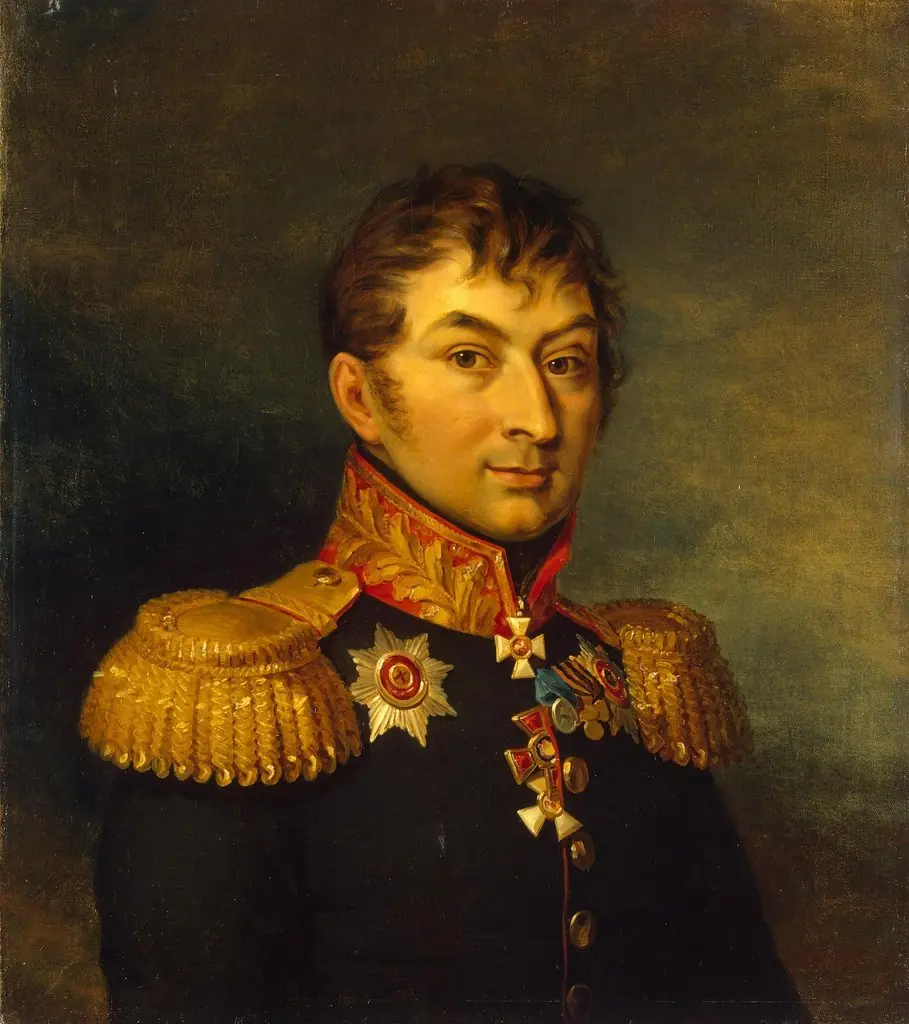 Portrait of Ivan D. Panchulidzev (1759-1815) (1st)
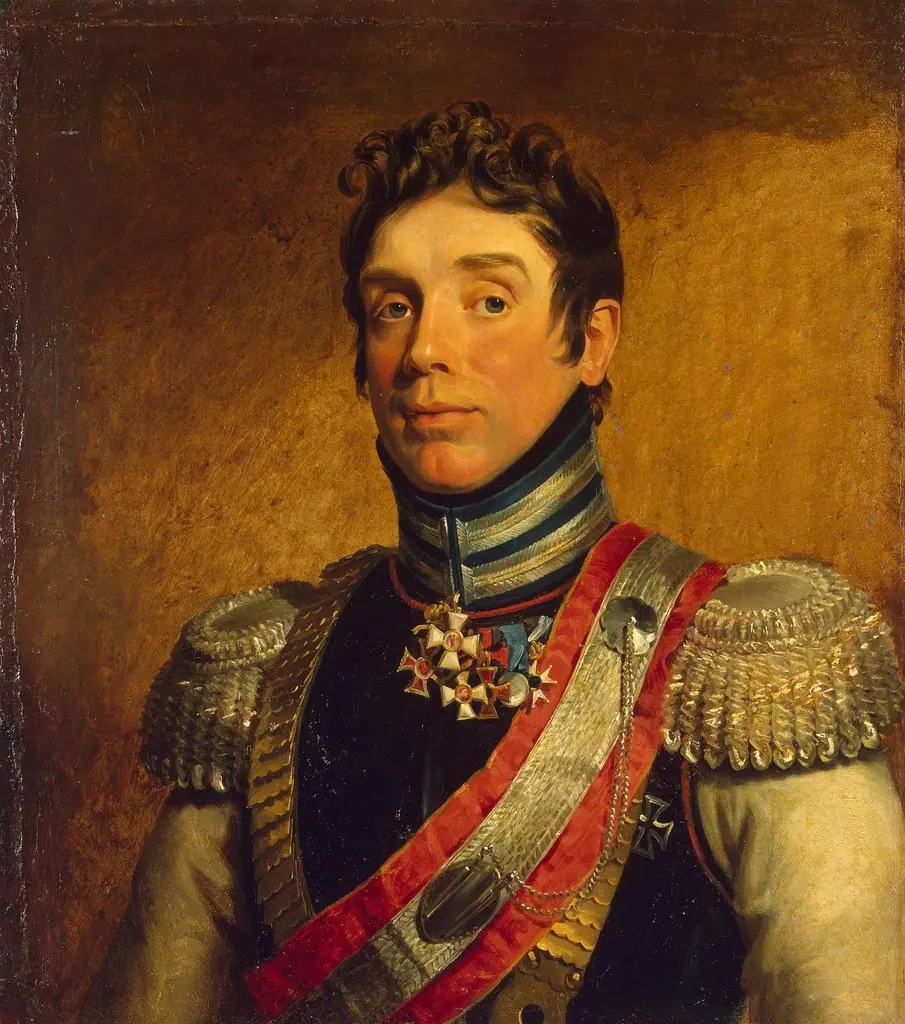 Portrait of Karl V. Budberg (1774-1829)
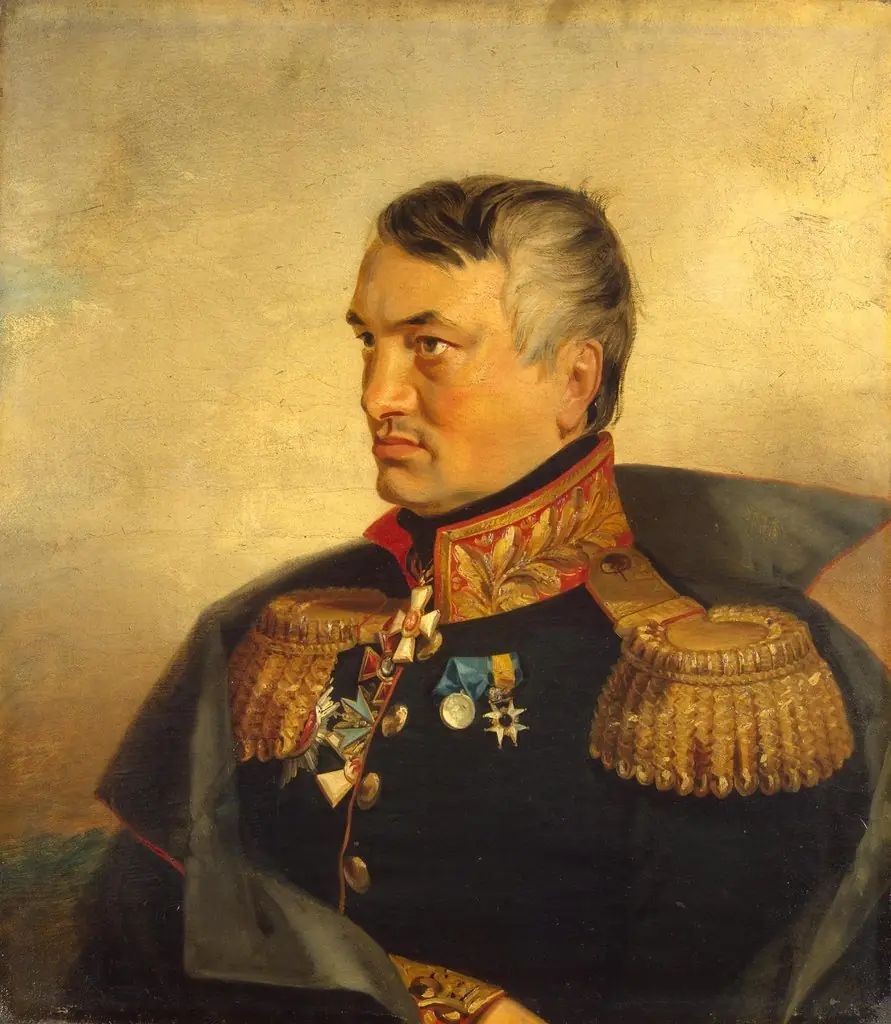 Portrait of Nikolai V. Vasilchikov (1781-1849) (3rd)
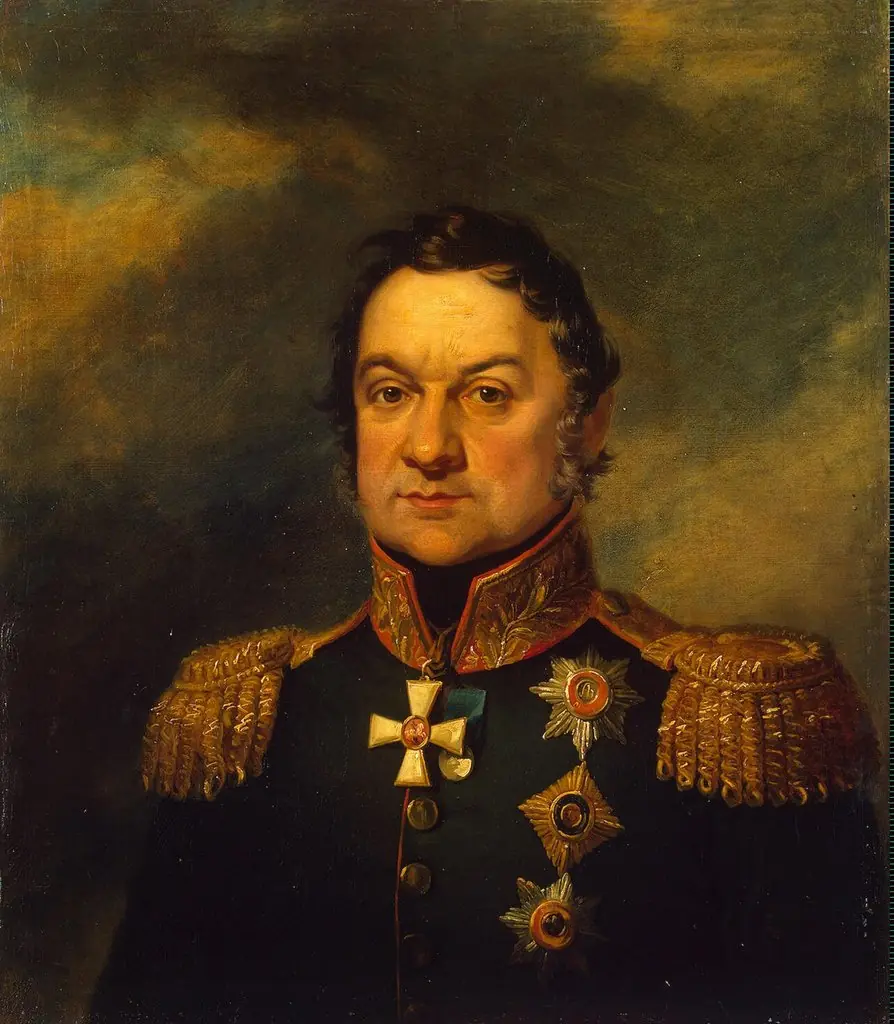 Portrait of Dmitry S. Dokhturov (1756/59-1816)
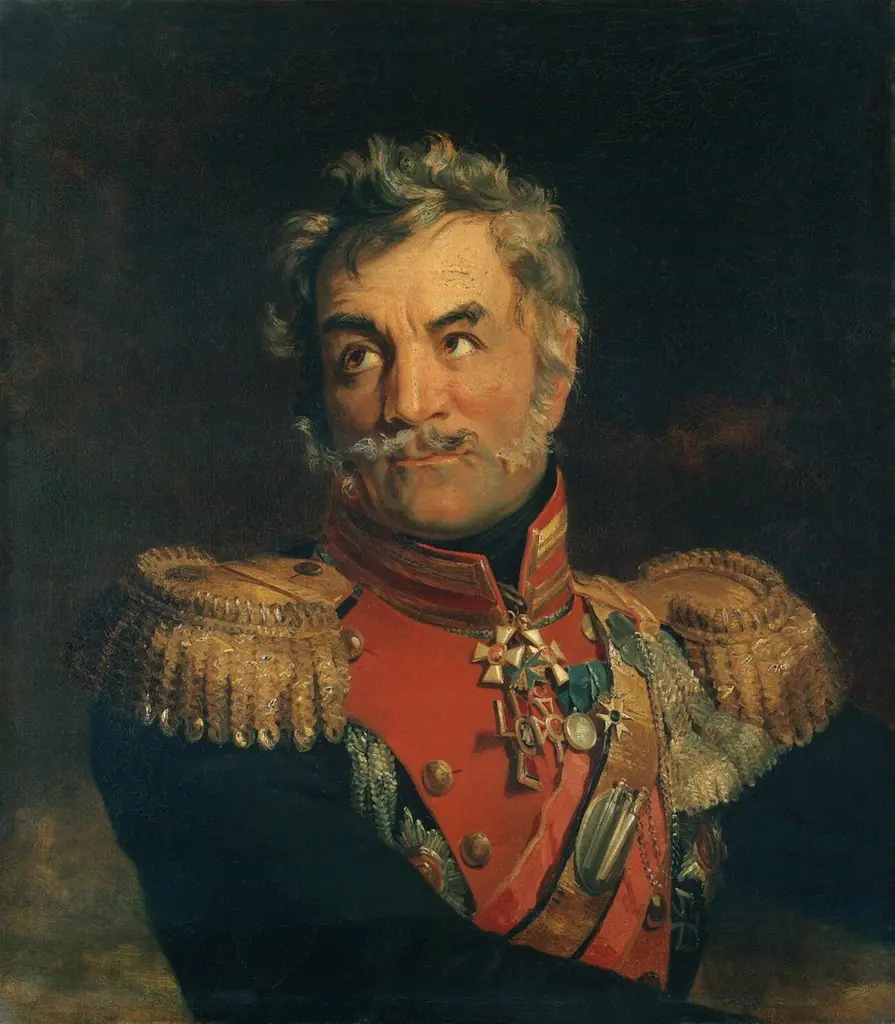 Portrait of Anton S. Chalikov (1754-1821)
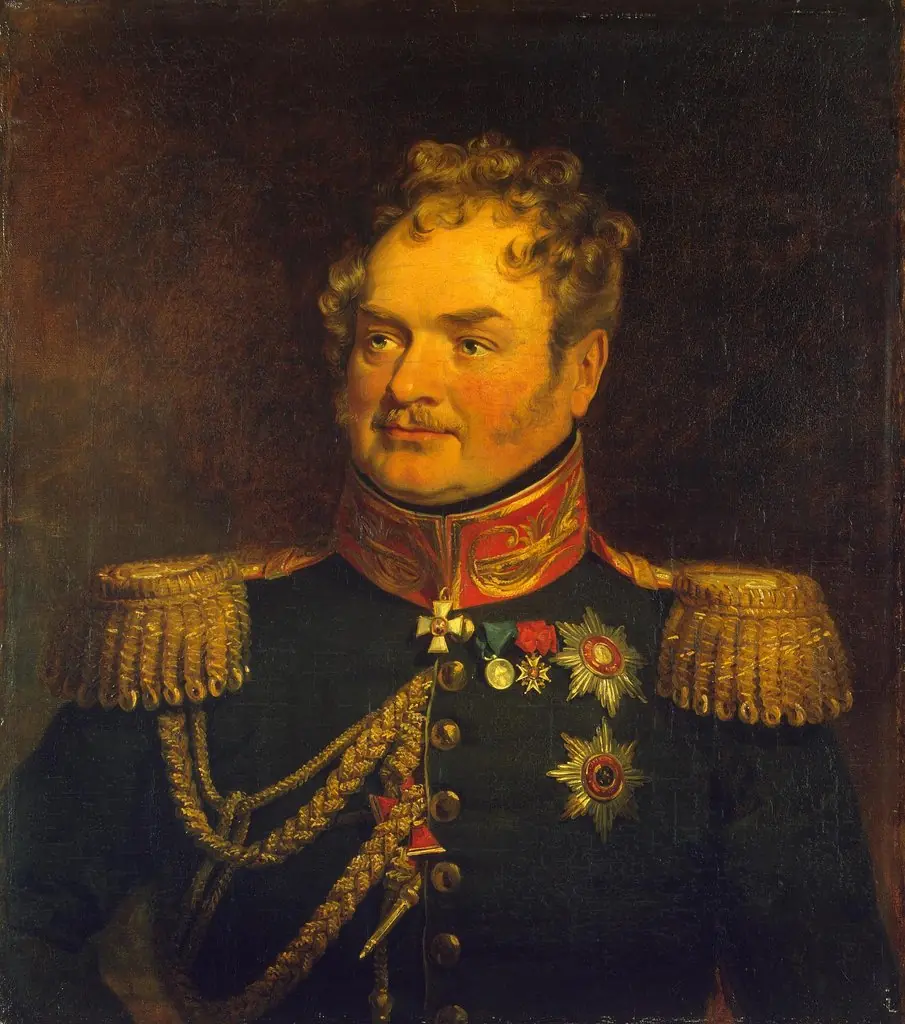 Portrait of Karl O. (Charles de) Lambert (1772-1843)
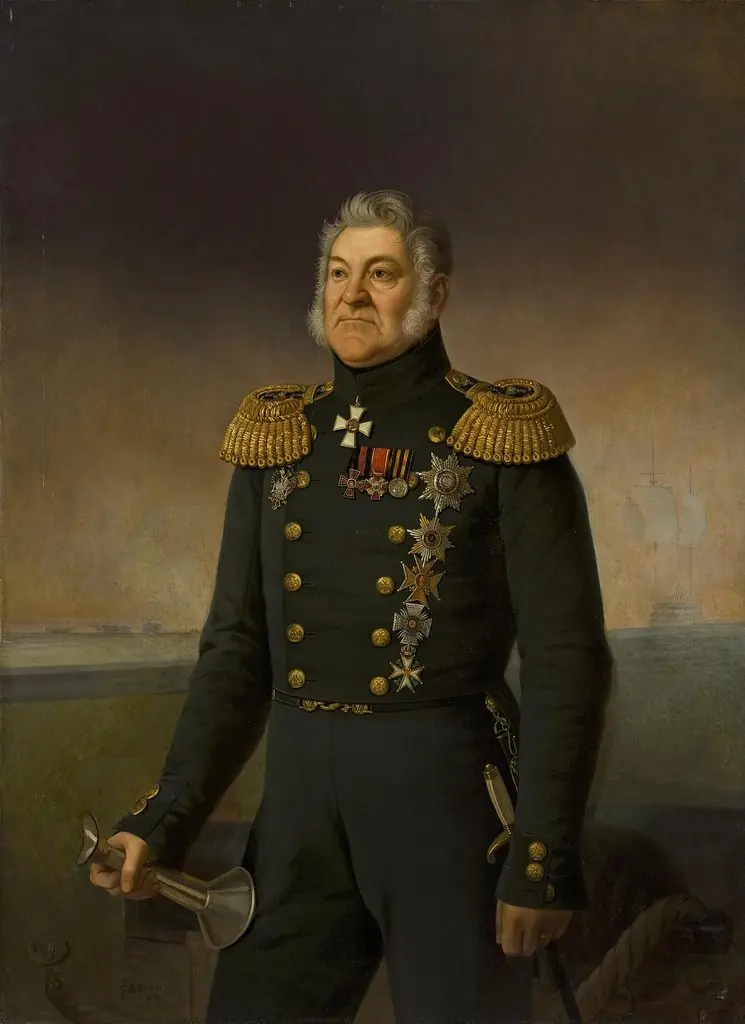 Portrait of Admiral Login Heiden
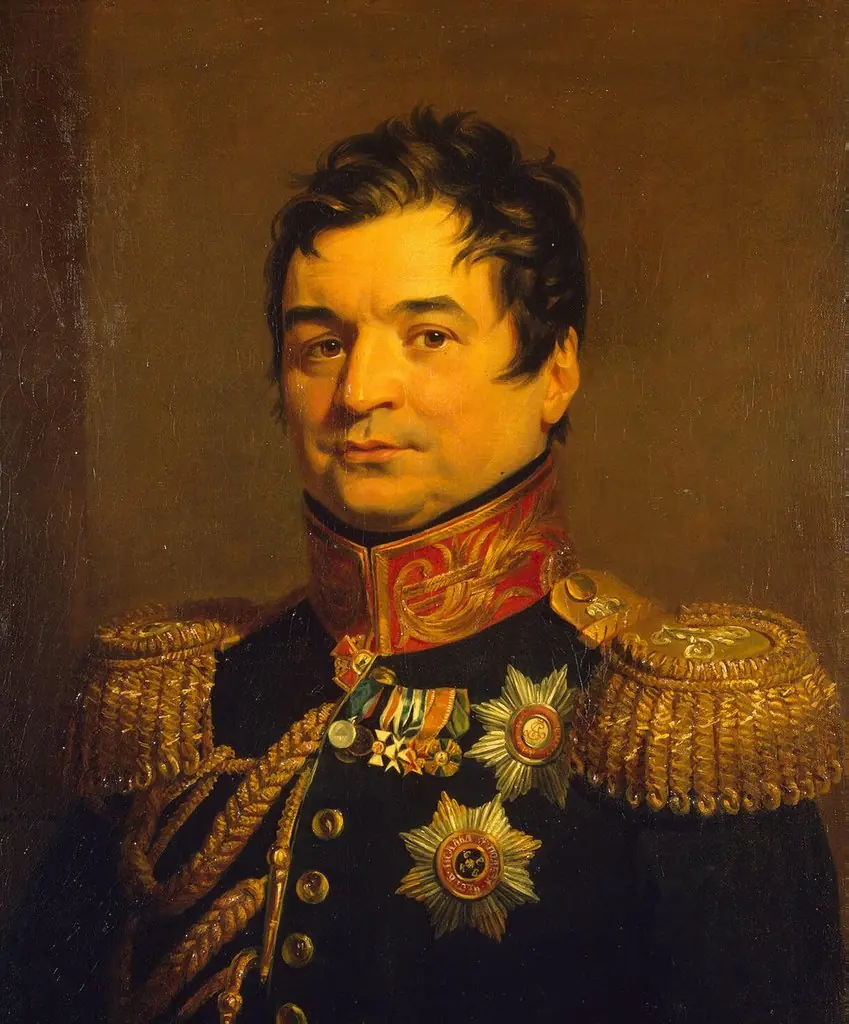 Portrait of Alexander D. Balashov (1770-1837)
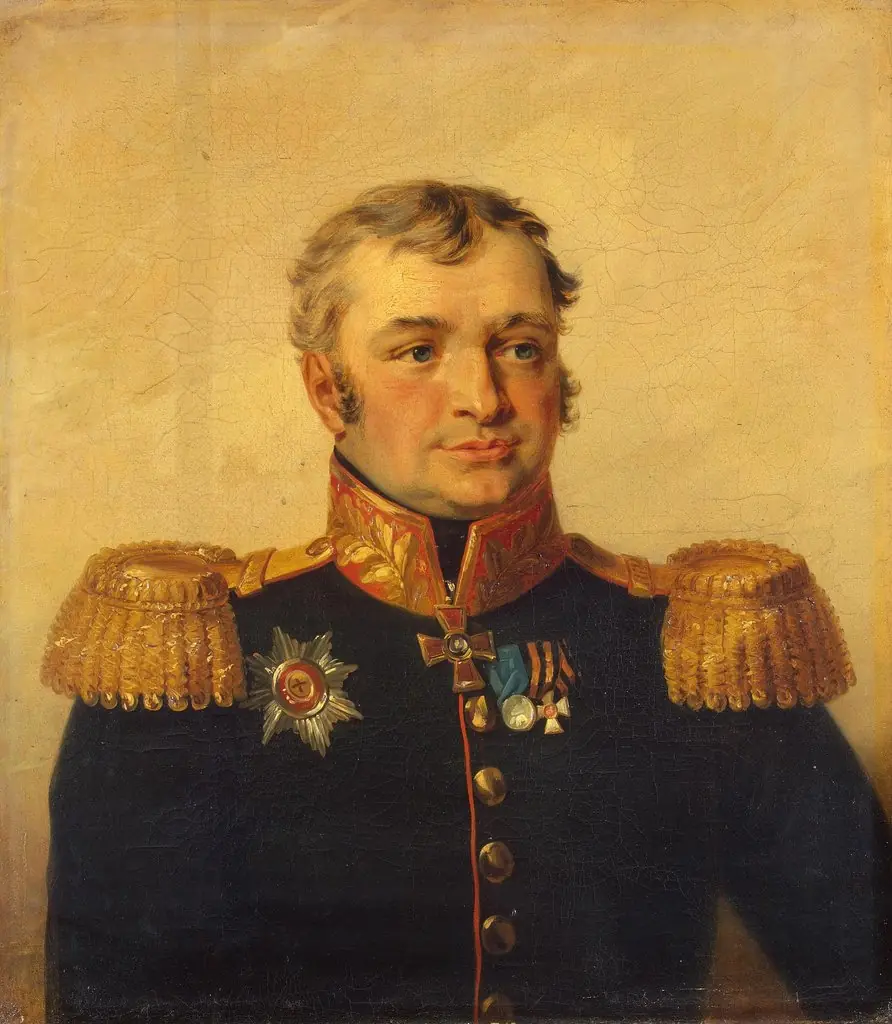 Portrait of Vasily S. Rakhmanov (1764-1816)
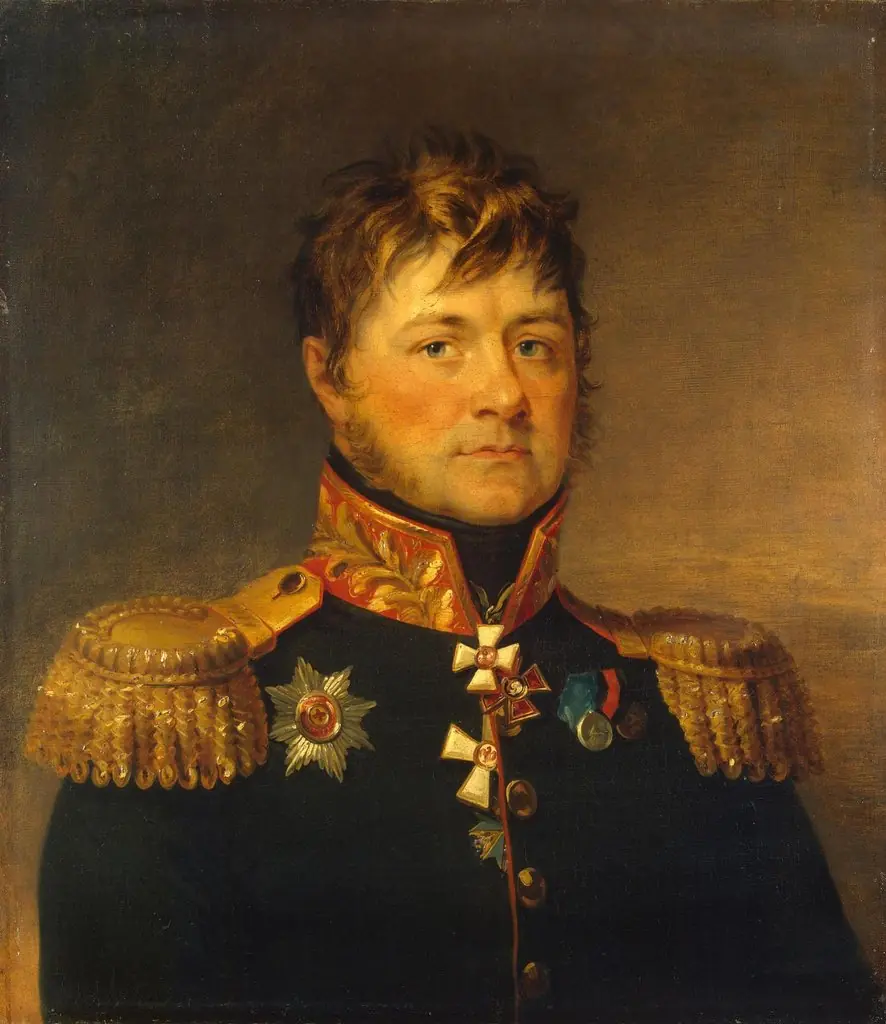 Portrait of Ivan L. Paul (1768-1840)
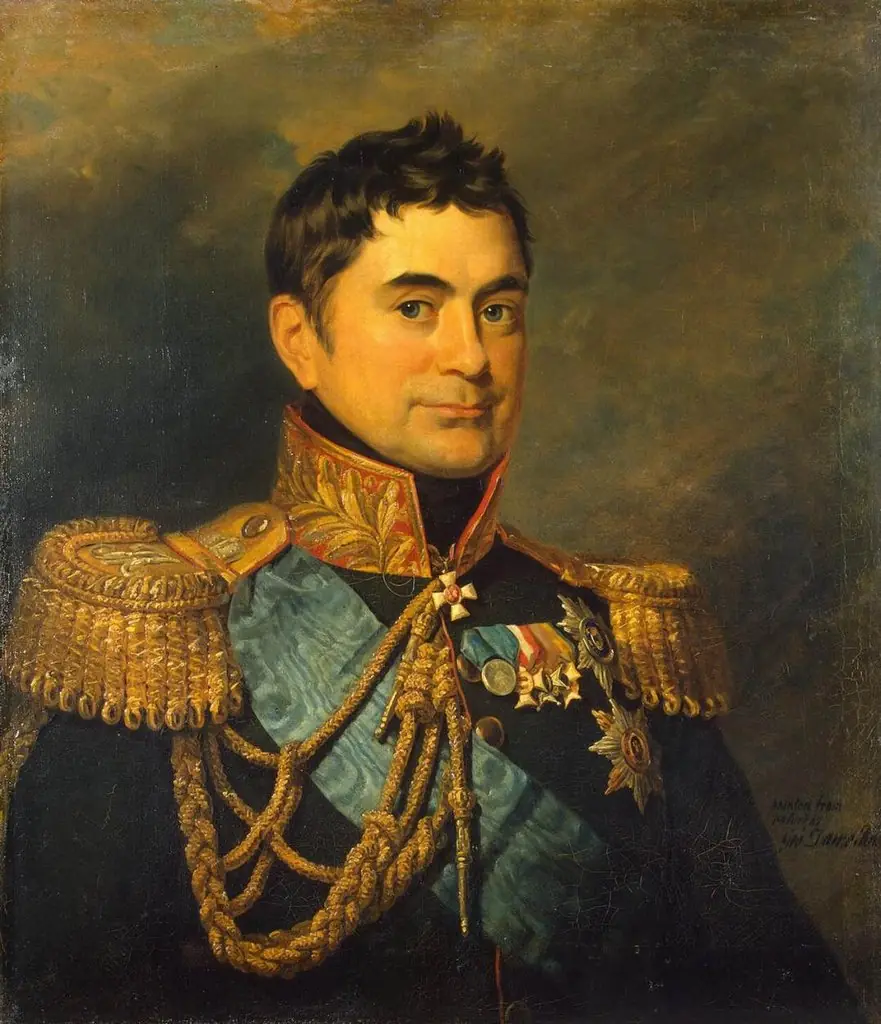 Portrait of Pyotr M. Volkonsky (1776-1852) (replica of the 1823 portrait)
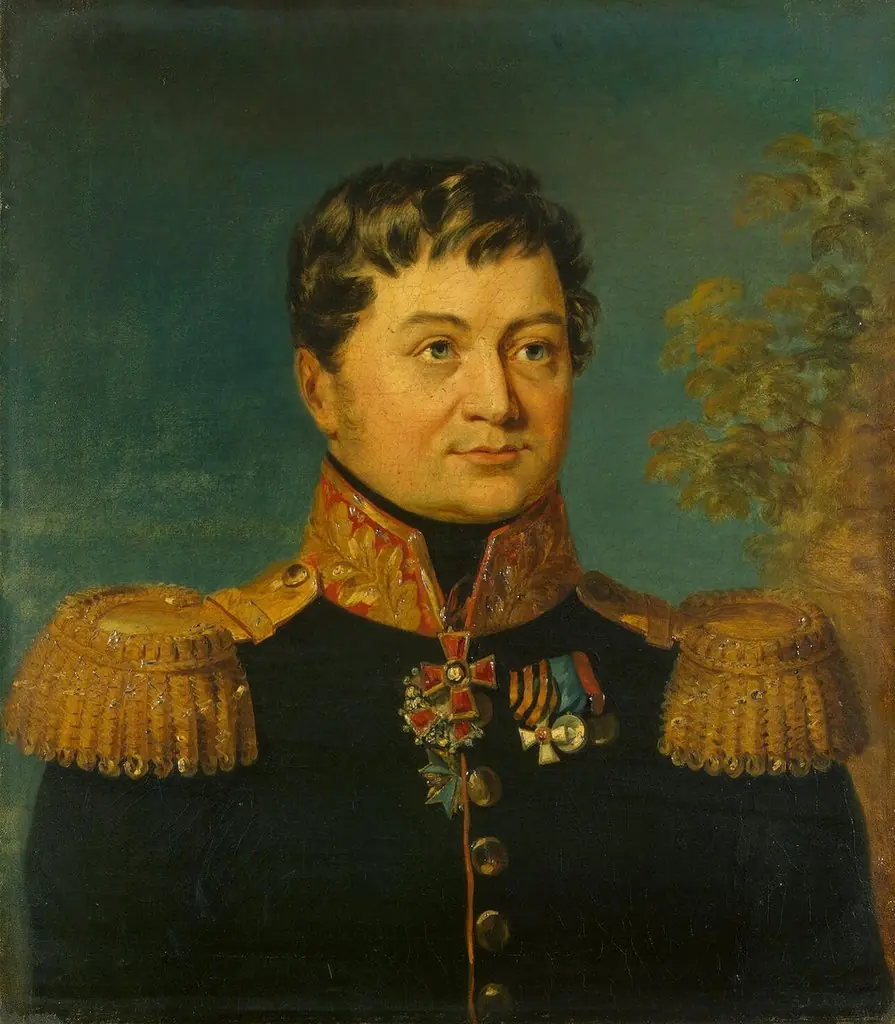 Portrait of Andrey P. Turchaninov (1779 -1830) (2nd)
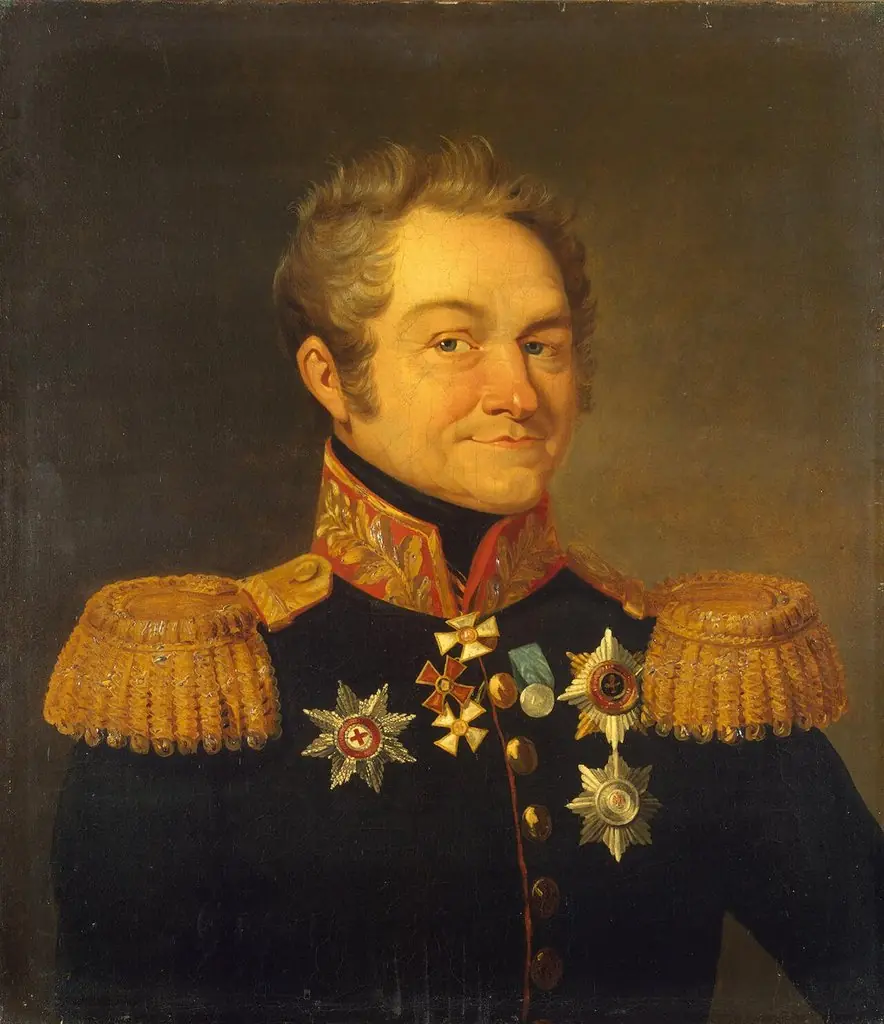 Portrait of Alexander B. Fock (1763-1825)
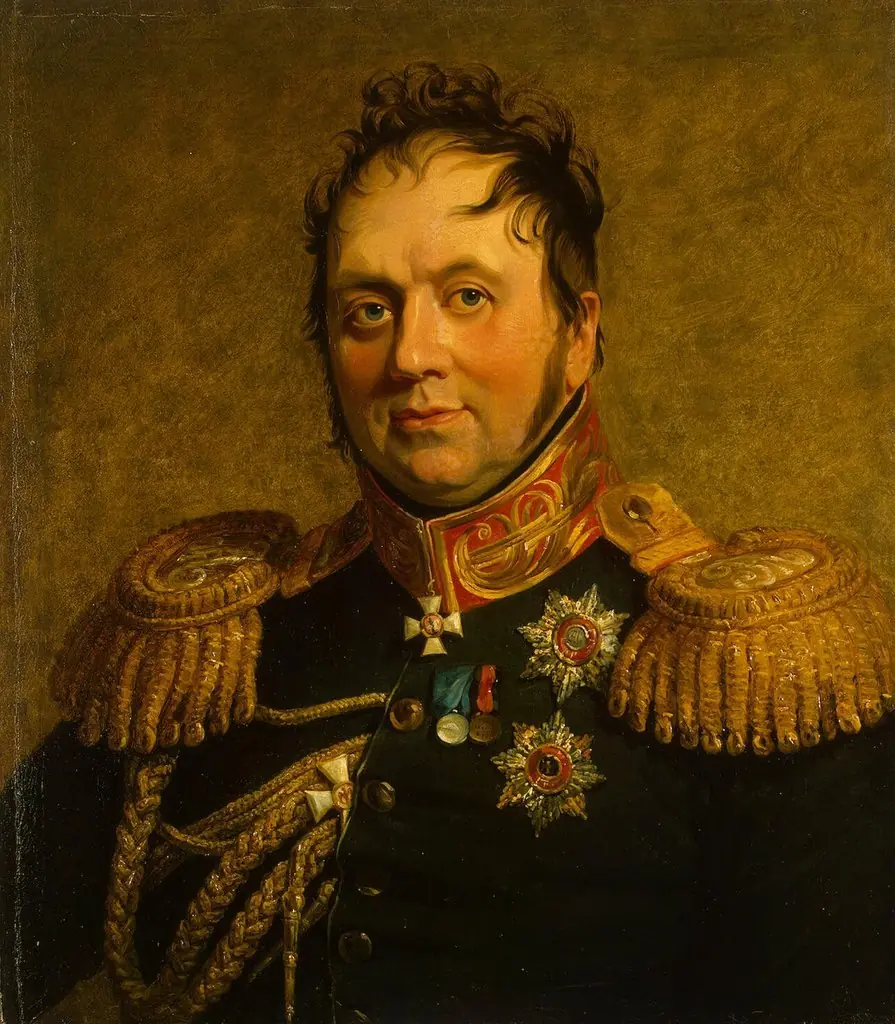 Portrait of Fyodor K. Korff (1773/74-1823)