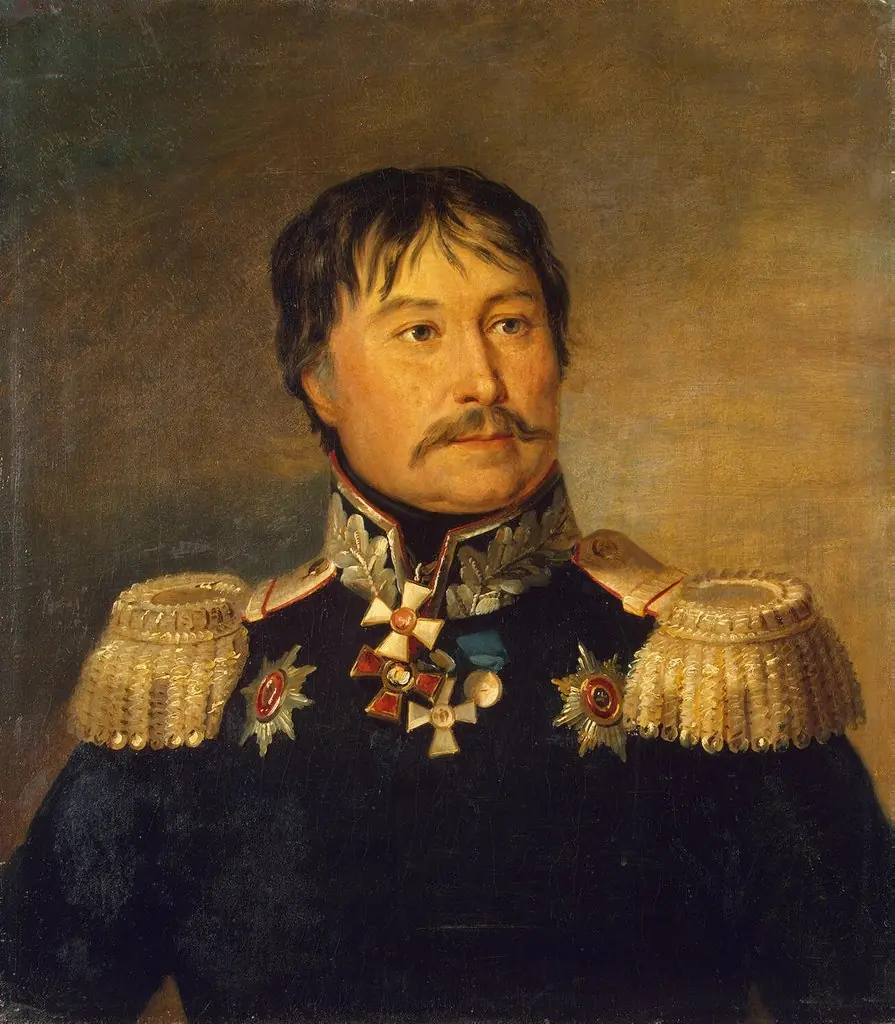
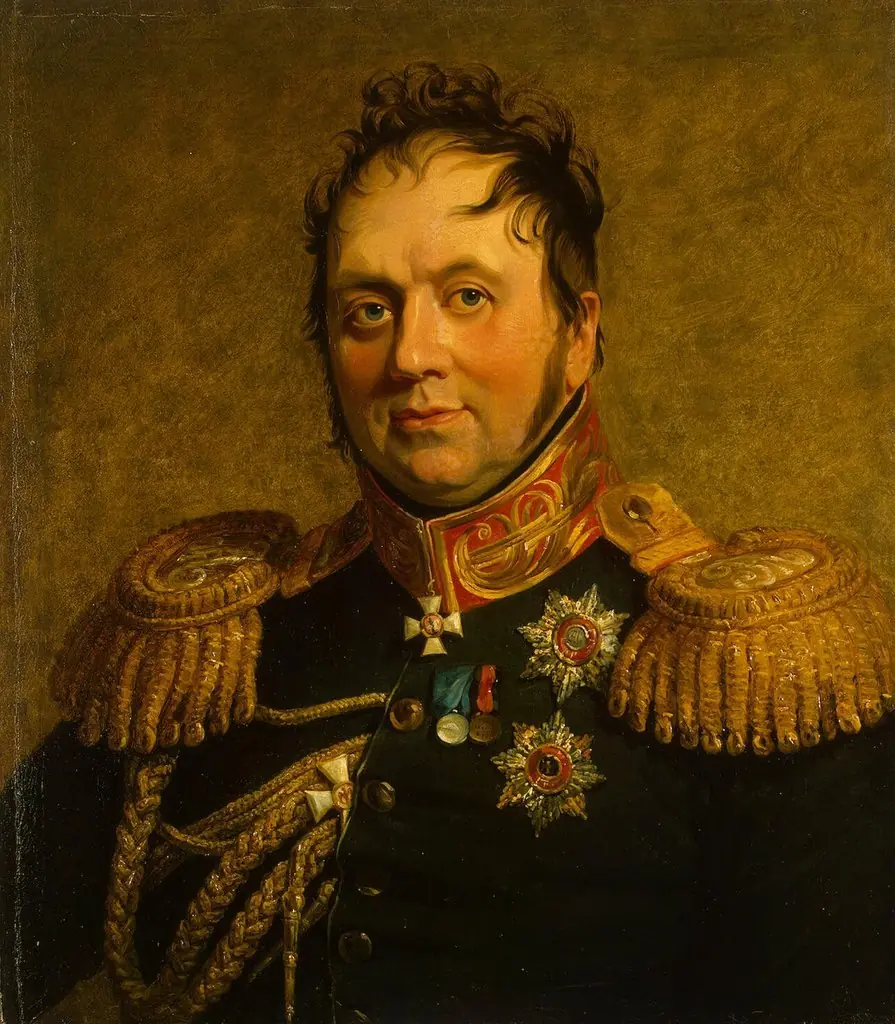
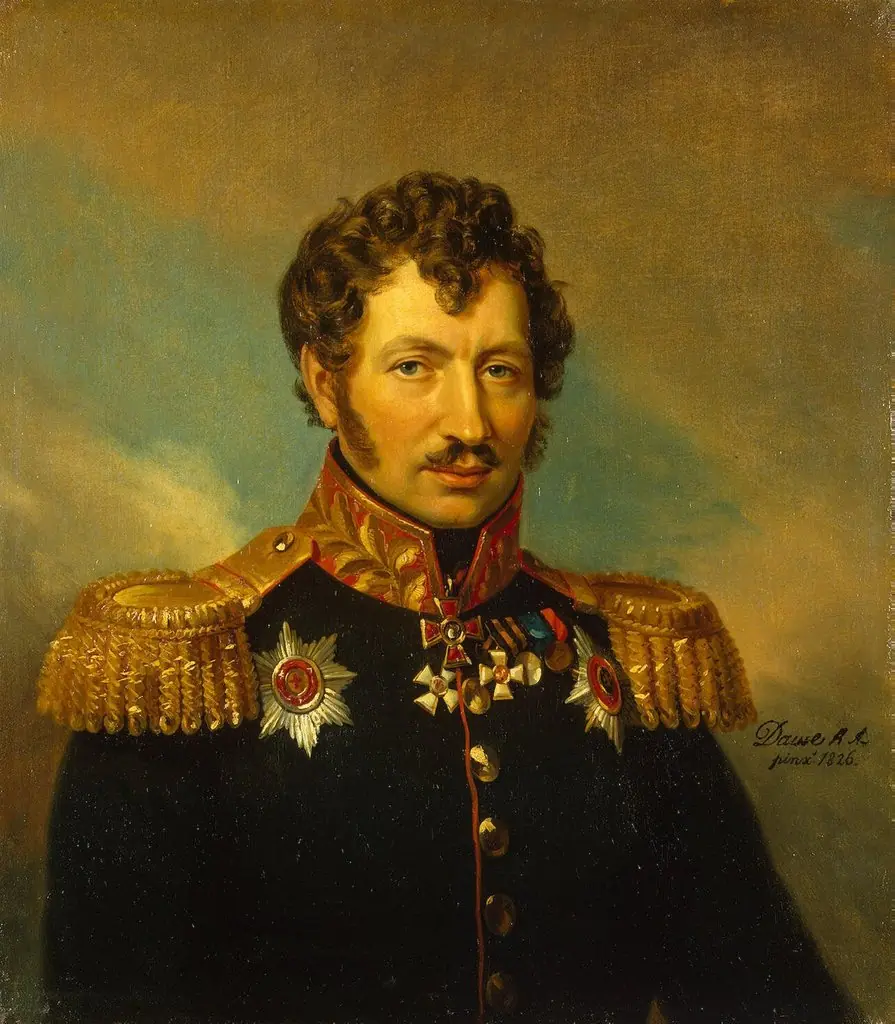
Artwork
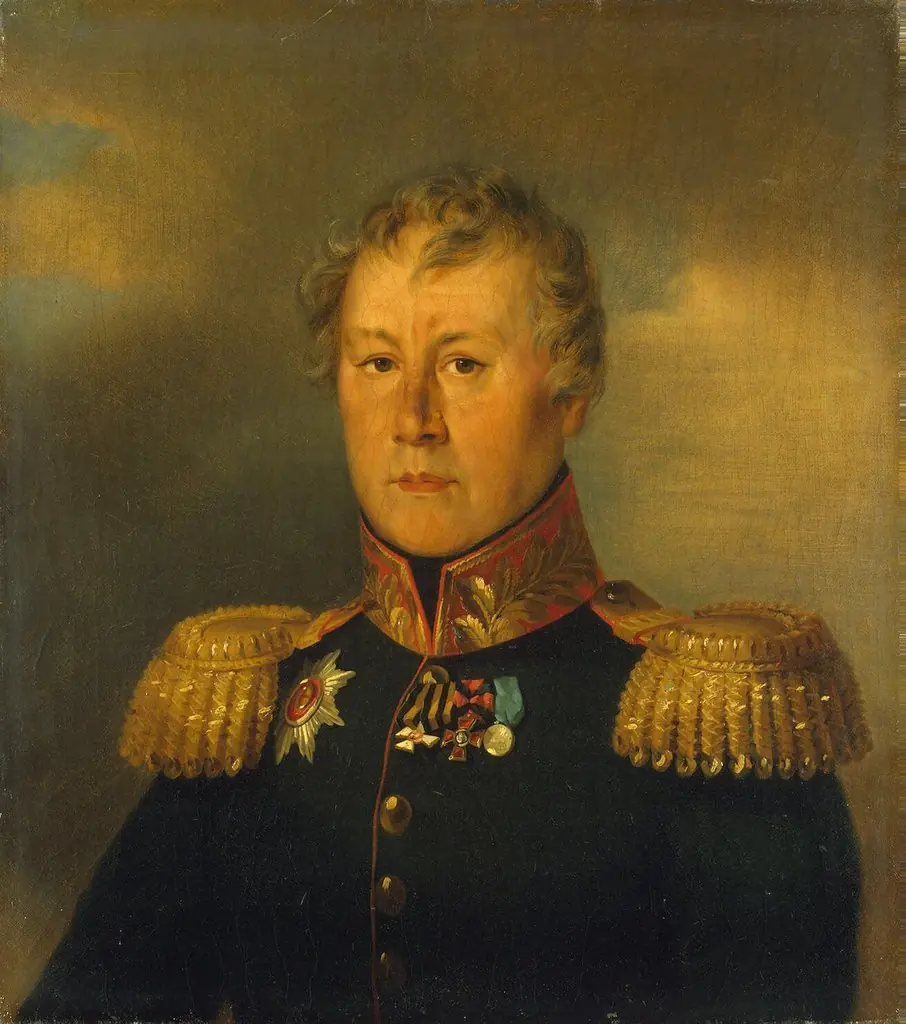
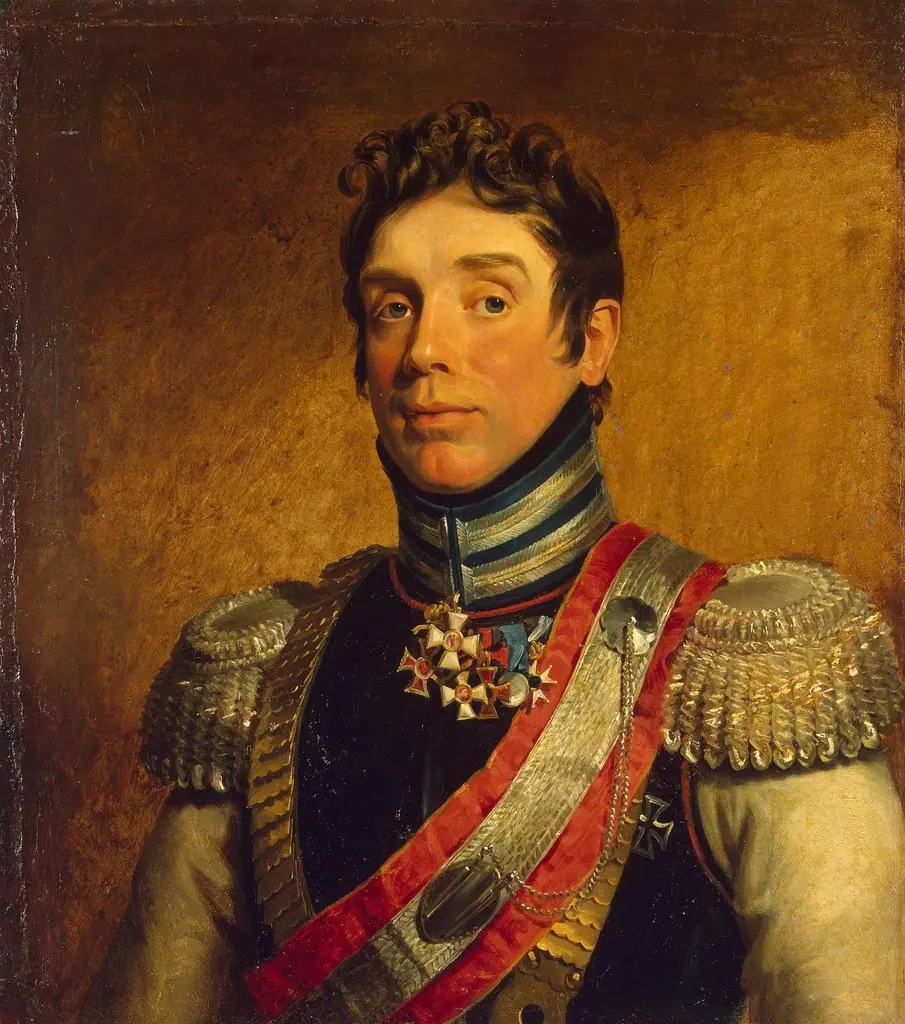
Portrait of Fyodor Ye. Knipper (1767/68-1850)
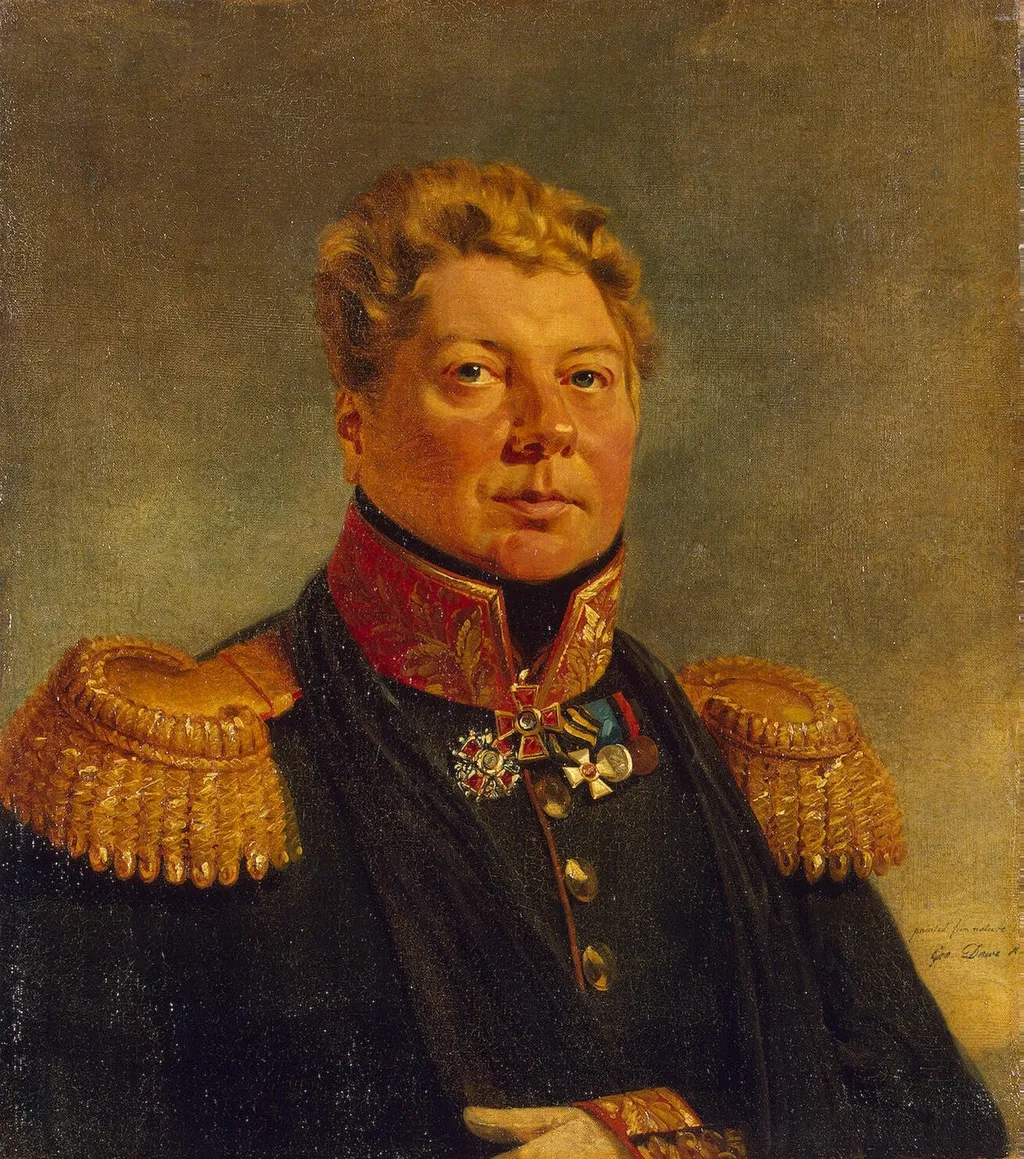
Portrait of Fyodor Ye. Knipper (1767/68-1850) is an oil painting by George Dawe. It dates from 1822 and is held in the collection of the Hermitage Museum.
About this work
Overview
Dawe, who moved to Saint Petersburg in 1819, was commissioned to document military leaders for the Winter Palace’s Military Gallery.
Painted in 1822 by the English artist George Dawe, this portrait captures Fyodor Ye. Knipper, a Russian general active during the Napoleonic Wars. Dawe, who moved to Saint Petersburg in 1819, was commissioned to document military leaders for the Winter Palace’s Military Gallery. The work is one of many in that series and remains part of the State Hermitage Museum’s permanent collection, reflecting its historical and institutional significance.
Subject & Meaning
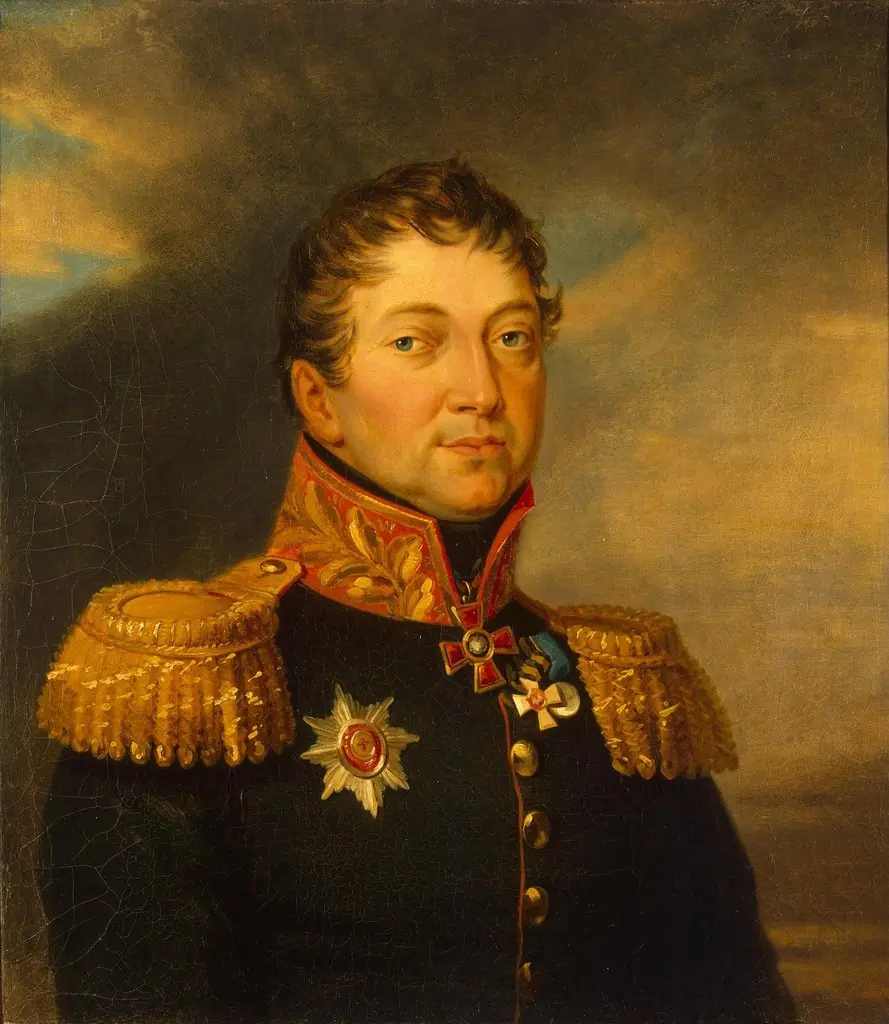
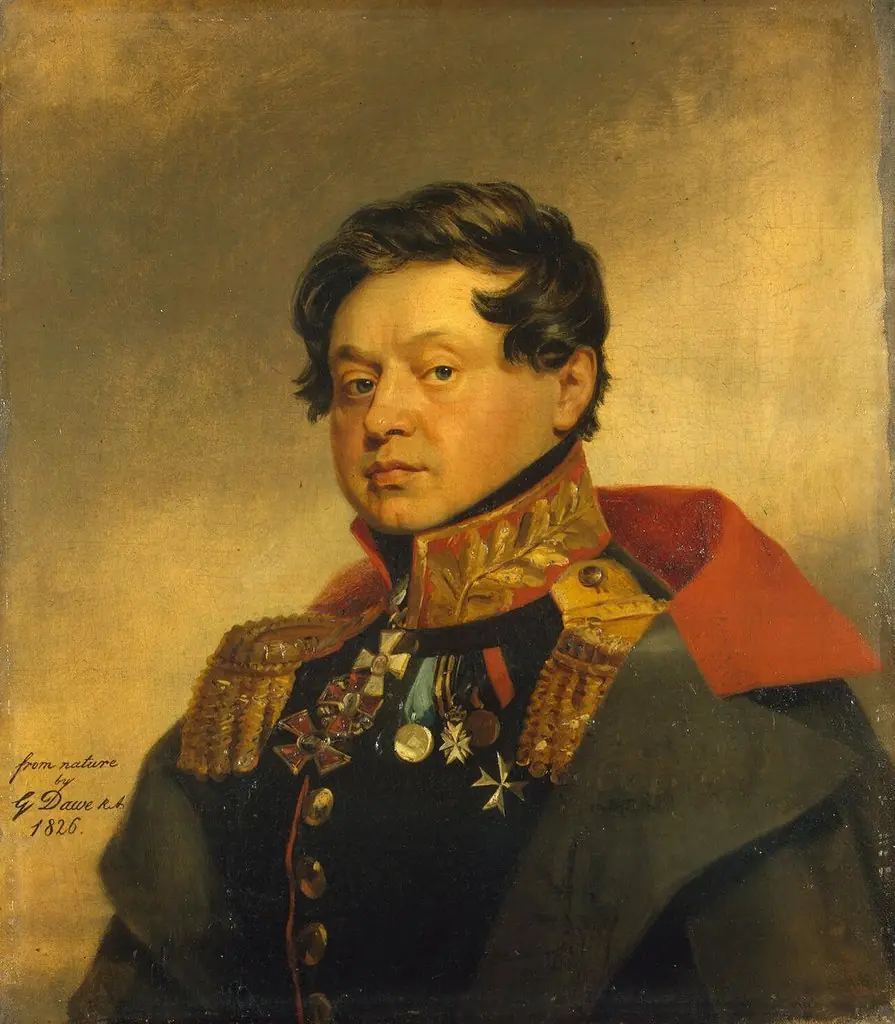
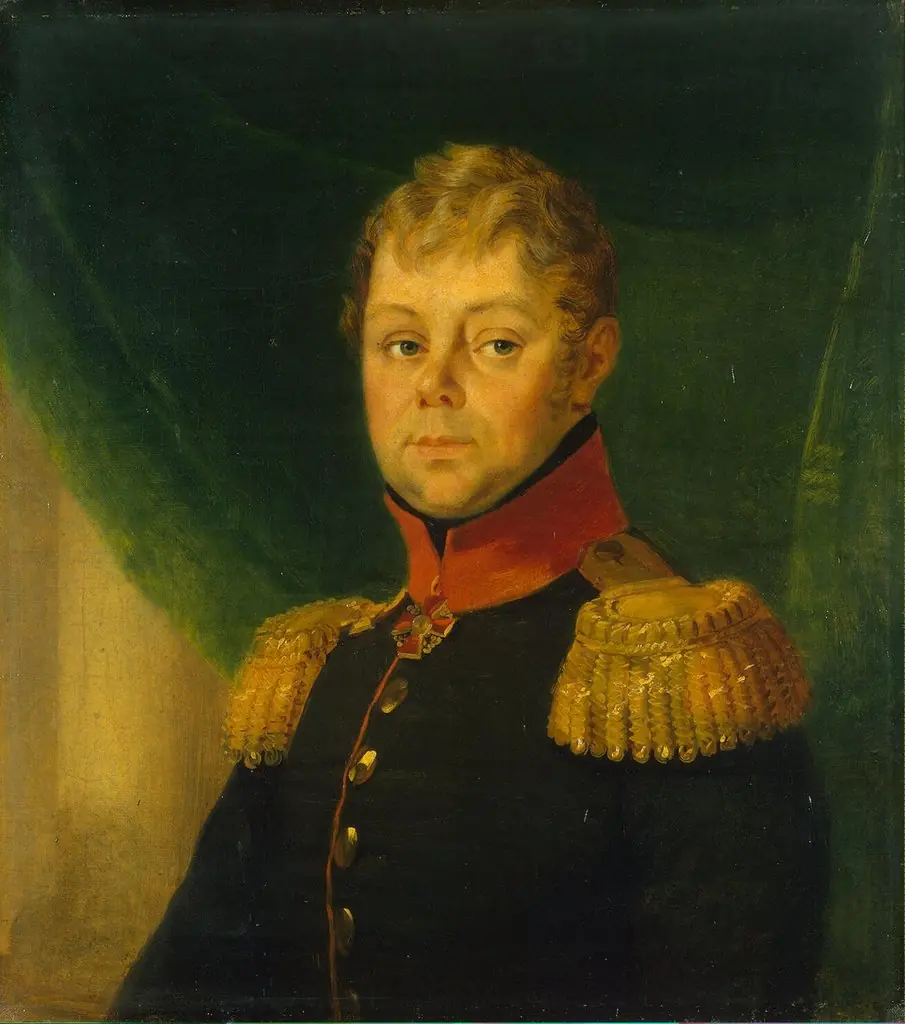
Fyodor Knipper is depicted in full military regalia, his uniform adorned with gold braid and multiple medals indicating distinguished service. The restrained composition and solemn expression emphasize duty and rank rather than individual personality. The absence of symbolic props or landscape reinforces his identity as a professional soldier, aligning with the gallery’s purpose of honoring military merit through standardized portraiture.
Technique & Style
Dawe employed precise brushwork to render the textures of fabric, metal, and skin. Light falls subtly across Knipper’s face and chest, defining the contours of his features and the gleam of his medals. The dark jacket and red collar create a strong tonal contrast, directing attention to the figure’s upper body. The plain background eliminates distraction, focusing the viewer on the subject’s bearing and uniform details.
History & Provenance
Commissioned as part of the Military Gallery project initiated by Tsar Alexander I, the portrait was completed during Dawe’s tenure in Saint Petersburg between 1819 and 1830. It was installed in the Winter Palace alongside over 300 other portraits of Russian officers. The painting has remained in the Hermitage’s collection since its creation, preserving its original context within the imperial military commemoration program.
Context
Dawe’s portraits were produced under state sponsorship to consolidate national pride after the Napoleonic Wars. The uniformity of style across the gallery—formal poses, detailed uniforms, neutral backgrounds—reflected a desire for collective representation over individual expression. Knipper’s portrait fits this template, serving as both personal likeness and institutional record within Russia’s post-war commemorative culture.
Legacy
The portrait endures as part of a larger visual archive of Russian military leadership from the early 19th century. While Dawe’s style was derivative of British academic portraiture, his work in Russia helped standardize the visual language of military honor in imperial institutions. The Hermitage’s preservation of the series ensures its continued role in historical study and public memory.
Artist & collection
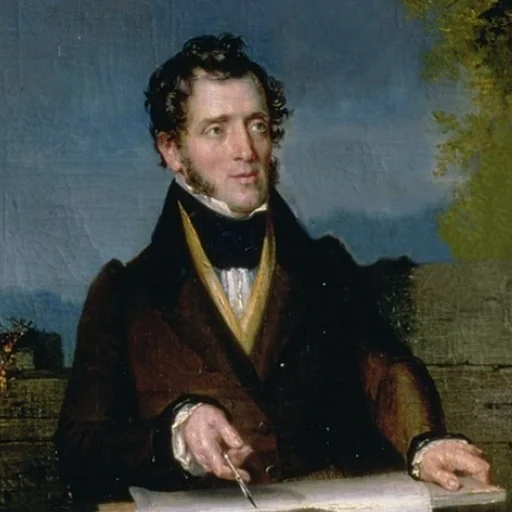
Artist
George Dawe (6 February 1781 – 15 October 1829) was an English portraitist who painted 329 portraits of Russian generals active during Napoleon's invasion of Russia for the Military Gallery of the Winter Palace.

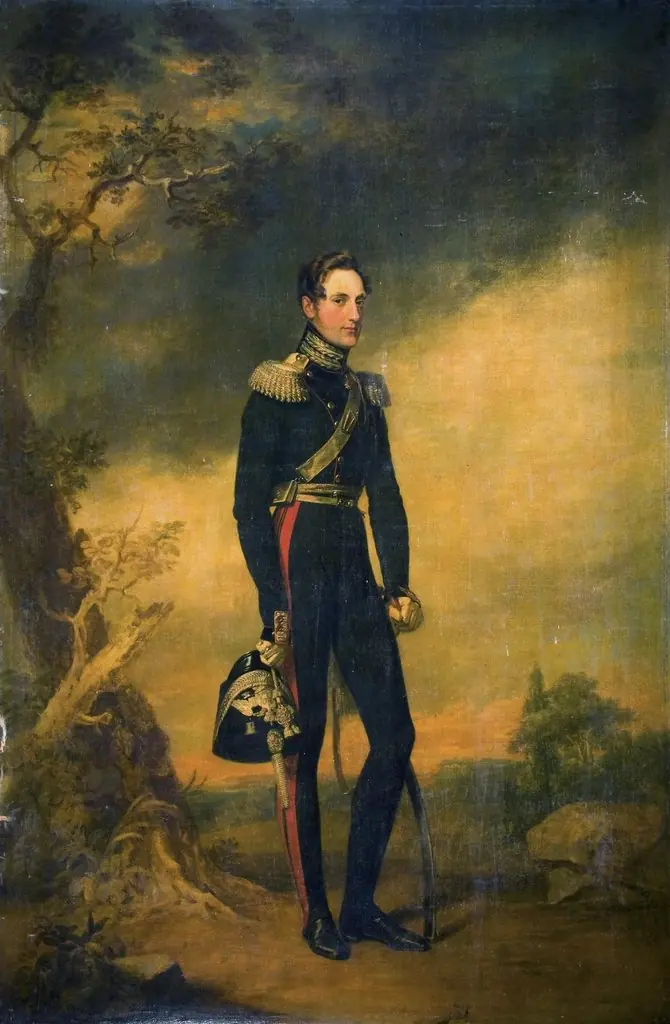 Portrait of Grand Duke Nikolai Pavlovich
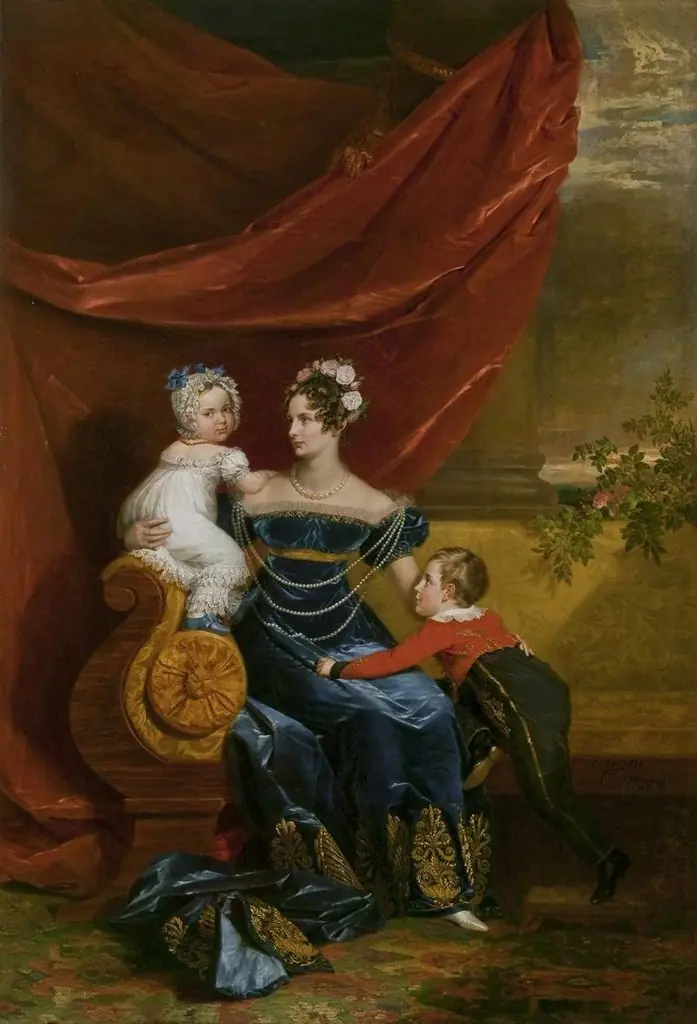 Portrait of Grand Duchess Alexandra Fiodorovna with Children
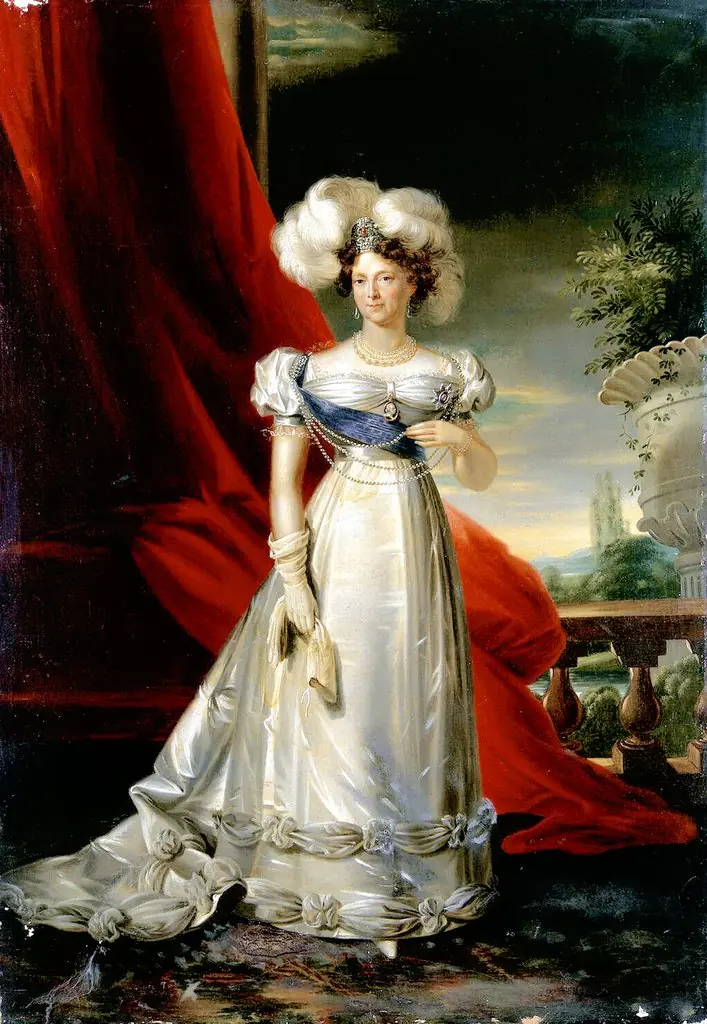 Portrait of the Empress Dowager Maria Feodorovna
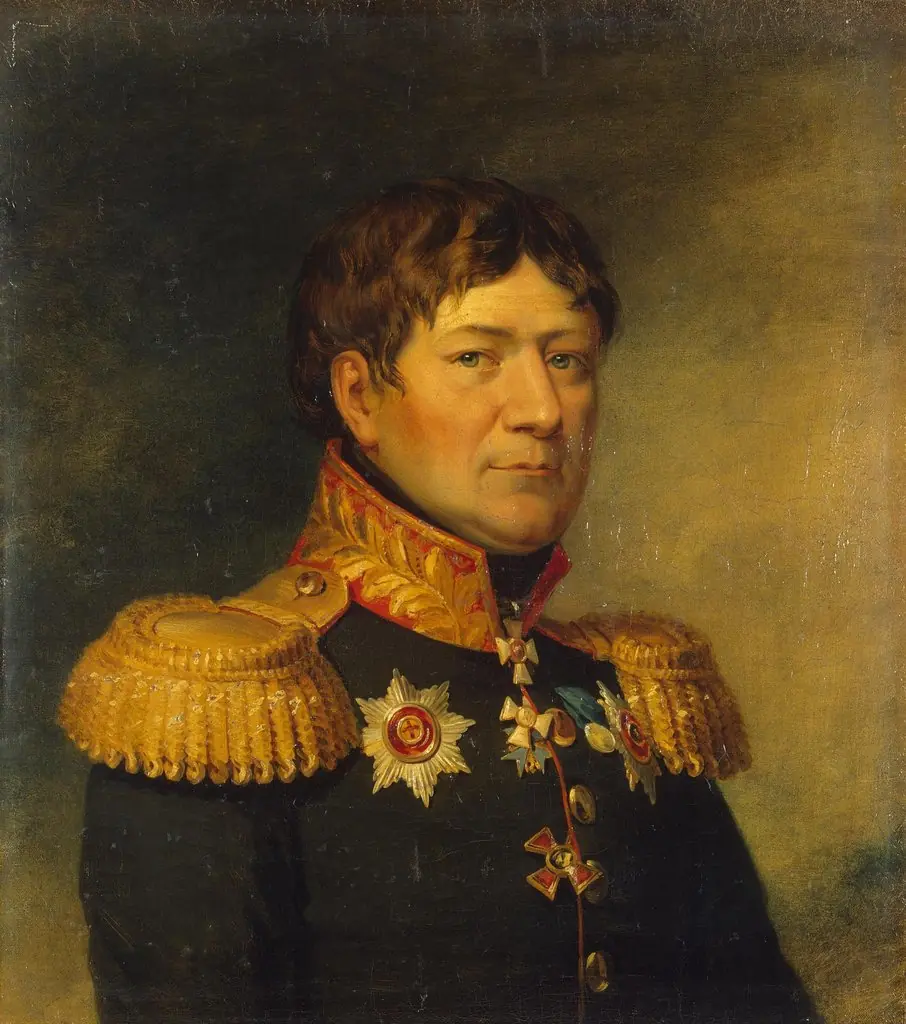 Portrait of Yegor M. Pillar (1767-1830)
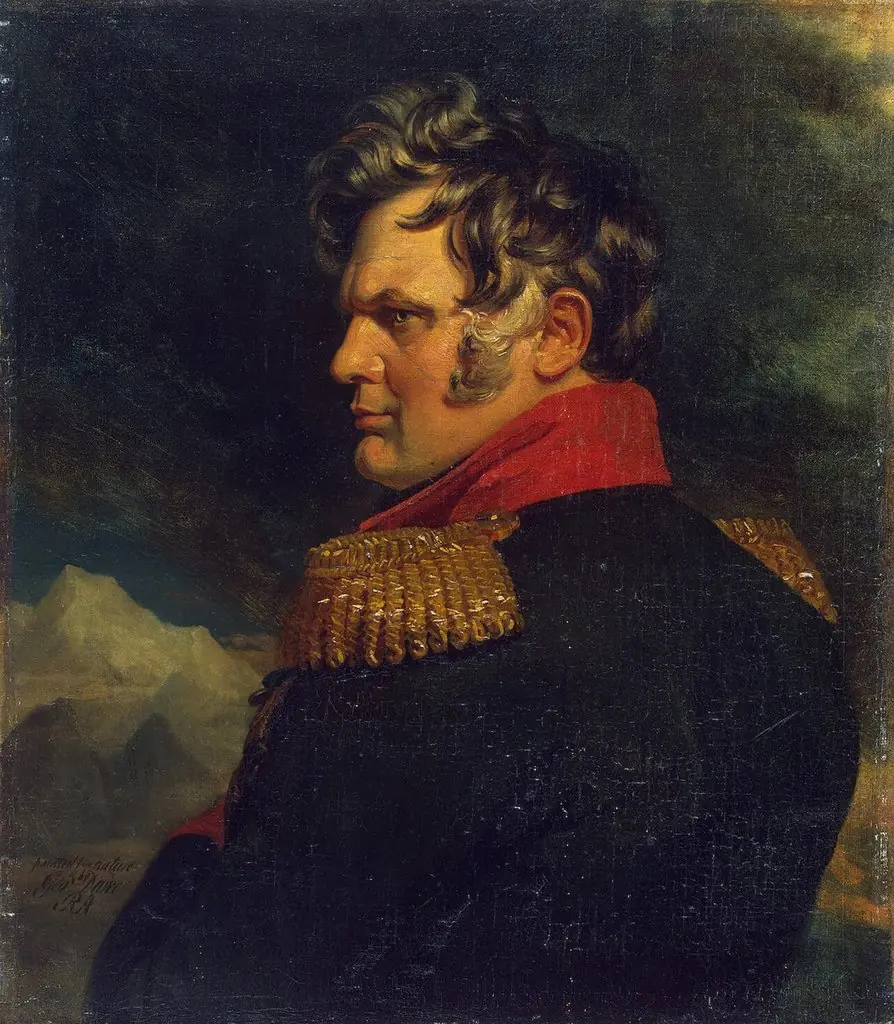 Portrait of Alexei P. Yermolov (1772/77-1861)
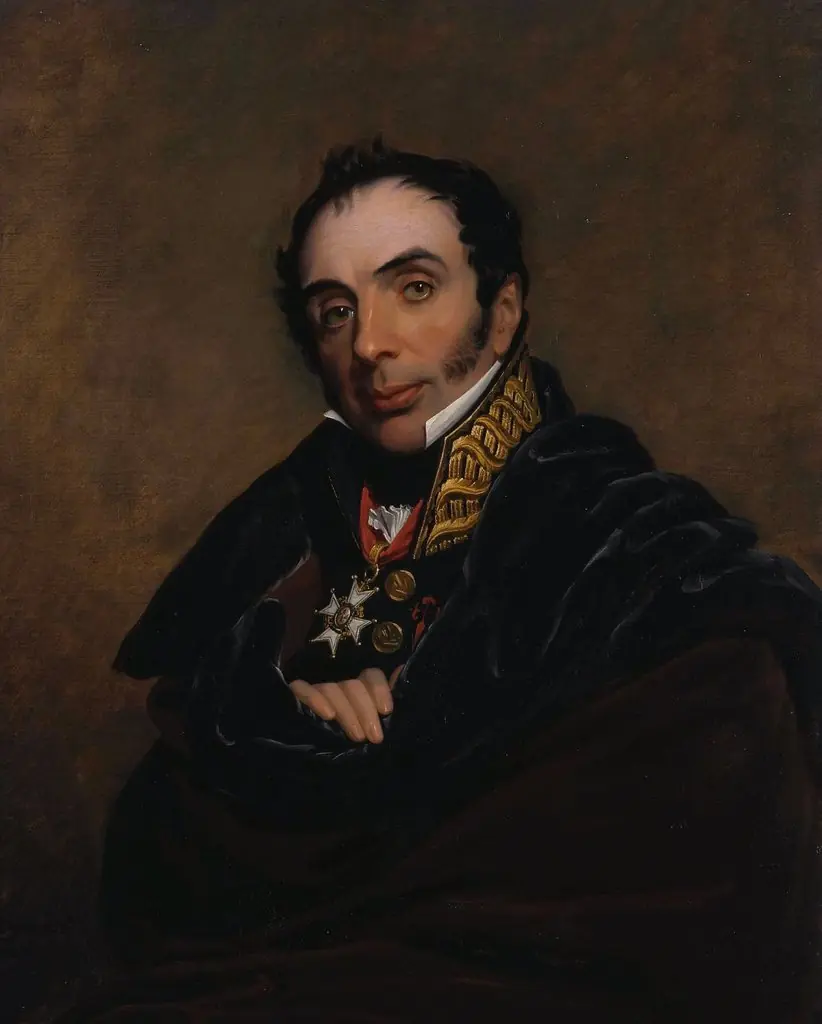 Portrait of Miguel Ricardo de Alava
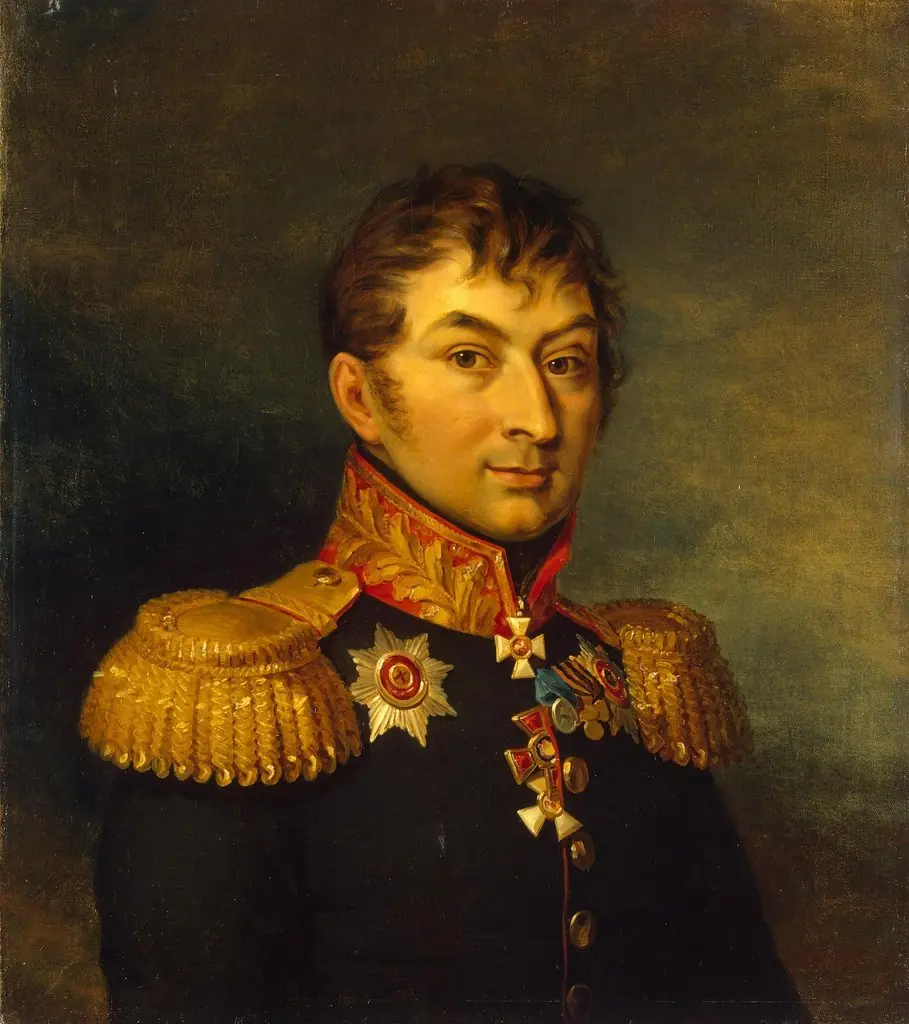 Portrait of Ivan D. Panchulidzev (1759-1815) (1st)
 Portrait of Karl V. Budberg (1774-1829)