Artwork
Portrait of Akim A. Karpov (1767-1838)
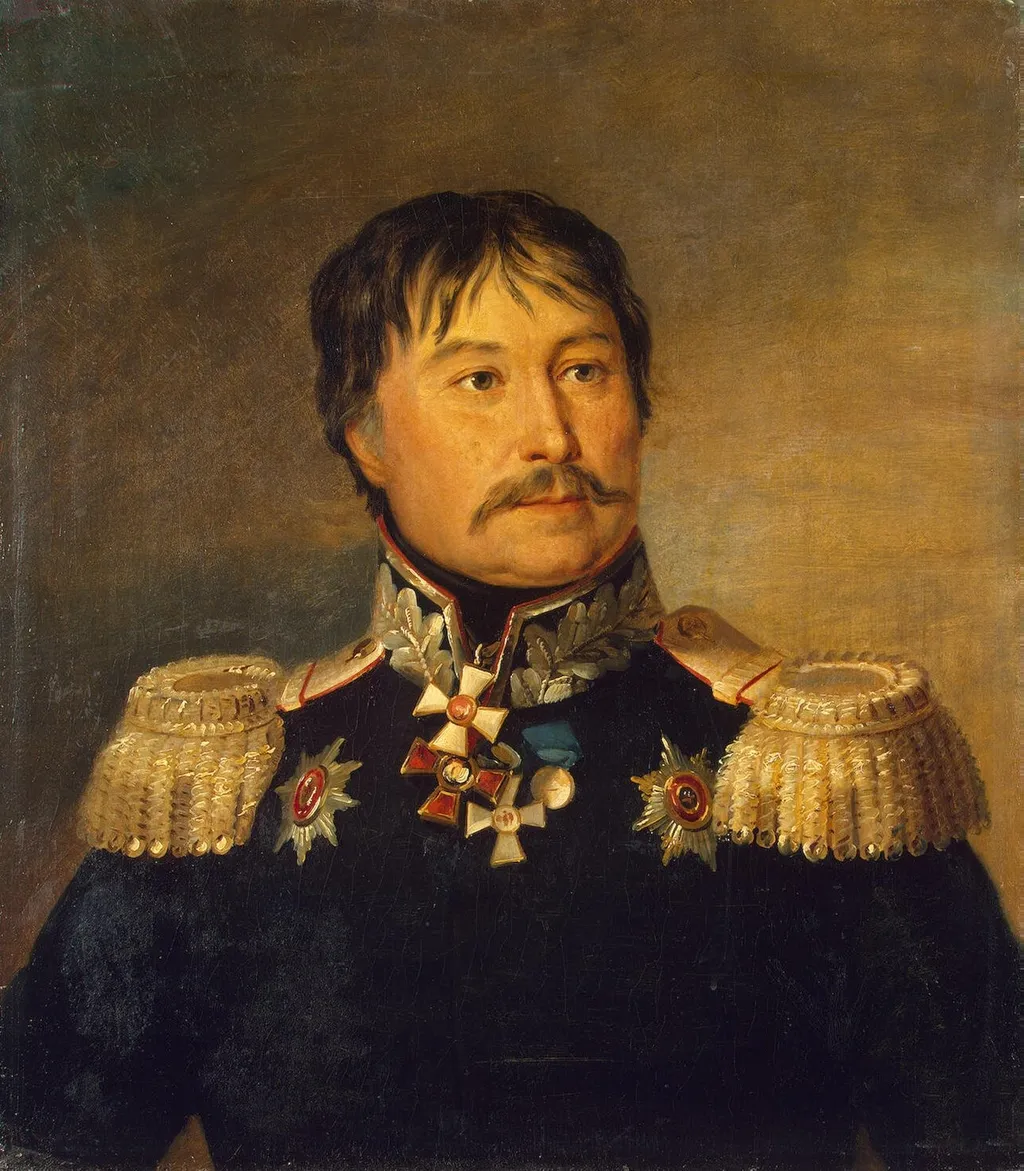
Portrait of Akim A. Karpov (1767-1838) is an oil painting by Unknown. It dates from 1823 and is held in the collection of the Hermitage Museum. This oil painting depicts Akim A.
About this work
Overview
This oil painting depicts Akim A. Karpov, a Russian military officer active in the late 18th and early 19th centuries. Rendered with careful attention to detail, the portrait presents him in full uniform, emphasizing his rank and service. The composition is formal, with a muted, earth-toned background that isolates the figure and enhances the visual weight of his attire and insignia.
Subject & Meaning
Karpov is portrayed not as an individual in private life, but as a representative of military authority. His stern expression, precise grooming, and array of medals convey duty, discipline, and earned distinction. The absence of decorative flourish or symbolic props focuses attention on his identity as a state servant, reflecting the values of service and hierarchy in imperial Russia.
Technique & Style
The artist employs chiaroscuro to model the figure with subtle gradations of light and shadow, lending volume to the uniform and face. The gold epaulets and medal ribbons catch the light with precision, contrasting against the dark fabric. Brushwork is controlled and refined, avoiding overt expressionism in favor of clarity and dignity, typical of official portraiture of the period.
History & Provenance
The portrait was likely commissioned during Karpov’s active service, possibly by the state or his family to commemorate his military career. Its survival suggests it remained in private or institutional hands, though specific ownership records prior to modern cataloging are not documented. It has been preserved without significant alteration, maintaining its original condition.
Context
In early 19th-century Russia, military portraits served both personal and political functions. Officers like Karpov were celebrated as pillars of state stability, especially after the Napoleonic Wars. Such images reinforced social order and loyalty to the crown, circulating among elite circles and state institutions as visual affirmations of service and hierarchy.
Legacy
The portrait stands as a quiet testament to the bureaucratic and military culture of imperial Russia. It does not seek to dramatize or idealize, but to record. As such, it contributes to the visual archive of Russian officer class identity, offering insight into how authority was visually constructed and preserved in an era before photography.
Artist & collection

 Domestic Scene
 Giacomo and Cardinal Marco, investing Andrea, Abbot of San Zeno, with his Benefice
 The Nymph of Fontainebleau
 Portrait of a Woman
 Madonna and Child with Saints in the Enclosed Garden
 Venus and Minerva
 Family Group of Four on Sofa
 Wall painting from Room H of the Villa of P. Fannius Synistor at Boscoreale
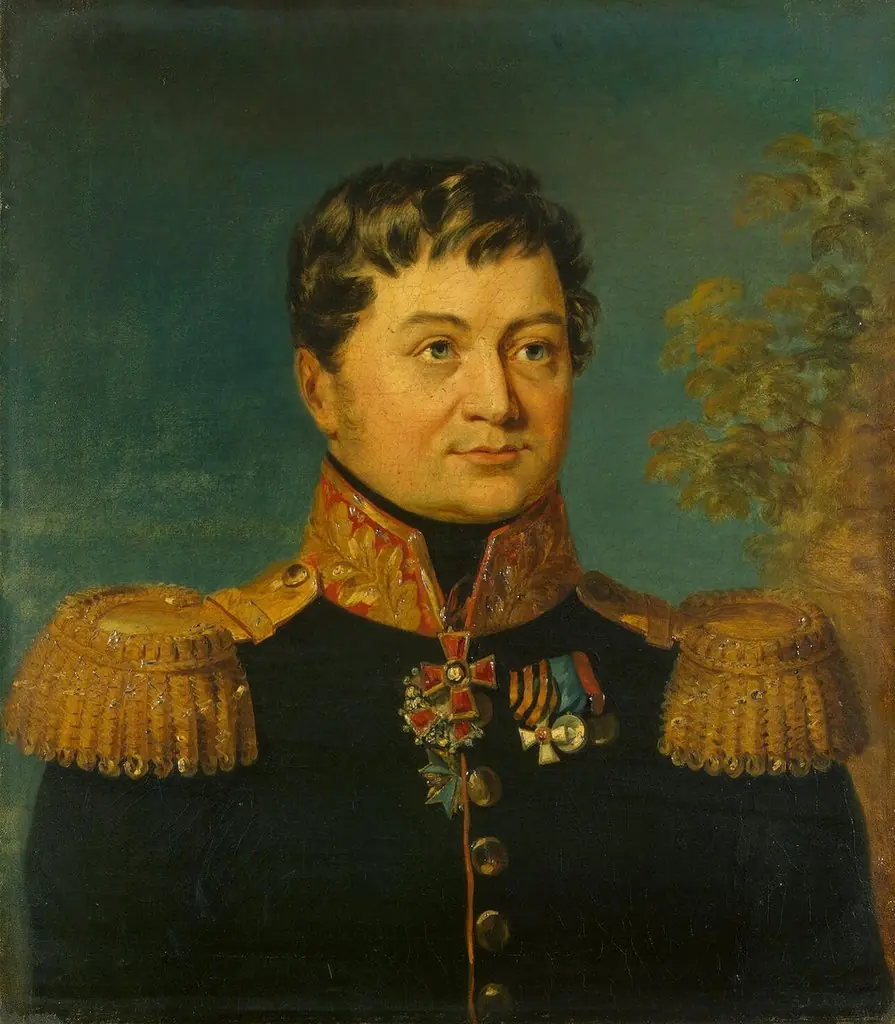 Portrait of Andrey P. Turchaninov (1779 -1830) (2nd)
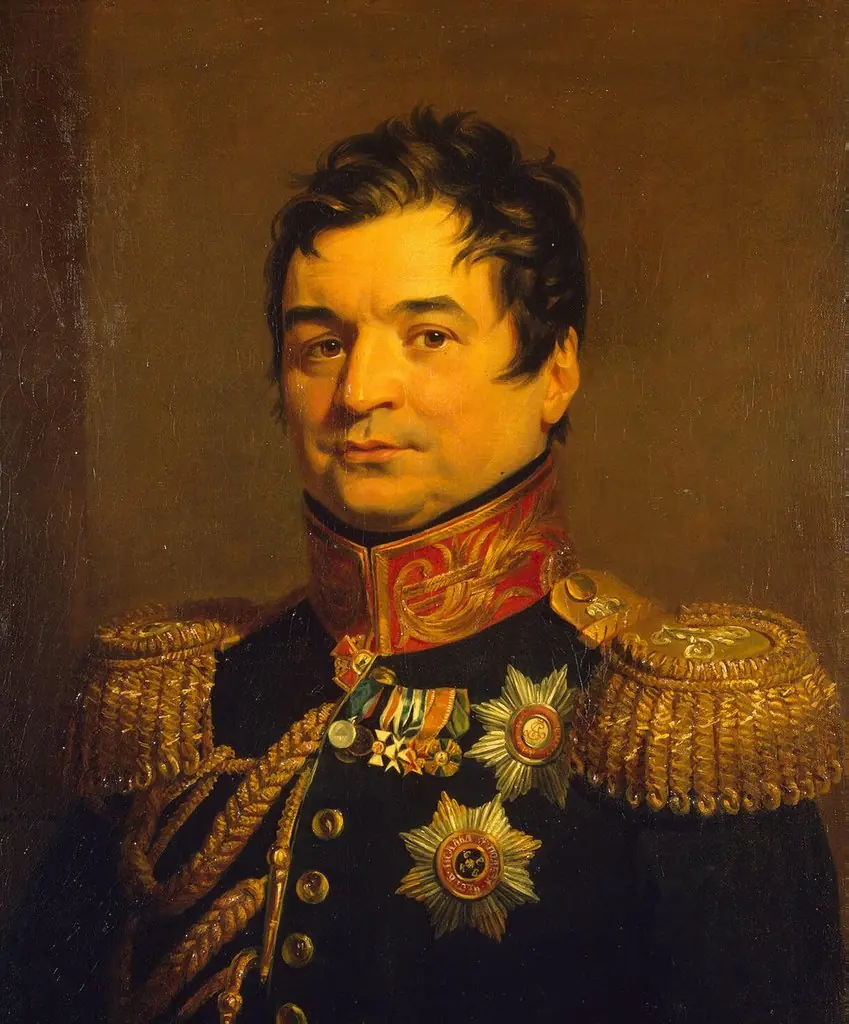 Portrait of Alexander D. Balashov (1770-1837)
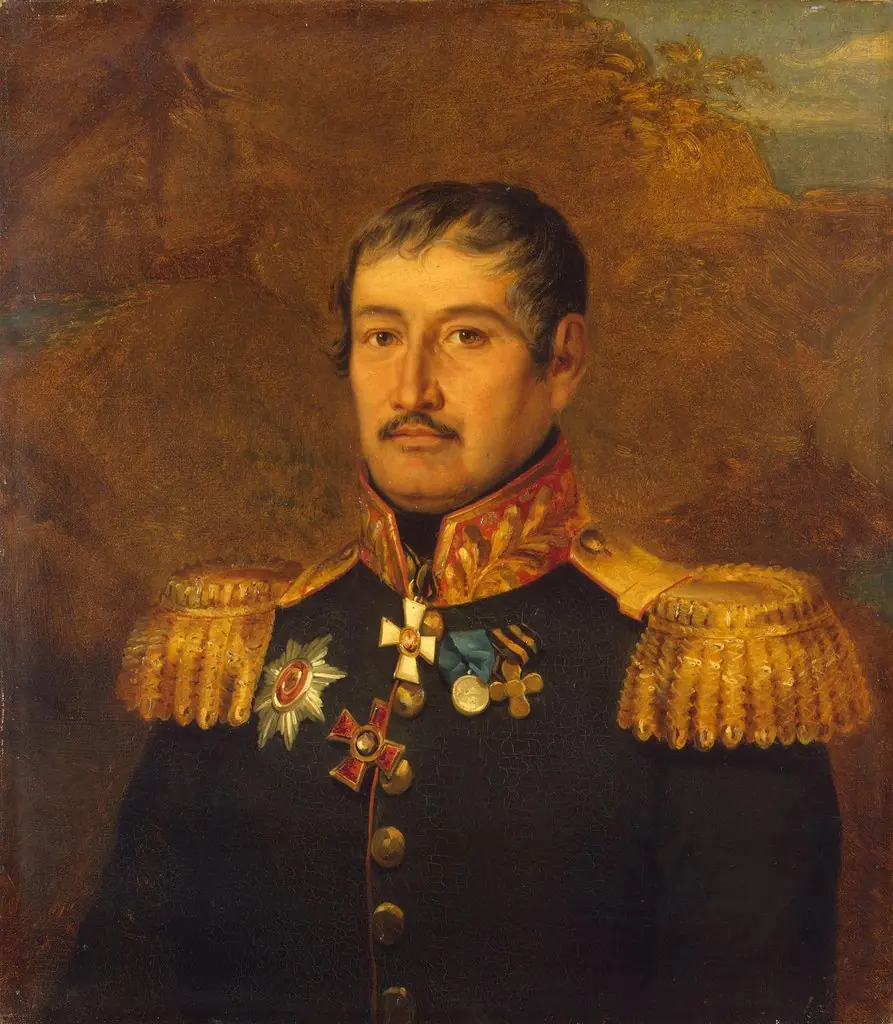 Portrait of Gerasim A. Shostakov (1756-1837)
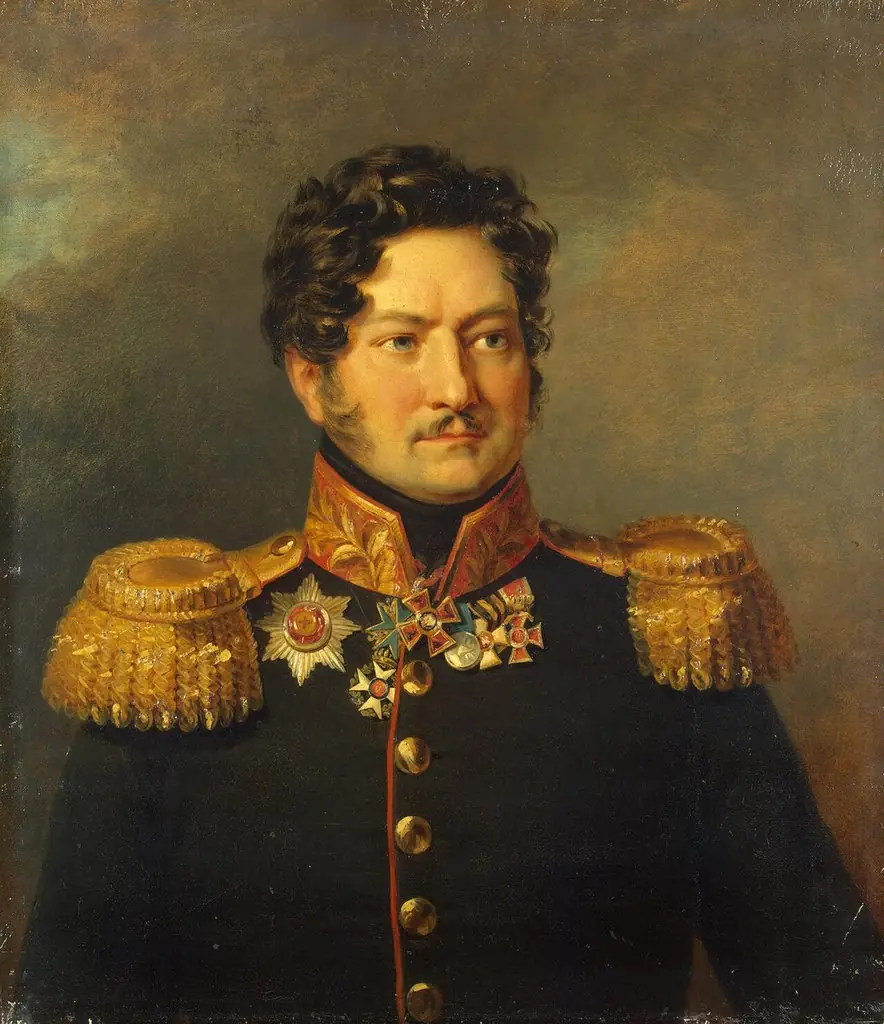 Portrait of Dmitry L. Ignatyev (1771-1833)
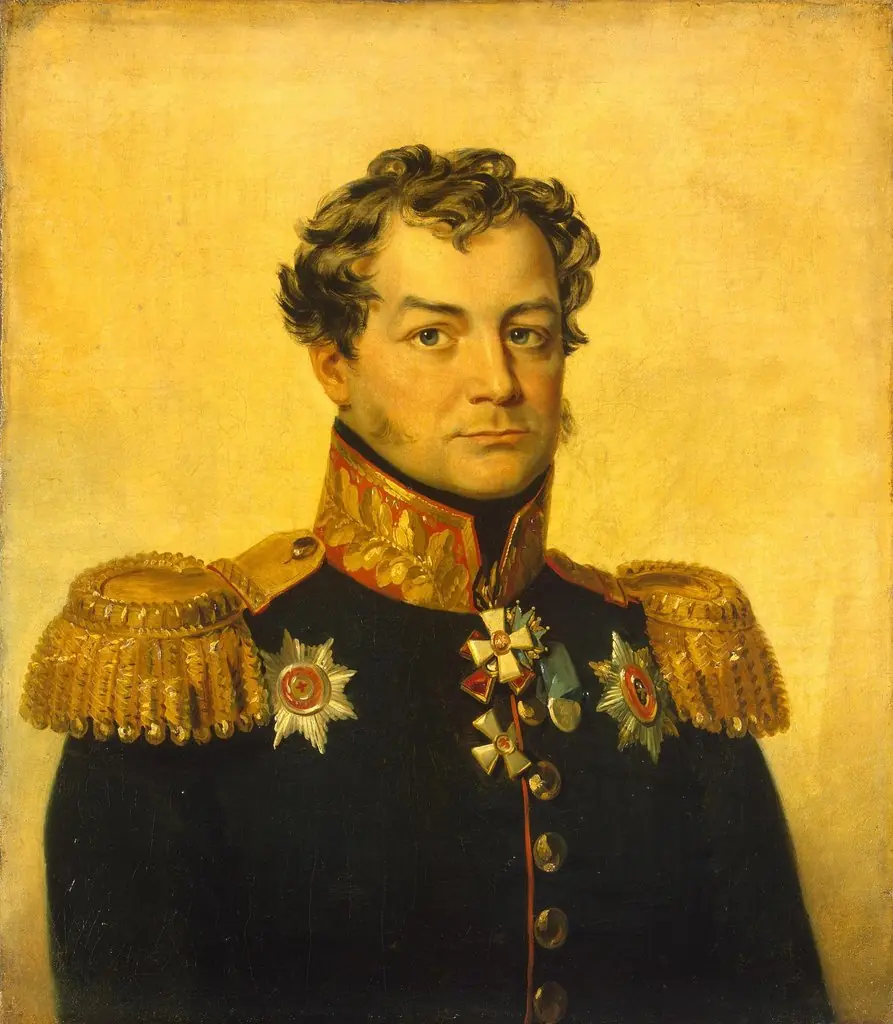 Portrait of Kirill F. Kazachkovsky (1760-1829)
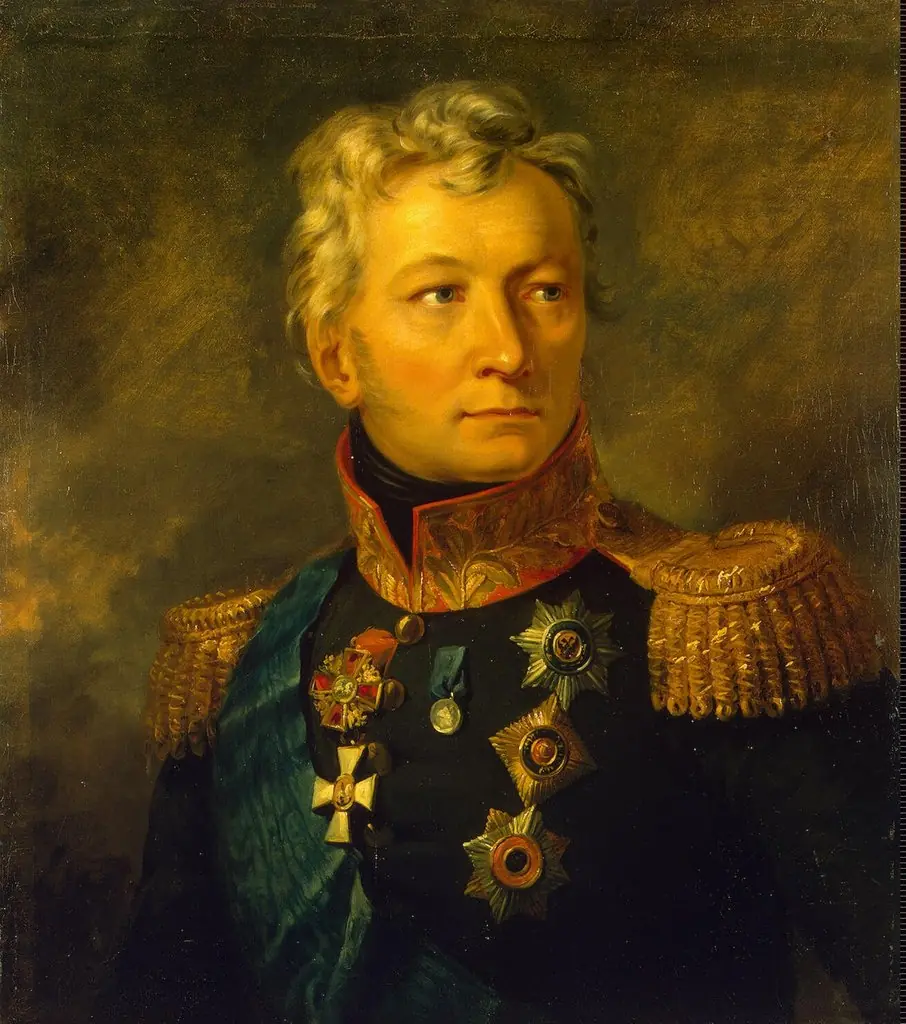 Portrait of Alexander P. Tormasov (1752-1819)
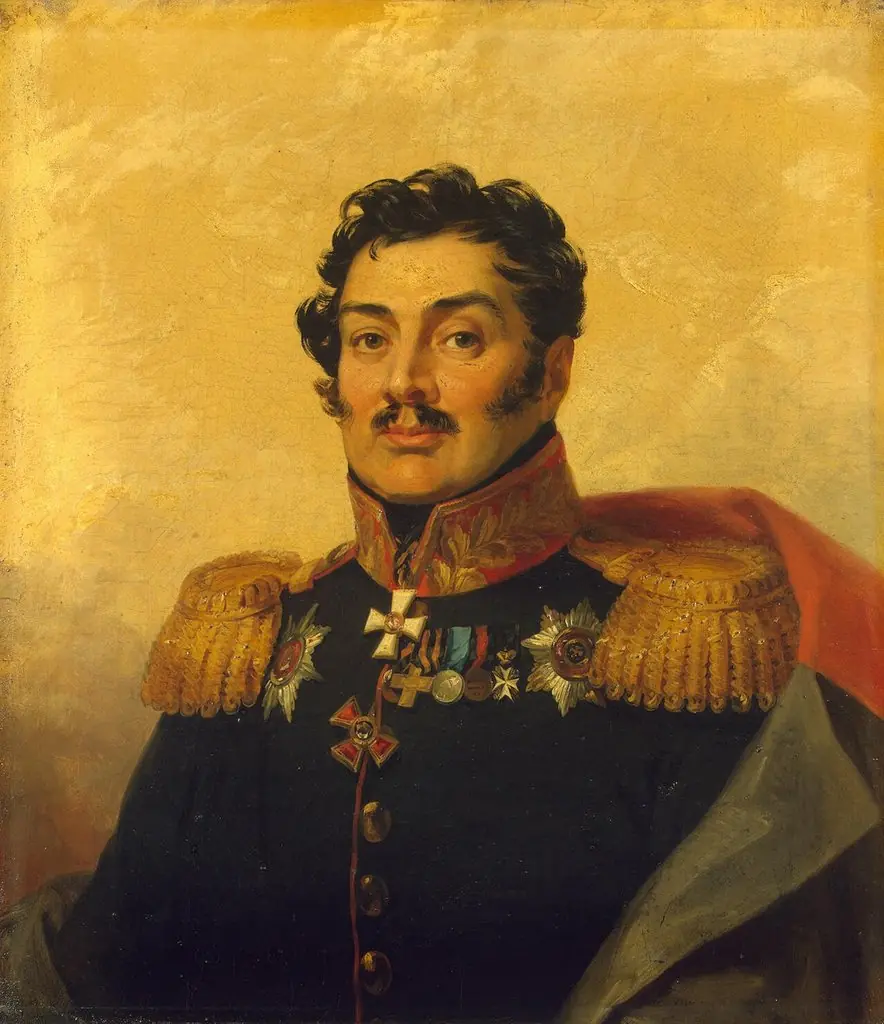 Portrait of Dmitry D. Shepelev (1771-1841)