Artwork
Portrait of Pyotr Ya. Kornilov (1770-1828)
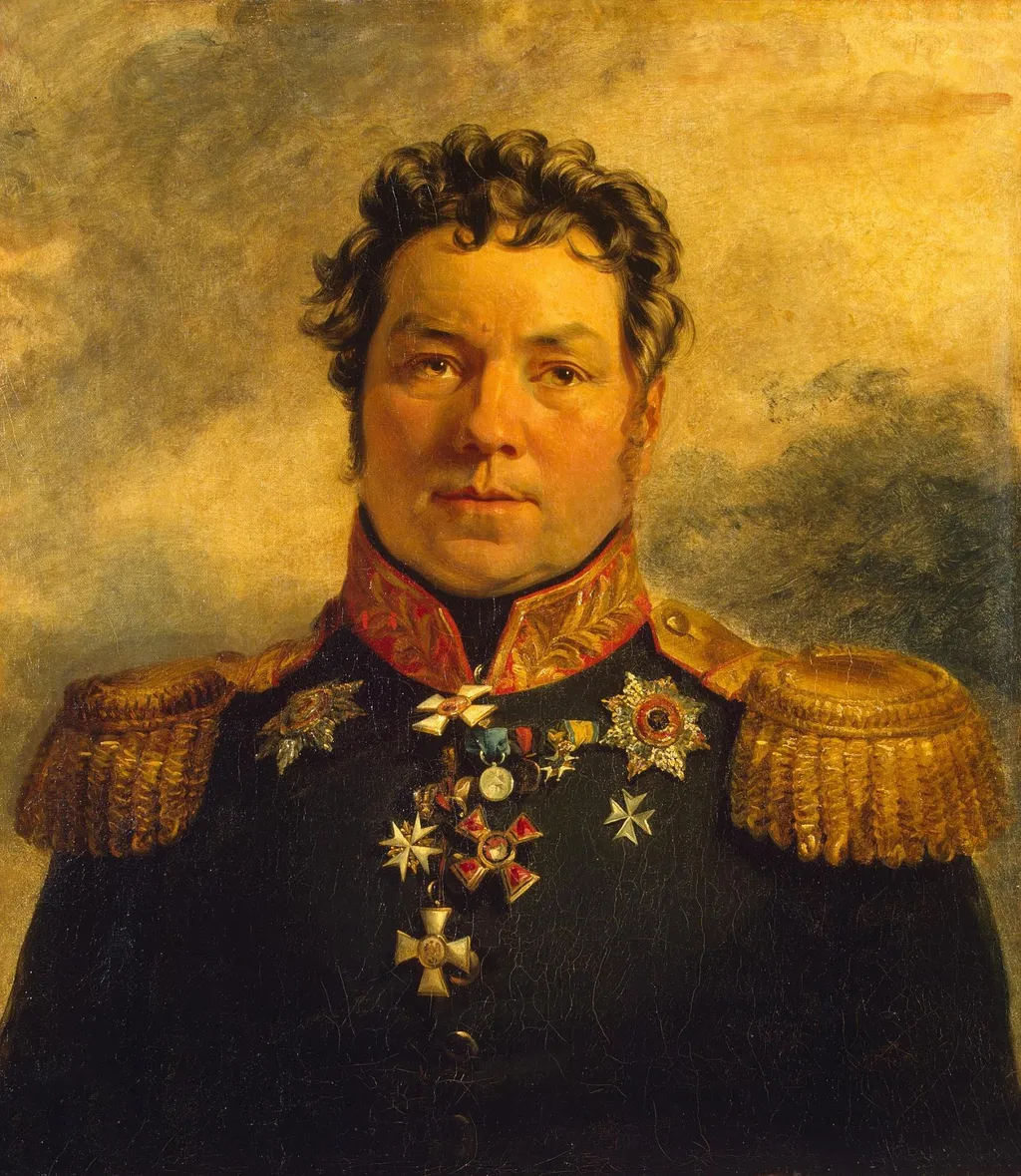
Portrait of Pyotr Ya. Kornilov (1770-1828) is an oil painting by George Dawe. It dates from 1822 and is held in the collection of the Hermitage Museum.
About this work
Overview
Dawe, who moved to Saint Petersburg in 1819, was commissioned to document Russian military leadership for the Winter Palace’s Military Gallery.
Painted in 1822 by the English artist George Dawe, this portrait captures General Pyotr Ya. Kornilov, a decorated officer of the Napoleonic Wars. Dawe, who moved to Saint Petersburg in 1819, was commissioned to document Russian military leadership for the Winter Palace’s Military Gallery. The work is one of over three hundred portraits he produced during his time in Russia, all intended to honor the nation’s wartime commanders.
Subject & Meaning
Pyotr Kornilov is portrayed as a seasoned military leader, his uniform adorned with medals signifying distinguished service. His stern gaze and composed posture convey authority and discipline, aligning with the ideals of Russian military honor. The absence of contextual elements emphasizes his personal achievements rather than battlefield scenes, reinforcing the portrait’s role as a formal tribute within a state-sponsored collection of heroes.
Technique & Style
Dawe employed soft, even lighting to accentuate the texture of the uniform’s gold embroidery and the gleam of medals, while maintaining a restrained palette. The background is neutral, directing attention to the subject’s face and insignia. His brushwork is precise but not overly ornate, favoring clarity and dignity over theatricality. This approach reflects his training in British portraiture and his adaptation to Russian imperial tastes.
History & Provenance
Commissioned as part of the Military Gallery project initiated by Tsar Alexander I, the portrait entered the collection of the Winter Palace shortly after completion. It remained in imperial custody through the Russian Revolution and was later transferred to the State Hermitage Museum, where it continues to be displayed as part of the gallery’s original ensemble. Its provenance is well-documented through imperial archives and Dawe’s own records.
Context
Dawe’s work emerged during a period when the Russian state sought to visually consolidate its military legacy after the Napoleonic Wars. The Military Gallery was conceived as both a memorial and a tool of national identity, featuring generals from across the empire. Dawe’s portraits, though painted by a foreign artist, were accepted for their technical accuracy and adherence to the formal conventions expected by the court.
Legacy
The portrait remains a key example of early 19th-century imperial portraiture in Russia. While Dawe’s style was later overshadowed by more expressive approaches, his systematic documentation of military figures provided a visual archive that influenced later historical representations. The work continues to serve as a reference for understanding the aesthetics of authority in Tsarist Russia.
Own this work as a print
Artist & collection
Artist
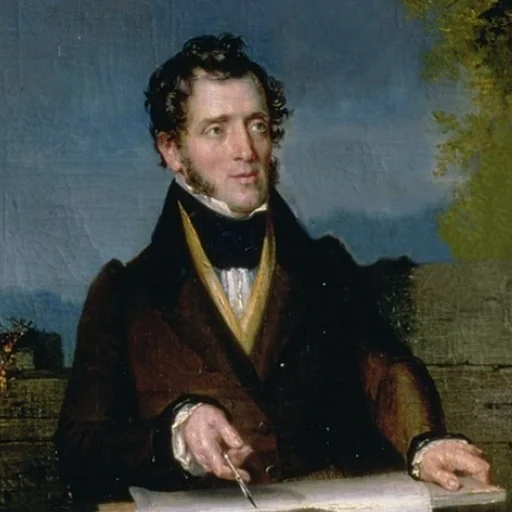
George Dawe (6 February 1781 – 15 October 1829) was an English portraitist who painted 329 portraits of Russian generals active during Napoleon's invasion of Russia for the Military Gallery of the Winter Palace.

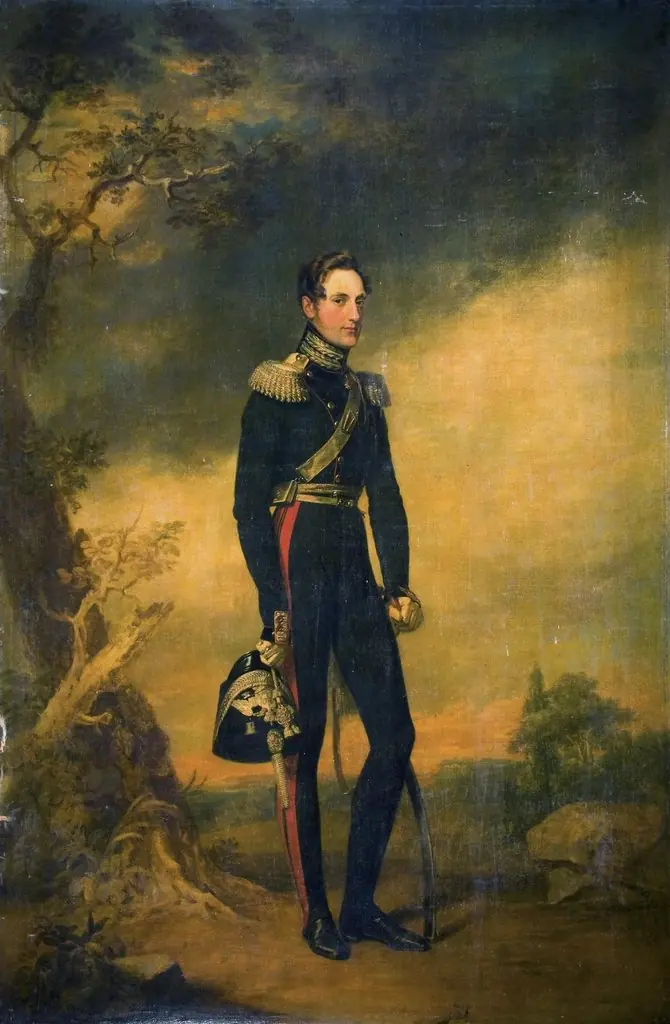 Portrait of Grand Duke Nikolai Pavlovich
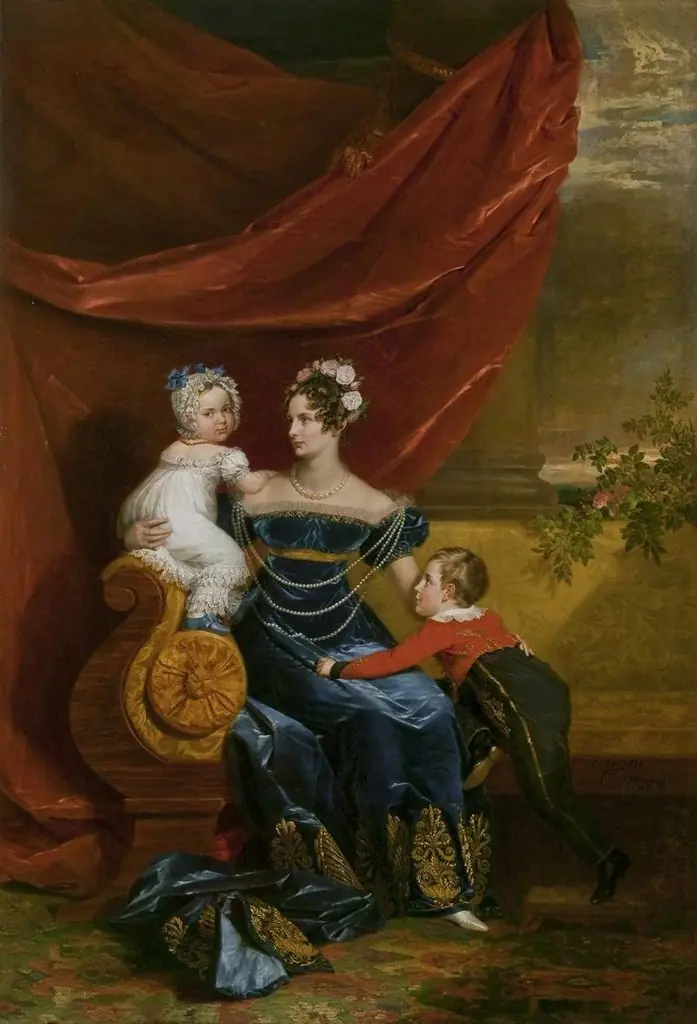 Portrait of Grand Duchess Alexandra Fiodorovna with Children
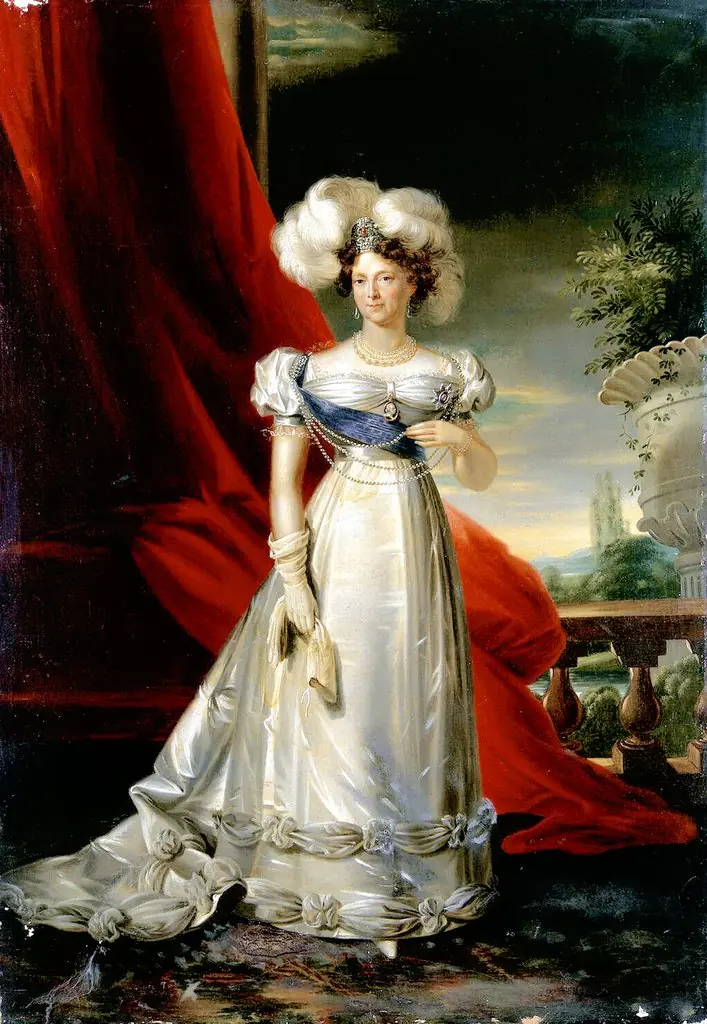 Portrait of the Empress Dowager Maria Feodorovna
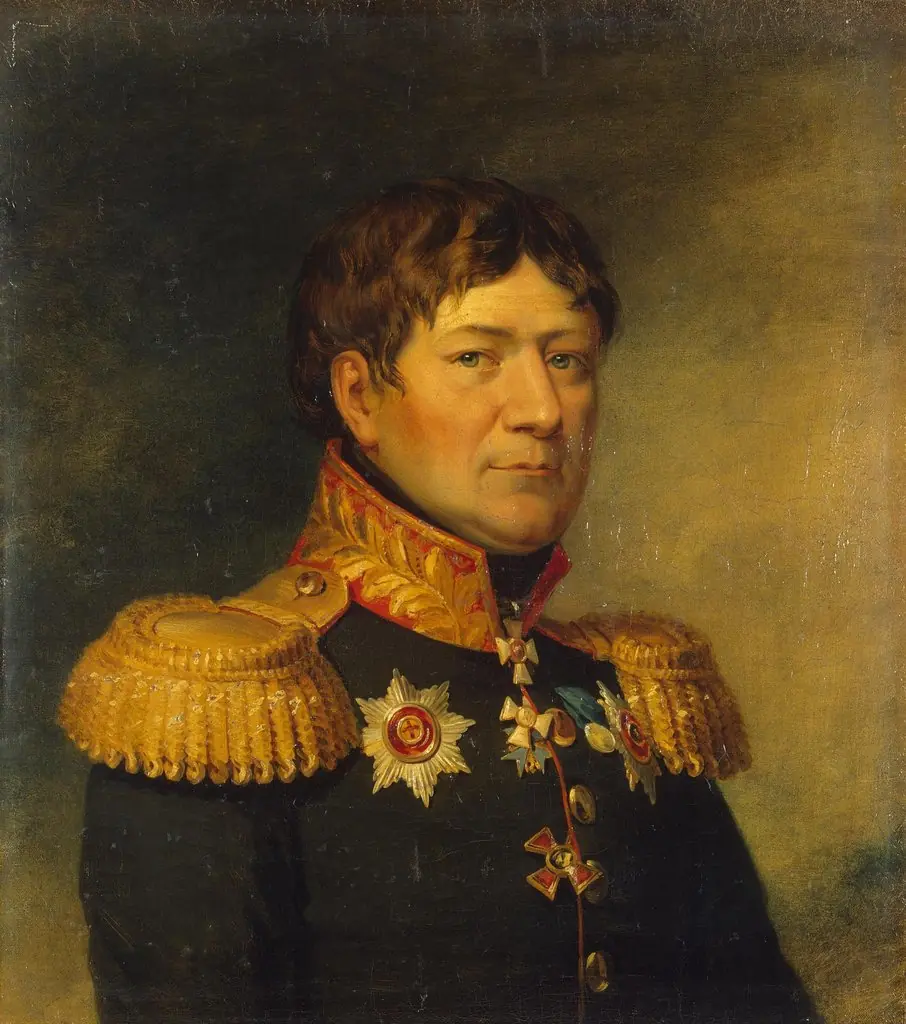 Portrait of Yegor M. Pillar (1767-1830)
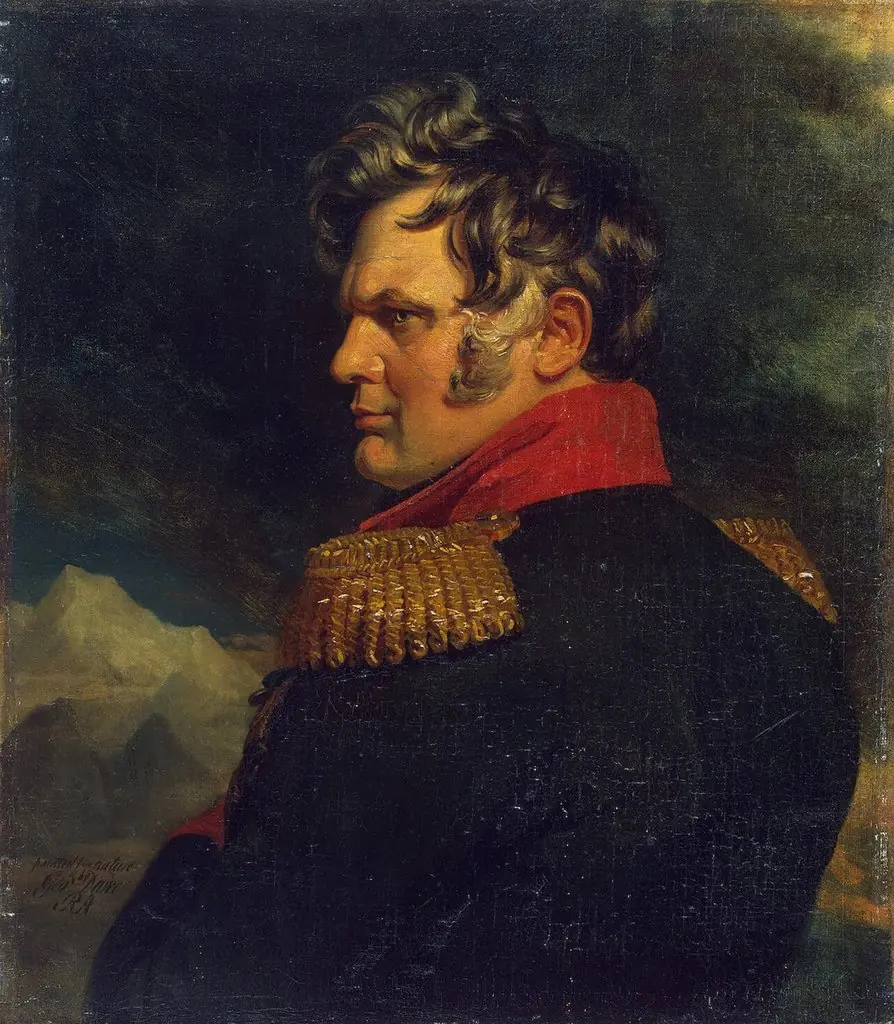 Portrait of Alexei P. Yermolov (1772/77-1861)
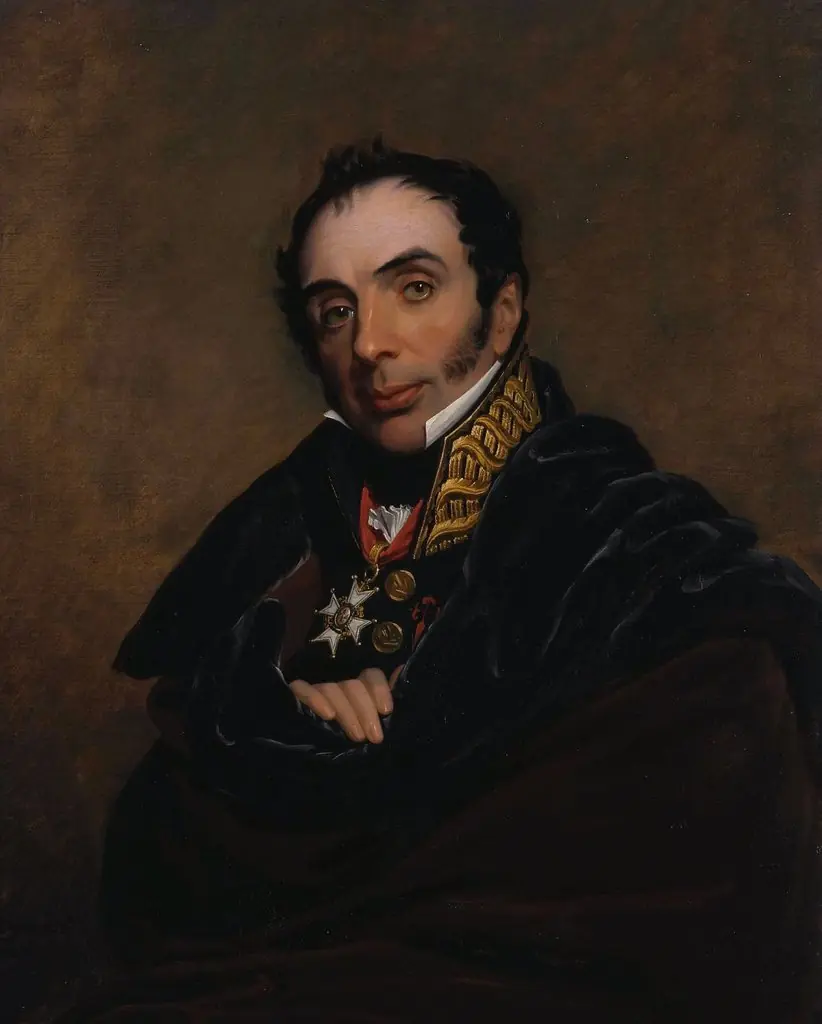 Portrait of Miguel Ricardo de Alava
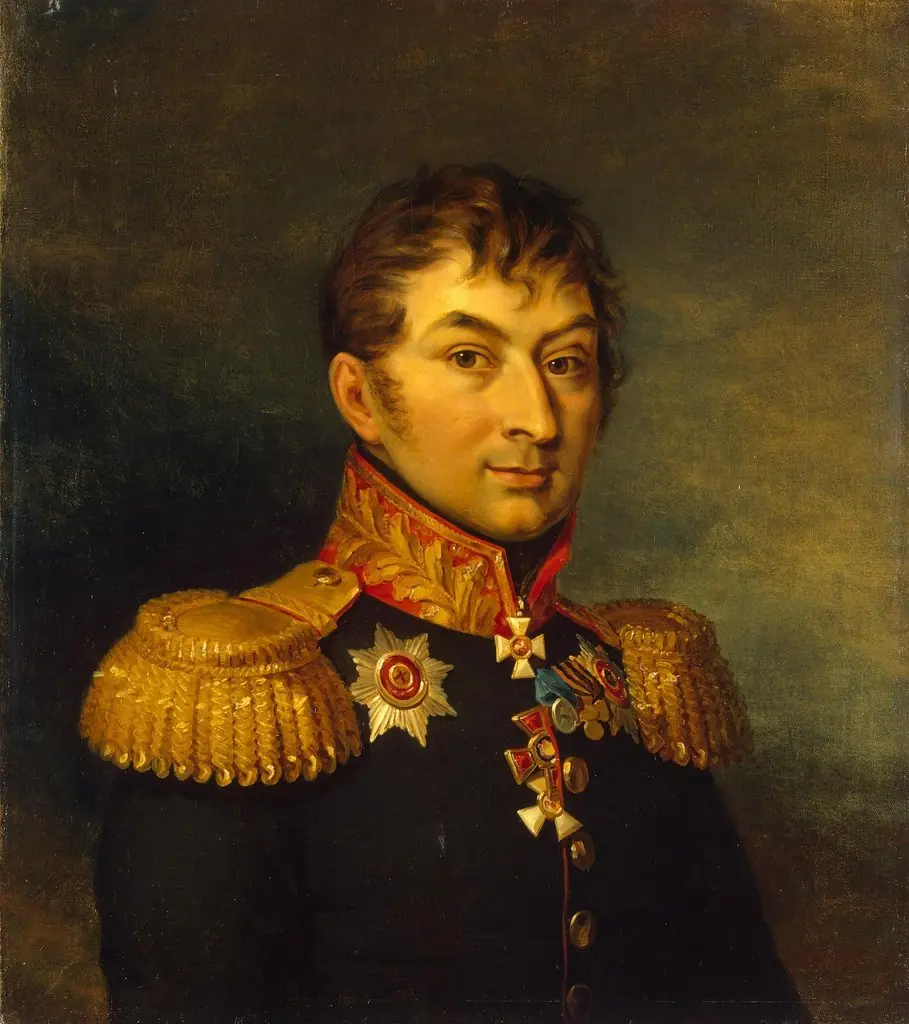 Portrait of Ivan D. Panchulidzev (1759-1815) (1st)
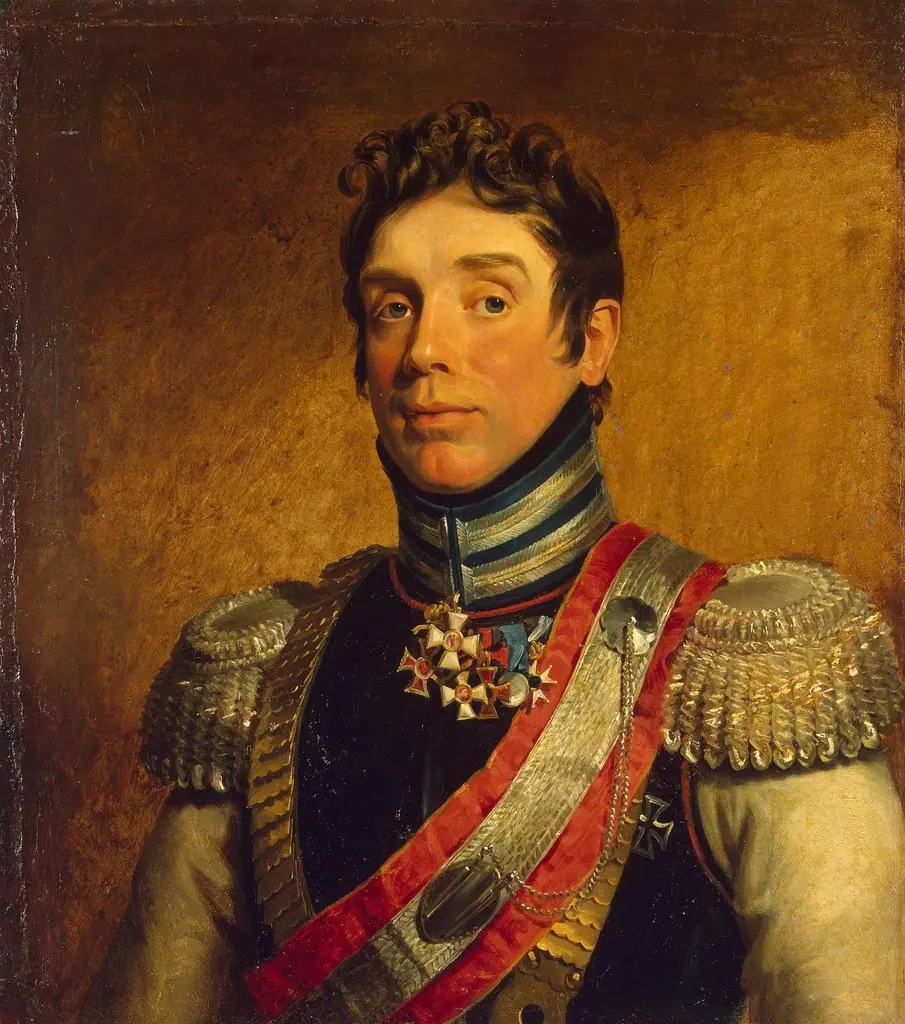 Portrait of Karl V. Budberg (1774-1829)
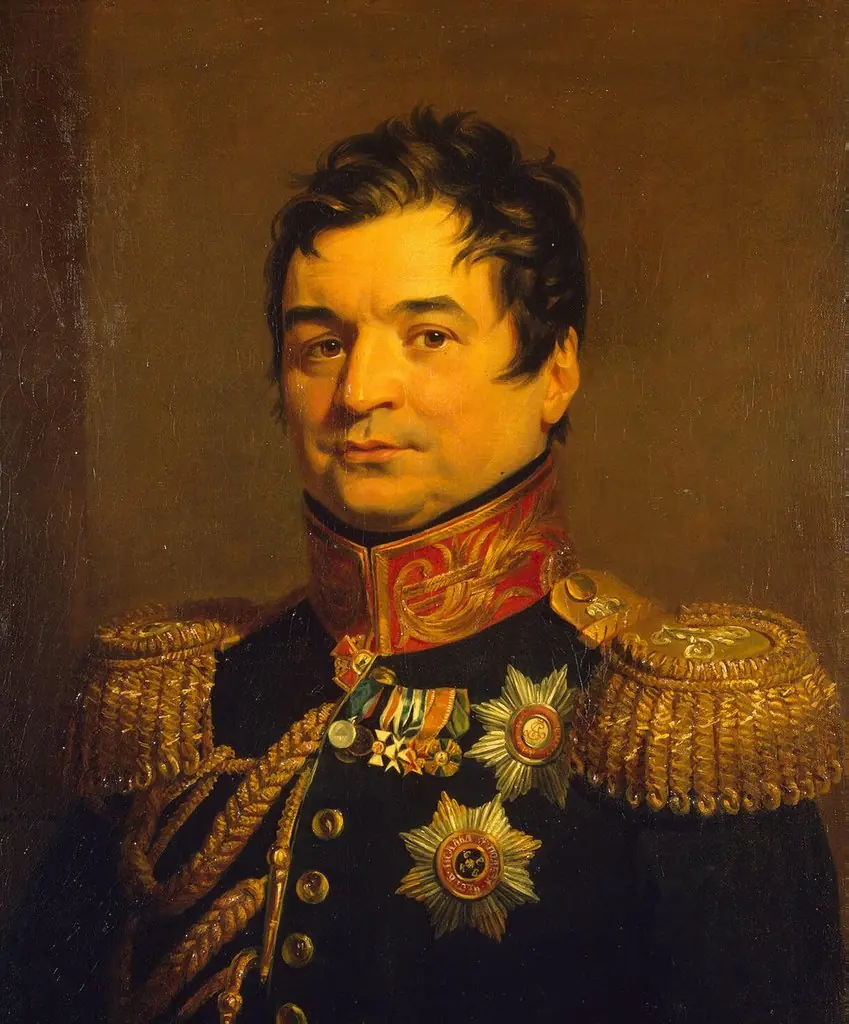 Portrait of Alexander D. Balashov (1770-1837)
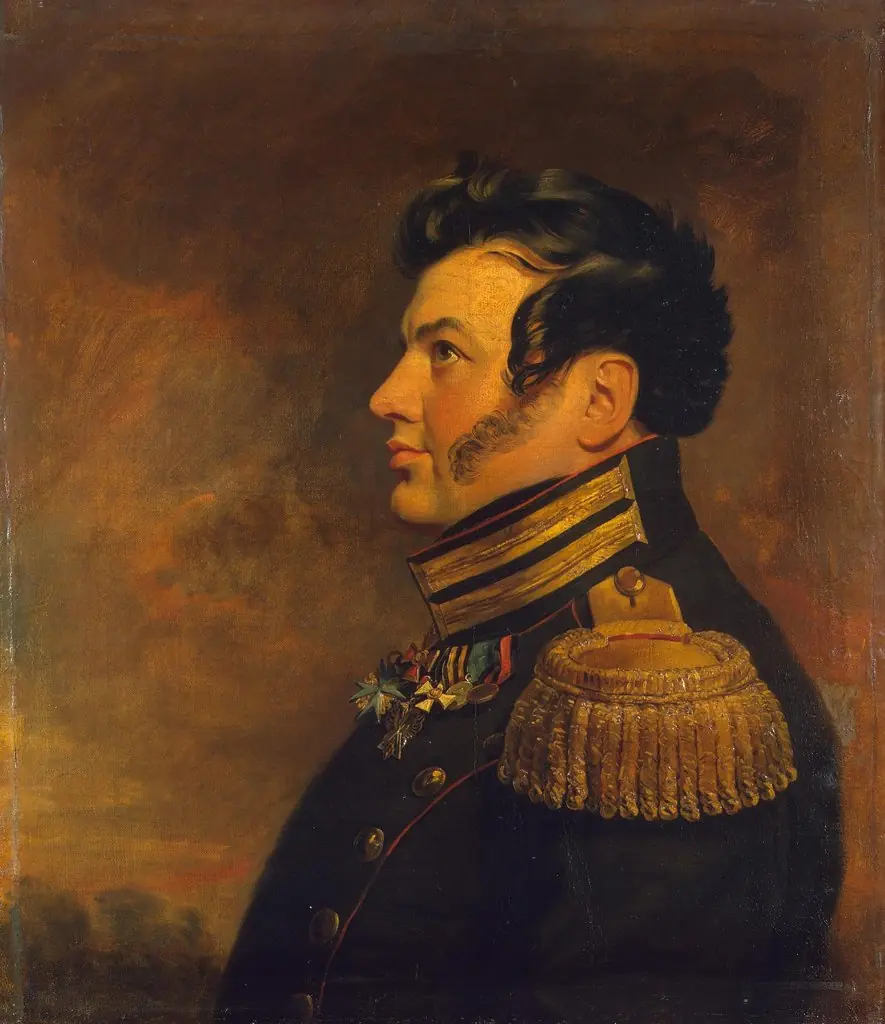 Portrait of Maxim K. Kryzhanovsky (1777-1839)
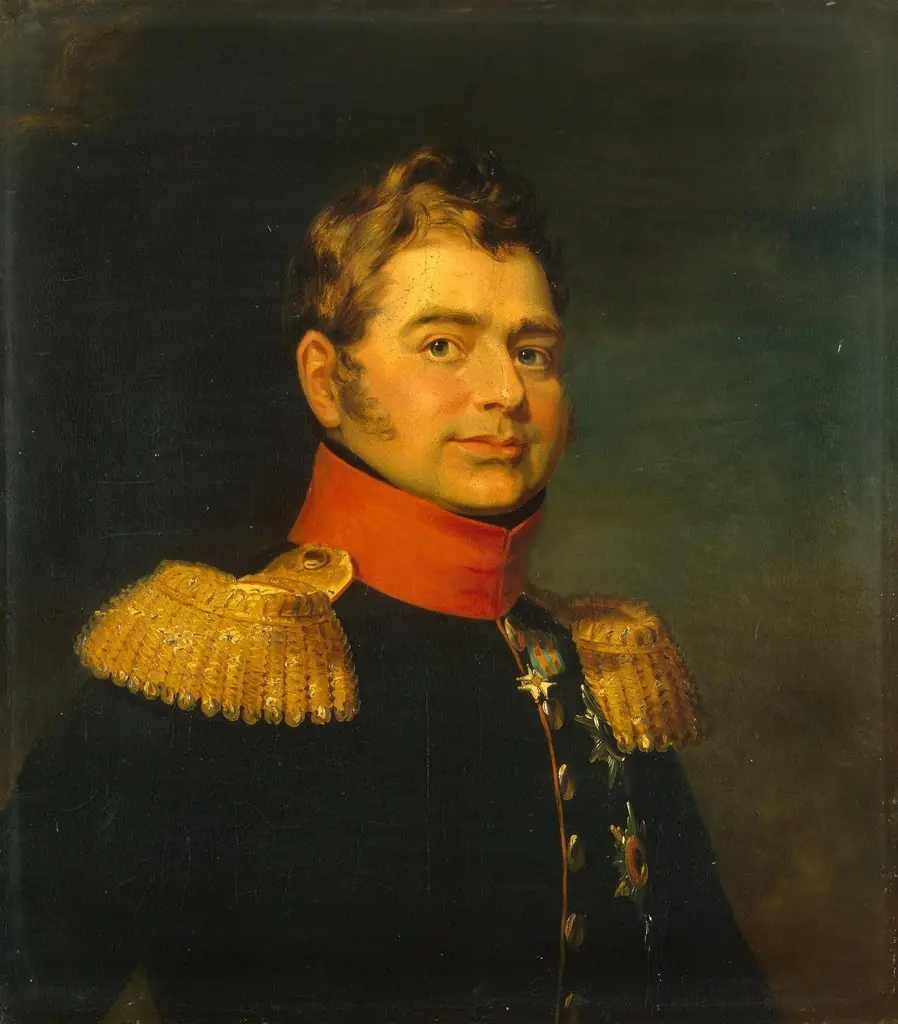 Portrait of Sergey Ya. Repninsky (1775-1818) (2nd)
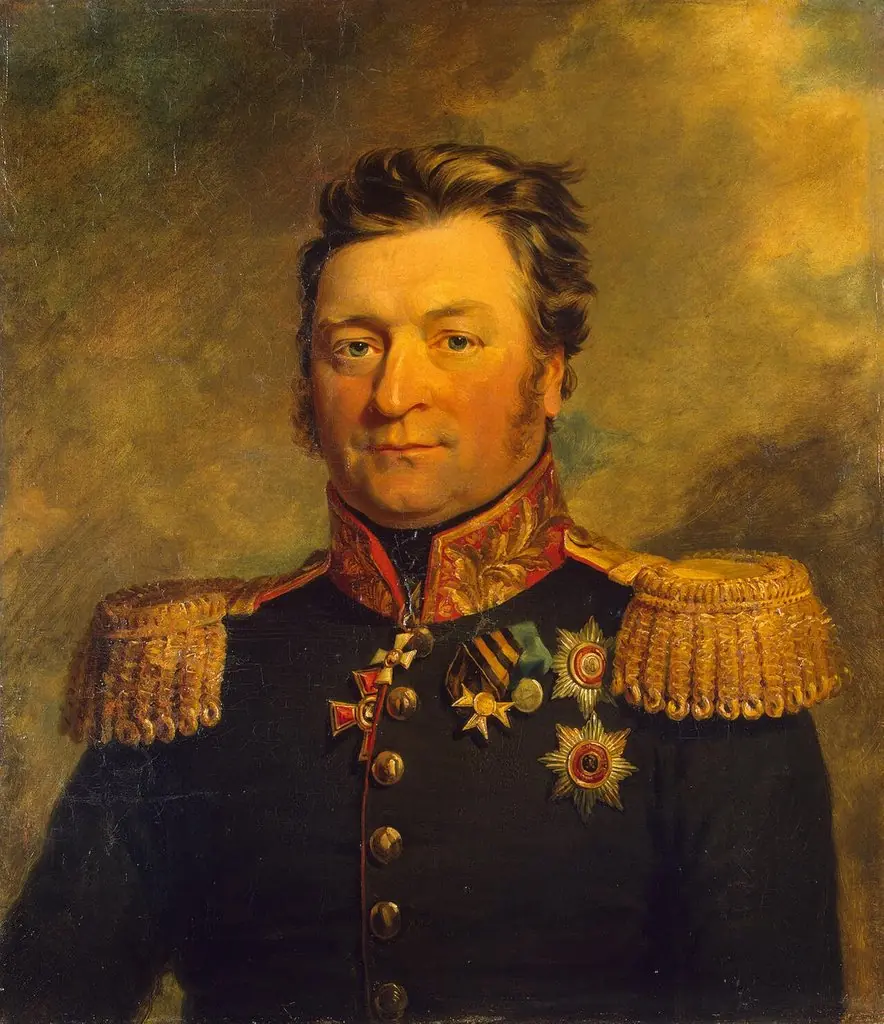 Portrait of Alexander L. Voinov (1768/70-1832)
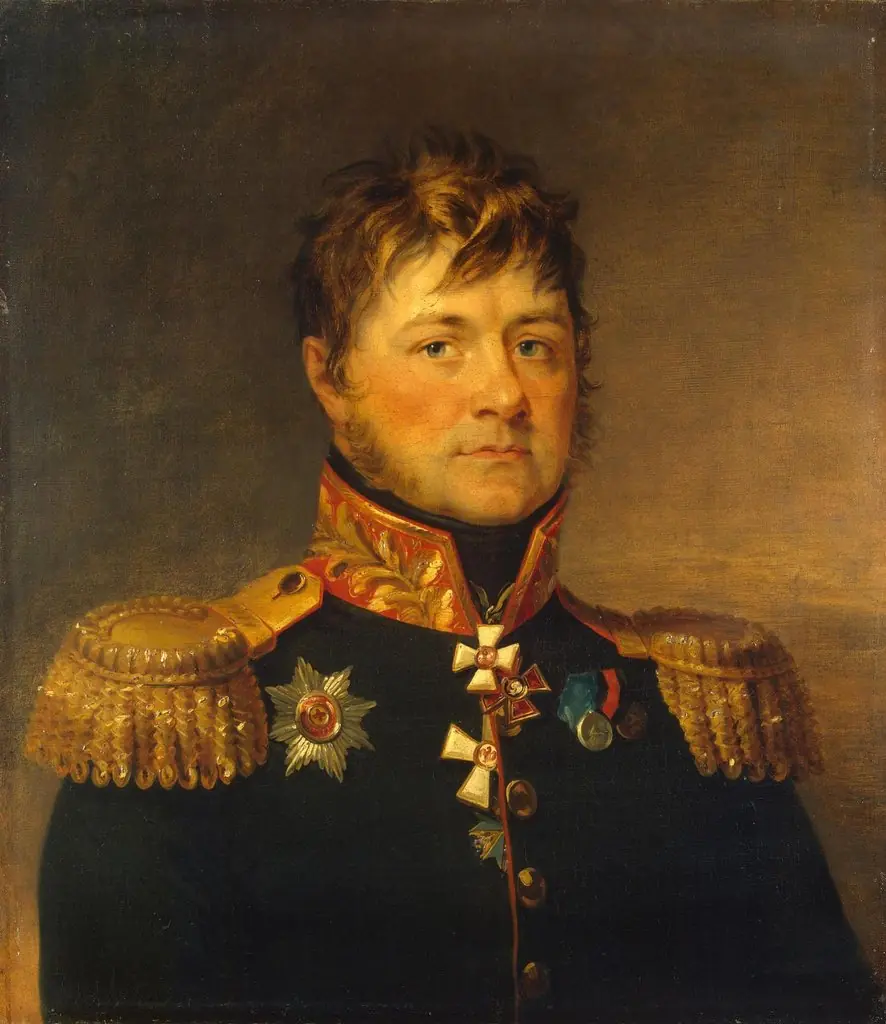 Portrait of Ivan L. Paul (1768-1840)
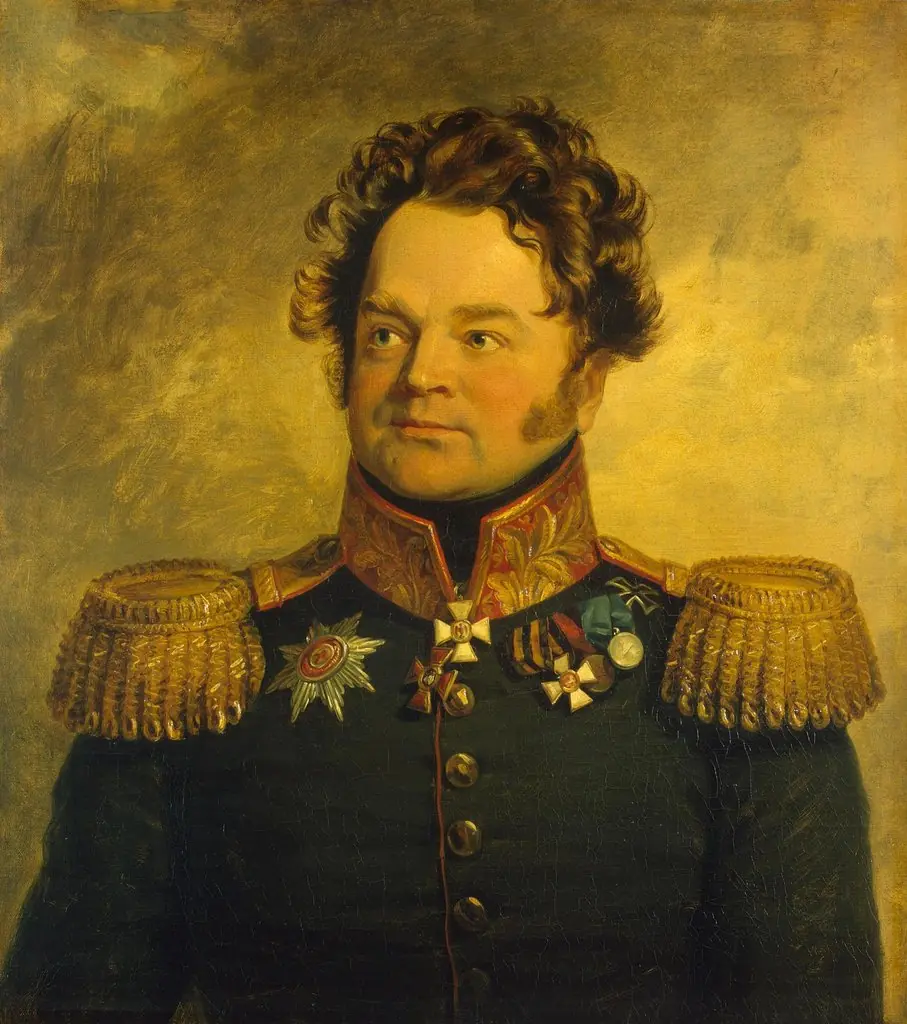 Portrait of Nikanor M. Svechin (1772-1849)
 Portrait of Andrey P. Turchaninov (1779 -1830) (2nd)
 Portrait of Alexander K. Riedinger (1782-1825)
 Portrait of Karl F. Loevenstern (1770/71-1840)