Artwork
Untitled
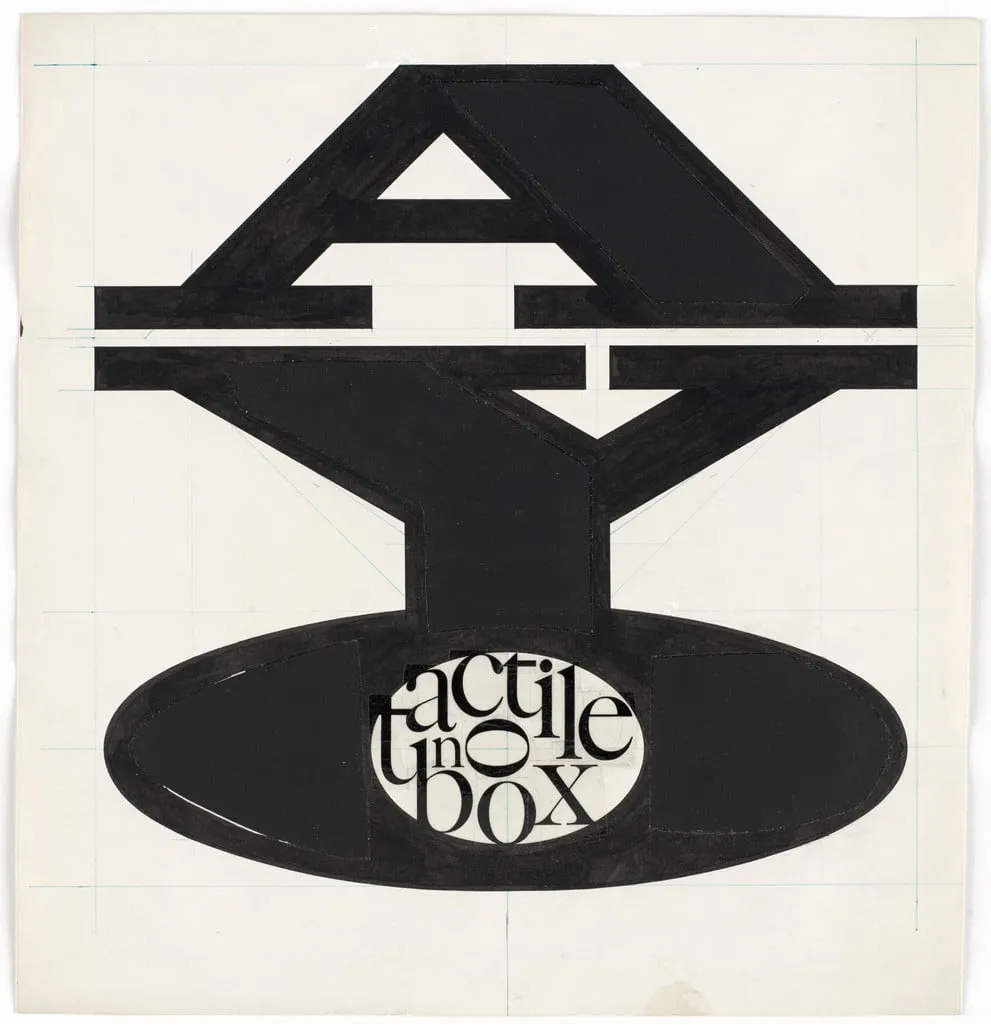
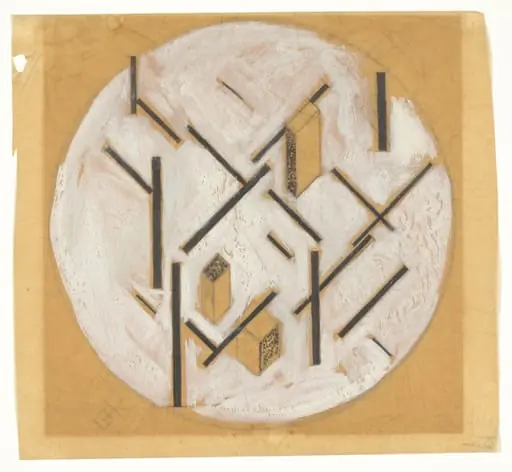
Untitled is an ink print by Ay-O George Maciunas. It dates from 1966 and is held in the collection of the Museum of Modern Art.
About this work
Overview
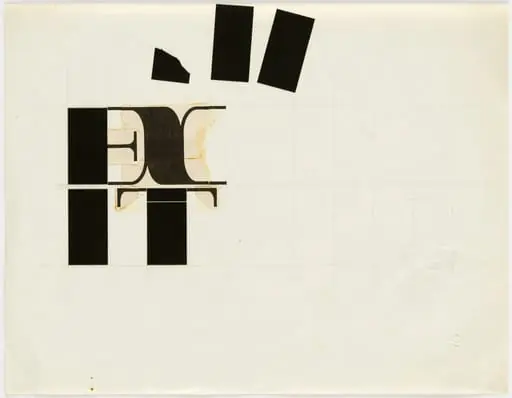
Created around 1966, this work by Ay-O and George Maciunas is a collage composed of cut-and-pasted colored paper, ink, felt-tip pen, and correction fluid. It belongs to the Fluxus movement’s experimental print tradition, emphasizing simplicity and conceptual play. The piece is held in the collection of The Museum of Modern Art, reflecting its significance in postwar avant-garde practice.
Subject & Meaning
The composition presents a stark, architectural form resembling a roof resting on a base. Within the base, a white oval contains the phrase 'factile no box.' The term 'factile'—a neologism blending 'factual' and 'mobile'—suggests an object that is both tangible and mutable. The phrase resists fixed interpretation, inviting viewers to question definitions of structure, containment, and meaning.
Technique & Style
The work employs rudimentary materials—paper, ink, correction fluid—to achieve a deliberate, hand-made aesthetic. Bold, unshaded lines and flat color fields reject illusionism, aligning with Fluxus’s anti-art sensibility. Typography is integral to the image, not supplemental; the lettering is thick, uniform, and centrally positioned, reinforcing the piece’s typographic and structural unity.
History & Provenance
Produced during the height of Fluxus activity, this piece emerged from collaborative exchanges between Ay-O and George Maciunas, key figures in the movement. It was likely made as part of a series of printed works distributed or exhibited in Fluxus events. The Museum of Modern Art acquired it as part of its broader effort to document experimental print practices of the 1960s.
Context
This piece reflects their interest in language as material and in blurring boundaries between art, design, and everyday objects.
Fluxus artists rejected traditional art categories, favoring ephemeral, participatory, and text-based works. This piece reflects their interest in language as material and in blurring boundaries between art, design, and everyday objects. Its minimalism and wordplay echo contemporaneous developments in conceptual art and concrete poetry, positioning it within a broader international avant-garde dialogue.
Legacy
Though modest in scale, the work exemplifies Fluxus’s enduring influence on conceptual and language-based art. Its use of vernacular materials and deliberate ambiguity inspired later artists to treat text as visual form and to challenge institutional definitions of art. It remains a reference point in studies of 1960s experimental printmaking.
Artist & collection