Artwork
Rebel Works in front of Atlanta, Georgia, No. 5
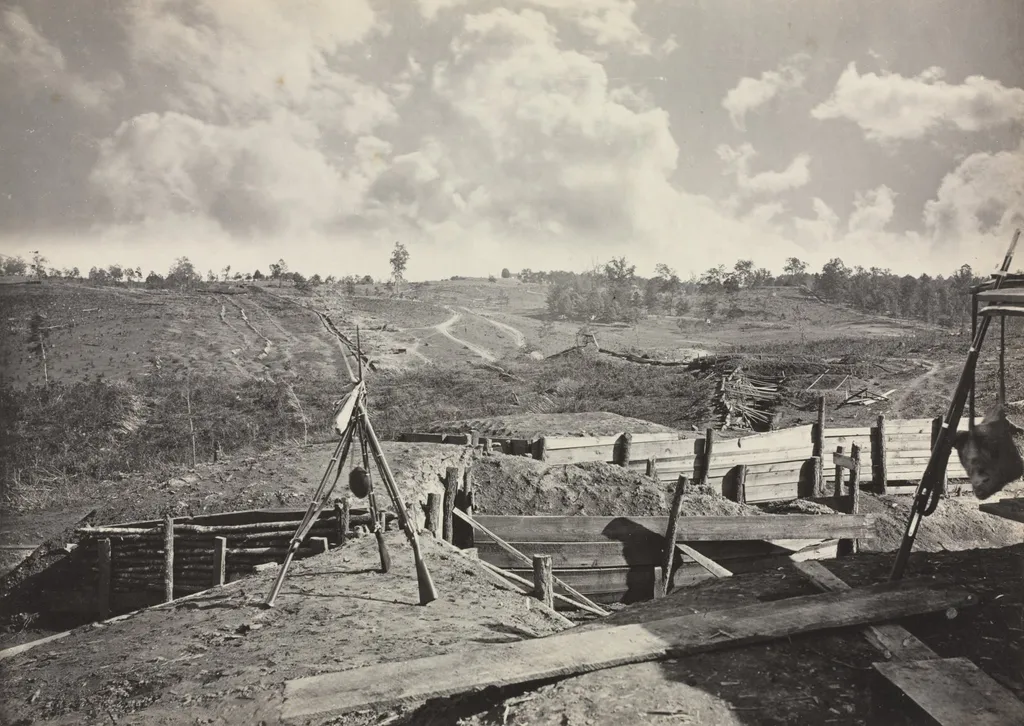
Rebel Works in front of Atlanta, Georgia, No. 5 is a photography by the Impressionist artist George N. Barnard. It dates from 1866 and is held in the collection of the Cleveland Museum of Art. Rebel Works in front of Atlanta, Georgia, No.
About this work
In the foreground, there are makeshift trenches dug into the earth, reinforced with wooden planks and barbed wire.
This is a black-and-white photo-style image of a war-torn landscape. In the foreground, there are makeshift trenches dug into the earth, reinforced with wooden planks and barbed wire. The ground is muddy and uneven, with scattered debris like broken branches and supplies. In the distance, you can see more trenches cutting across a flat, open field under a cloudy sky.
The photo was taken during the American Civil War, showing the harsh reality of battlefields. The artist, George N. Barnard, documented these scenes shortly after the war ended.
Check out more works by George N. Barnard (American, 1819–1902) to see how he captured other moments in history.
Overview
Rebel Works in front of Atlanta, Georgia, No. 5 is a photograph by George N. Barnard, created in 1866. It is a black-and-white image held at The Cleveland Museum of Art.
Subject & Meaning
The photograph depicts a war-torn landscape with makeshift trenches, wooden planks, and barbed wire in the foreground, and more trenches in a flat field under a cloudy sky in the background. It documents the harsh reality of battlefields during the American Civil War.
Technique & Style
The image is rendered in a photographic style, capturing the uneven terrain, mud, and debris of the battlefield. Barnard's documentation of the scene is characterized by its straightforward representation of the war's aftermath.
History & Provenance
The photograph was taken shortly after the American Civil War ended, providing a visual record of the conflict's impact on the landscape. It is now part of The Cleveland Museum of Art's collection.
Artist & collection

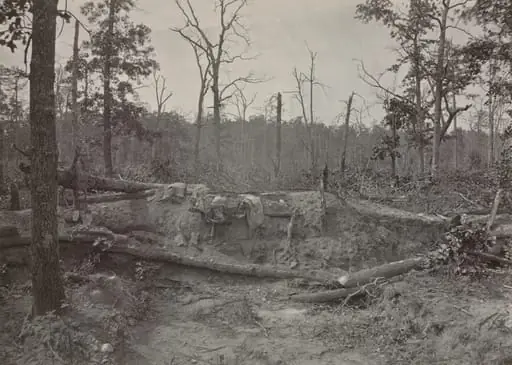 Battlefield of New Hope Church, Georgia, No. 2
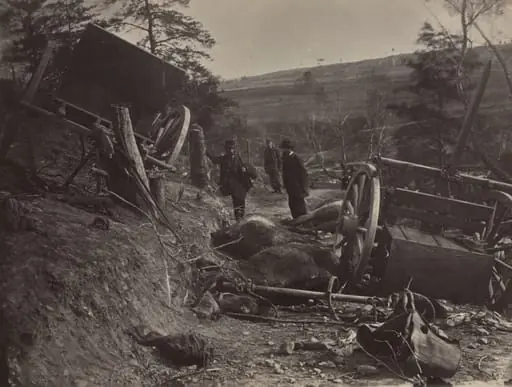 Effects of a Shell Explosion, Fredericksburg, VA.
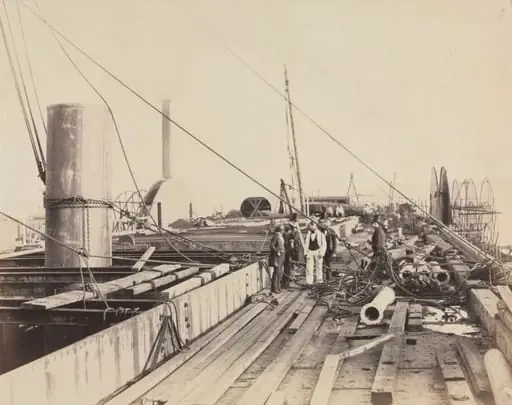 Deck Scene of the Great Eastern
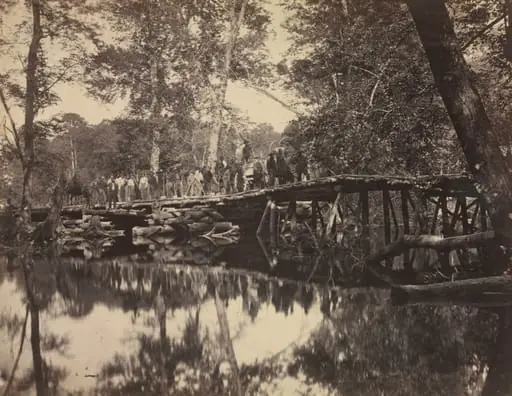 Military Bridge, Across the Chickahominy, Virginia
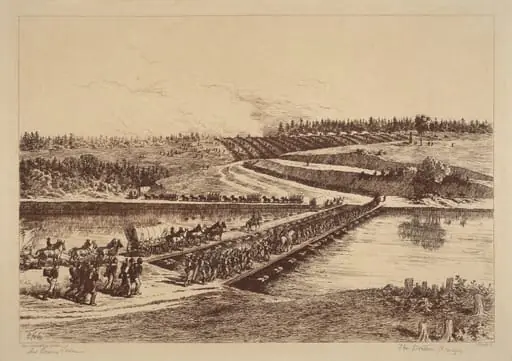 The Pontoon Bridges
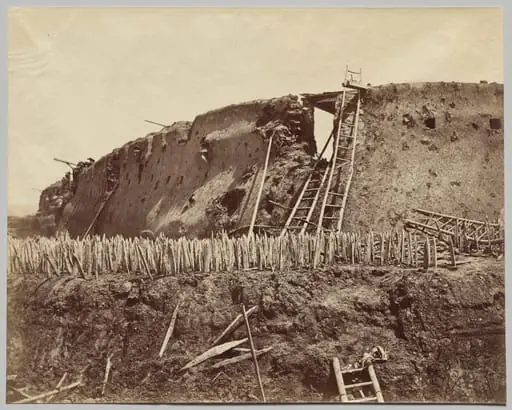 Angle of Taku Fort at which the French entered
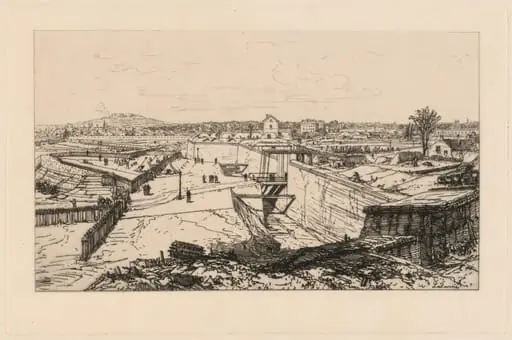 The Porte de Versailles at Pont du Jour
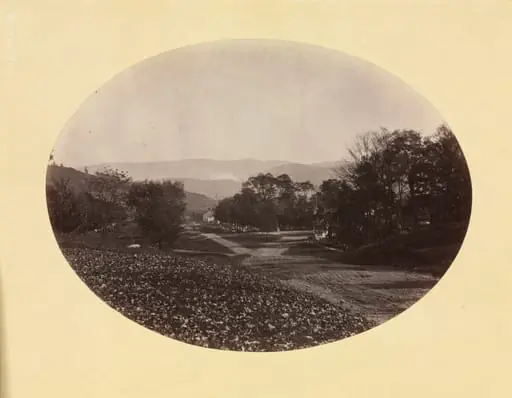 A Road in Williamstown
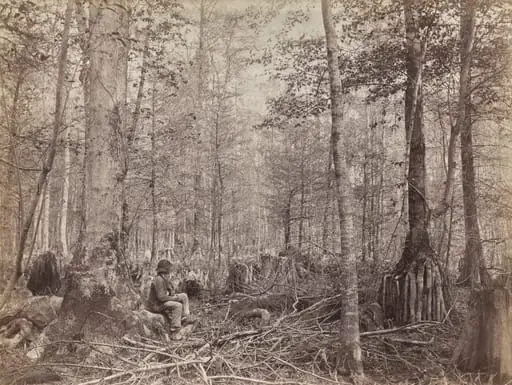 Great Dismal Swamp, Virginia
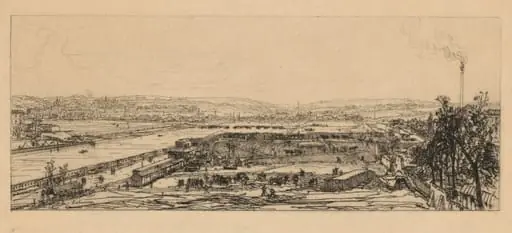 View from the Viaduct of Point du Jour
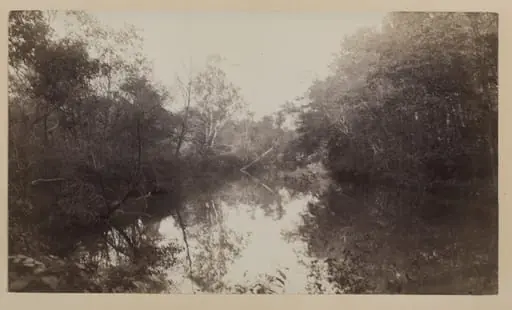 Avondale
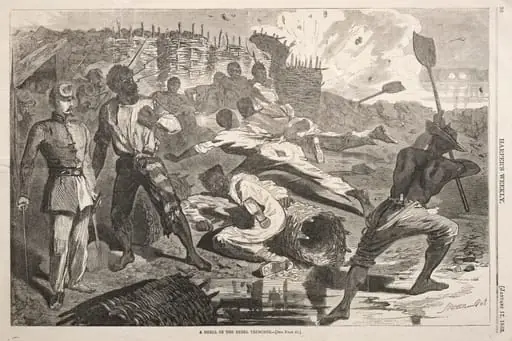 A Shell in the Rebel Trenches