Artwork
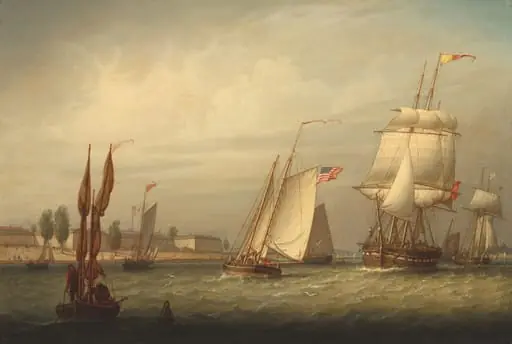
View of Sacramento, California from across the Sacramento River
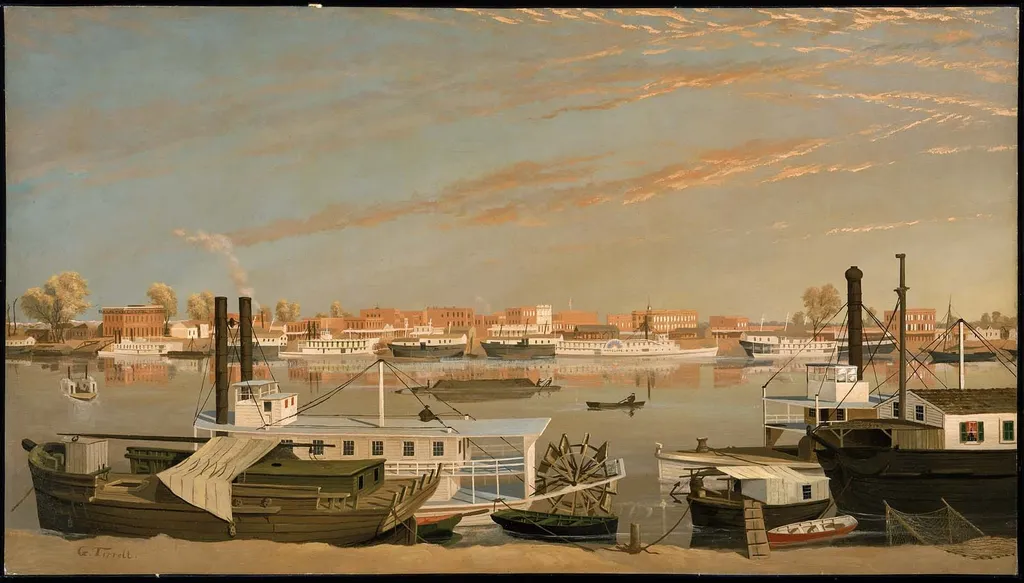
View of Sacramento, California from across the Sacramento River is an oil painting by George Tirrell. It dates from 1861 and is held in the collection of the Museum of Fine Arts Boston.
About this work
Overview
Painted around 1861, this oil work by George Tirrell captures a quiet stretch of the Sacramento River opposite the city of Sacramento, California.
Painted around 1861, this oil work by George Tirrell captures a quiet stretch of the Sacramento River opposite the city of Sacramento, California. The scene presents a calm waterscape with moored vessels and a distant urban outline, rendered in the soft tonalities typical of mid-19th-century American landscape painting. The piece is part of the Museum of Fine Arts, Boston’s collection, where it serves as a record of the region’s early post-gold-rush development.
Subject & Meaning
The painting portrays a working riverfront, where boats of differing sizes rest along the bank, suggesting commercial or transport activity. Behind them, the city’s modest buildings and scattered trees indicate a growing settlement. The stillness of the water and the muted sky convey a sense of equilibrium, reflecting the period’s idealization of progress tempered by natural order. No overt drama or human figures disrupt the quiet rhythm of daily life.
Technique & Style
Tirrell employed oil paint to achieve subtle gradations of light and atmosphere, particularly in the reflection of the sky on the river’s surface. Brushwork is restrained, favoring smooth transitions over texture, which enhances the painting’s tranquil mood. The composition is deliberately balanced, with the horizon line centered and the boats arranged to guide the eye gently from foreground to distant skyline, reinforcing a sense of spatial harmony.
History & Provenance
Created shortly after California’s statehood, the painting likely emerged from Tirrell’s observations during a period of rapid urban growth along the Sacramento River. It entered the Museum of Fine Arts, Boston’s collection in the late 19th or early 20th century, possibly through a private donor or acquisition from a regional collector. Its preservation reflects early institutional interest in documenting Western American scenes beyond the East Coast.
Context
In the early 1860s, Sacramento was transitioning from a frontier boomtown to a more established civic center, fueled by river trade and rail connections. This painting aligns with a broader trend among American artists to depict emerging Western cities with quiet dignity, avoiding sensationalism. Unlike frontier narratives of conflict or gold rush chaos, Tirrell’s view emphasizes stability and integration with the natural landscape.
Legacy
Though George Tirrell is not widely known today, this work remains a valuable artifact of California’s visual history. It contributes to the understanding of how early artists framed the West not as a wild frontier but as a place of quiet settlement and economic continuity. The painting’s presence in a major Eastern museum underscores the national interest in regional American scenes during the post-Civil War era.
Artist & collection

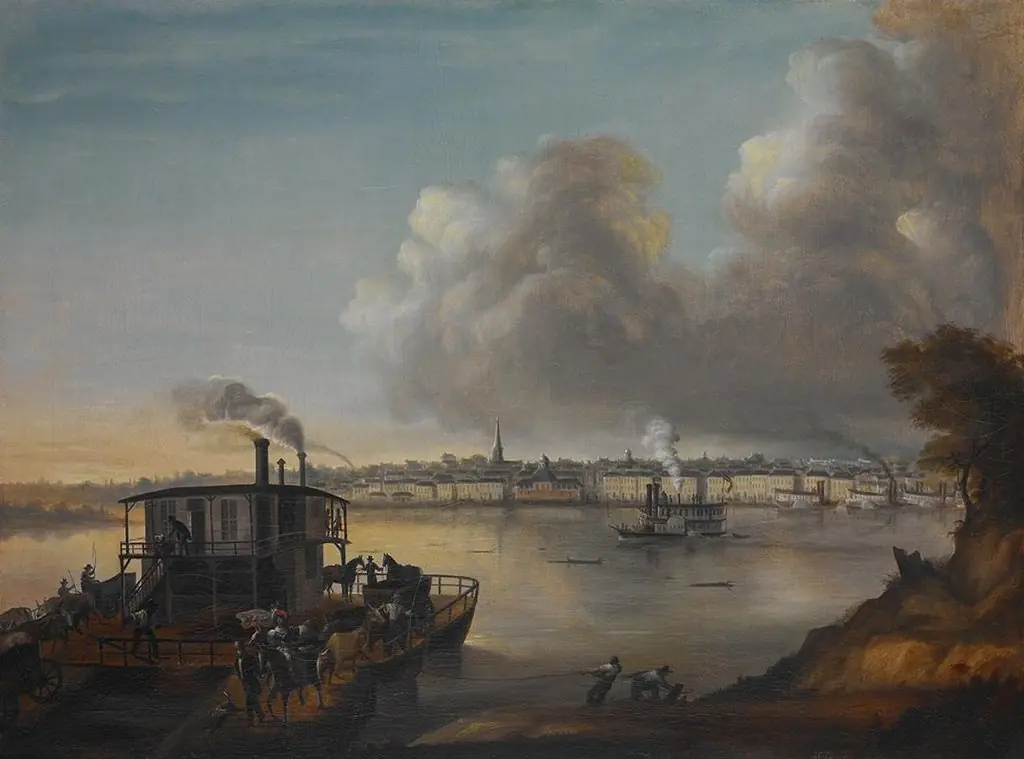 View of St. Louis
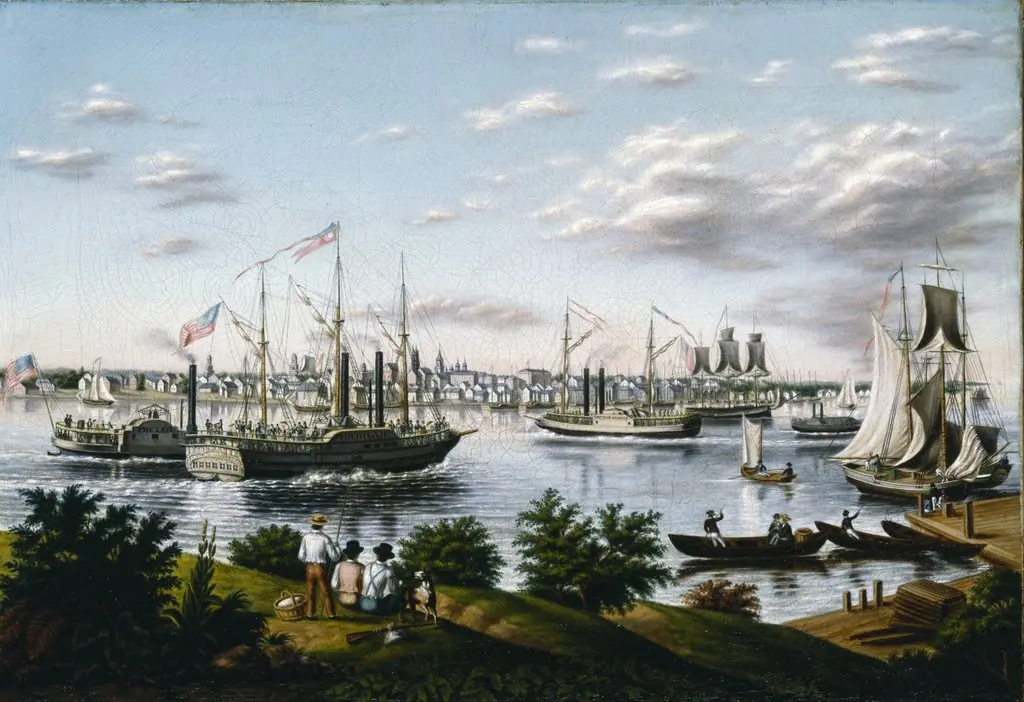 View of Detroit in 1836
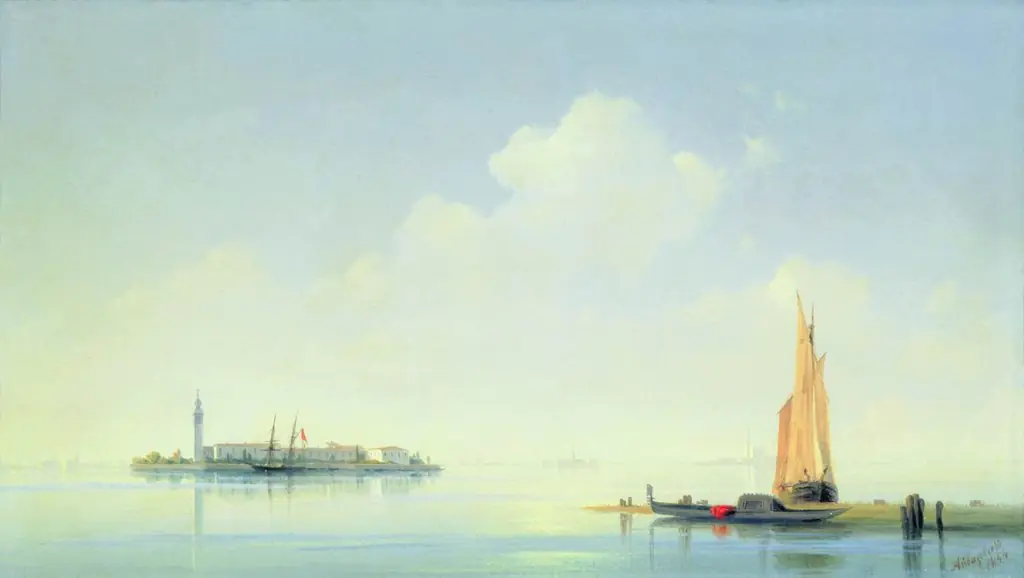 Venetian lagoon. View of the island of San Giorgio.
 Bordeaux, the Quais
 Canton Waterfront (The Hongs at Canton)
 Crowninshield's Wharf
 New York Harbor
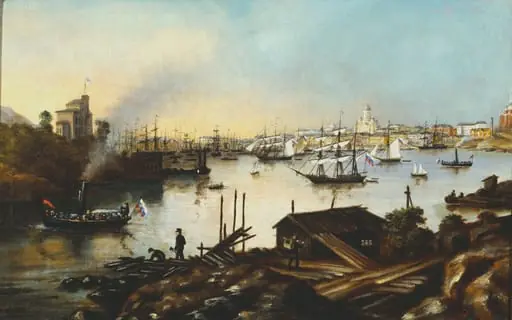 Näkymä Valkosaarelta Eteläsatamaan
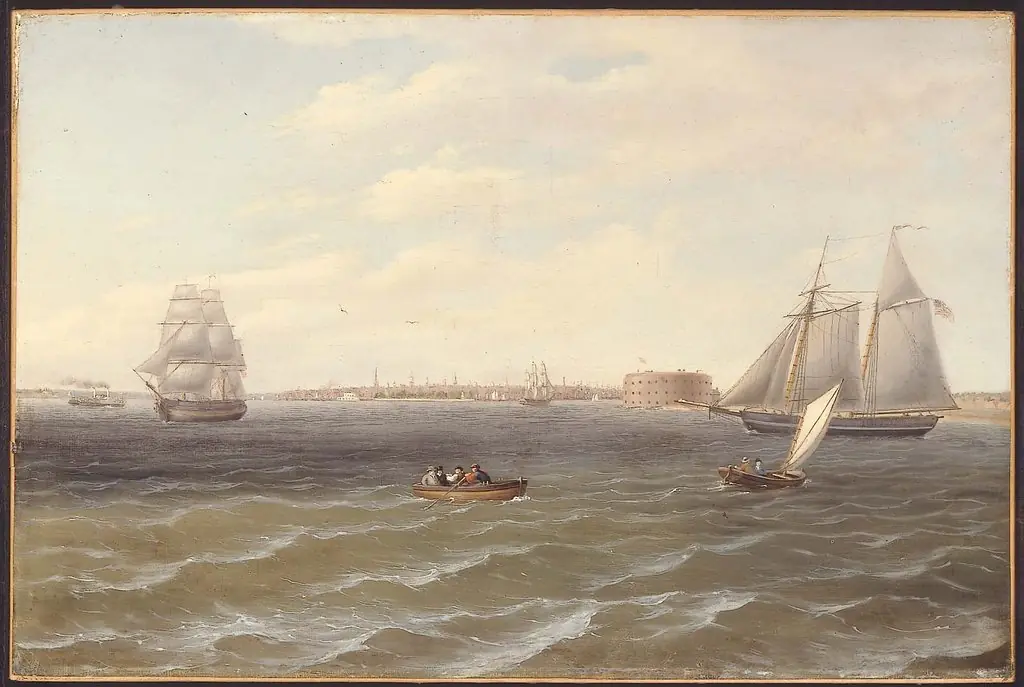 New York Harbor
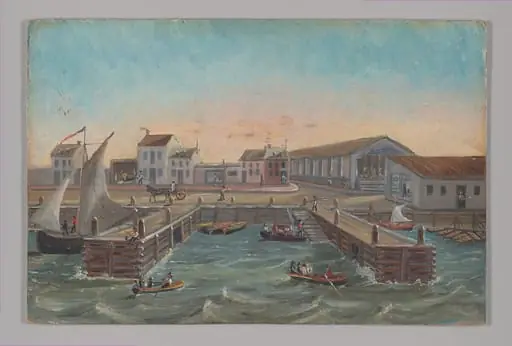 Old Ferry Stairs
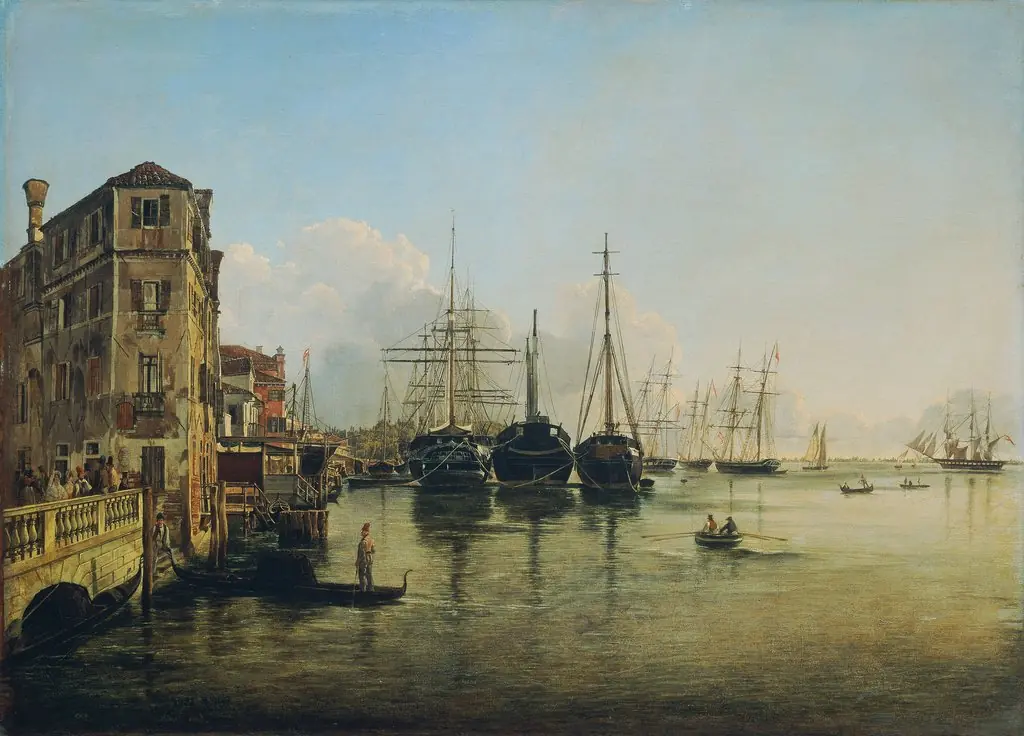 View of the Strada Nuova against the Giardini Pubblici in Venice
 Boston Harbor