Artwork
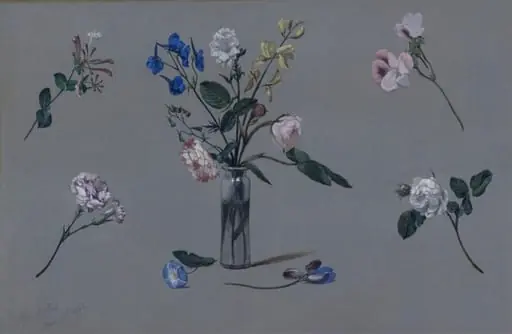
A Study of Flowers
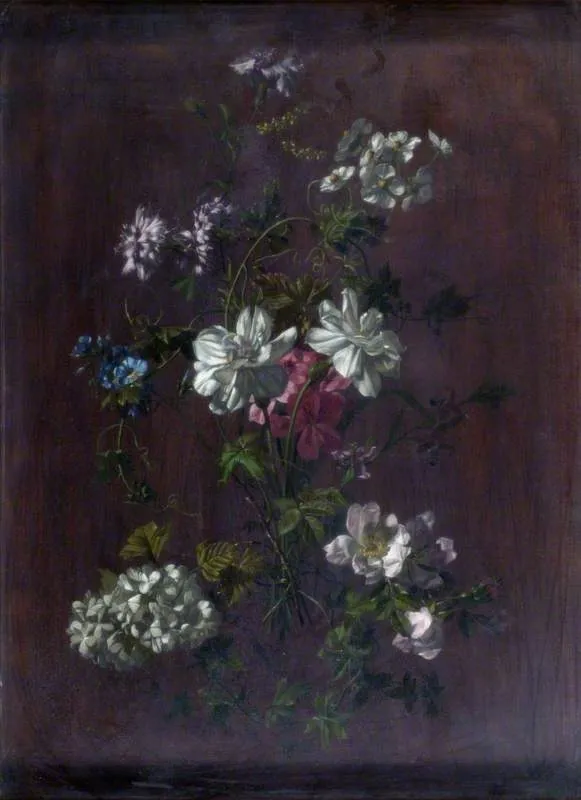
A Study of Flowers is an oil painting by the Realist artist George Wallis. It dates from 1846 and is held in the collection of the Victoria and Albert Museum.
About this work
Overview
Painted in 1846 by George Wallis, this oil-on-canvas work is a botanical study that reflects the 19th-century emphasis on close observation of nature.
Painted in 1846 by George Wallis, this oil-on-canvas work is a botanical study that reflects the 19th-century emphasis on close observation of nature. Wallis, an English artist and educator, created the piece during a period when art institutions were increasingly valuing scientific accuracy in visual representation. The painting is now part of the Victoria and Albert Museum’s collection, where it serves as an example of detailed naturalism in mid-Victorian art.
Subject & Meaning
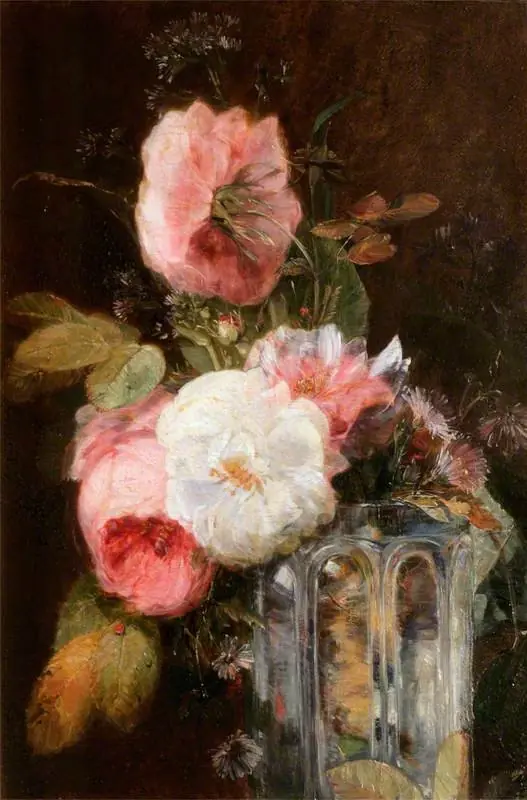
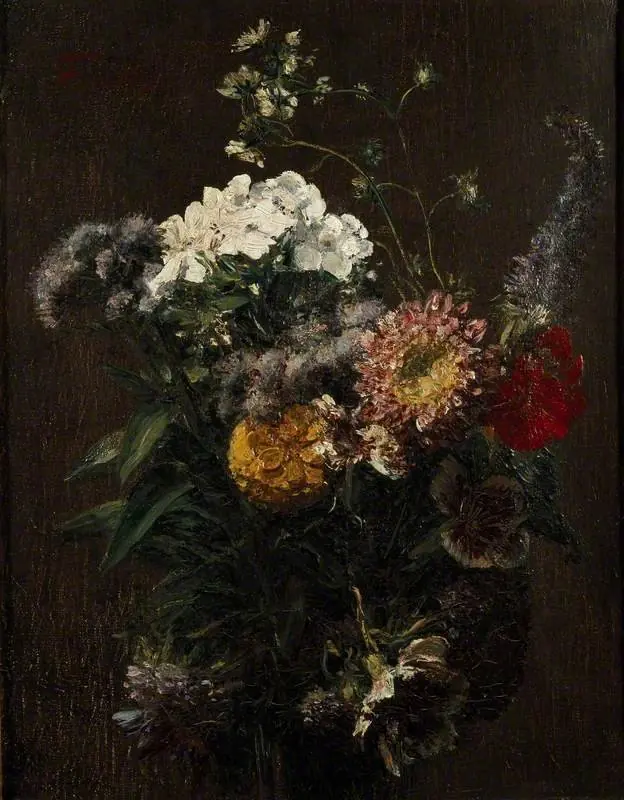
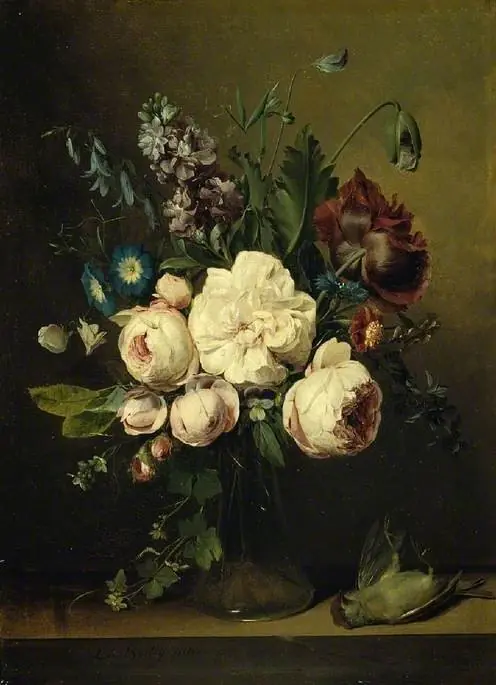
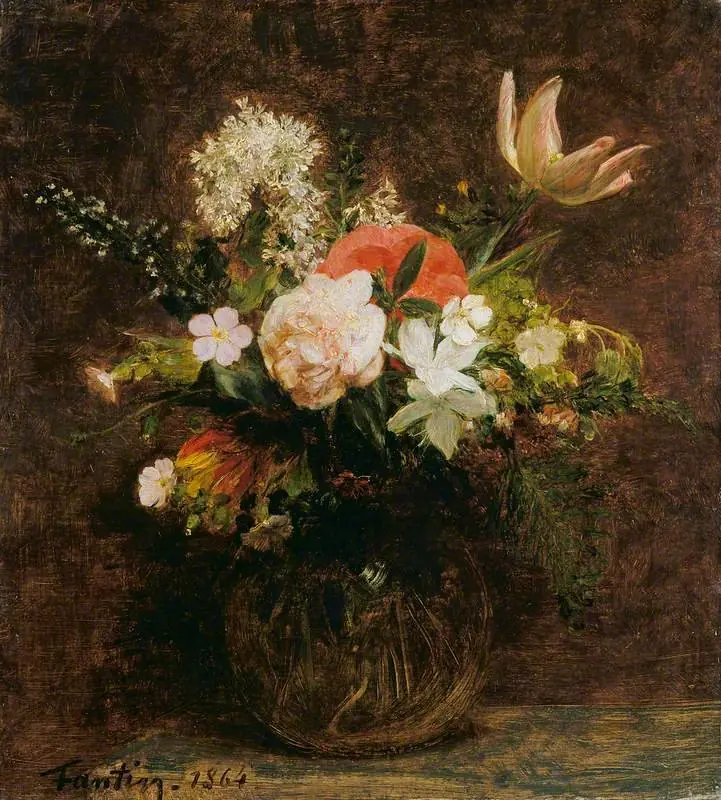
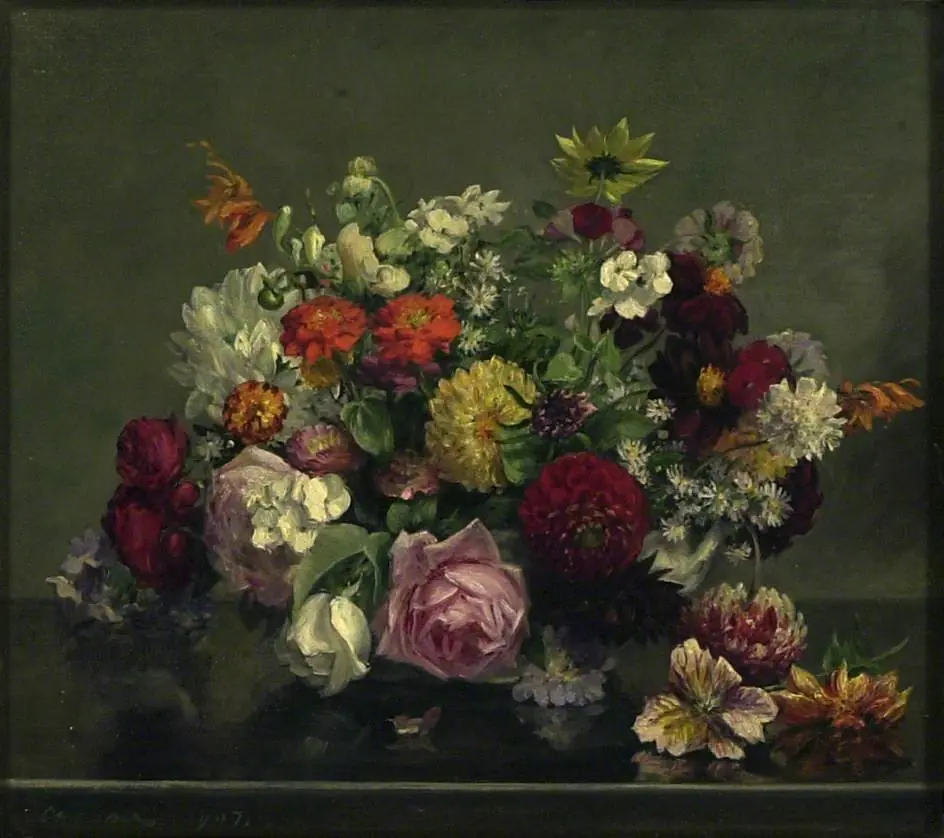
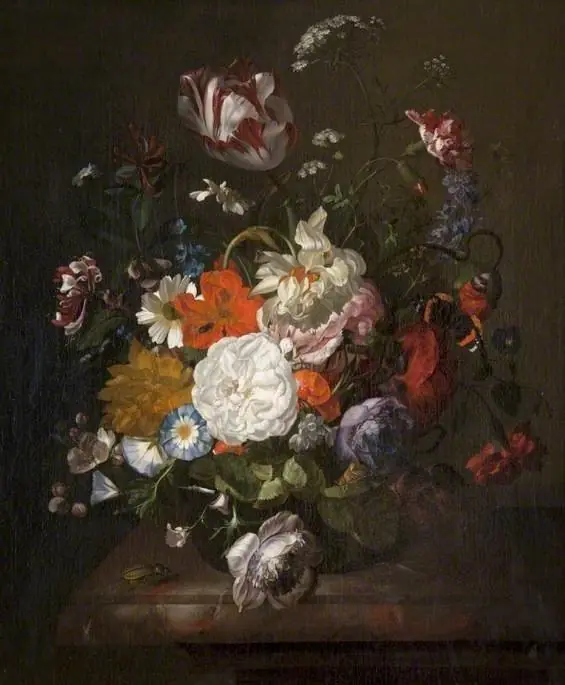
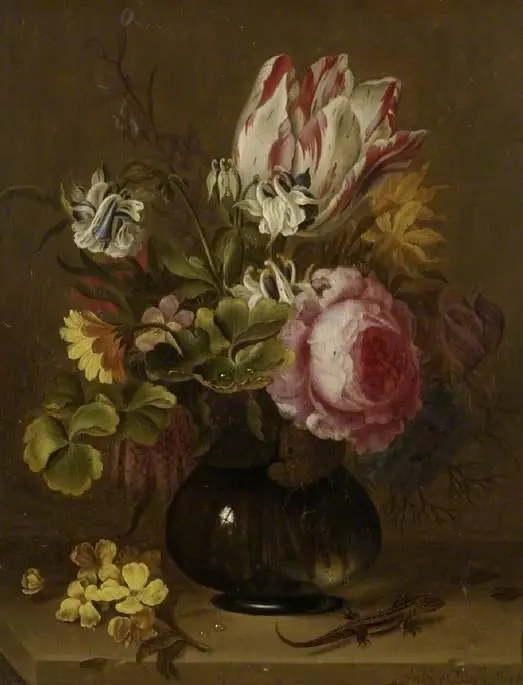
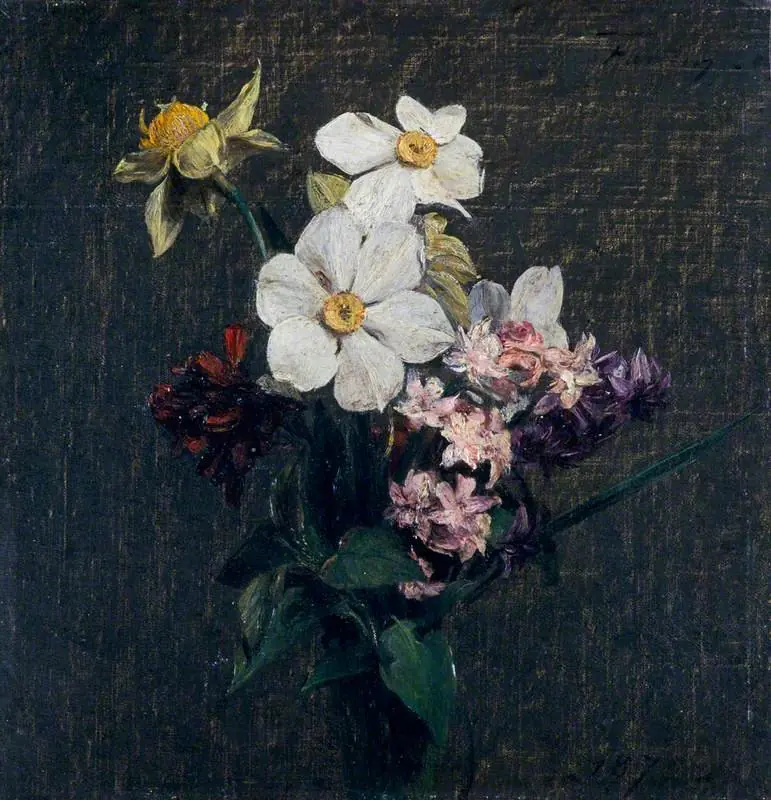
The composition presents a loose arrangement of wild and cultivated flowers, including white blossoms with broad petals, smaller pink and blue blooms, and varied green foliage. There is no symbolic narrative or decorative intent; instead, the focus lies in the accurate rendering of plant forms. The work functions as a visual record, valuing the intrinsic beauty and structural complexity of botanical specimens over idealized or romanticized interpretations.
Technique & Style
Wallis employed oil paint to capture subtle variations in texture and tone, allowing for fine detailing of petals, veins, and stems. The dark brown background isolates the flowers, enhancing their three-dimensionality and drawing attention to their natural forms. Brushwork is precise yet unobtrusive, avoiding theatrical lighting or dramatic contrast. This restrained approach aligns with Realist principles, prioritizing fidelity to observed reality over stylistic flourish.
History & Provenance
Created in 1846, the painting remained in private hands until it entered the South Kensington Museum’s collection, later renamed the Victoria and Albert Museum. Wallis, appointed the museum’s first Keeper of Fine Art in 1852, likely donated or facilitated its acquisition. Its presence in the museum’s holdings reflects its role in educational efforts to promote visual literacy and the study of natural forms among students and designers.
Context
In mid-19th-century Britain, interest in botany and natural history surged alongside industrialization. Art schools and museums began using detailed natural studies to train designers and craftsmen. Wallis’s work fits within this pedagogical shift, where painting served not only as aesthetic expression but as a tool for scientific and industrial education, bridging art, science, and applied design.
Legacy
Though not widely exhibited today, the painting remains a representative example of how art was harnessed for educational purposes in Victorian institutions. Wallis’s commitment to observational accuracy influenced curriculum development at the South Kensington Museum and contributed to broader efforts to elevate design standards through direct engagement with nature.
Artist & collection
Artist
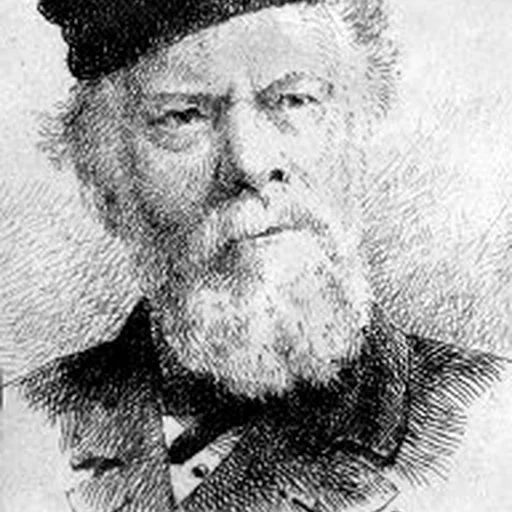
George Wallis (8 June 1811 – 24 October 1891) was an English artist, art educator, and museum curator. He was the first Keeper of Fine Art Collection at South Kensington Museum (later the Victoria & Albert Museum) in London.