Artwork
The Great Exhibition of All Nations
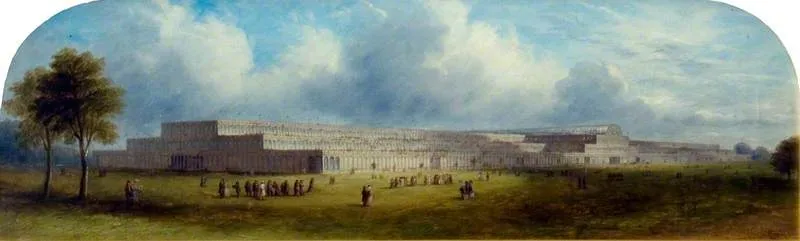
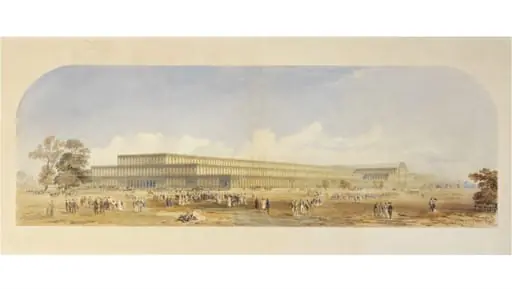
The Great Exhibition of All Nations is an oil painting by the Realist artist George Wallis. It dates from 1851 and is held in the collection of the Victoria and Albert Museum.
About this work
Overview
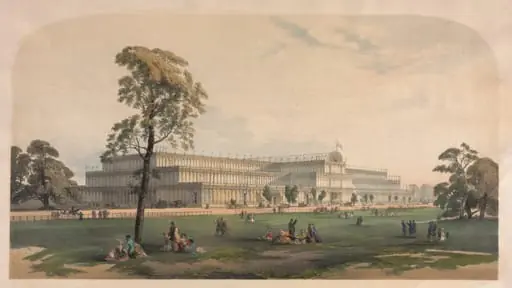
Painted in 1851 by George Wallis, this oil on canvas work captures the exterior of the Crystal Palace during the Great Exhibition of All Nations in London.
Painted in 1851 by George Wallis, this oil on canvas work captures the exterior of the Crystal Palace during the Great Exhibition of All Nations in London. Wallis, an educator and later the first Keeper of Fine Art at the South Kensington Museum, recorded the event with quiet observation rather than grandeur. The painting reflects the era’s interest in documenting industrial and cultural progress through direct visual record.
Subject & Meaning
The scene centers on the Crystal Palace, a vast glass and iron structure housing global exhibits. Figures in the foreground—dressed in mid-19th-century attire—move casually, suggesting public engagement with the exhibition. The composition avoids spectacle, instead emphasizing the ordinary presence of visitors amid an extraordinary architectural feat, underscoring the event’s role as a civic and international gathering.
Technique & Style
Wallis employed a restrained Realist approach, using soft brushwork and naturalistic lighting to render the building and its surroundings. The flat roof and repetitive window patterns are rendered with precision, while the sky and grass are painted with subtle tonal shifts. There is no dramatic emphasis; the focus remains on clarity and spatial accuracy, aligning with the period’s growing preference for observational truth over idealization.
History & Provenance
Created shortly after the exhibition closed, the painting entered the collection of the South Kensington Museum, now the Victoria and Albert Museum, where it remains today. As one of the few contemporary artworks documenting the event, it served both as a historical record and a pedagogical tool for art students, reflecting Wallis’s dual role as artist and educator.
Context
The Great Exhibition of 1851 was a landmark event showcasing industrial innovation and colonial goods from across the British Empire and beyond. Wallis’s painting emerged during a time when art increasingly turned to contemporary life as subject matter. His depiction aligns with broader cultural shifts toward documenting modernity, technology, and public space with sober attention rather than romantic embellishment.
Legacy
Though not widely exhibited today, the painting endures as a quiet testament to the era’s faith in progress and international exchange. It offers a grounded perspective on the Crystal Palace, distinct from the more celebratory or monumental treatments of the time. For scholars, it remains a valuable visual document of how ordinary observers experienced one of the 19th century’s defining public events.
Artist & collection
Artist
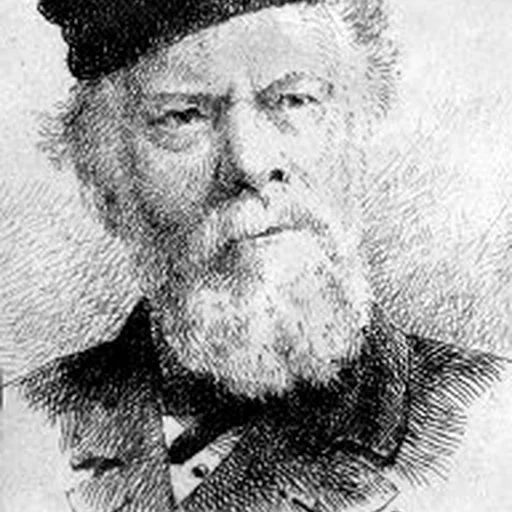
George Wallis (8 June 1811 – 24 October 1891) was an English artist, art educator, and museum curator. He was the first Keeper of Fine Art Collection at South Kensington Museum (later the Victoria & Albert Museum) in London.

 The Crystal Palace
 View of the back of a Palace
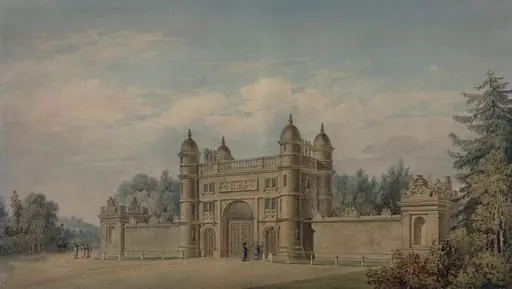 The Lodge, Wollaton Hall, Nottinghamshire
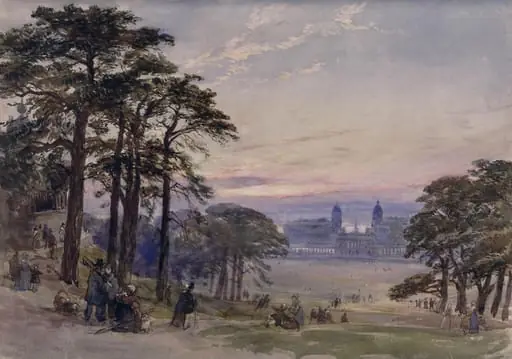 Greenwich Hospital from the Observatory
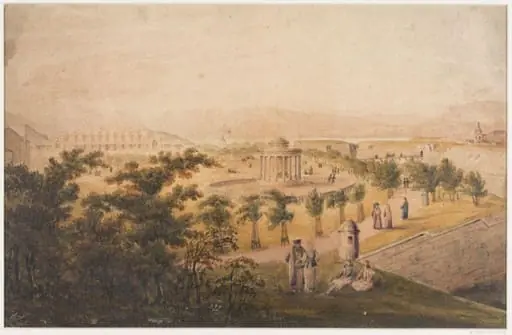 A Greek fort containing a small circular temple
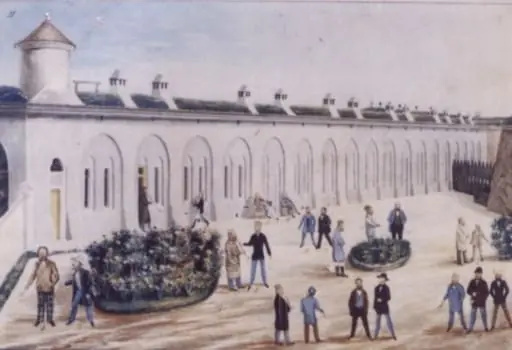 Deținuți pașoptiști în curtea cetății Aradului
 Rheinlandschaft bei Hochheim
![Topçular Barracks on the outskirts of Pera[?], by Anonymous Greek artist](https://artifactworldgallery.com/img/anonymous-greek-artist--topcular-barracks-on-the-outskirts-of-pera--81cd3e7e912c2328-w320.webp) Topçular Barracks on the outskirts of Pera[?]
Topçular Barracks on the outskirts of Pera[?] A View of Paestum
 Brook Green Fair
 A distant view of Petworth House across the lake in Petworth Park
 A View of Crystal Palace in Hyde Park