Artwork
The Black Man
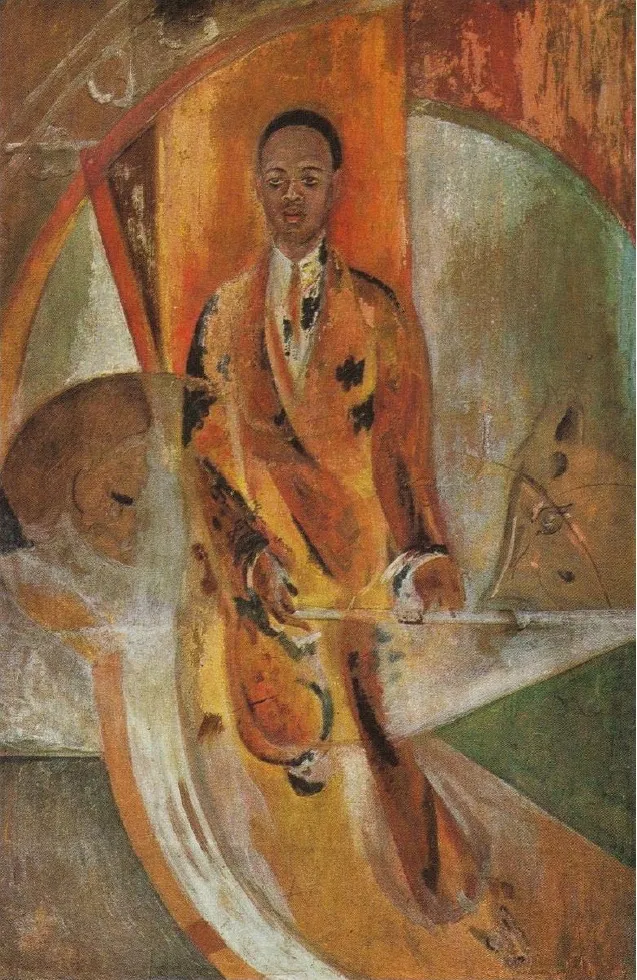
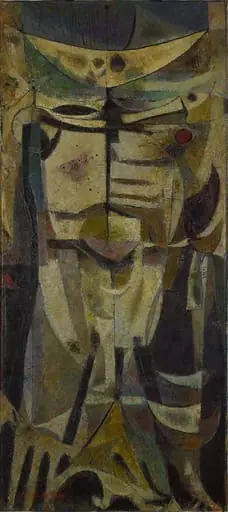
The Black Man is an oil painting by Georgy Yakulov. It dates from 1916 and is held in the collection of the National Gallery of Armenia.
About this work
Overview
The Black Man, created by Georgy Yakulov around 1916, is a plywood painting that embodies the artist's fusion of Eastern and Western artistic influences, reflecting his engagement with avant-garde movements.
Subject & Meaning
The subject, a suited man with a blurred face holding a cane, stands before an abstract, multicolored backdrop. The blurring of the figure's identity suggests a focus on the universal or the everyday, set against a vibrant, dynamic abstraction.
Technique & Style
Executed on plywood, the work incorporates the material's unique texture. Yakulov's use of warm and cool colors (orange, yellow, green, brown) and composition generates a sense of depth and movement, characteristic of his synthesised avant-garde approach.
History & Provenance
Created during a pivotal period in Yakulov's career, bridging the Silver Age and the early Soviet era, The Black Man is now part of the National Gallery of Armenia's collection.
Context
This piece reflects Yakulov's theoretical explorations of light and the evolutionary origins of artistic styles, situating it within the broader experimental climate of early 20th-century Moscow.
Legacy
While specific lasting impacts of The Black Man are not widely documented, it contributes to the understanding of Yakulov's innovative style, which blended Cubism, Futurism, and Constructivism.
Artist & collection
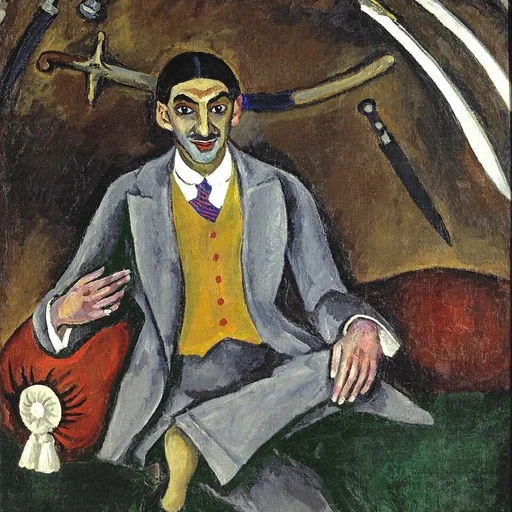
Artist
Georgy Bogdanovich Yakulov (January 2 (14), 1884, — December 28, 1928) was a Russian painter and art theorist of Armenian descent.

![Arearea no Varua Ino (Words of the Devil) [recto], by Paul Gauguin](https://artifactworldgallery.com/img/paul-gauguin--arearea-no-varua-ino-words-of-the-devil-recto--0bfcd29d383e4267-w320.webp)