Artwork
Water
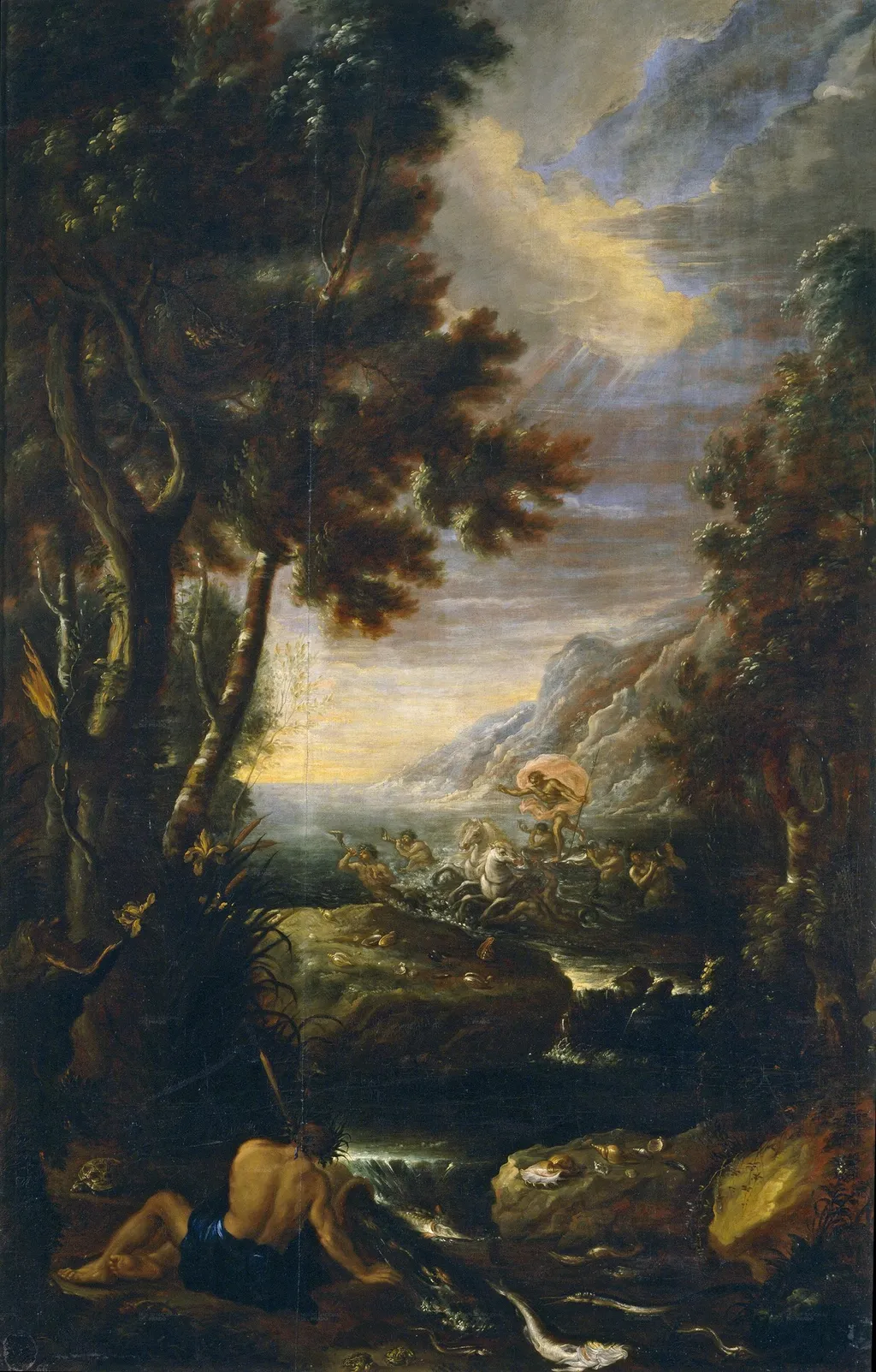
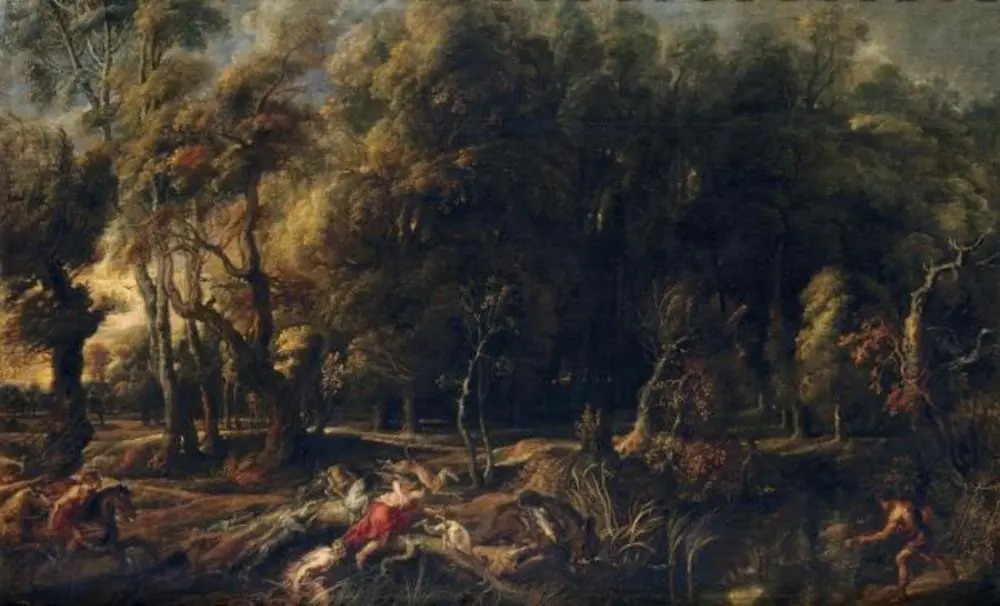
Water is an oil painting by the Barbizon school artist Gerónimo Antonio de Ezquerra. It dates from 1700 and is held in the collection of the Museo del Prado.
About this work
Overview
Though often associated with later movements, this piece predates the Barbizon School by over a century and reflects Spanish Baroque sensibilities.
Painted in 1700 by Gerónimo Antonio de Ezquerra, *Water* is an oil-on-canvas work depicting a quiet moment beside a forest stream. Though often associated with later movements, this piece predates the Barbizon School by over a century and reflects Spanish Baroque sensibilities. It resides in the Museo del Prado’s collection, where it stands as an example of Ezquerra’s lesser-known secular scenes, contrasting with his more frequent religious and still-life subjects.
Subject & Meaning
The painting shows a solitary figure seated by a stream, glancing toward a group on the opposite bank, who are dressed more elaborately and appear engaged in a communal activity. The contrast in attire and posture suggests a divide between solitude and collective ritual. The setting—dense trees, rocky terrain, and diffused sunlight—evokes a contemplative atmosphere, possibly alluding to themes of reflection, transition, or the quiet tension between individual and community.
Technique & Style
Ezquerra employs oil paint with careful attention to light and texture, using chiaroscuro to model forms and create spatial depth. The foliage and water are rendered with textured brushwork, while the sky’s cloudy openness is suggested through subtle gradations. The figures are rendered with naturalistic detail, particularly in the folds of fabric and the play of light on skin, reflecting the artist’s training under Antonio Palomino and his familiarity with Spanish Baroque conventions.
History & Provenance
Created in 1700, *Water* entered the Museo del Prado’s holdings during the 19th-century consolidation of Spanish royal and ecclesiastical collections. Its attribution to Ezquerra is supported by stylistic comparisons with his documented works, though few secular compositions by him survive. The painting’s journey from private Spanish collections to the national museum reflects broader efforts to preserve and categorize Baroque-era Spanish art.
Context
While the Barbizon School is incorrectly cited as its movement, *Water* aligns with late 17th-century Spanish painting, where religious themes dominated but secular landscapes and genre scenes occasionally appeared. Ezquerra’s work exists at the intersection of devotional art and emerging interest in natural observation, influenced by Flemish and Italian precedents filtered through Spanish academic traditions.
Legacy
Though not widely exhibited or studied, *Water* contributes to understanding the breadth of Ezquerra’s output beyond religious imagery. It offers insight into how Spanish artists of the period engaged with landscape and human interaction outside ecclesiastical contexts. The painting remains a quiet testament to the diversity of Baroque expression in Spain, where even secular scenes carried a sense of solemnity and narrative restraint.
Own this work as a print
Artist & collection
Artist
Gerónimo Antonio de Ezquerra (c. 1660–1733) was a Spanish painter of the Baroque period. He was a pupil of Antonio Palomino. He often painted half-torso saints. He frescoed the lunnetes over the arches of the chapel of…

 Landscape with Figures
 Fantastic Landscape with Figures
 St Jerome in the Wilderness
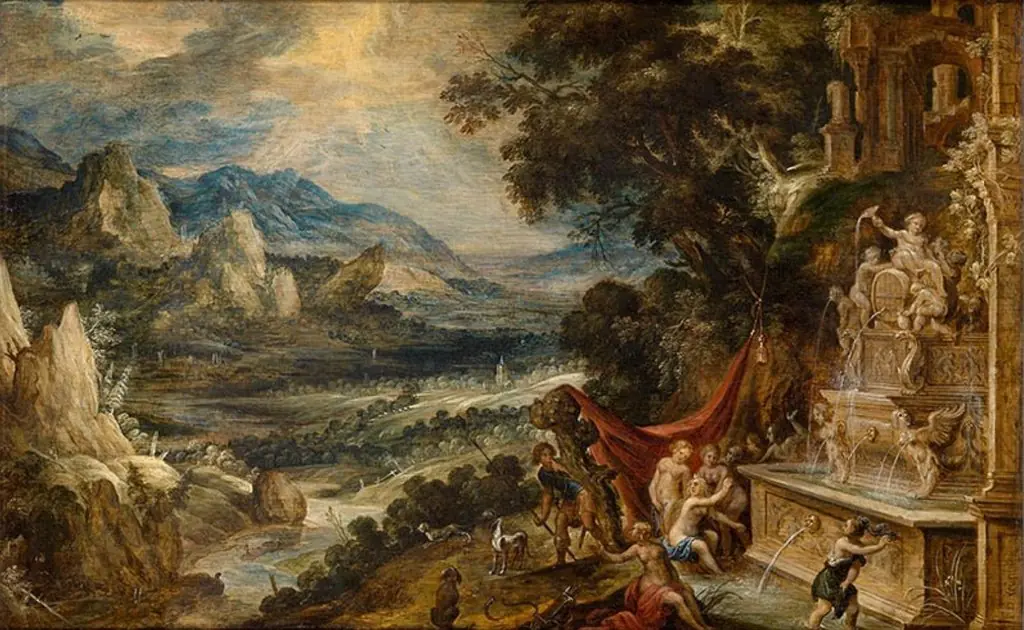 Landscape with Diana and Actaeon
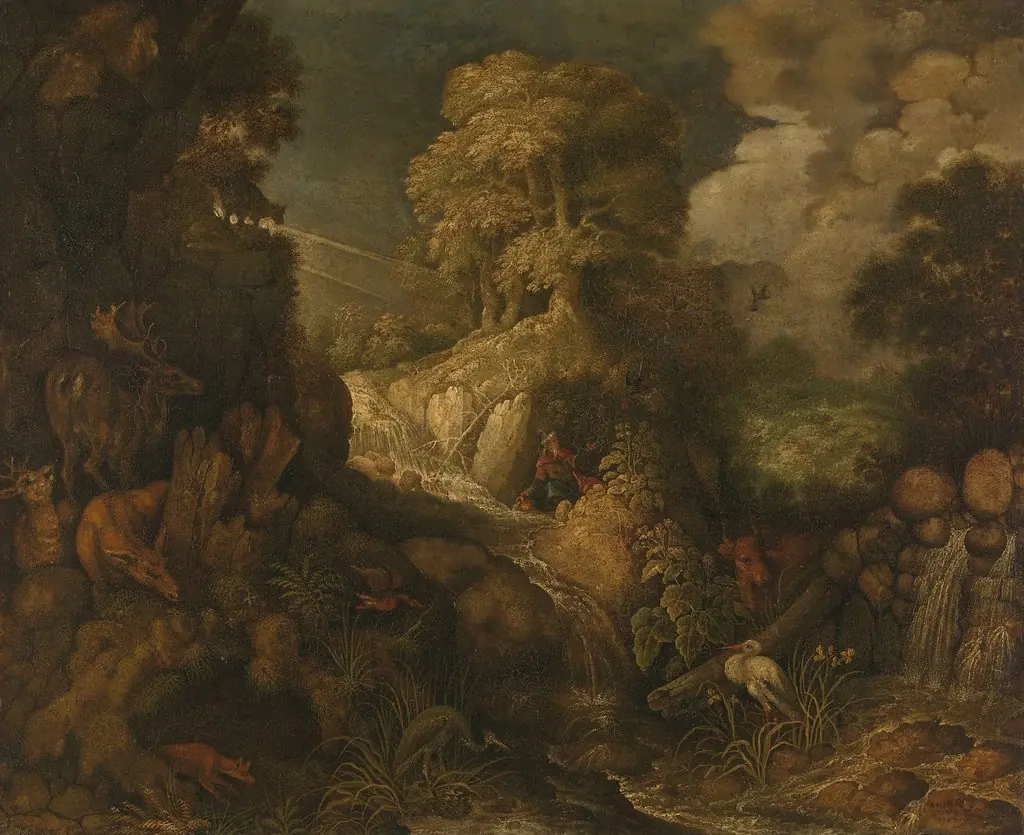 Elijah fed by the ravens
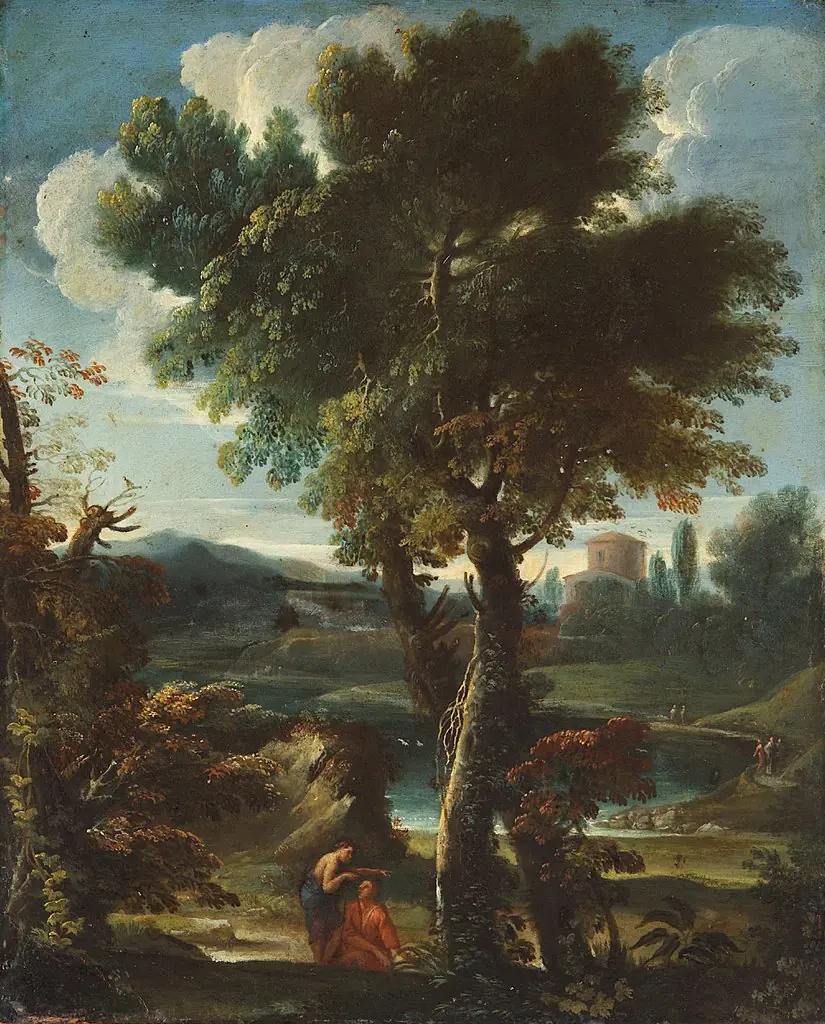 Landschaft mit Hirten
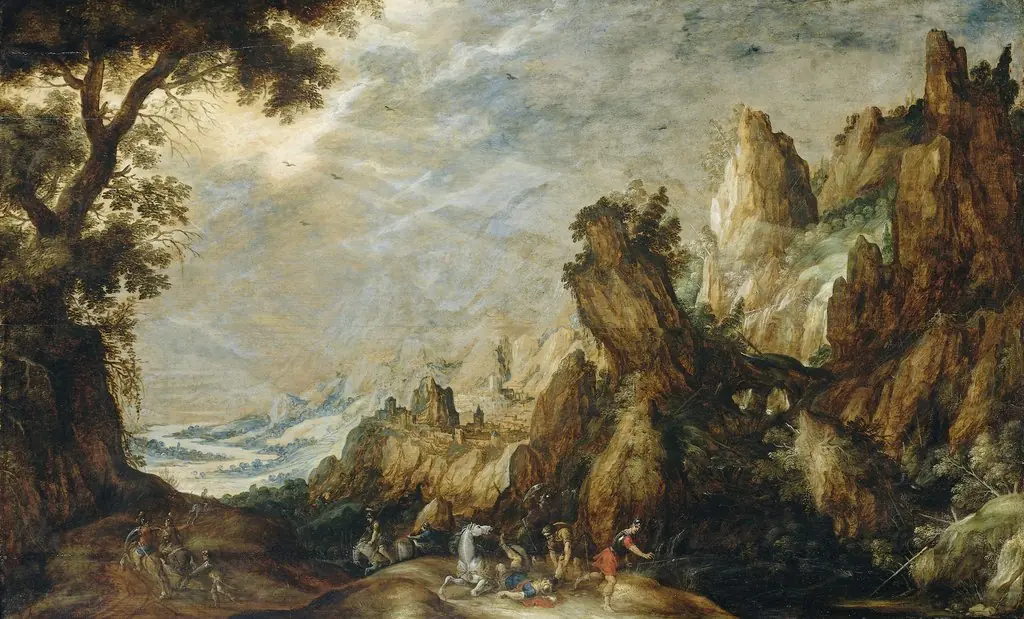 Landscape with Conversion of Saint Paul
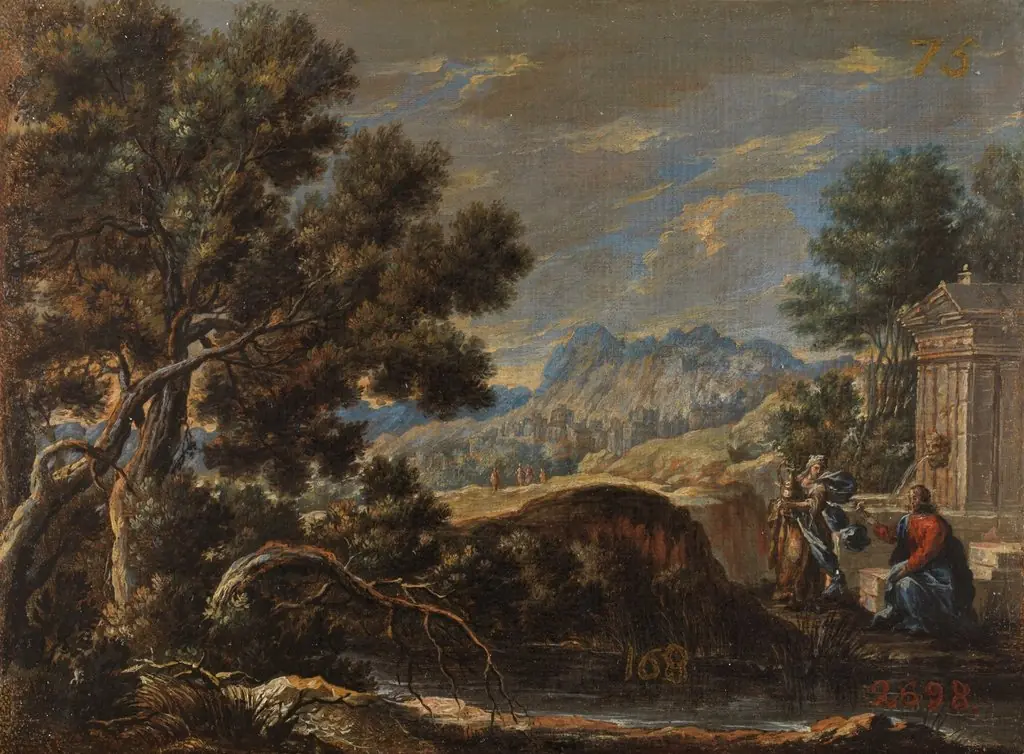 Cristo y la samaritana en un paisaje
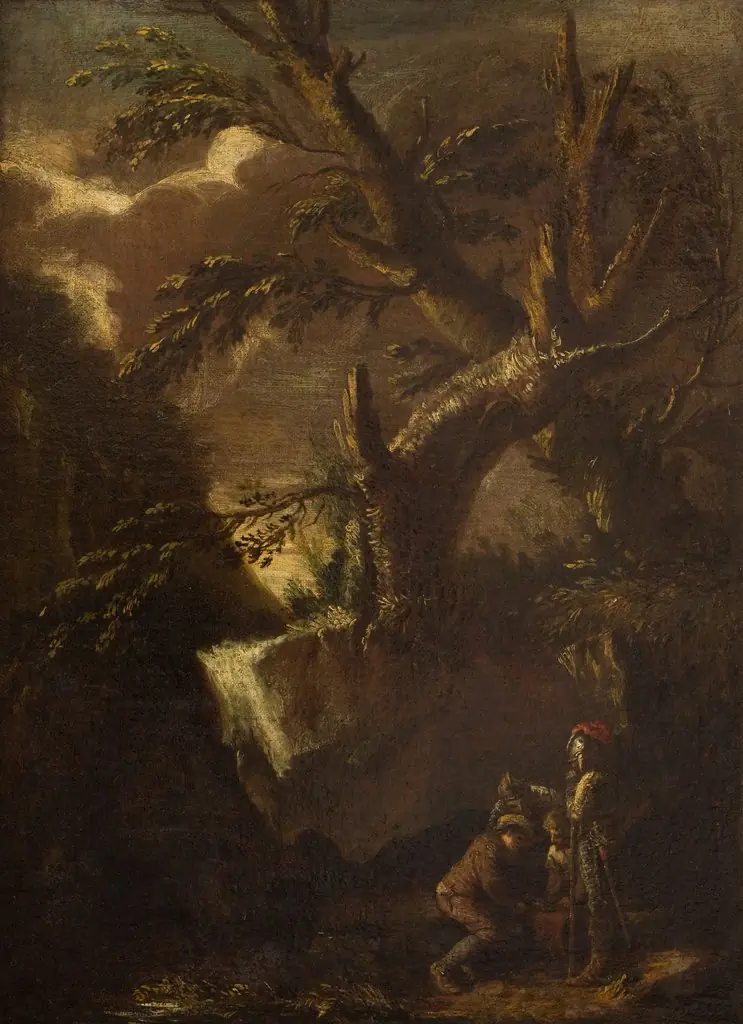 Landscape with Dice Players
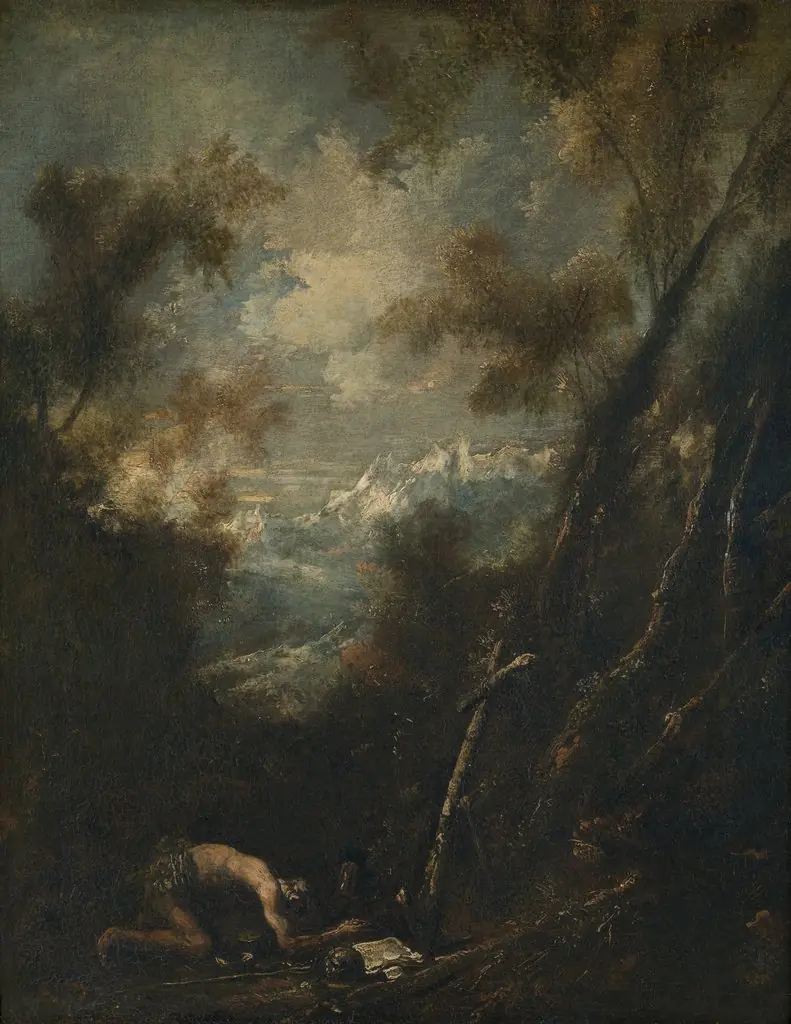 Saint Jerome in a Landscape
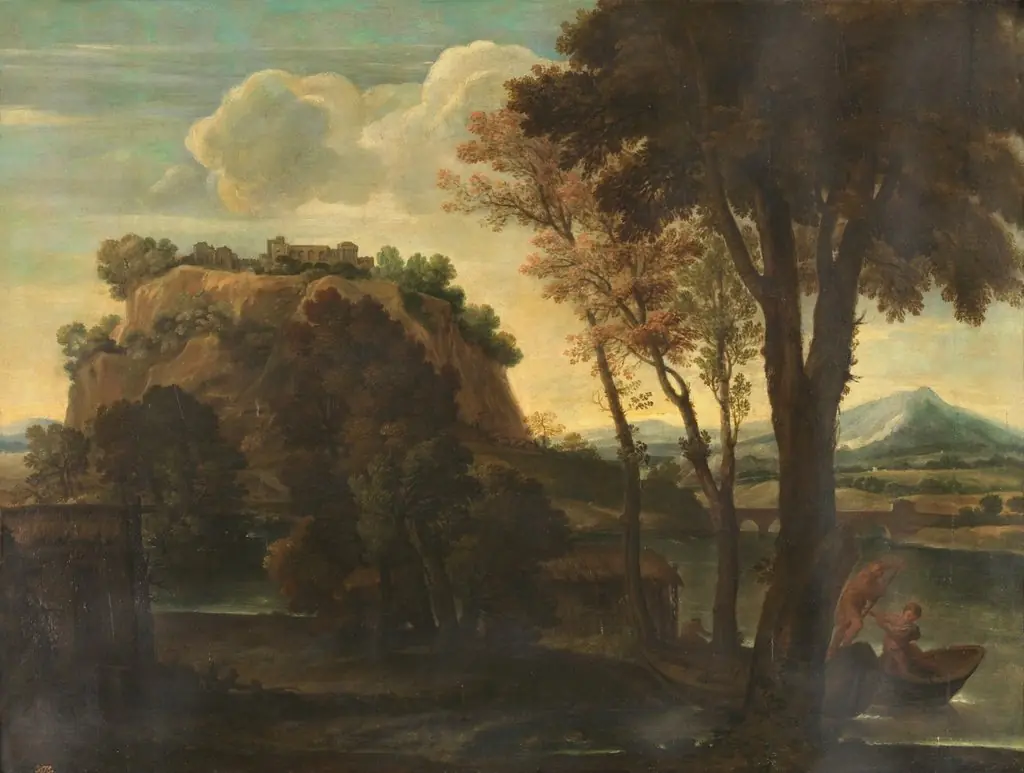 Landscape with River and Boats
 Atalanta and Meleager Hunting the Calydonian Boar