Artwork
Allegorie auf Kaiser Leopold I. (1640-1705)
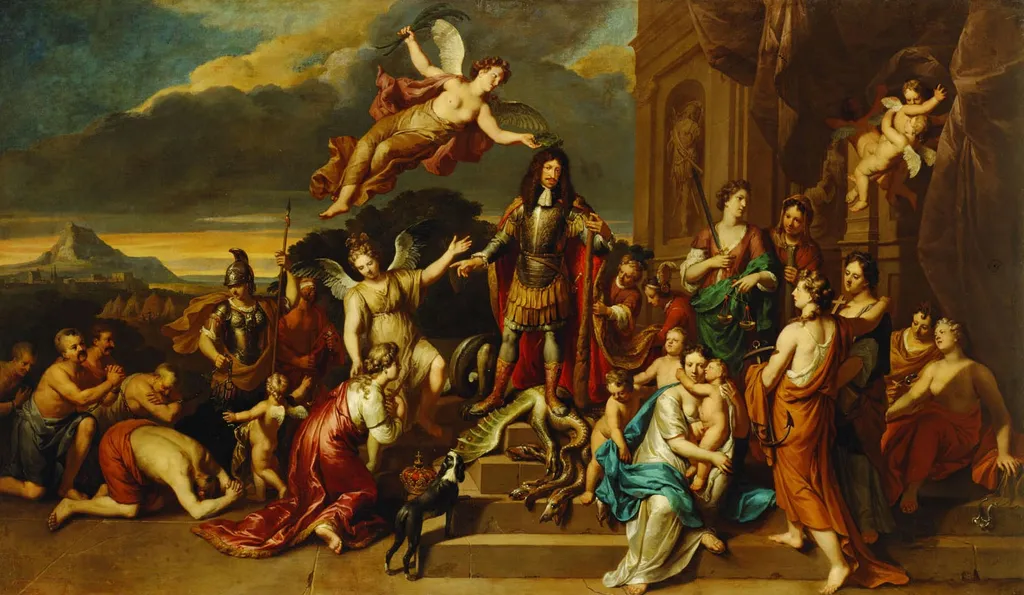
Allegorie auf Kaiser Leopold I. (1640-1705) is an oil painting by the Dutch Golden Age artist Gerard Hoet. It dates from 1672 and is held in the collection of the Kunsthistorisches Museum.
About this work
Overview
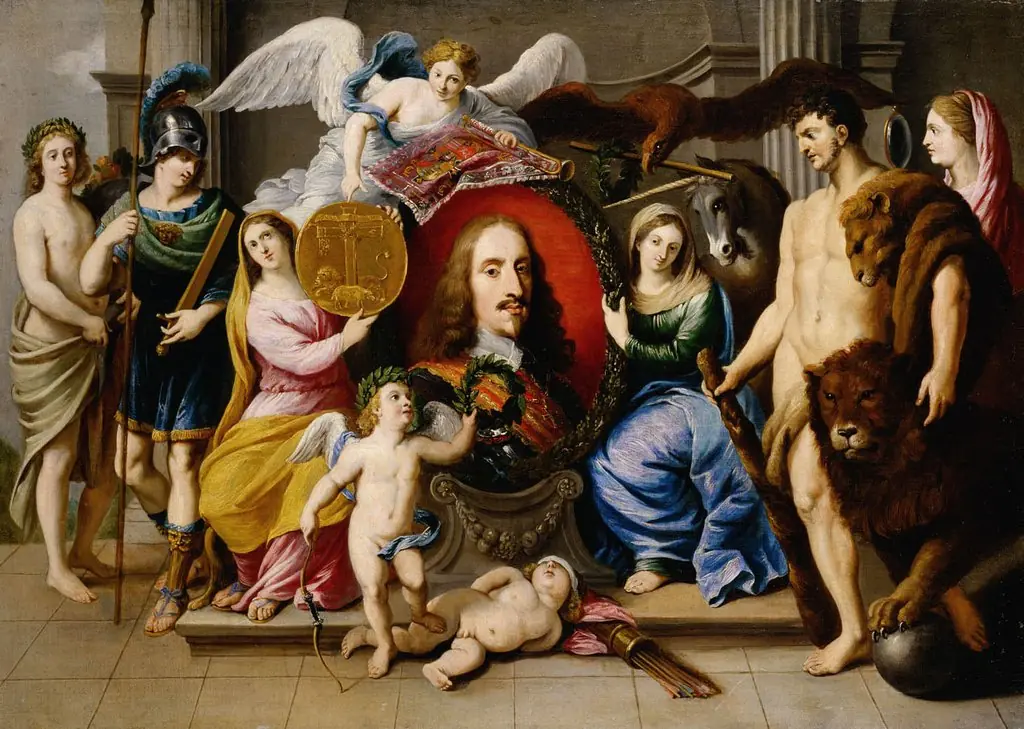
Gerard Hoet’s 1672 oil painting, titled *Allegorie auf Kaiser Leopold I.*, is part of the collection of the Kunsthistorisches Museum. The work presents a complex allegorical tableau that juxtaposes a contemporary figure in elaborate armor with a host of classical and celestial beings, set against an architectural backdrop.
Subject & Meaning
He is surrounded by angels, kneeling classical figures, and winged entities bearing symbols such as crowns and shields.
At the composition’s centre stands a man clad in richly decorated armor, identified as Emperor Leopold I. He is surrounded by angels, kneeling classical figures, and winged entities bearing symbols such as crowns and shields. The contrast between his modern attire and the ancient or divine dress of the surrounding figures underscores his elevated status and the notion of imperial authority sanctioned by heavenly forces.
Technique & Style
Hoet employs a dynamic arrangement of figures, using chiaroscuro to heighten the dramatic tension between the storm‑filled sky and the illuminated central figure. The painter’s handling of oil allows for fine detailing in the armor’s gilding and the textures of drapery, while the architectural elements in the background are rendered with a restrained, classical clarity.
History & Provenance
Created in 1672, the painting entered the holdings of the Kunsthistorisches Museum, where it remains on display. Its provenance traces back to the Habsburg collections, reflecting the imperial patronage that commissioned such allegorical representations of Leopold I’s reign.
Context
The work belongs to a broader 17th‑century tradition of allegorical portraiture, wherein rulers were depicted within mythological settings to convey virtues and divine favor. Hoet’s inclusion of both classical motifs and celestial beings aligns the Austrian emperor with the same iconography used for other European monarchs, such as Louis XIV of France, to legitimize their power through visual symbolism.
Artist & collection


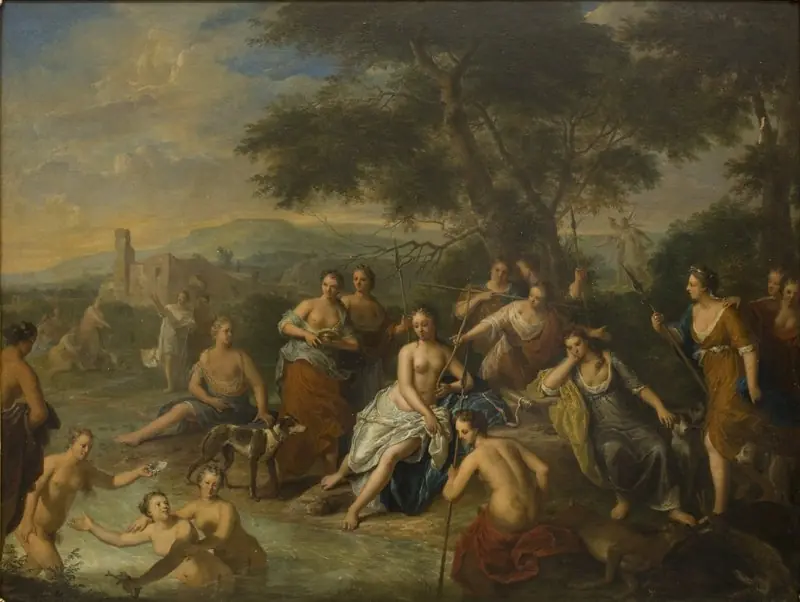 Diana and her Nymphs
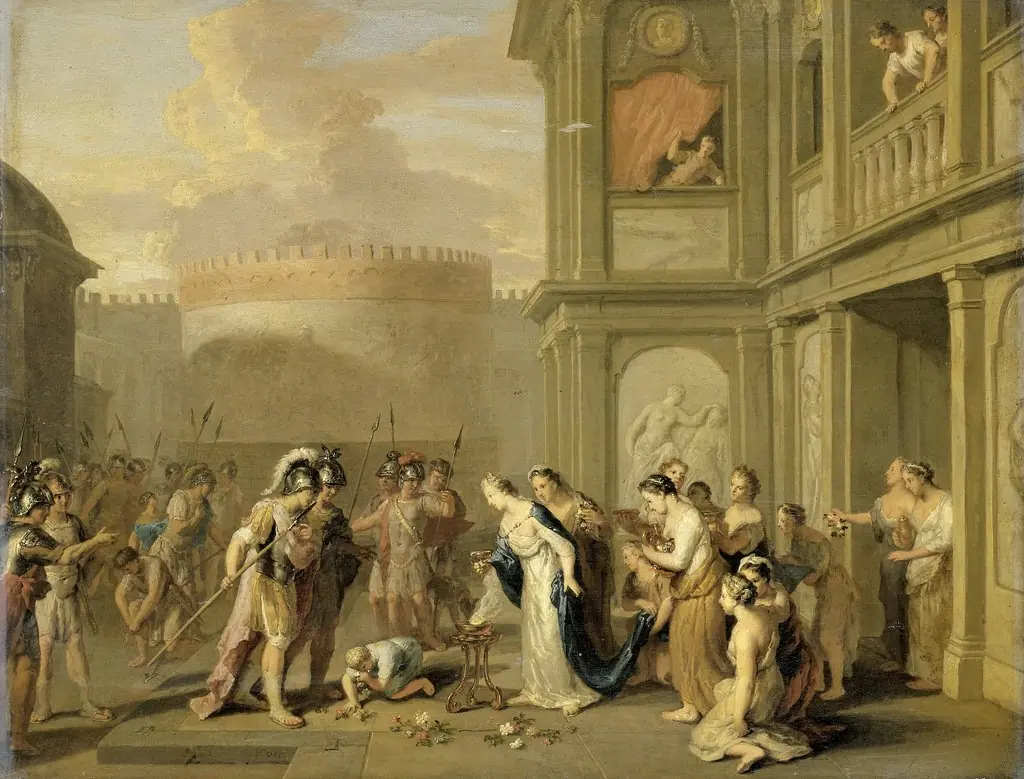 Queen Cleophis Offers Alexander the Great Wine after Conquering Massaga
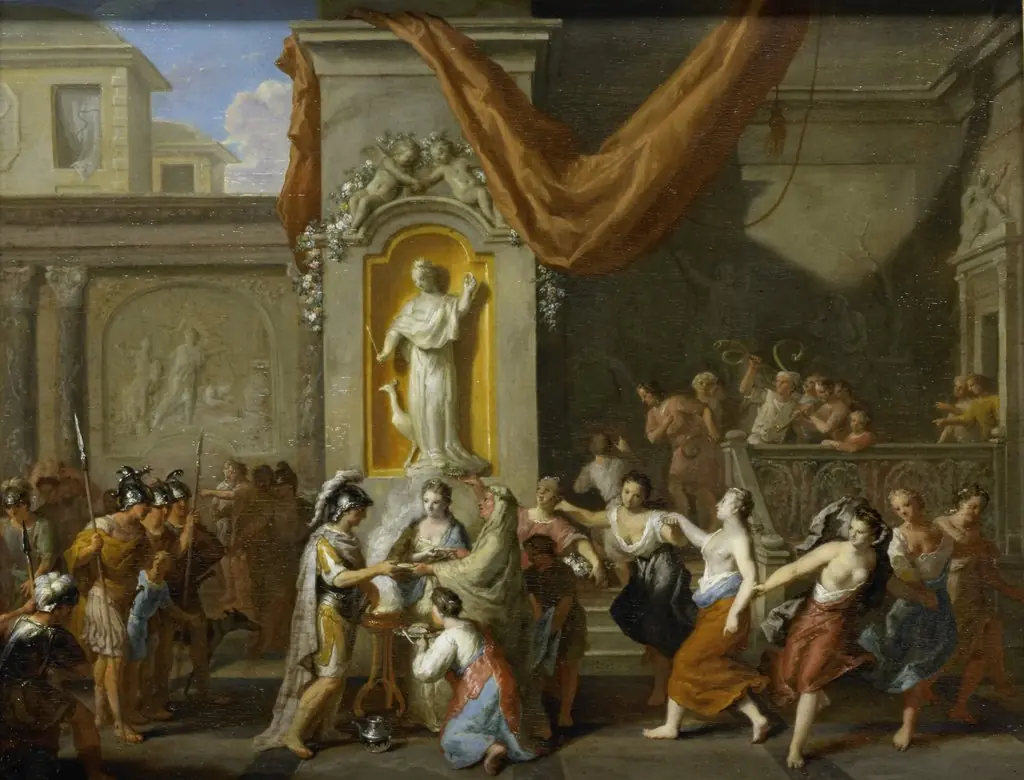 Marriage of Alexander the Great, King of Macedonia, with Roxana of Bacteriane
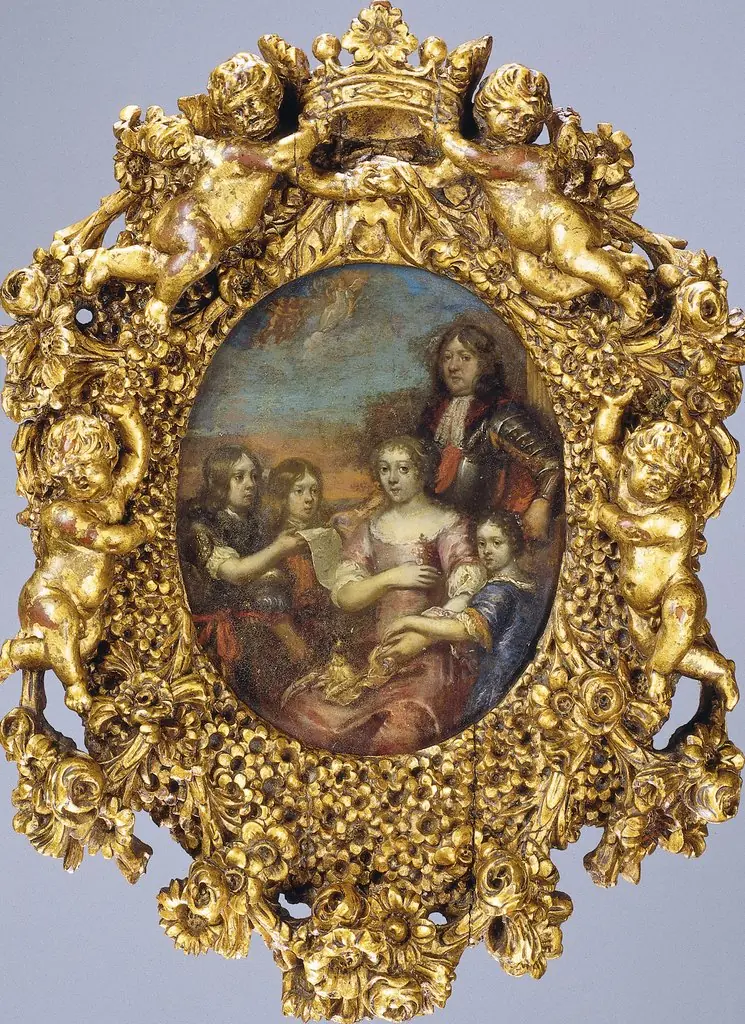 Family Portrait of Willem Hadriaan of Nassau, Lord of Odijk, with his Wife and Children
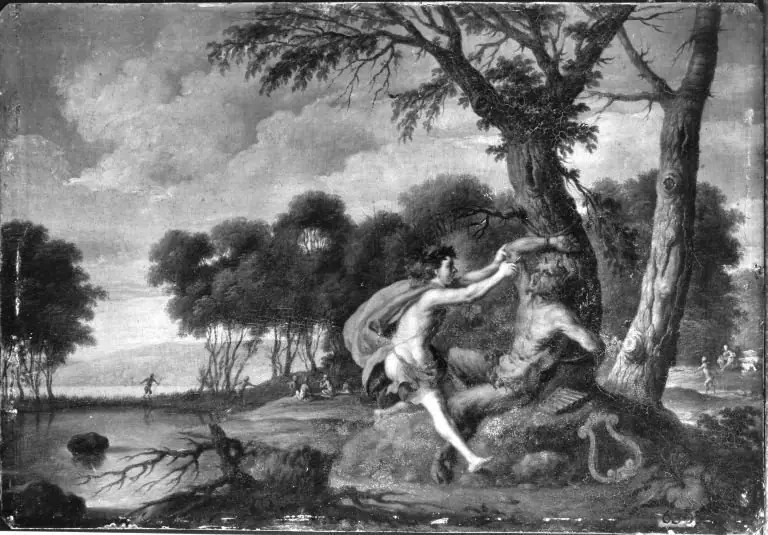 Schindung des Marsyas (?)
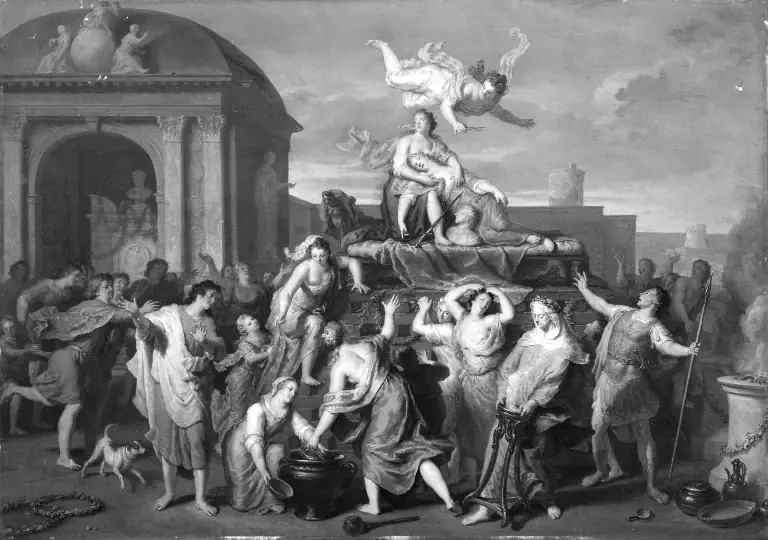 Death of Dido
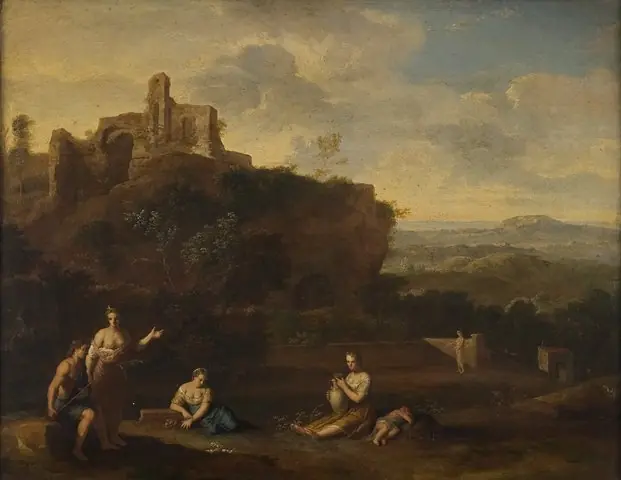 Idyllic Landscape with Fortress
 Idyllic Landscape with Watch-tower
 The Guild of the Crossbow Venerates the Portrait of Headman Jan Karel de Cordes
 The leavetaking of Captain Hendrik de Sandra (1619-1707), sent off by his wife and children
 Portrait of the Earl of Pembroke with His Family (copy)
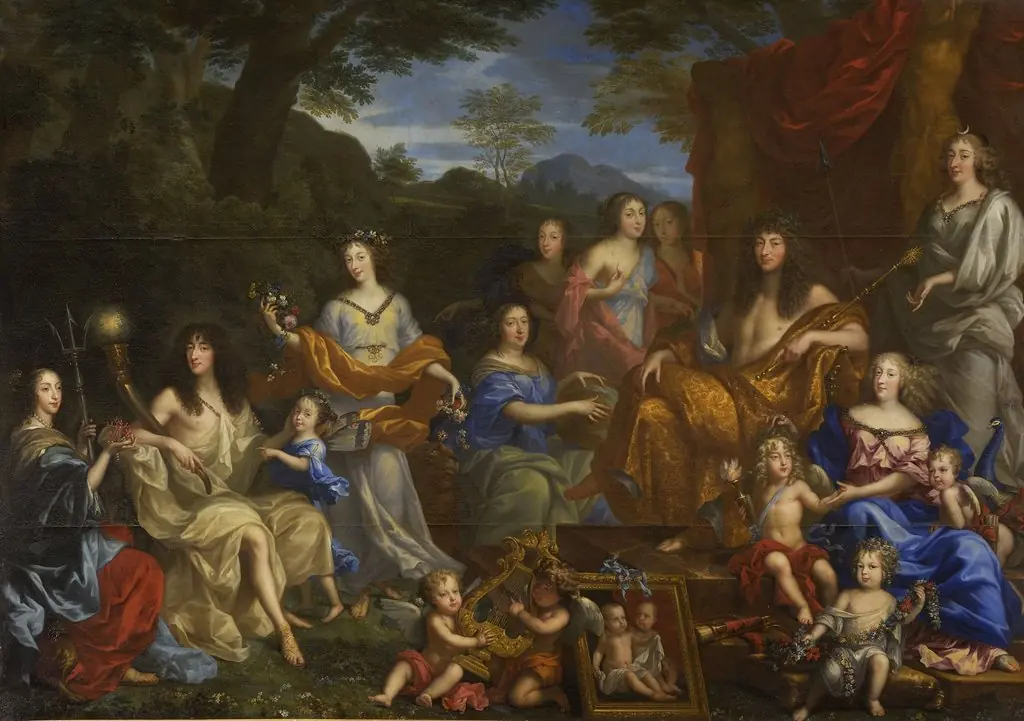 Mythological portrait of Louis XIV and the royal family
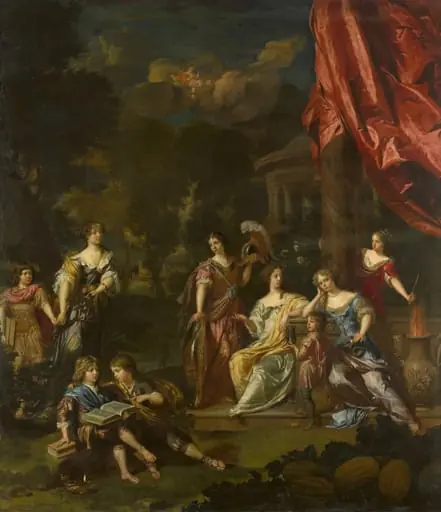 Allegorizing Group Portrait of the Children of Diederic Pietersz van Leyden van Leeuwen, Burgomaster of Leiden, and Alida Paets
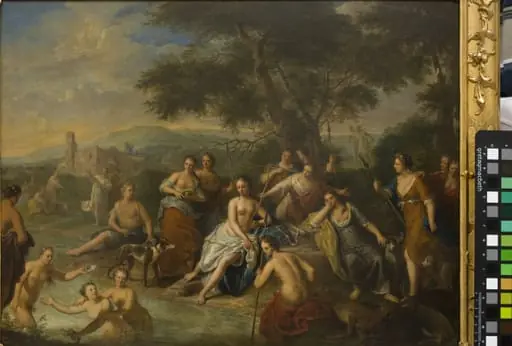 Diana and her Nymphs
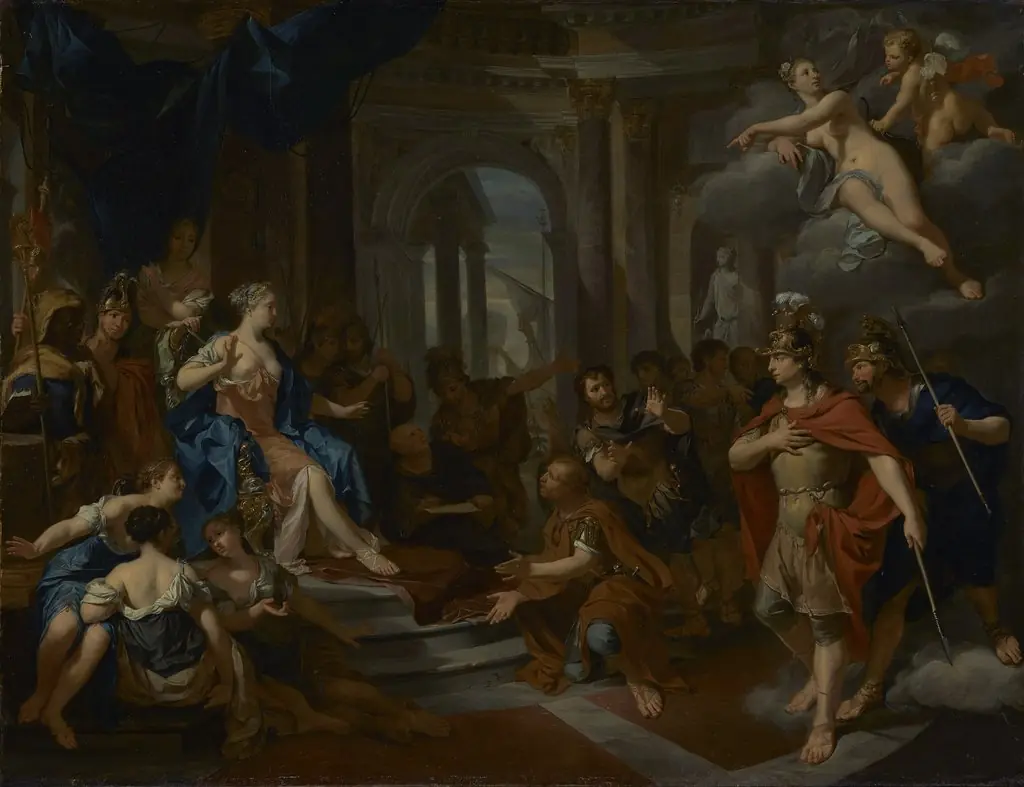 Dido and Aeneas
 Hermes Ordering Calypso to Release Odysseus
 Hermes Ordering Calypso to Release Odysseus
 David Returning Victorious after Defeating Goliath and the Philistines
 Meeting of King Ferdinand and Cardinal-infante Ferdinand at Nördlingen
 Allegory on Archduke Leopold Wilhelm (1614-1662)