Artwork
Officer Writing a Letter, with a Trumpeter and a Dog
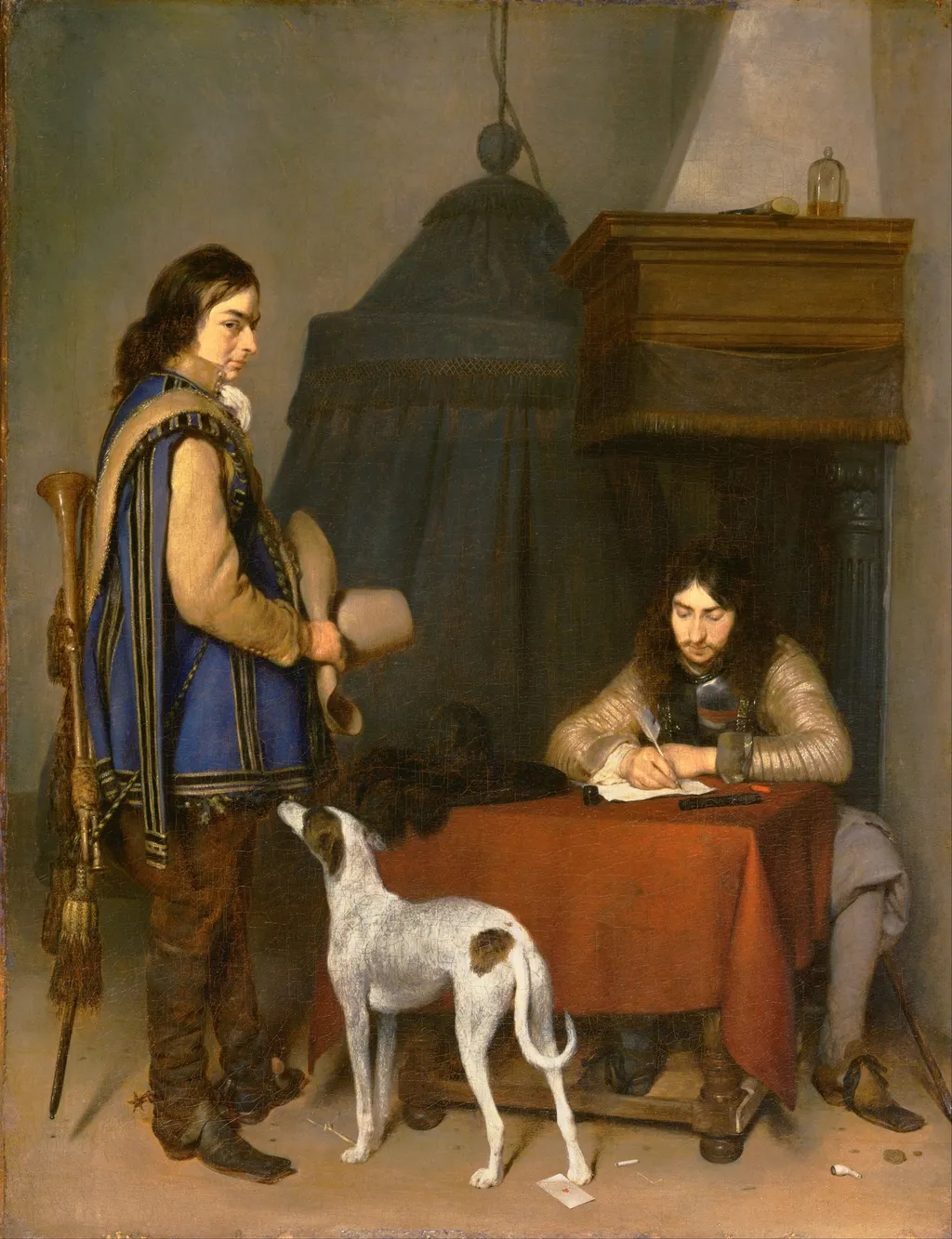
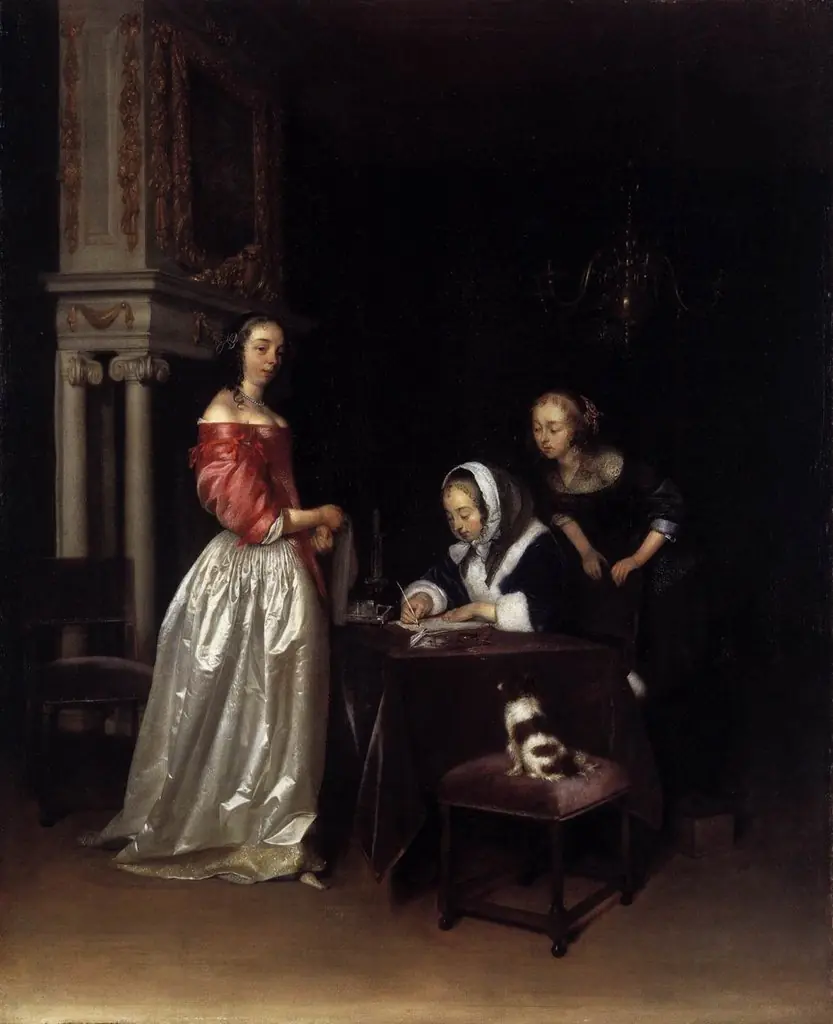
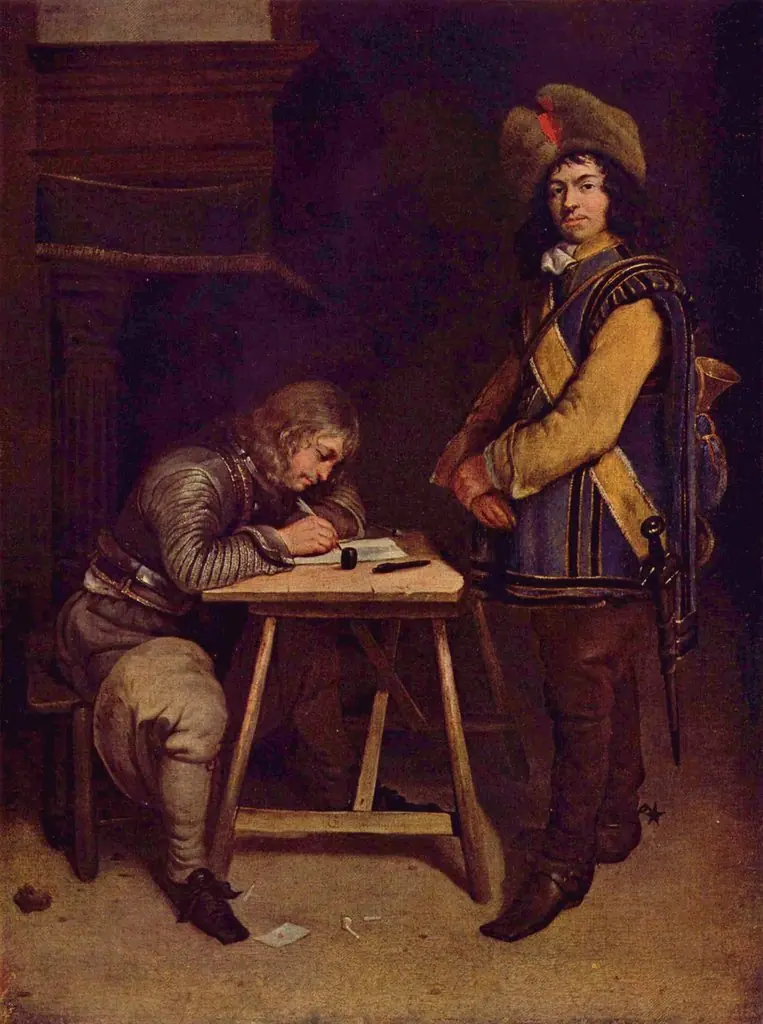
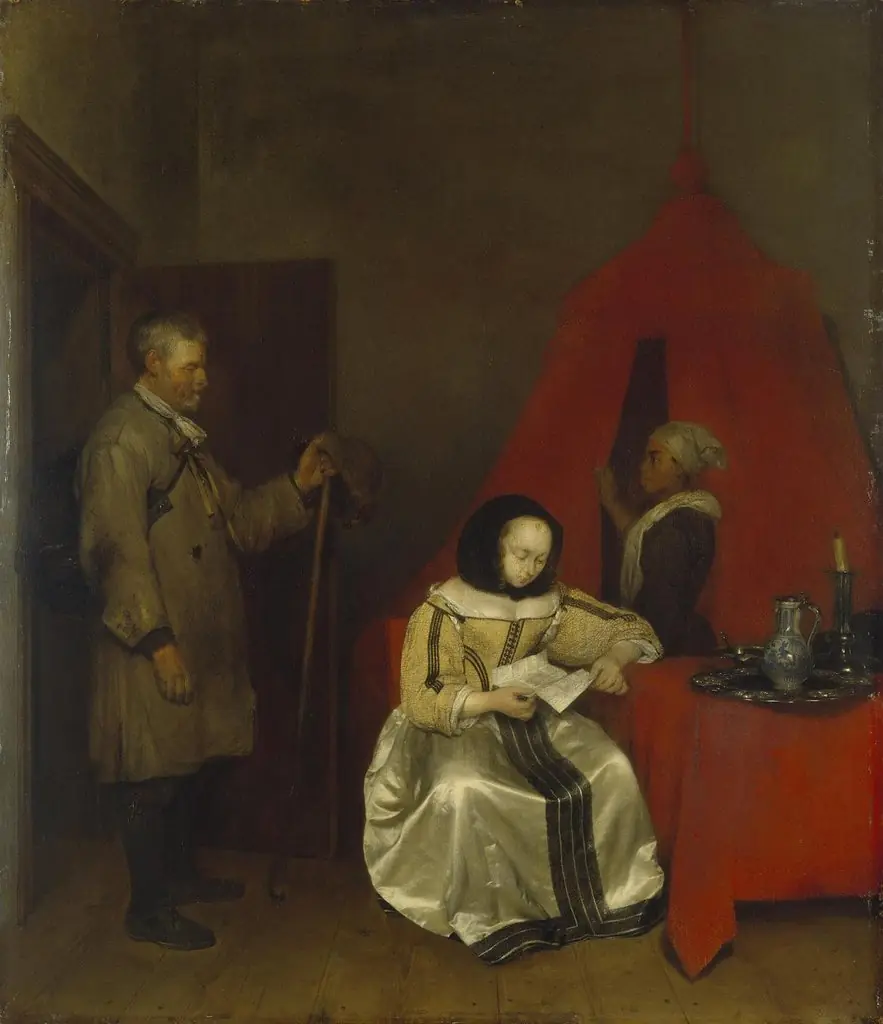
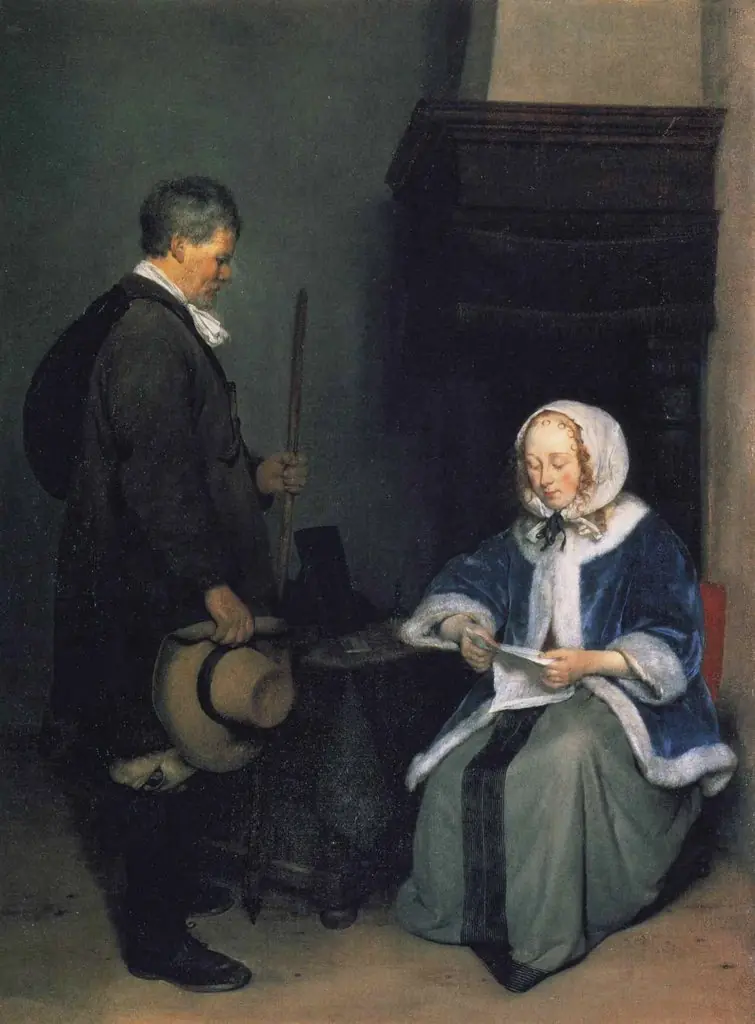
Officer Writing a Letter, with a Trumpeter and a Dog is an oil painting by the Dutch Golden Age artist Gerard ter Borch. It dates from 1658 and is held in the collection of the Philadelphia Museum of Art.
About this work
Overview
Painted in 1658 by Gerard ter Borch, this oil on panel work captures a quiet moment within a military setting.
Painted in 1658 by Gerard ter Borch, this oil on panel work captures a quiet moment within a military setting. The scene features a seated officer composing a letter, flanked by a trumpeter and a small dog. Ter Borch, known for his intimate genre scenes, avoids dramatic action in favor of stillness and observation, reflecting the Dutch Golden Age’s interest in everyday life rendered with precision and restraint.
Subject & Meaning
The painting portrays a pause in military routine, emphasizing solitude and contemplation. The officer’s focused act of writing suggests personal correspondence, possibly from the front, while the trumpeter’s idle posture and the dog’s calm presence imply waiting. No narrative climax is offered; instead, the work invites reflection on the quiet dignity of ordinary moments within a structured, hierarchical world.
Technique & Style
Ter Borch employs fine brushwork and subtle chiaroscuro to render textures: the sheen of armor, the softness of fur, and the crisp folds of fabric. Light falls gently across the scene, modeling forms without harsh contrasts. The composition is tightly controlled, with figures arranged to guide the eye toward the writer’s hand and the quill, reinforcing the theme of quiet concentration and domesticated military life.
History & Provenance
The painting entered the Philadelphia Museum of Art’s collection in the 20th century, though its earlier ownership history remains partially undocumented. It has been consistently attributed to Ter Borch since its rediscovery in the 19th century. Its preservation in good condition allows for close study of the artist’s meticulous technique and the material culture of mid-17th-century Dutch military interiors.
Context
Created during the Dutch Golden Age, the work reflects a broader cultural shift toward domestic and civilian themes in art, even within military contexts. Ter Borch’s focus on private moments aligns with contemporaries like Vermeer and Metsu, who elevated ordinary scenes through refined observation. The presence of a trumpeter and armor hints at the lingering presence of war, yet the atmosphere remains intimate and subdued.
Legacy
Ter Borch’s restrained approach influenced later genre painters through his emphasis on psychological nuance and tactile realism. This painting exemplifies his ability to convey emotion through stillness rather than action. While not widely exhibited, it remains a key example of how Dutch artists transformed mundane moments into enduring studies of human behavior and material detail.
Own this work as a print
Artist & collection
Artist
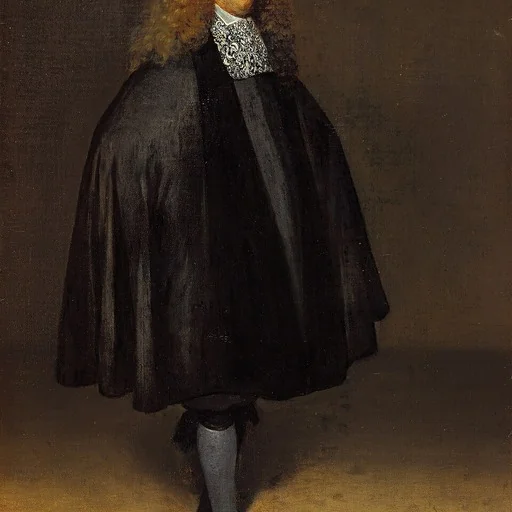
Gerard ter Borch (Dutch: ; December 1617 – 8 December 1681), also known as Gerard Terburg (Dutch: ), was a Dutch Golden Age painter mainly of genre subjects.