Artwork
The Seed Received among the Thorns, from the Parable of the Sower
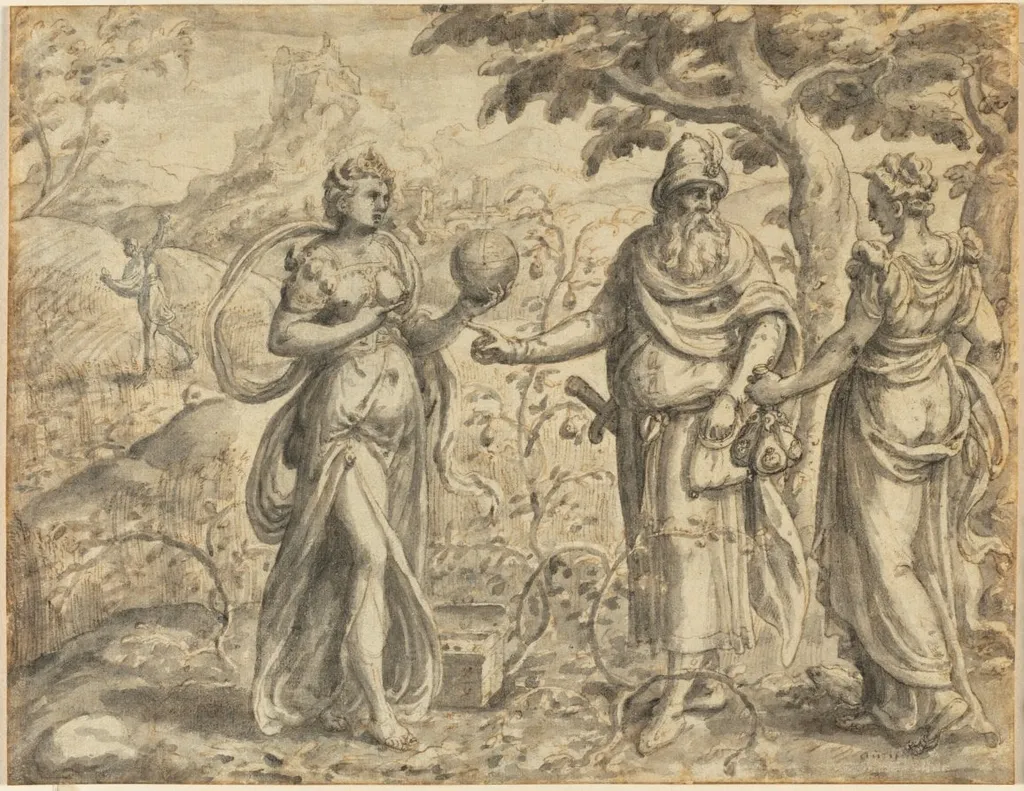
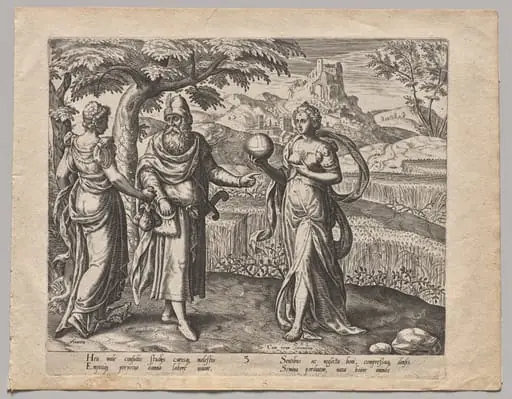
The Seed Received among the Thorns, from the Parable of the Sower is a drawing by the Renaissance artist Gerard van Groeningen. It dates from 1573 and is held in the collection of the Cleveland Museum of Art. This drawing is a preparatory design for a printed illustration that forms part of a series depicting the biblical Parable of the Sower.
About this work
Look up more prints from belgium, flanders, antwerp, 16th century to see how artists turned Bible stories into everyday scenes.
A pilgrim scatters seeds into a patch of thorns while two women watch. One woman holds a moneybag, the other clutches a tangle of weeds.
This is a sketch for a print that tells part of Jesus’s story about different kinds of listeners. The thorns stand for worries and greed that choke good ideas. The artist made it in Antwerp when religious pictures were used to teach lessons at home.
Look up more prints from belgium, flanders, antwerp, 16th century to see how artists turned Bible stories into everyday scenes.
Overview
This drawing is a preparatory design for a printed illustration that forms part of a series depicting the biblical Parable of the Sower. In the scene a pilgrim, representing a third type of sower, casts seed into a thicket of thorns while two allegorical women observe, embodying worldly cares and avarice. Behind them a fourth sower is shown successfully planting his seed, completing the narrative sequence.
Subject & Meaning
The composition visualises the parable’s teaching that different conditions of the heart affect the reception of divine truth. The thorns symbolize anxieties and greed that suffocate spiritual growth, while the two female figures personify those distractions. The pilgrim’s careless sowing illustrates the listener whose attention is divided, contrasting with the successful sower who represents an open, receptive heart.
Technique & Style
Executed as a detailed sketch, the work employs fine line work typical of 16th‑century Antwerp drafts for engravings. The figures are rendered with clear contours and modest shading, allowing the design to be transferred to a printing matrix. The allegorical women are distinguished by attributes—a money bag and a clump of weeds—providing visual shorthand for their symbolic roles.
History & Provenance
Created in Antwerp during the early modern period, the drawing reflects the city’s thriving print industry and its role in disseminating religious instruction for private devotion. The design was intended for a series of prints that would have circulated among households, serving both as moral instruction and as a didactic illustration of scriptural narrative.
Context
In the 16th‑century Low Countries, biblical scenes were frequently adapted into everyday settings to make theological concepts accessible to lay audiences. This work follows that tradition, translating the parable’s abstract lessons into a concrete tableau of a pilgrim and personified vices, aligning with contemporary moral discourse that emphasized personal piety and the dangers of material preoccupation.
Artist & collection
Artist
Gerard van Groeningen (1515–1599) was a Flemish artist, born in Antwerp.

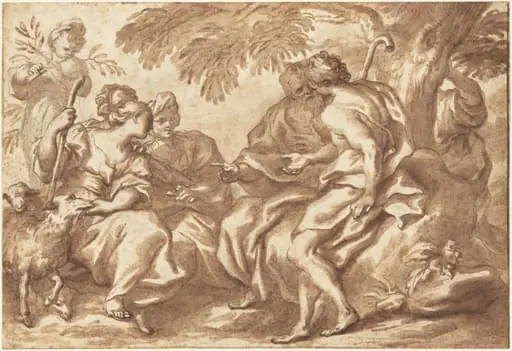 The Meeting of Jacob and Rachel
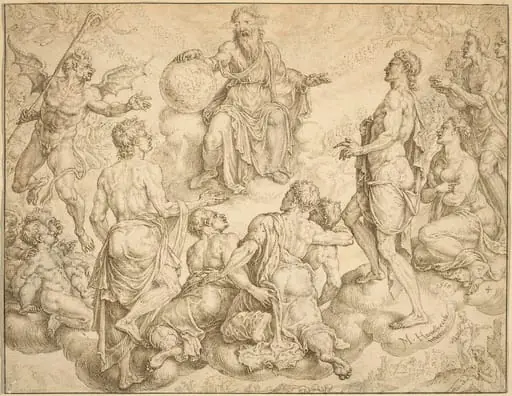 Satan Challenges God to Remove his Protection from Job
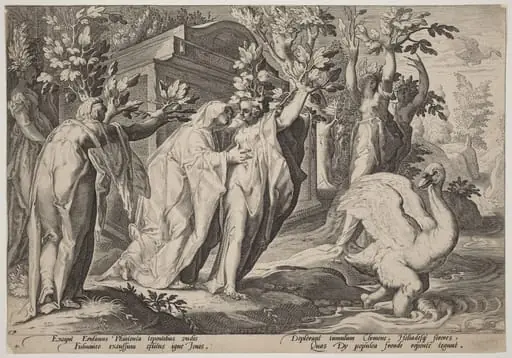 Phaeton's Sisters Changed into Poplars, and Cygnus into a Swan
 Christ and the Samaritan Woman
![Temporalis Aeternitas [Second Version], by Italian 17th Century](https://artifactworldgallery.com/img/italian-17th-century--temporalis-aeternitas-second-version--2b55857961773f67-w320.webp) Temporalis Aeternitas [Second Version]
Temporalis Aeternitas [Second Version] Virtue Triumphing over Vices
 Clymene Urging Phaeton to Find Helios
 Dance of the Dryades
 The Four Elements
 The Sacrifice of Iphigenia
 The Judgment of Paris
 The Seed Received among the Thorns