Artwork
Virtue Triumphing over Vices
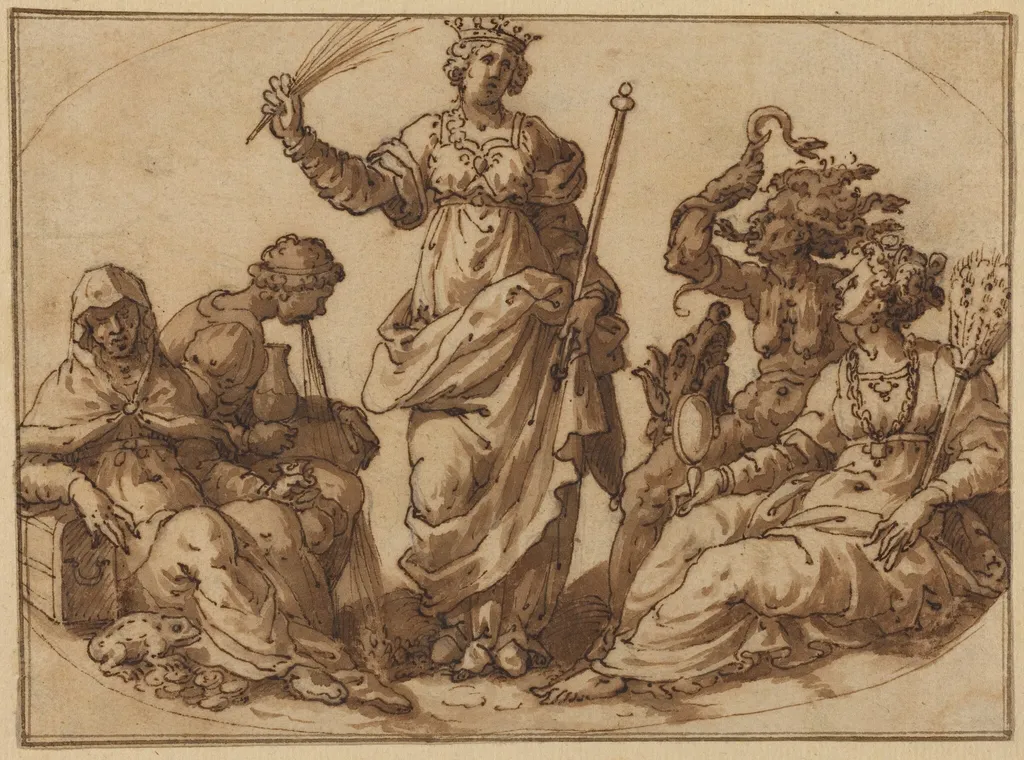
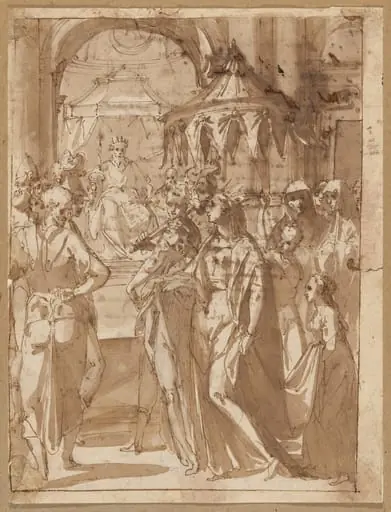
Virtue Triumphing over Vices is an ink drawing by the Renaissance artist Italian 16th Century. It dates from 1501 and is held in the collection of the National Gallery of Art.
About this work
Overview
The use of laid paper and minimal tools reflects a preparatory or exploratory intent, common in Renaissance studies of moral themes.
This ink and wash drawing depicts an allegorical scene in which a crowned figure, representing Virtue, stands dominant over a group of fallen figures symbolizing Vices. Executed with swift, expressive brushwork and tonal washes, the composition emphasizes emotional weight over fine detail. The use of laid paper and minimal tools reflects a preparatory or exploratory intent, common in Renaissance studies of moral themes.
Subject & Meaning
The central figure, adorned with a crown and holding wheat and a staff, embodies Virtue as a force of moral authority and abundance. Surrounding figures, some clutching mirrors and musical instruments, suggest vanity and indulgence, their slumped postures and averted gazes conveying defeat. The wheat, a traditional symbol of prosperity and divine favor, reinforces the idea that moral integrity leads to societal well-being.
Technique & Style
The artist employed pen and brown ink with diluted washes to create contrast and volume with minimal means. Loose, rapid strokes define form, while darker washes deepen shadows and suggest depth without detailed modeling. Cross-hatching is used sparingly, prioritizing expressive gesture over precision. This approach reveals a focus on emotional impact and compositional clarity rather than finish.
History & Provenance
The drawing’s origin is not definitively recorded, but its style and medium align with Italian Renaissance workshop practices of the late 15th or early 16th century. Likely a study for a larger composition, it may have been produced by an artist engaged in moral or religious iconography. Its survival suggests it was valued as a working sketch, preserved for its conceptual strength.
Context
During the Renaissance, allegorical imagery drawn from classical and Christian traditions was widely used to convey ethical ideals. Artists often explored Virtue and Vice as opposing forces in drawings and frescoes, particularly in humanist circles. This piece reflects a broader cultural interest in moral instruction through visual metaphor, common in both public and private commissions.
Legacy
Though unsigned and unattributed, the drawing exemplifies how Renaissance draftsmen used rapid, tonal techniques to convey complex ideas with economy. Its emphasis on mood and symbolic clarity influenced later generations of artists studying allegory. As a surviving example of preparatory work, it offers insight into the conceptual processes behind more finished compositions of the period.
Artist & collection

Artist
A 16th-century Italian sculptor left us small bronze works in dark brown and gold.

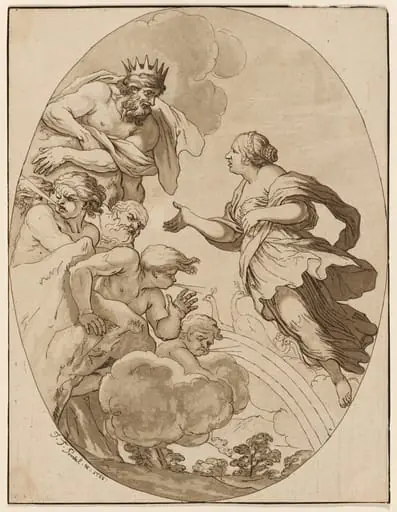 Jupiter and Juno
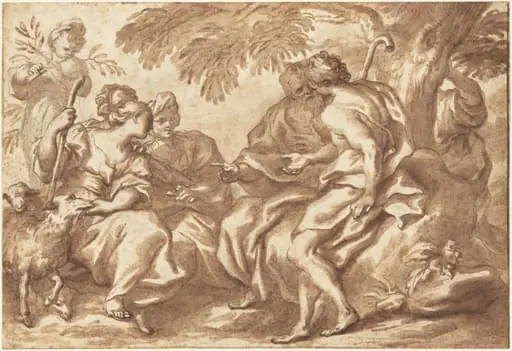 The Meeting of Jacob and Rachel
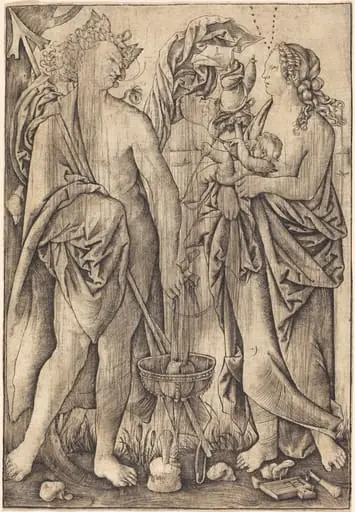 Mars and Venus (Mercury and Venus?)
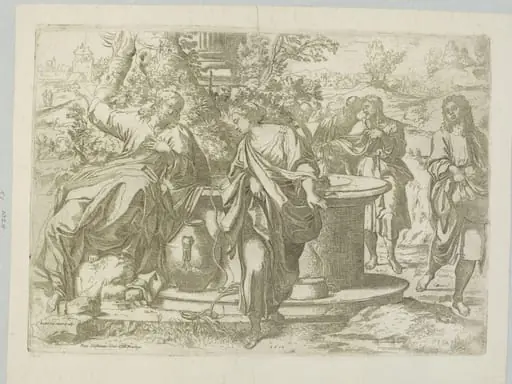 Christ and the Woman of Samaria
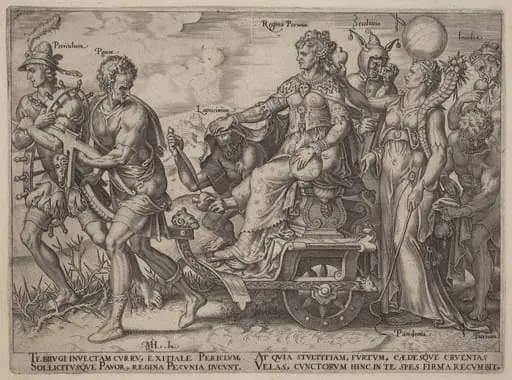 Dangers and Vices Accompanying Wealth
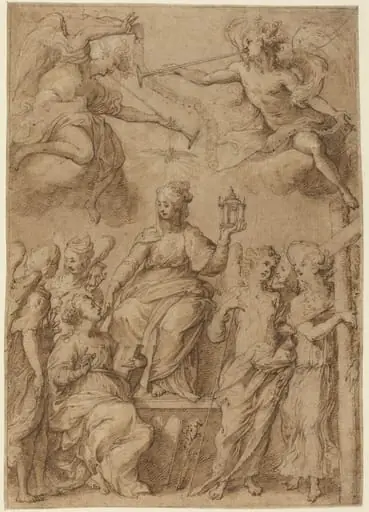 Ecclesia Surrounded by Angels Holding the Instruments of the Passion
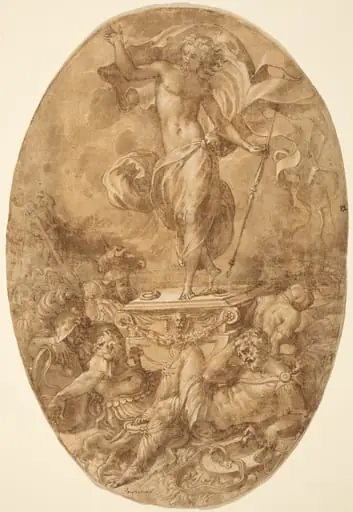 The Resurrection
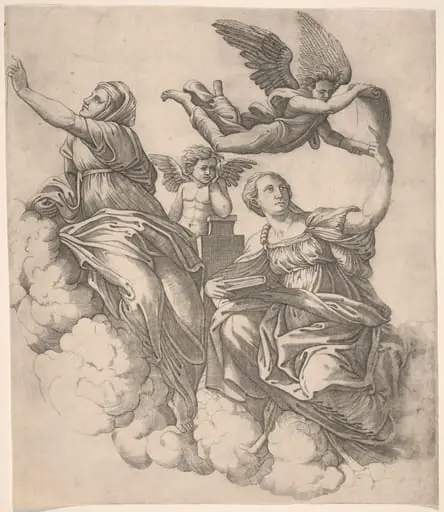 Two Sibyls and an Angel
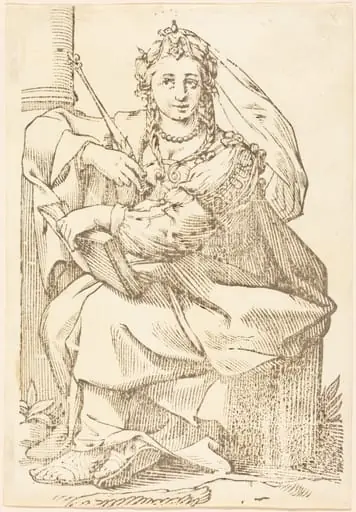 Sibylla Phrygia
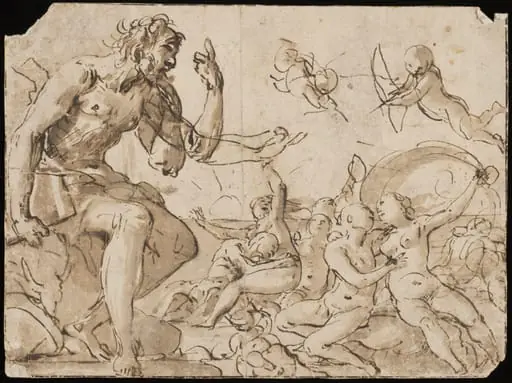 Sea-nymphs playing with tritons and a man; on the left a semi-draped giant, holding a book or stone, seated on a rock; possibly Polyphemus with Acis and Galatea
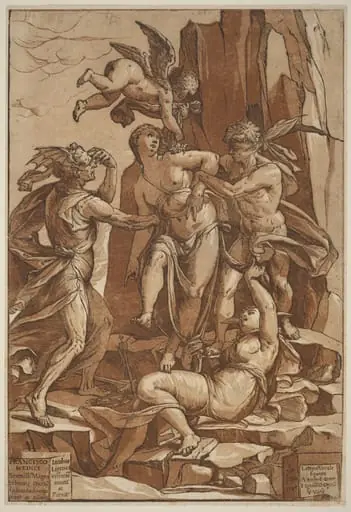 Allegory of Virtue
 Esther before Ahasuerus