Artwork
Cultivated Medlar (Mespilus germanica)
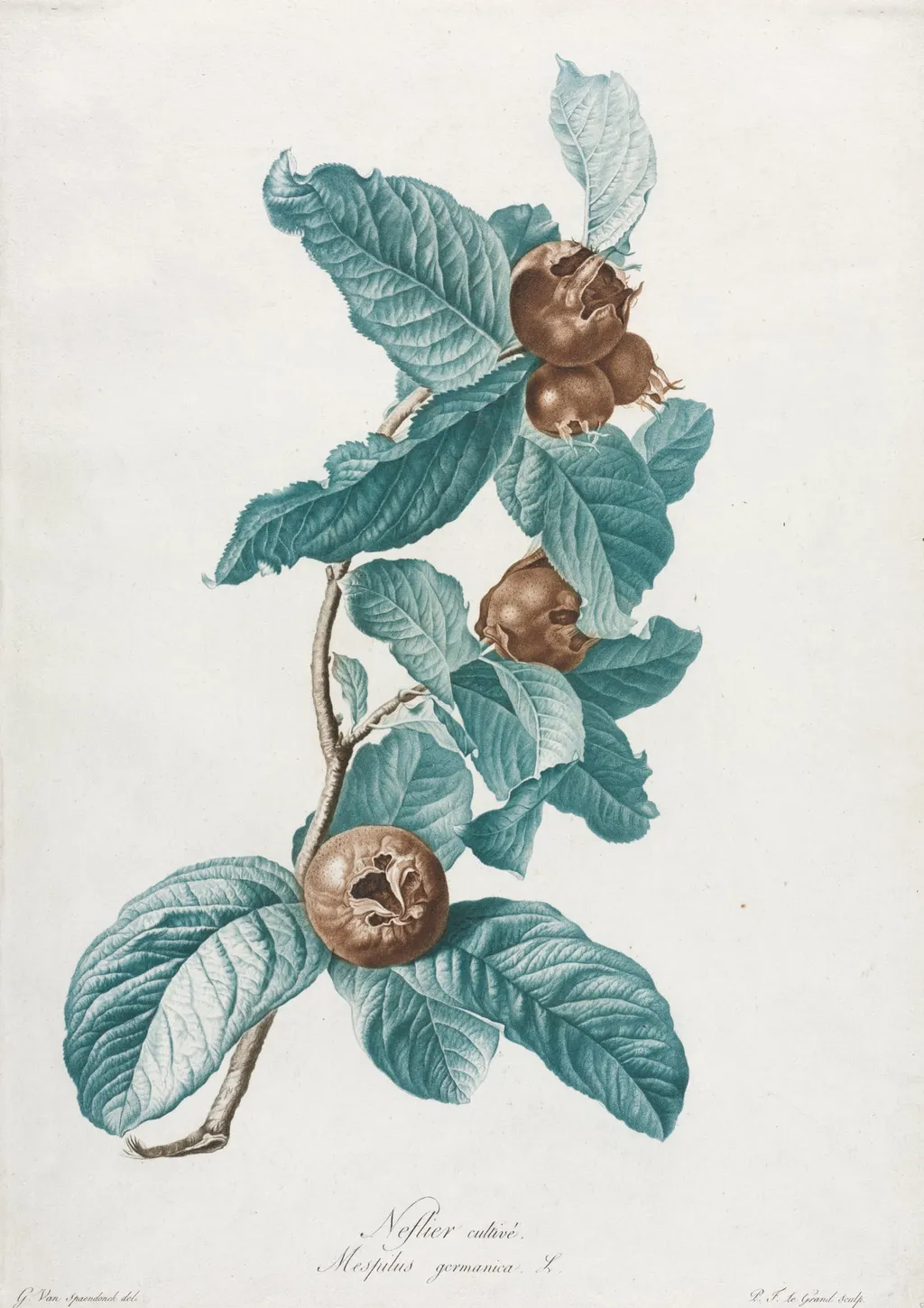
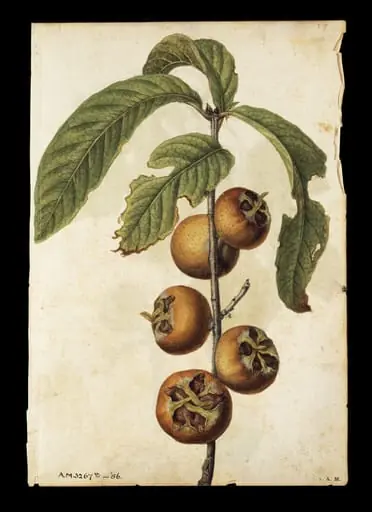
Cultivated Medlar (Mespilus germanica) is a print by the Romanticist artist Gerard van Spaendonck. It dates from 1800 and is held in the collection of the Cleveland Museum of Art. The work is a print depicting a single medlar fruit, its rough, split skin and soft interior rendered with meticulous detail.
About this work
Overview
The work is a print depicting a single medlar fruit, its rough, split skin and soft interior rendered with meticulous detail. The image combines brown and blue‑green tones applied simultaneously on the same plate, creating a subtle gradation across the surface of the fruit.
Subject & Meaning
The medlar, a fruit once common in European orchards, is presented in close‑up, emphasizing its tactile texture and the delicate contrast between its fuzzy exterior and the exposed flesh. The focus on a solitary fruit reflects the artist’s interest in natural study and the quiet beauty of everyday botanical objects.
Technique & Style
After printing, the right‑hand side received additional hand‑applied watercolor, a common practice to enhance color but one that can obscure fine details.
The image was produced using the à la poupée method, in which a single copper plate is selectively inked with different colors by dab‑dabbing rag “dolls” onto designated areas. Brown and blue‑green inks were applied together, allowing the tonal shifts to emerge in a single impression. After printing, the right‑hand side received additional hand‑applied watercolor, a common practice to enhance color but one that can obscure fine details.
History & Provenance
The artist, Gerard van Spaendonck, served as a painter for the French royal court before relocating to the Netherlands. Known for his highly finished fruit and flower studies, he applied his precise observational skill to this print, which exemplifies his transition from court patronage to a broader European market.
Context
During the late 18th and early 19th centuries, the à la poupée technique was prized for its ability to produce multicolored prints without the expense of multiple plates. Van Spaendonck’s use of the method aligns with contemporary interests in scientific illustration and the decorative appeal of botanical subjects.
Legacy
The print illustrates the delicate balance between mechanical reproduction and hand‑finished embellishment, offering insight into the evolving practices of printmakers who sought to combine efficiency with the painterly qualities of watercolor.
Artist & collection

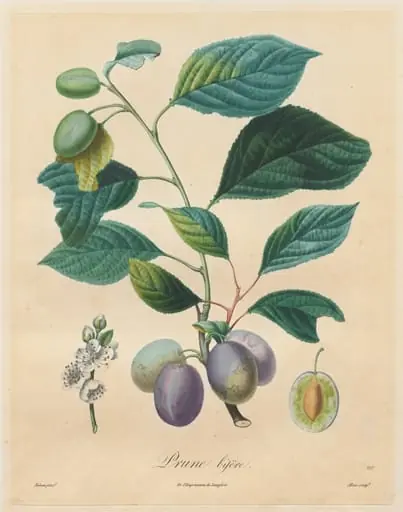 Traité des arbres fruitiers: Prune bifère
 Fig; Medlar
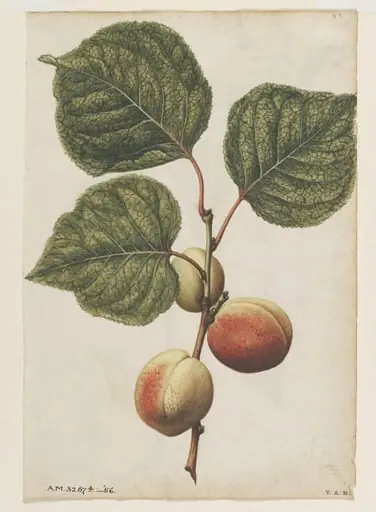 Apricots; Cherries
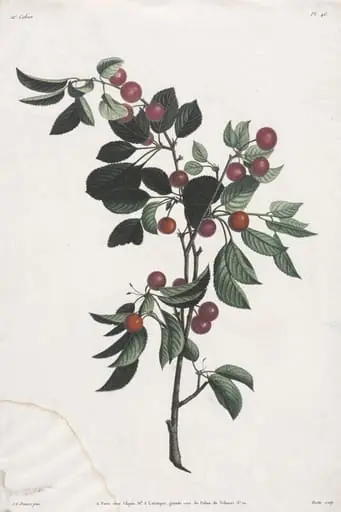 Collection des fleurs et des fruits: Branches de Cérises précoce
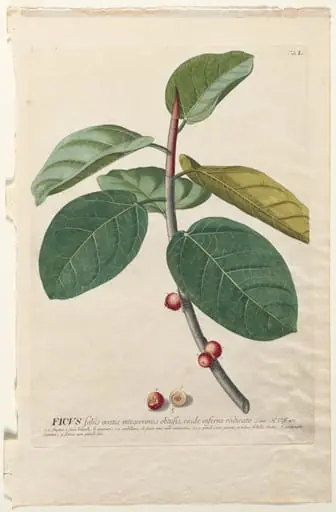 Plantae Selectae: No. 50 - Ficus
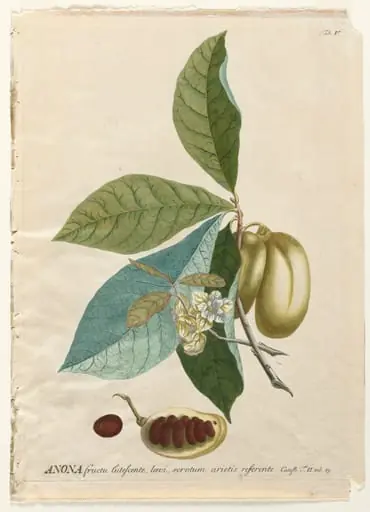 Plantae Selectae: No. 5 - Anona
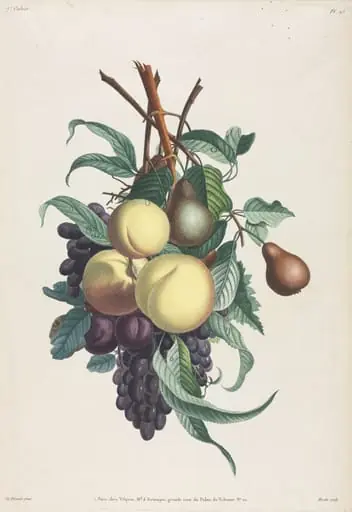 Collection des fleurs et des fruits: Branches de rousselet, pêche, prune et raisin
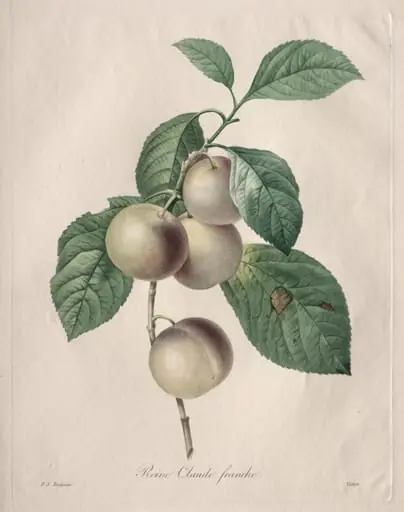 Reine Claude Plum
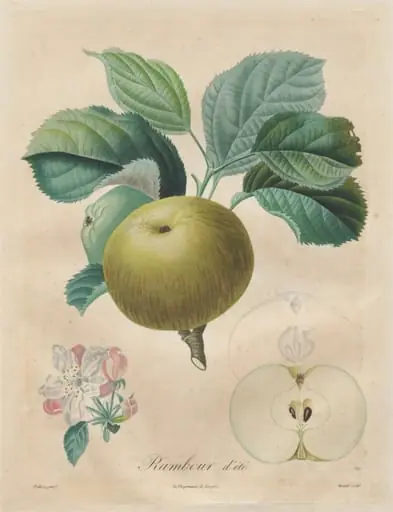 Traité des arbres fruitiers: Rambour d'été
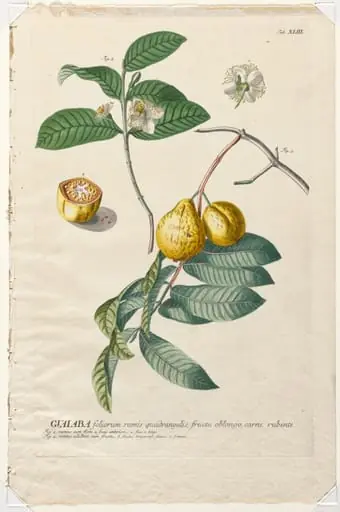 Plantae Selectae: No. 43 - Guaiaba
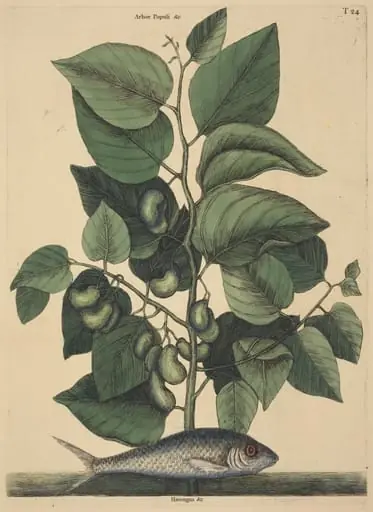 The Pilchard (Argentina carolina)
 Phytographia Curiosa: Britannica Antiquorum Vera