Artwork
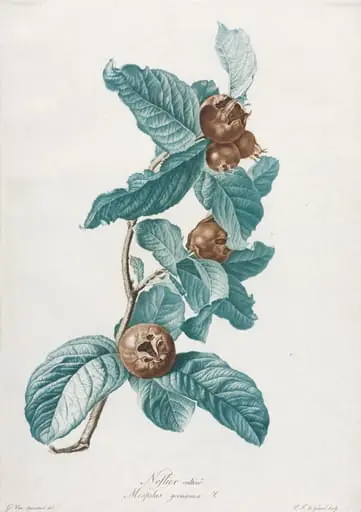
Fleurs dessinées d'après nature: Campanule gantelée
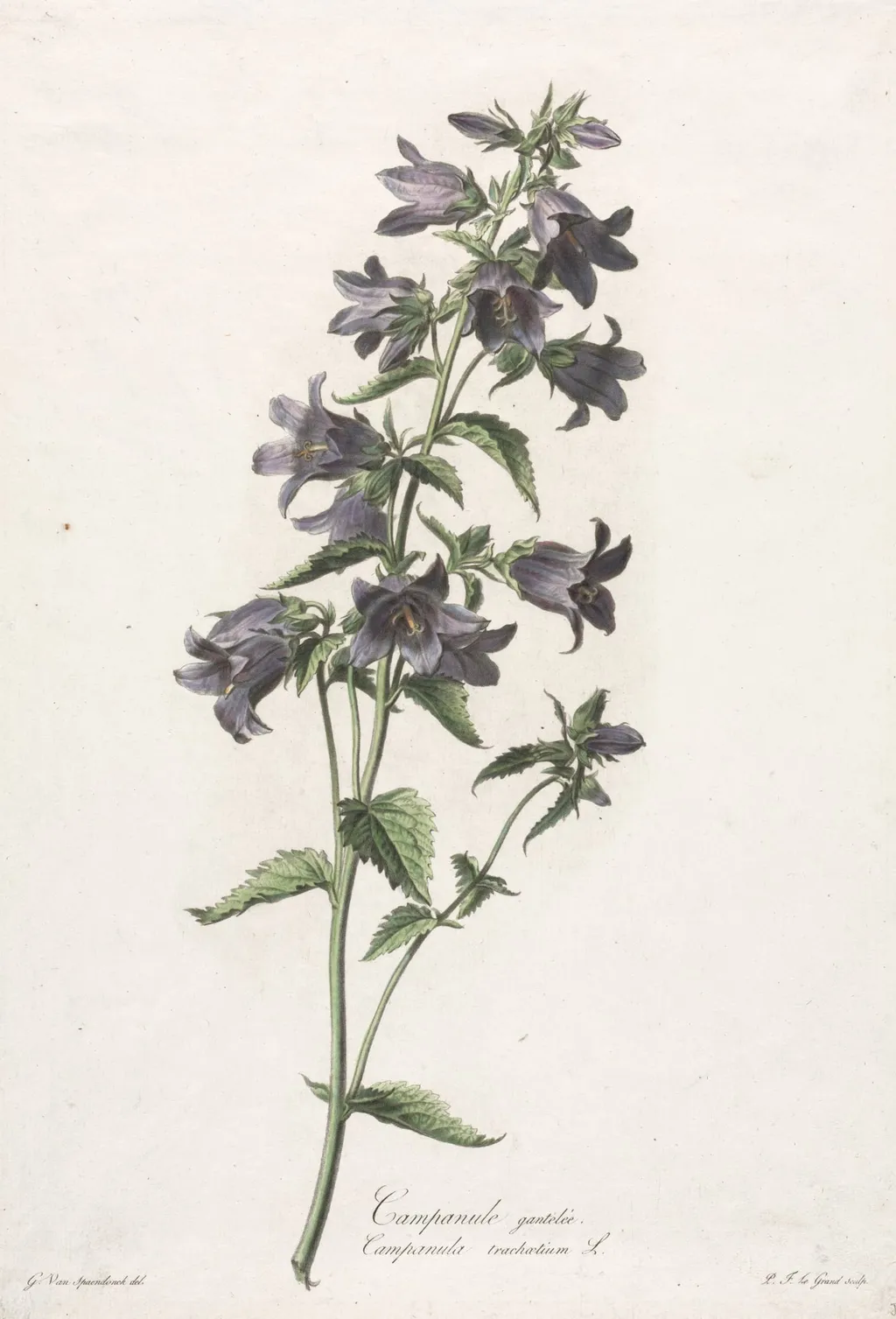
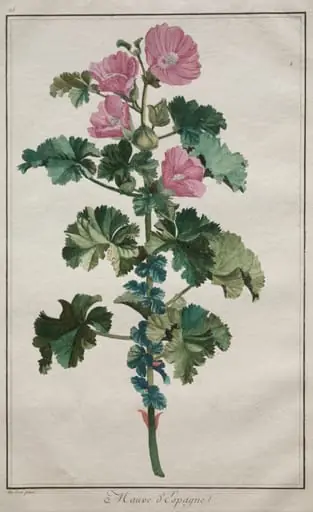
Fleurs dessinées d'après nature: Campanule gantelée is a print by the Romanticist artist Gerard van Spaendonck. It dates from 1800 and is held in the collection of the Cleveland Museum of Art.
About this work
Overview
Rendered in precise detail against a pale beige background, the work belongs to a series focused on accurate floral studies drawn directly from life.
Created around 1800 by Gerard van Spaendonck, this botanical print depicts a single stem of the campanule gantelée, or bellflower. Rendered in precise detail against a pale beige background, the work belongs to a series focused on accurate floral studies drawn directly from life. It is part of the collection at The Cleveland Museum of Art, where it reflects the scientific and aesthetic interests of late 18th- and early 19th-century natural history illustration.
Subject & Meaning
The subject is a cultivated variety of bellflower, chosen for its distinctive tubular petals and graceful form. Rather than symbolizing abstract ideas, the image serves as a record of botanical specificity, emphasizing the plant’s natural structure. Its quiet composition invites close observation, aligning with Enlightenment-era values that prized empirical study over ornamentation in scientific imagery.
Technique & Style
Van Spaendonck employed fine, controlled lines and subtle tonal gradations to capture the delicate textures of petals and leaves. Veins, edges, and the slight curvature of each element are rendered with clinical precision, yet without excessive embellishment. The muted background isolates the specimen, enhancing its clarity and reinforcing the work’s function as a scientific reference rather than a decorative piece.
History & Provenance
The print originates from van Spaendonck’s series of botanical illustrations commissioned for academic and royal patrons in France. He was renowned for his ability to combine artistic skill with botanical accuracy. The work entered The Cleveland Museum of Art’s collection through established channels of 19th-century scientific publishing and European art acquisitions, preserving its role as a document of natural history.
Context
During the early 1800s, botanical illustration flourished as natural sciences expanded. Artists like van Spaendonck worked closely with botanists to produce reliable visual records for classification. This print reflects a broader European effort to catalog plant species, driven by colonial exploration and the rise of systematic taxonomy, rather than romanticized interpretations of nature.
Legacy
Van Spaendonck’s works remain valued for their fidelity to botanical form and their influence on later scientific illustration. Though not widely known outside specialist circles, his prints helped standardize visual methods for plant documentation. This piece endures as an example of how art served as a tool for knowledge, bridging aesthetics and empirical science in the pre-photographic era.
Artist & collection

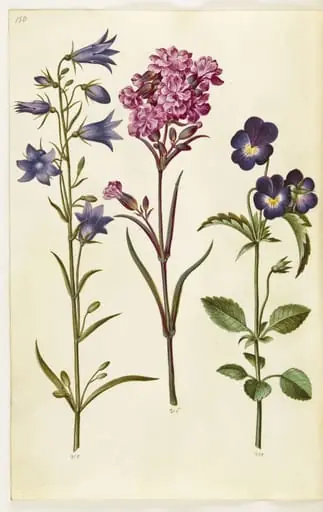 Campanula rotundifolia (liden klokke); Silene viscaria (almindelig tjærenellike); Viola tricolor (almindelig stedmoderblomst)
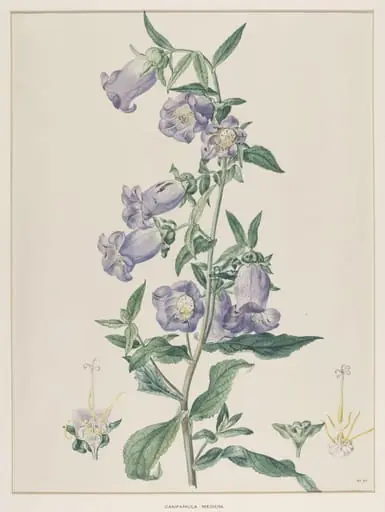 Campanula Medium
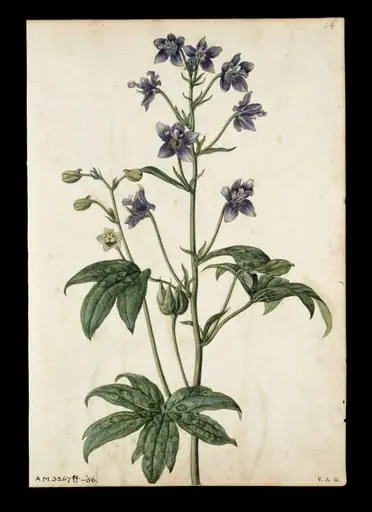 Stavesacre; Lavender
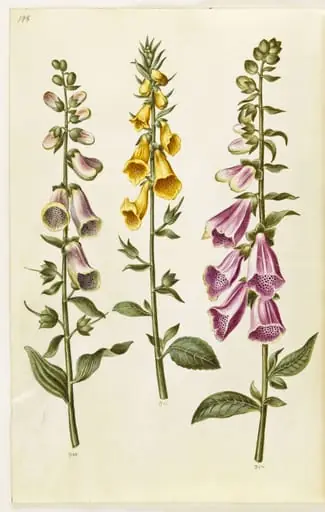 Digitalis purpurea (almindelig fingerbøl); Digitalis grandiflora (storblomstret fingerbøl)
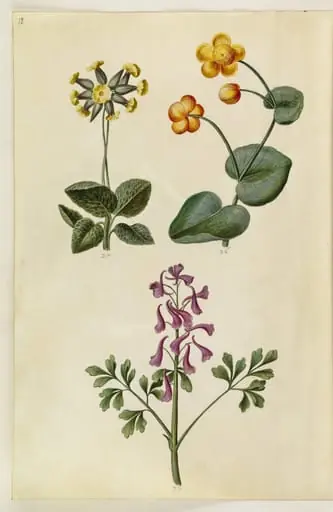 Primula veris (hulkravet kodriver); Caltha palustris (eng-kabbeleje); Corydalis cava (hulrodet lærkespore)
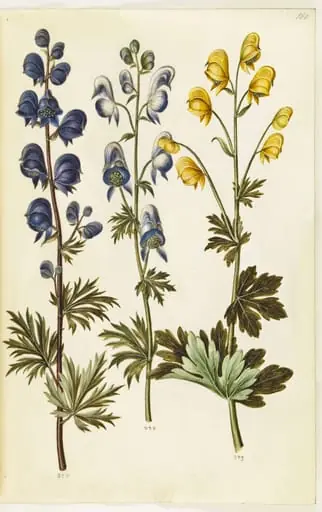 Aconitum napellus (?) (ægte stormhat); Aconitum variegatum, evt. Aconitum ×cammarum (?) (broget stormhat, evt. have-stormhat); Aconitum anthora (finbladet stormhat)
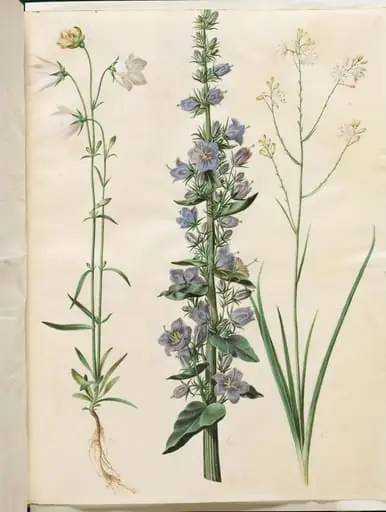 Campanula persicifolia (smalbladet klokke); Campanula pyramidalis (pyramide-klokke); Anthericum ramosum (grenet edderkopurt)
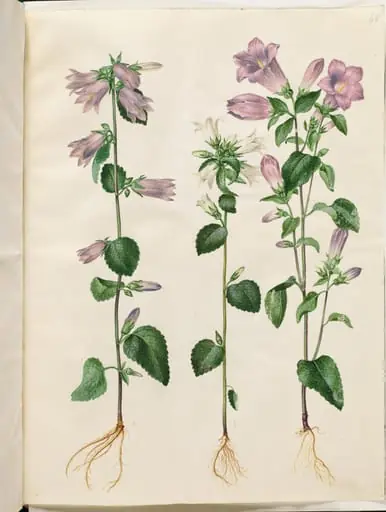 Campanula trachelium (nælde-klokke); Campanula medium (marie-klokke)
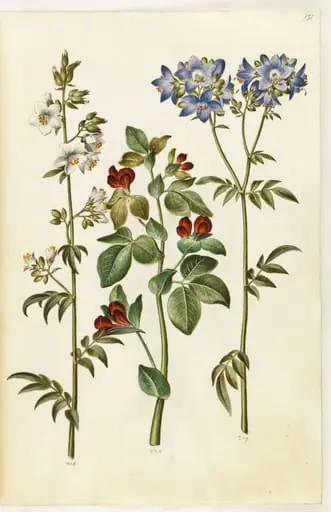 Polemonium caeruleum (almindelig jakobsstige); Lotus tetragonolobus (aspargesært)
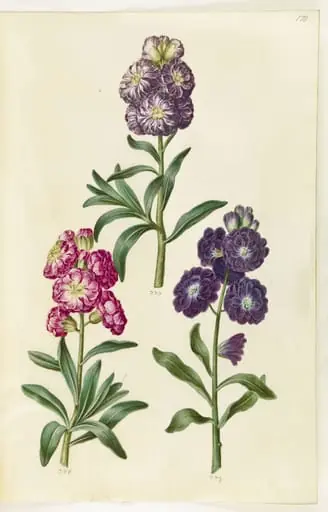 Titelblad. Blomsterkrans
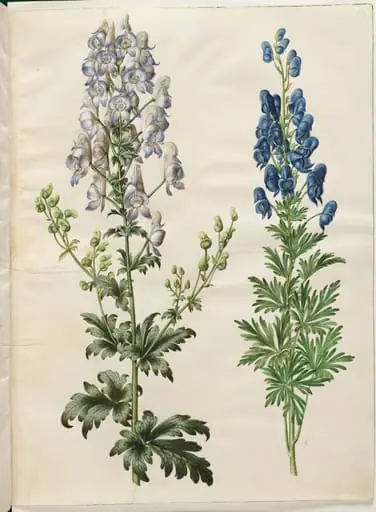 Aconitum variegatum (broget stormhat); Aconitum napellus (ægte stormhat)
 Recueil de vingtquatre plantes et fleurs: Mallow