Artwork
An angel appears to the shepherds
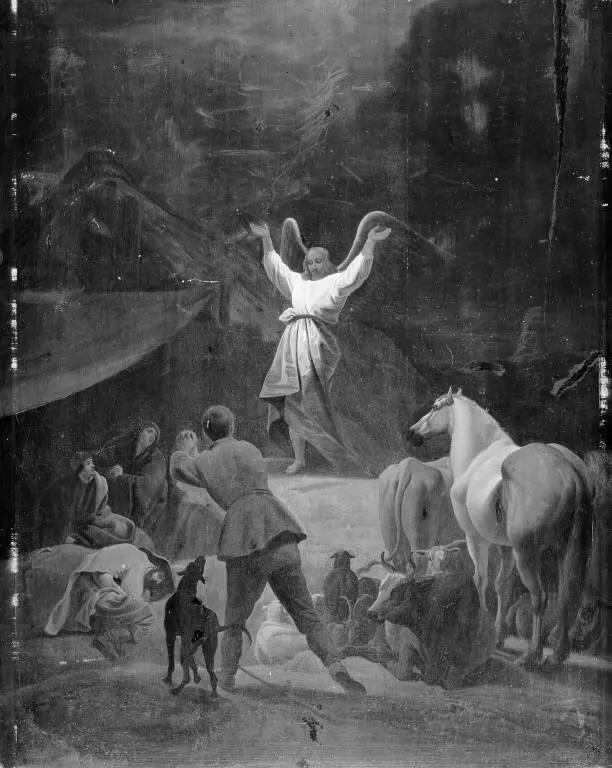
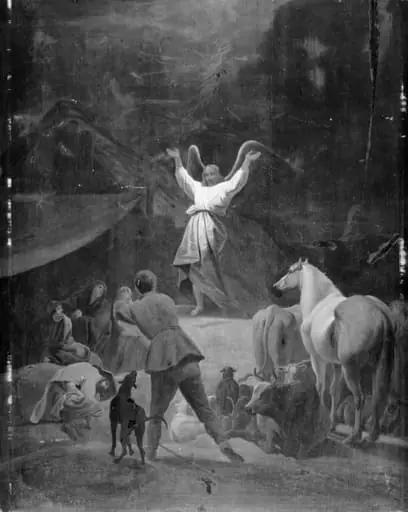
An angel appears to the shepherds is an unspecified painting by the Dutch Golden Age artist Gerbrand van den Eeckhout. It dates from 1655 and is held in the collection of the Statens Museum for Kunst.
About this work
Overview
Gerbrand van den Eeckhout, a pupil of Rembrandt active during the Dutch Golden Age, completed the oil painting *An Angel Appears to the Shepherds* in 1655. The work illustrates the biblical moment when an angel announces the birth of Christ to a group of shepherds, rendered in a calm, illuminated setting.
Subject & Meaning
The composition centers on a celestial messenger clothed in a white, flowing garment, arms extended in a gesture of proclamation. Two shepherds occupy the foreground: one tends his flock while the other gazes upward, embodying awe and reverence at the divine visitation.
Technique & Style
Eeckhout employs a subtle gradation of sky tones that recede into the background, creating depth through atmospheric perspective. The use of light—halo‑like radiance surrounding the angel—highlights the figure against the dimmer surroundings, reflecting the chiaroscuro influence of his master, Rembrandt.
History & Provenance
The painting emerged in the mid‑17th century, a period of prolific artistic production in the Netherlands. While specific ownership records are sparse, the work remains associated with Eeckhout’s oeuvre, which includes both painting and etching, as well as his activities as a poet and collector.
Context
Religious subjects were common in Dutch Golden Age art, though often treated with restrained drama. Eeckhout’s rendering aligns with contemporary preferences for intimate, domestic scenes that convey spiritual narratives without overt theatricality, reflecting the Protestant sensibilities of his milieu.
Artist & collection
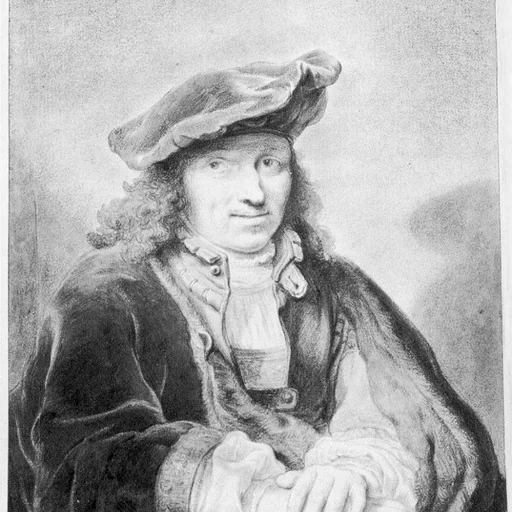
Artist
Gerbrand van den Eeckhout (19 August 1621 – 29 September 1674) was a Dutch Golden Age painter and a favourite student of Rembrandt. He was also an etcher, an amateur poet, a collector and an adviser on art.

 Christus am Ölberg
 En engel åbenbarer sig for hyrderne
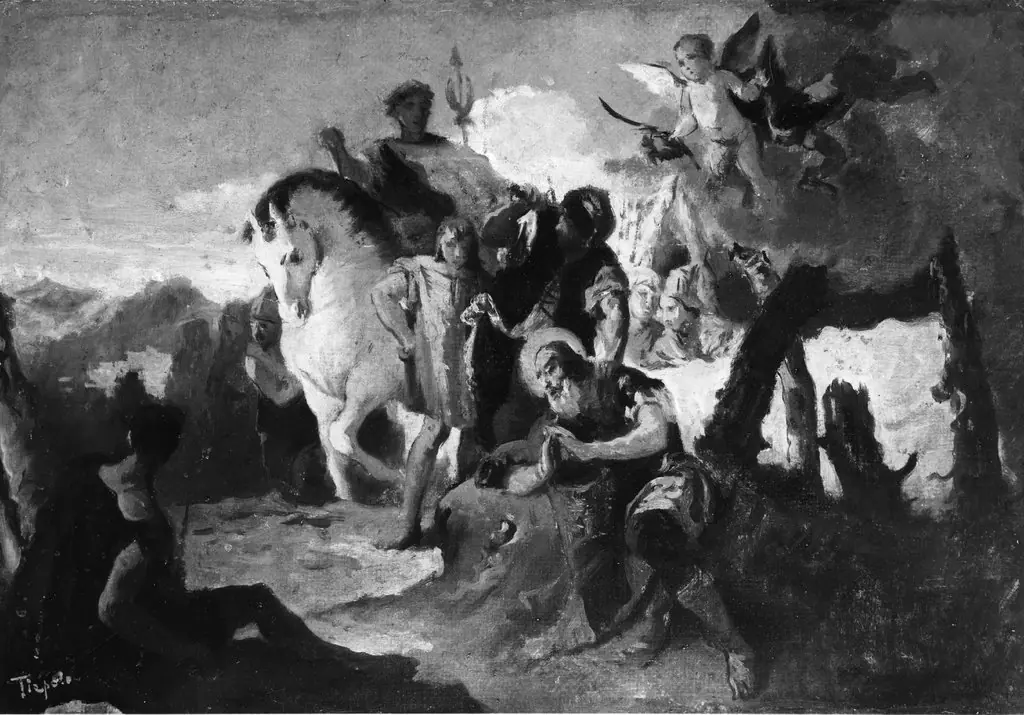 Beheading of a Martyr
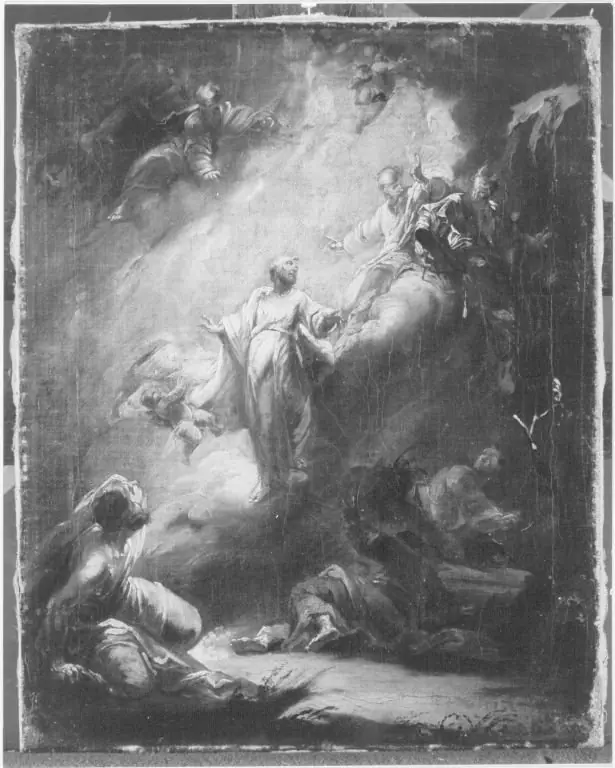 Verklärung Christi
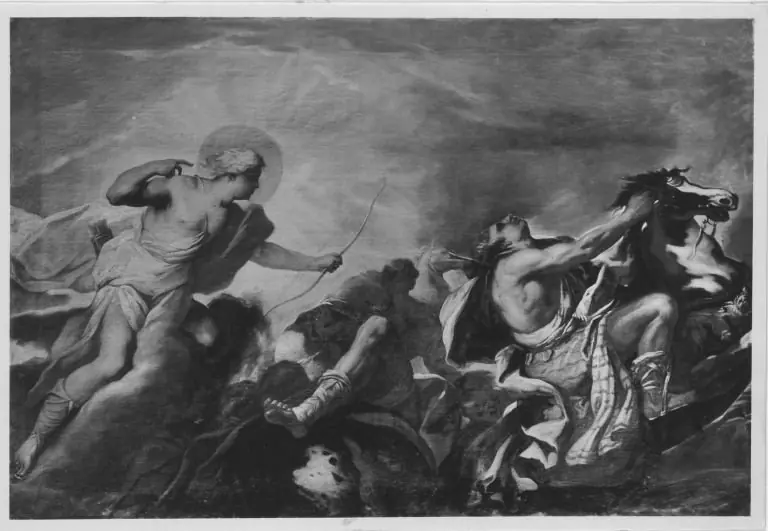 Apollo tötet die Kinder der Niobe
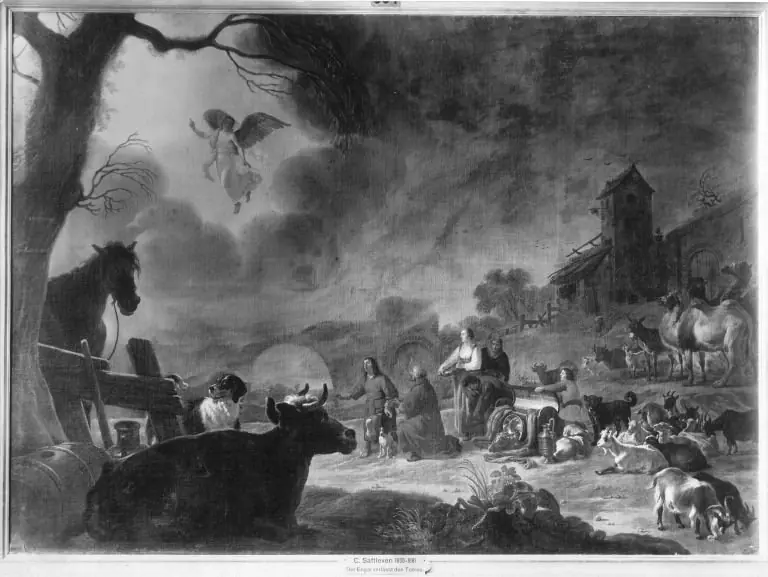 Der Engel verlässt die Familie des Tobias
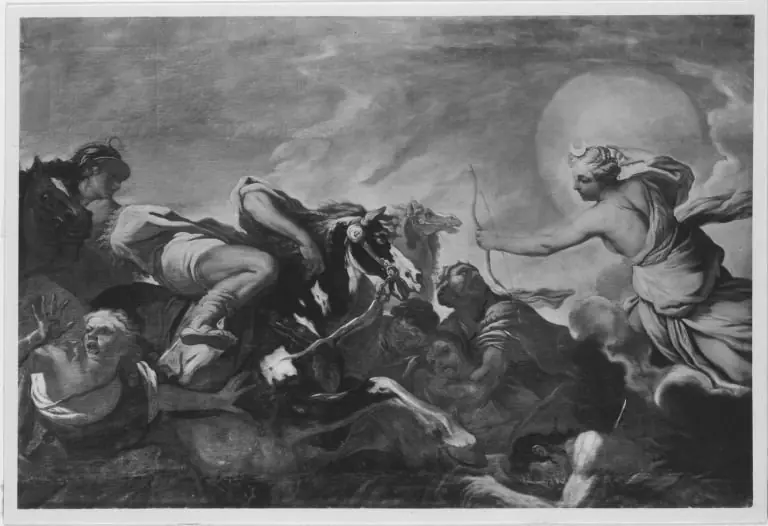 Diana tötet die Kinder der Niobe
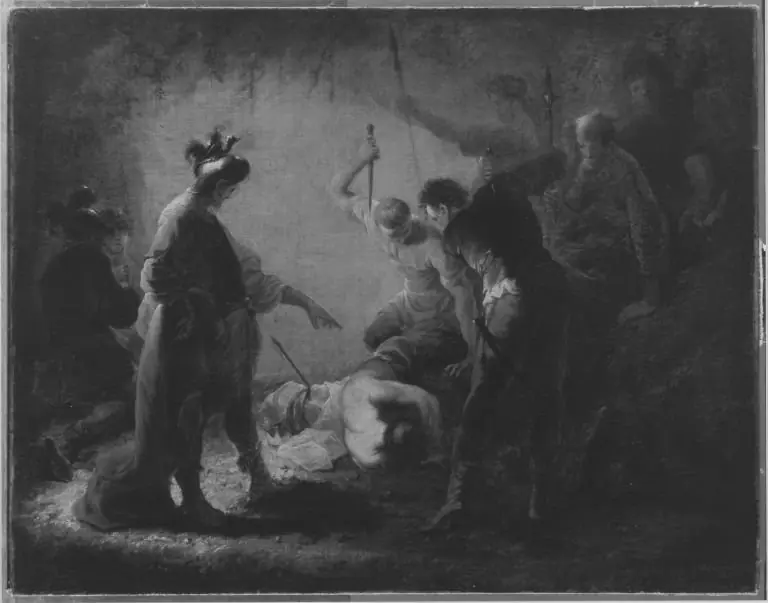 Die Ermordung des hl. Severus
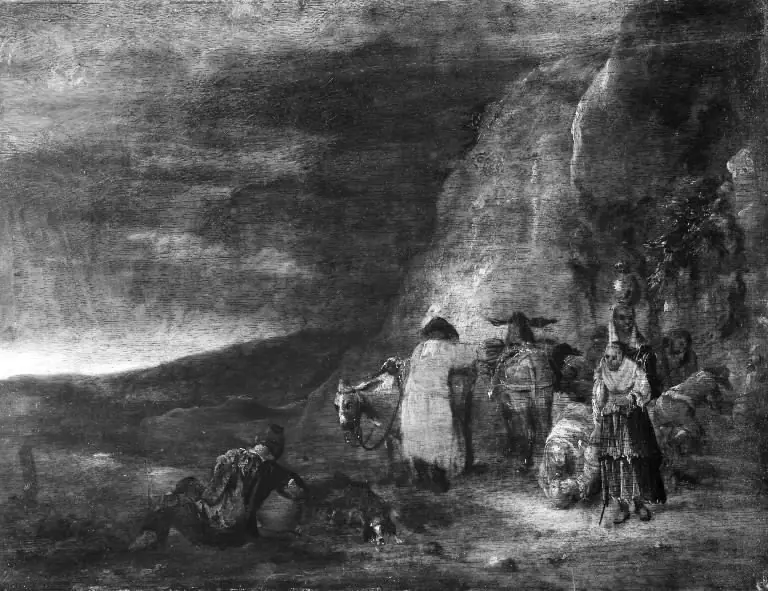 Landscape with Travellers some of them in Oriental Costume
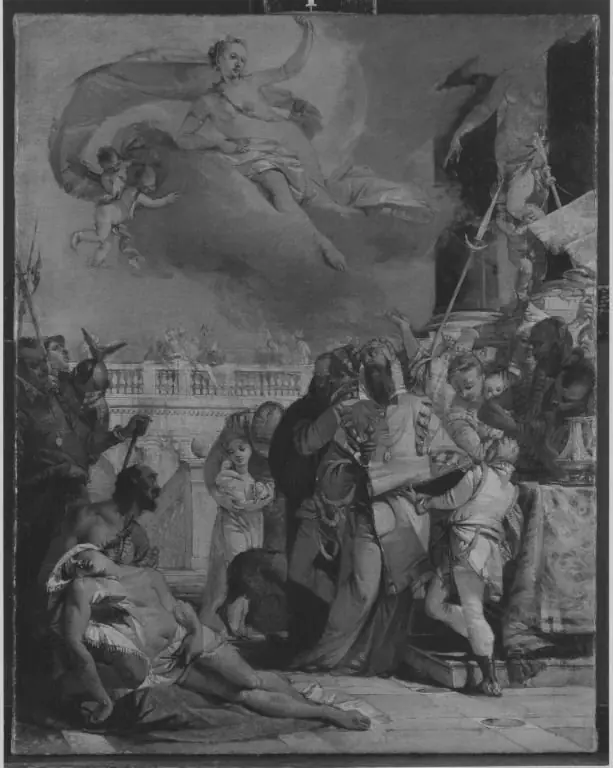 Opferung der Iphigenie
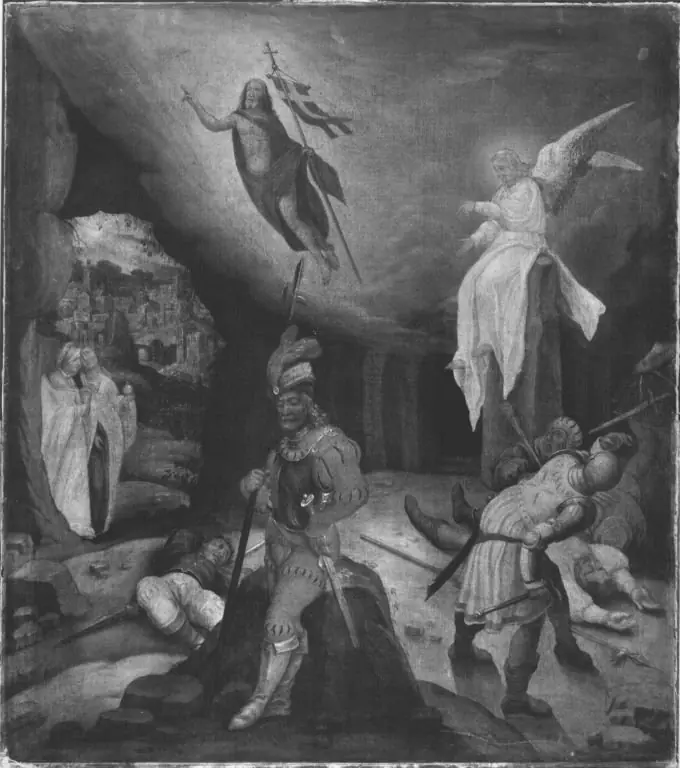 Auferstehung Christi
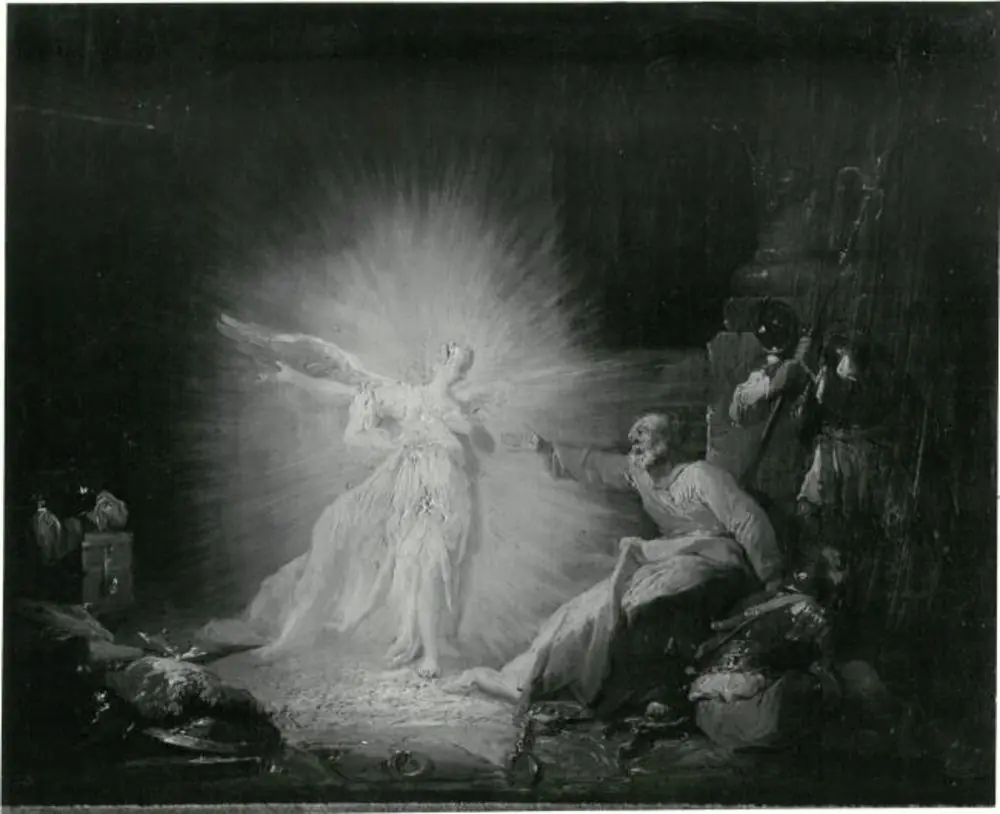 The Liberation of St Peter