Artwork
Betrayal
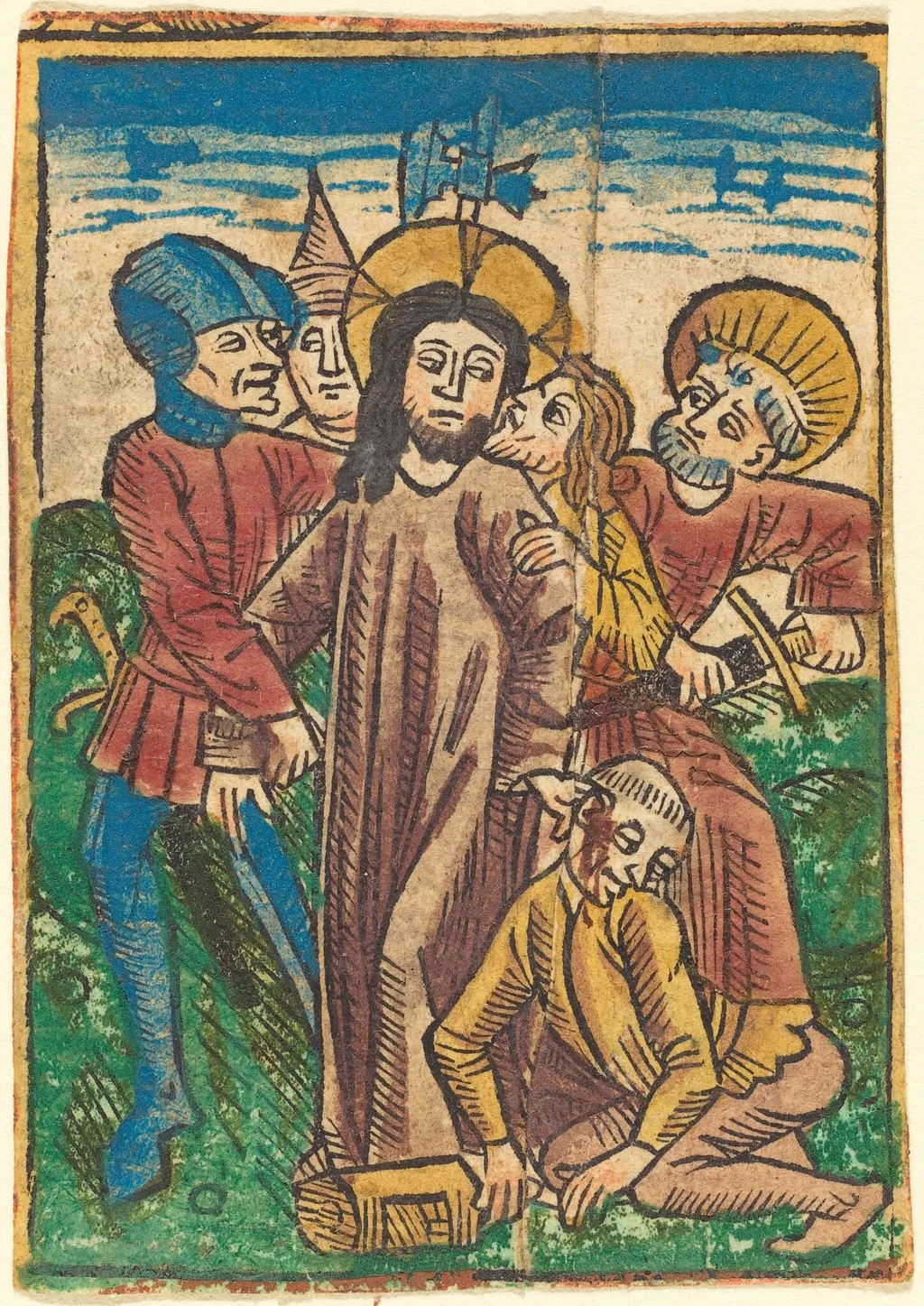
Betrayal is an ink print by the Renaissance artist German 15th Century. It dates from 1490 and is held in the collection of the National Gallery of Art.
About this work
Overview
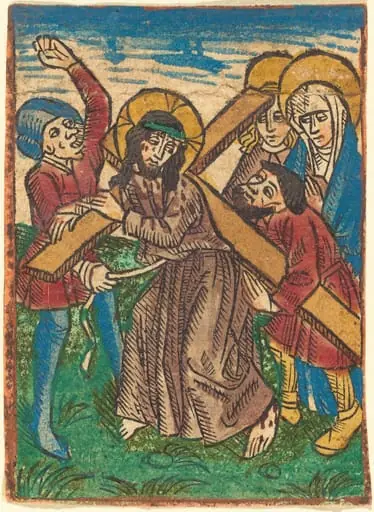
“Betrayal” is a hand‑colored woodcut print that presents a central figure in a long robe crowned with a halo, surrounded by five other men. The composition is rendered in a limited palette of blue, green and yellow, and the figures are depicted with a simplified, blocky aesthetic typical of early Renaissance woodcut techniques.
Subject & Meaning
The central, haloed figure appears sorrowful and apprehensive, while the surrounding men are shown restraining or kissing him, suggesting a narrative of treachery or emotional conflict. The halo traditionally signals sanctity, creating a tension between the figure’s implied holiness and the surrounding acts of betrayal.
Technique & Style
Executed as a woodcut, the image relies on carved lines and flat areas of color applied after printing, a method that yields the characteristic bold outlines and limited tonal range. The hand‑coloring in muted blues, greens and yellows accentuates the stark contrasts inherent in the medium and reflects the straightforward visual language of Renaissance printmaking.
Context
The work aligns with the broader Renaissance interest in narrative prints that could be reproduced and disseminated widely. Its straightforward, graphic style mirrors the period’s emphasis on clarity of story and moral instruction, while the use of a halo connects the scene to religious iconography common in the era’s visual culture.
Artist & collection

Artist
This 15th-century German artist carved vivid religious scenes into metal and wood, then hand-painted them in bright, symbolic colors.

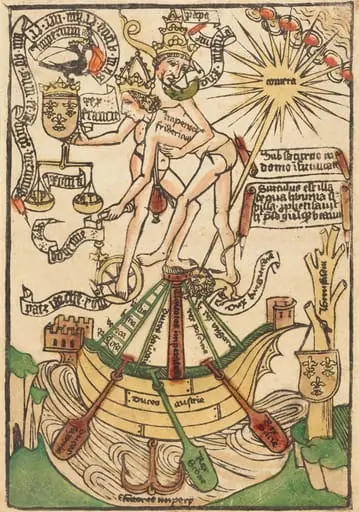 Allegory of the Meeting of Pope Paul II and Emperor Frederick III
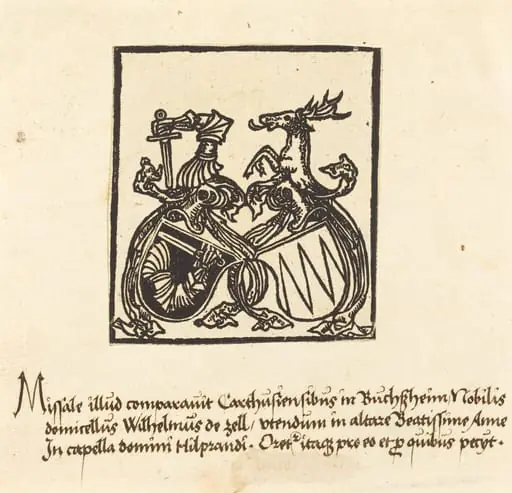 Bookplate of Wilhelm von Zell
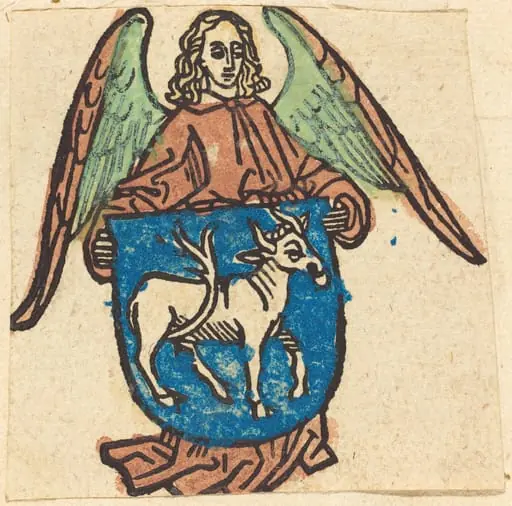 Bookplate of Hilprand Brandenburg of Bibrach
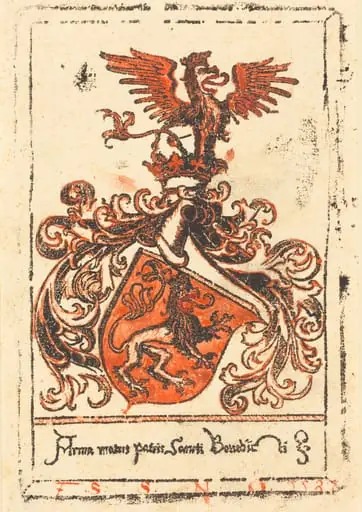 Bookplate of the Abbey of Ottobeuren
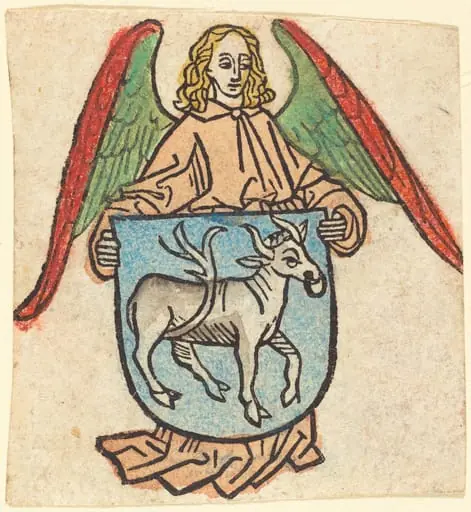 Bookplate of Hilprand Brandenburg of Bibrach
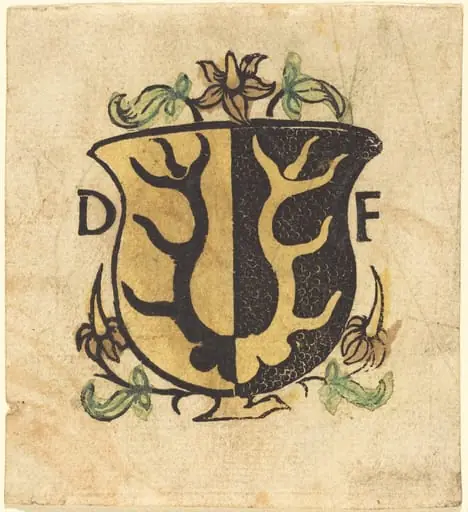 Bookplate of Dominicus Frauenfelder
![Studies for Six Figures (sheet from a model book) [recto], by German 15th Century](https://artifactworldgallery.com/img/german-15th-century--studies-for-six-figures-sheet-from-a-model-book-recto--4837429e0755bc3f-w320.webp) Studies for Six Figures (sheet from a model book) [recto]
Studies for Six Figures (sheet from a model book) [recto]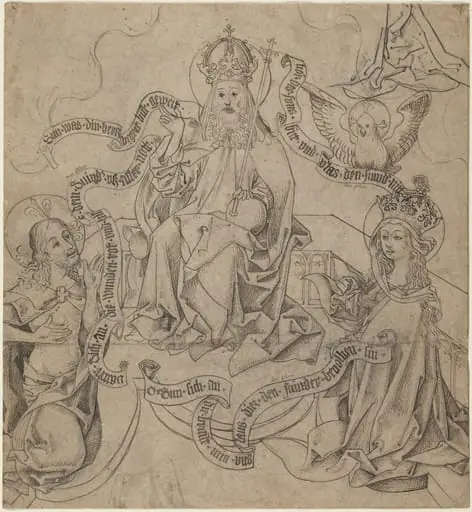 Christ and Mary Interceding with God the Father