Artwork
Bookplate of Dominicus Frauenfelder
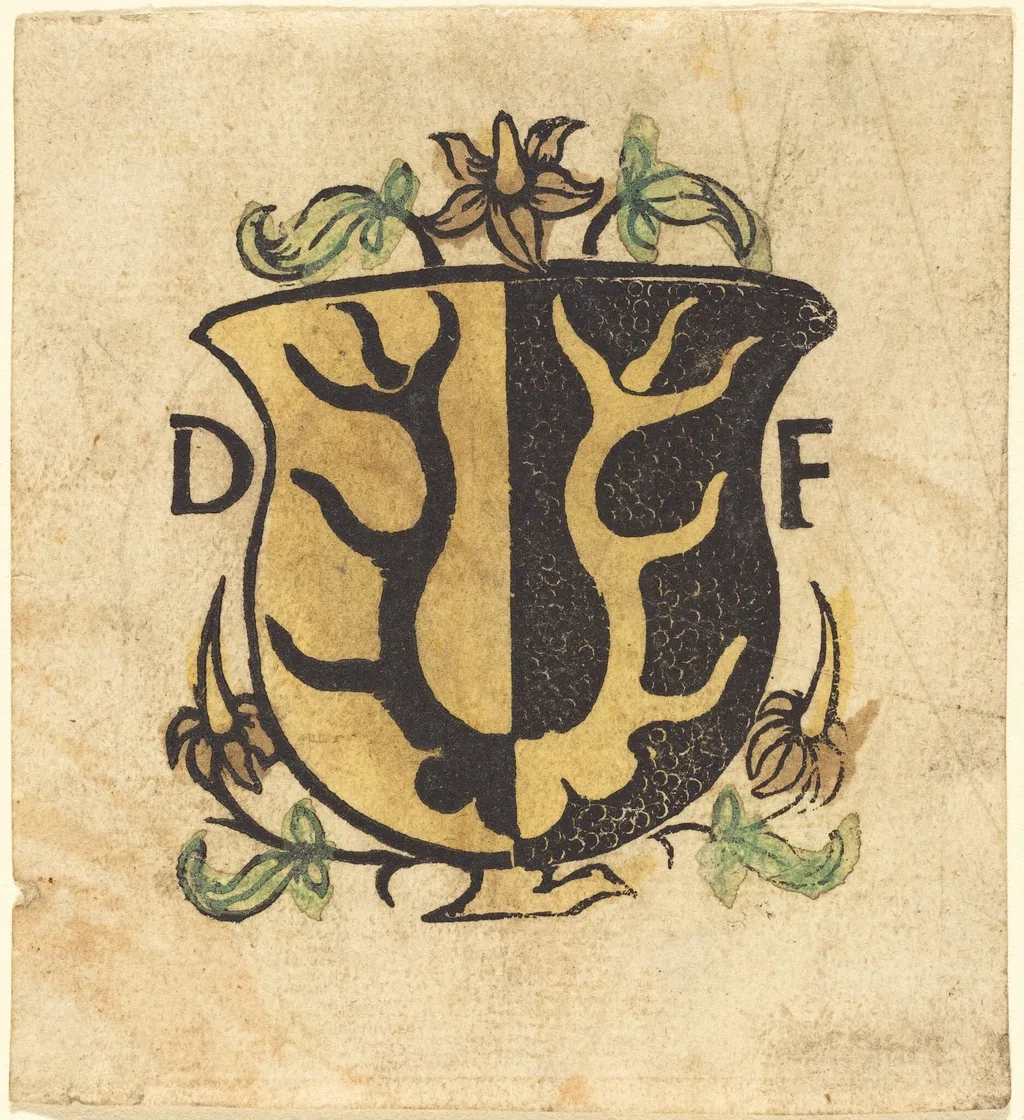
Bookplate of Dominicus Frauenfelder is an ink print by the Renaissance artist German 15th Century. It dates from 1500 and is held in the collection of the National Gallery of Art.
About this work
This small woodcut shows a saint holding a book with a green cover.
This small woodcut shows a saint holding a book with a green cover. Black ink outlines the figure on cream paper. Yellow and brown add simple color to the folds of his robe.
Hand-colored woodcuts were rare in 1500. Most prints stayed black and white. This one feels warm and personal because of the few colors.
Look at the soft shading around the saint’s face. It uses cross-hatching to show shadow. See how the lines curve gently. Try finding chiaroscuro in the light on his hand.
woodcut
Overview
This small, hand-colored woodcut depicts a saint holding a book with a green cover, rendered in yellow, green, black, and brown on laid paper.
Subject & Meaning
The subject, a saint with a book, conveys a sense of devotion and learning. The personal, warm quality of the piece may suggest it was created for an individual, such as Dominicus Frauenfelder, as indicated by the title.
Technique & Style
The woodcut features black ink outlines with selective hand-coloring, a rarity for prints circa 1500. Soft shading, achieved through curved cross-hatching, and subtle chiaroscuro effects (notably on the saint’s hand) demonstrate the artist’s attention to detail and depth.
History & Provenance
Created in the early 16th century, this woodcut is exceptional for its time due to its hand-colored elements. The title suggests a connection to Dominicus Frauenfelder, potentially as the owner or subject, though specific historical context about its creation or ownership history is not provided.
Context
Most woodcuts from around 1500 remained uncolored, making this piece unusual. Its warm, personal feel contrasts with the more common black-and-white prints of the era, highlighting the extra effort and possibly the personal nature of its commission or use.
Legacy
While the broader impact or influence of this specific woodcut on later art is not detailed, its rarity as a hand-colored piece from its time contributes to its historical significance in the study of early 16th-century printmaking techniques and preferences.
Artist & collection

Artist
This 15th-century German artist carved vivid religious scenes into metal and wood, then hand-painted them in bright, symbolic colors.

 Allegory of the Meeting of Pope Paul II and Emperor Frederick III
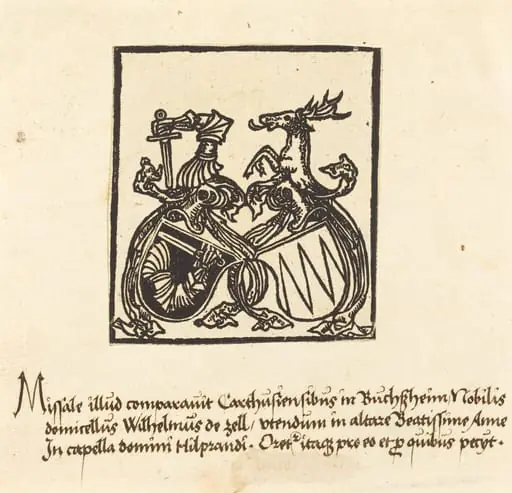 Bookplate of Wilhelm von Zell
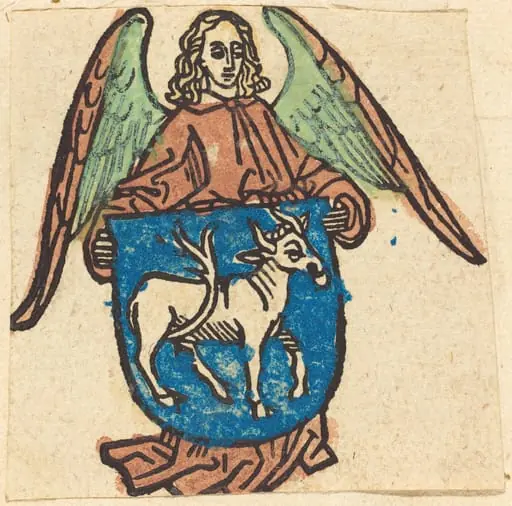 Bookplate of Hilprand Brandenburg of Bibrach
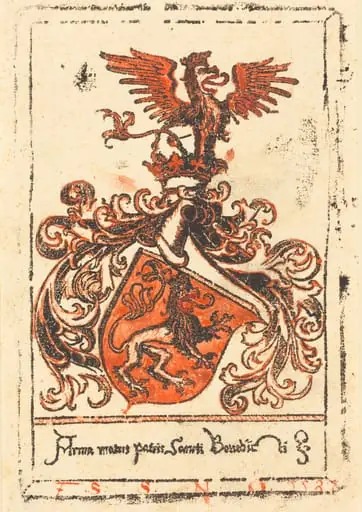 Bookplate of the Abbey of Ottobeuren
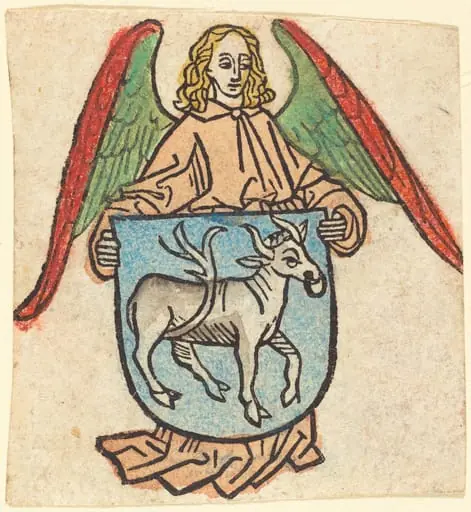 Bookplate of Hilprand Brandenburg of Bibrach
![Studies for Six Figures (sheet from a model book) [recto], by German 15th Century](https://artifactworldgallery.com/img/german-15th-century--studies-for-six-figures-sheet-from-a-model-book-recto--4837429e0755bc3f-w320.webp) Studies for Six Figures (sheet from a model book) [recto]
Studies for Six Figures (sheet from a model book) [recto]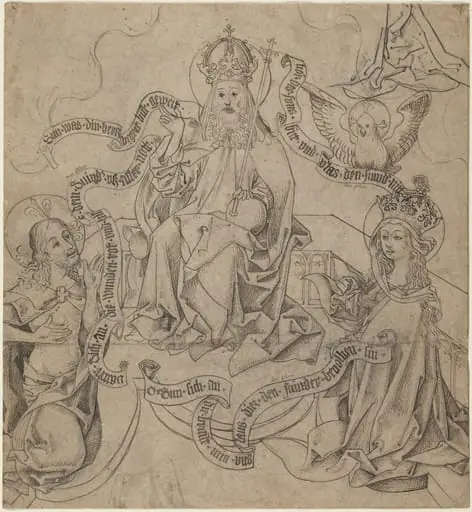 Christ and Mary Interceding with God the Father
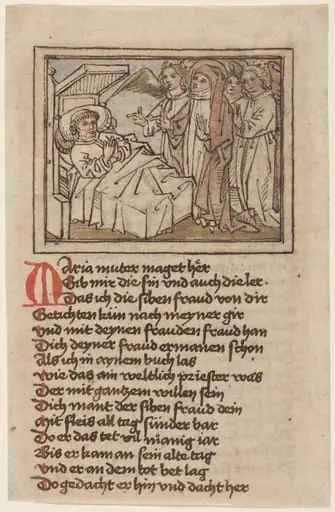 The Virgin Appearing to a Dying Priest