Artwork
Allegory of the Meeting of Pope Paul II and Emperor Frederick III
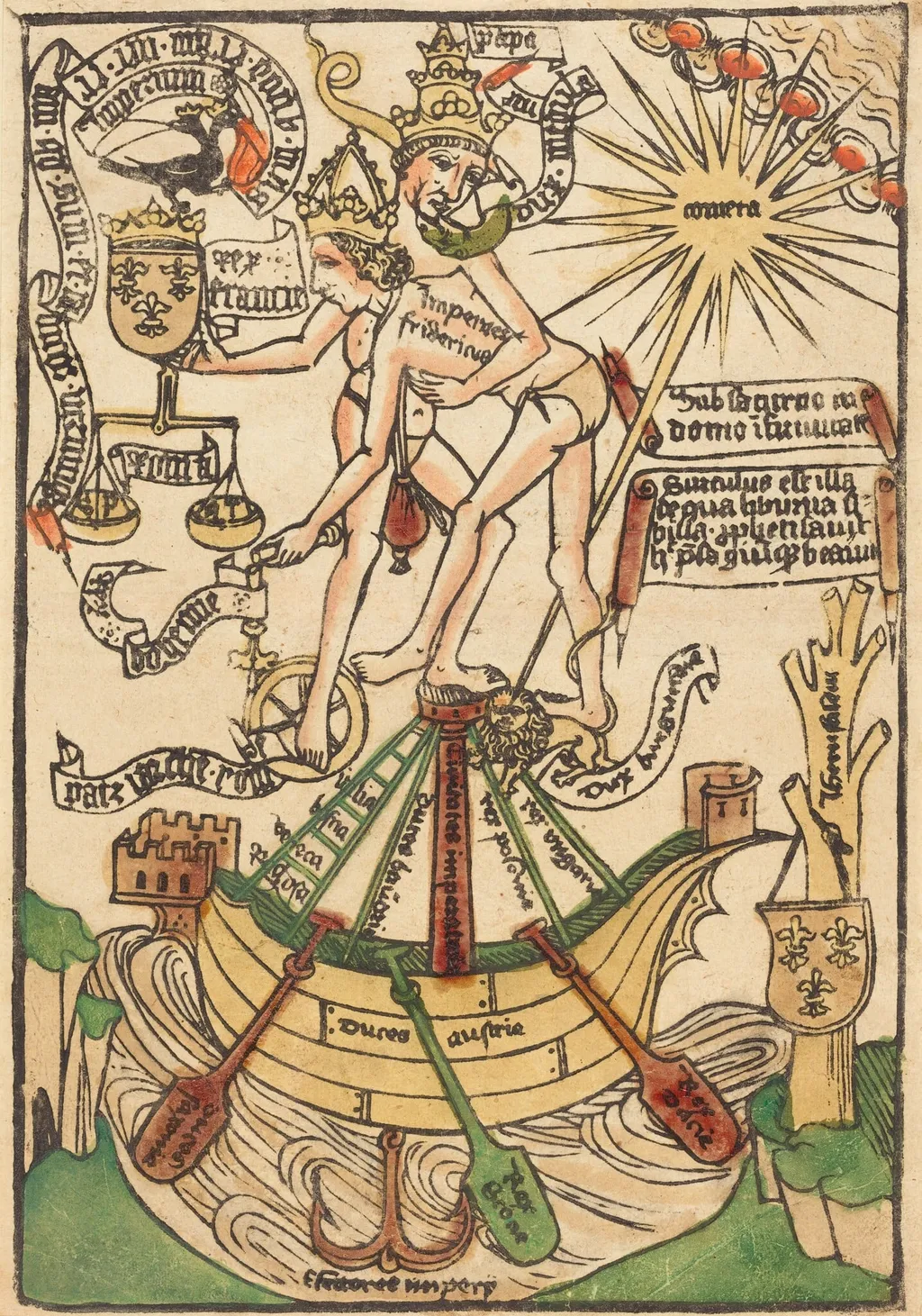
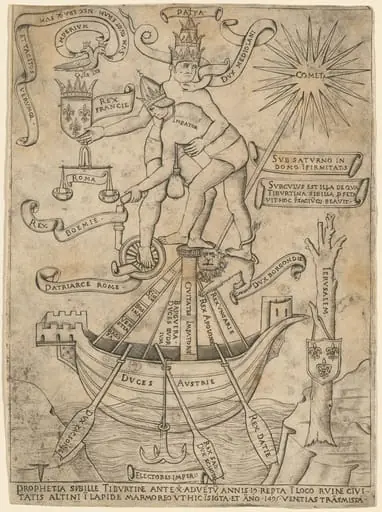
Allegory of the Meeting of Pope Paul II and Emperor Frederick III is an ink print by the Renaissance artist German 15th Century. It dates from 1470 and is held in the collection of the National Gallery of Art. This woodcut print depicts a formal audience between Pope Paul II and Emperor Frederick III, rendered in hand-colored inks on laid paper.
About this work
Overview
This woodcut print depicts a formal audience between Pope Paul II and Emperor Frederick III, rendered in hand-colored inks on laid paper.
This woodcut print depicts a formal audience between Pope Paul II and Emperor Frederick III, rendered in hand-colored inks on laid paper. The composition emphasizes ceremonial dignity, capturing a moment of political and religious diplomacy in the mid-15th century. Its medium—woodcut—was a common method for disseminating images before the widespread use of movable type, making such prints valuable for communicating authority across regions.
Subject & Meaning
The scene illustrates a rare face-to-face meeting between the spiritual leader of Christendom and the Holy Roman Emperor, symbolizing the intertwined nature of ecclesiastical and secular power. Their postures and attire reflect mutual recognition of rank, with no overt submission, suggesting a balance of influence rather than dominance. The image served to reinforce the legitimacy of both figures to contemporary audiences.
Technique & Style
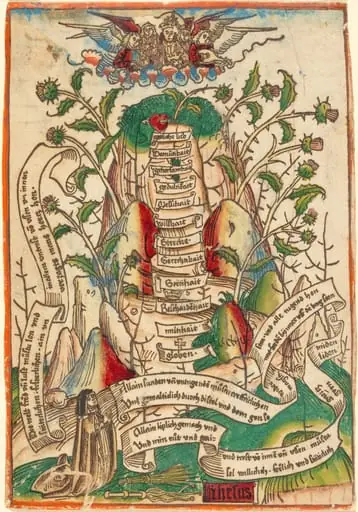
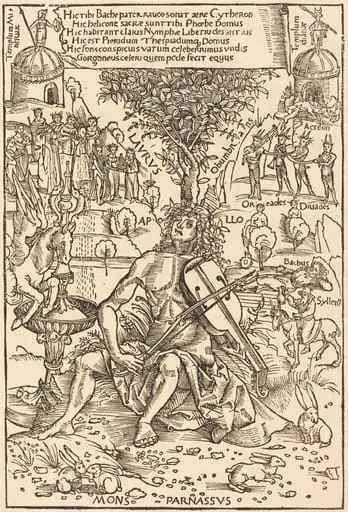
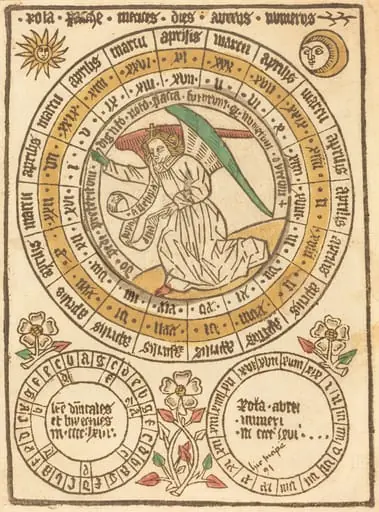
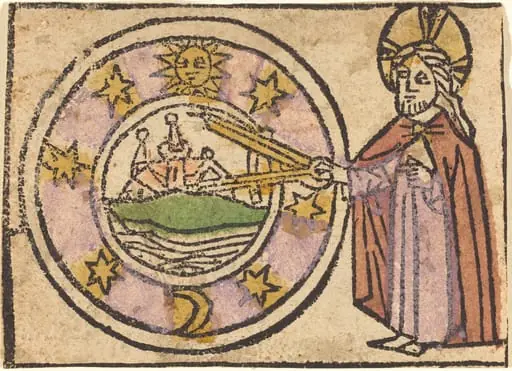
Executed as a hand-colored woodcut, the image uses bold outlines and flat areas of color—green, red lake, yellow, tan, and orange—to define figures and drapery. The printer likely carved the design into a wooden block, inked it, and pressed it onto paper, then added color by hand. The style is linear and schematic, prioritizing clarity over naturalism, typical of early printed images intended for wide circulation.
History & Provenance
Created around 1469–1471, the print likely originated in Germany or northern Italy, regions active in early printmaking. It may have been produced to commemorate the emperor’s visit to Rome, where he was crowned by the pope. Surviving examples are rare, and most are held in institutional collections, indicating its use as a diplomatic or propagandistic artifact rather than a private keepsake.
Context
In the 15th century, the relationship between the papacy and the Holy Roman Empire was complex, marked by both cooperation and rivalry. This print emerged during a period when rulers sought visual tools to assert legitimacy. Woodcuts like this one helped standardize public imagery of authority, reaching audiences beyond the elite who could afford painted portraits or manuscripts.
Legacy
As an early example of political imagery in print, this work contributed to the evolving role of visual media in shaping perceptions of power. While not artistically innovative, its existence reflects the growing capacity of print to disseminate symbolic narratives. It remains a document of how authority was visually constructed and shared in the pre-modern era.
Artist & collection

Artist
This 15th-century German artist carved vivid religious scenes into metal and wood, then hand-painted them in bright, symbolic colors.

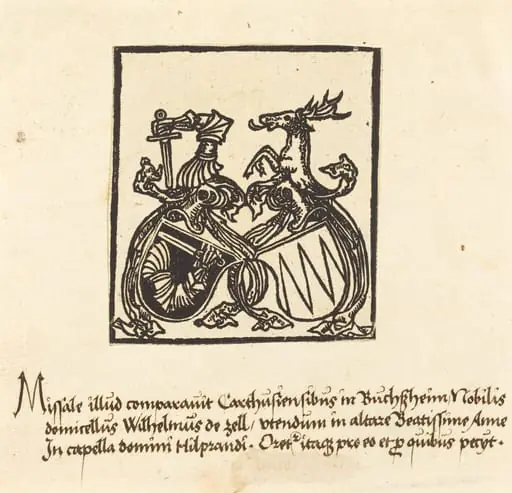 Bookplate of Wilhelm von Zell
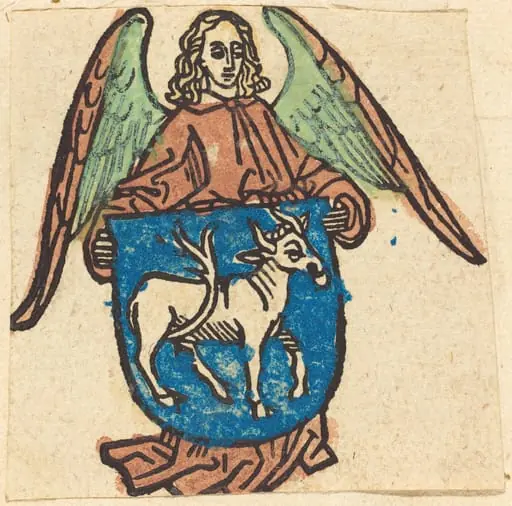 Bookplate of Hilprand Brandenburg of Bibrach
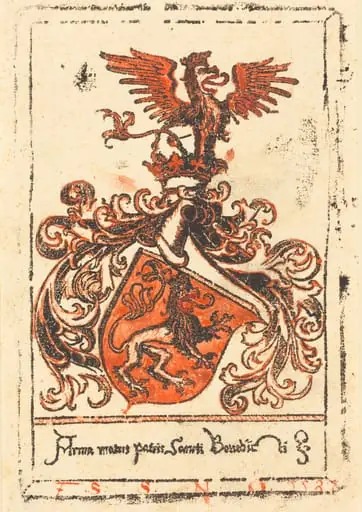 Bookplate of the Abbey of Ottobeuren
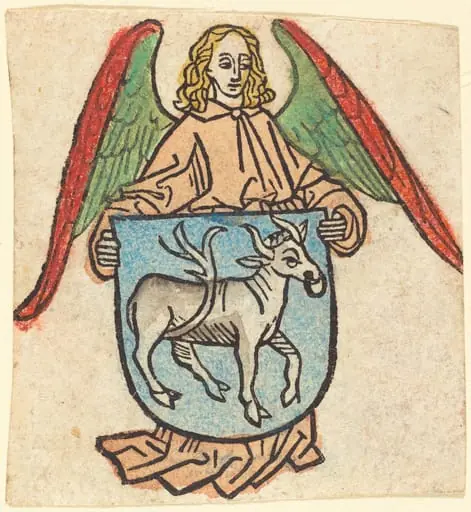 Bookplate of Hilprand Brandenburg of Bibrach
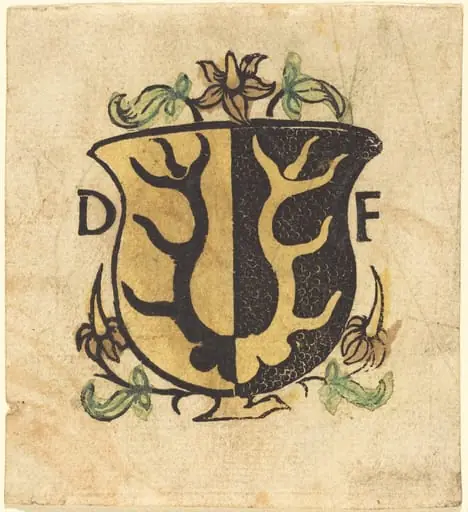 Bookplate of Dominicus Frauenfelder
![Studies for Six Figures (sheet from a model book) [recto], by German 15th Century](https://artifactworldgallery.com/img/german-15th-century--studies-for-six-figures-sheet-from-a-model-book-recto--4837429e0755bc3f-w320.webp) Studies for Six Figures (sheet from a model book) [recto]
Studies for Six Figures (sheet from a model book) [recto]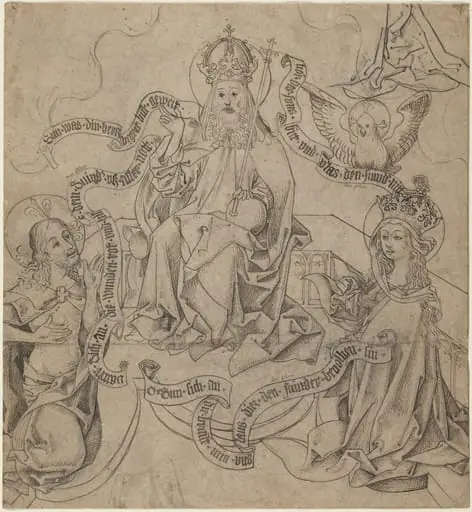 Christ and Mary Interceding with God the Father
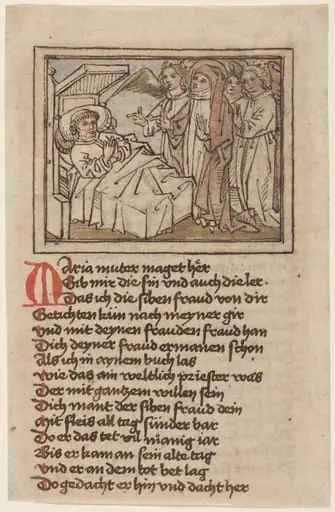 The Virgin Appearing to a Dying Priest