Artwork
Christ as Salvator Mundi
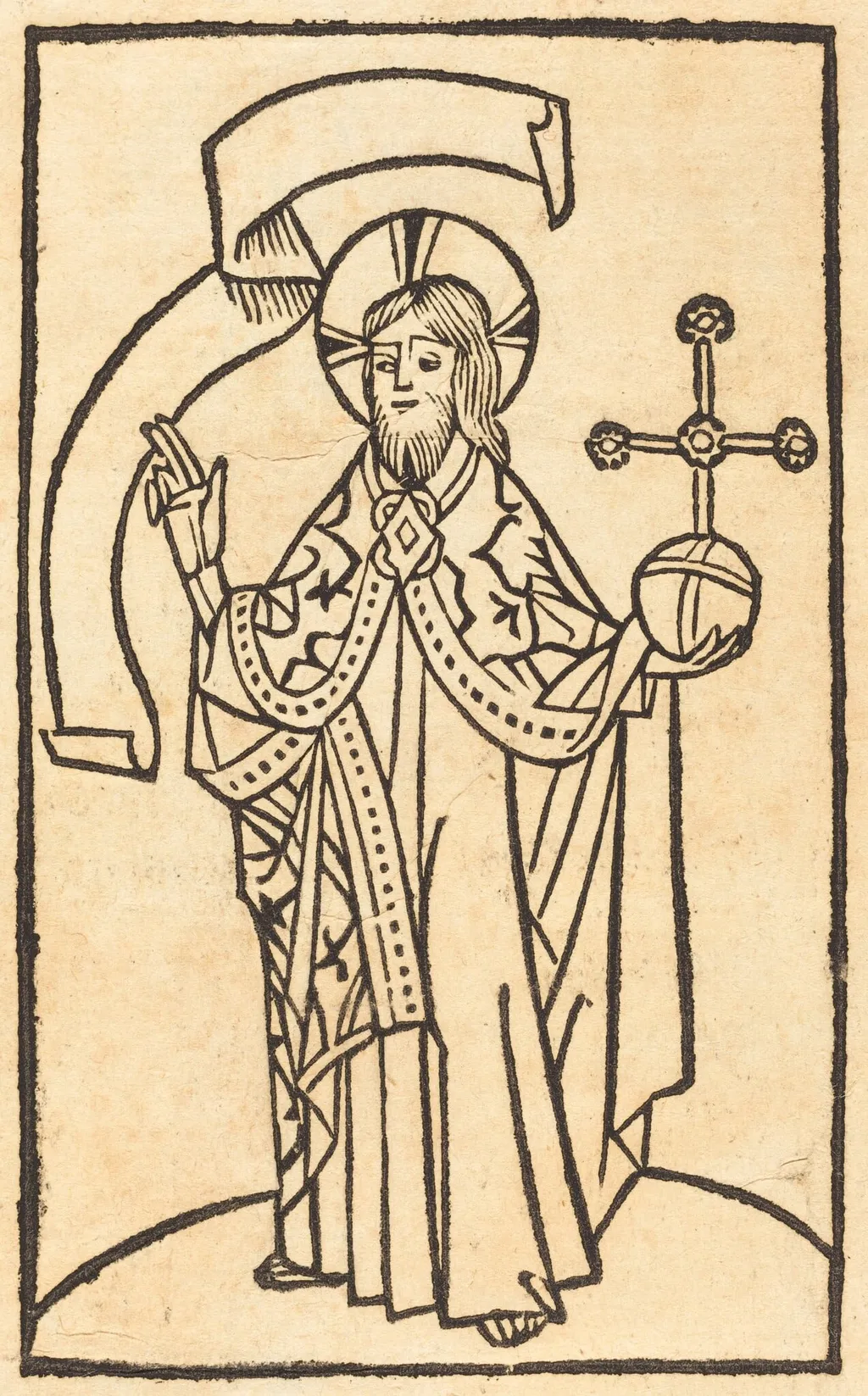
Christ as Salvator Mundi is an ink print by the Renaissance artist German 15th Century. It dates from 1475 and is held in the collection of the National Gallery of Art. This woodcut presents a singular religious figure identified as Christ the Savior of the World.
About this work
The level of detail and decoration in the image suggests that it was created during the Renaissance period.
This image is a woodcut of a religious figure. The figure is dressed in long robes and has a halo around their head. They are holding a cross in one hand and a globe in the other.
The figure's robes are intricately detailed, with folds and creases visible. The cross and globe are also decorated with patterns and designs. The background of the image is plain, with no visible scenery or objects.
The level of detail and decoration in the image suggests that it was created during the Renaissance period. The artist's use of woodcut as a medium adds to the image's sense of antiquity and historical significance. To learn more about the artist and their techniques, look up the German 15th Century.
Overview
This woodcut presents a singular religious figure identified as Christ the Savior of the World. He is shown in flowing, intricately carved robes, a luminous halo encircling his head, and he holds a cross in one hand while supporting a globe in the other. The composition is set against an unadorned background, focusing attention on the symbolic attributes of the central figure.
Subject & Meaning
The iconography combines two traditional symbols of Christ’s authority: the crucifix, representing his sacrificial role, and the orb, denoting his dominion over the world. The halo underscores his sanctity, while the detailed drapery conveys a sense of reverence. Together, these elements articulate the theological concept of Christ as the universal ruler and redeemer.
Technique & Style
Executed as a woodcut, the image relies on the contrast of carved lines and negative space to render fine folds in the robes and decorative motifs on the cross and globe. The precision of the incisions reflects the high level of craftsmanship associated with late medieval German printmaking, where intricate detail could be achieved despite the medium’s limitations.
Context
Produced in the 15th‑century German lands, the work aligns with the broader Renaissance interest in devotional imagery and the spread of printed religious material. Woodcuts of this period served both liturgical and private devotional functions, facilitating the wider circulation of theological concepts such as the Salvator Mundi across Europe.
Artist & collection

Artist
This 15th-century German artist carved vivid religious scenes into metal and wood, then hand-painted them in bright, symbolic colors.

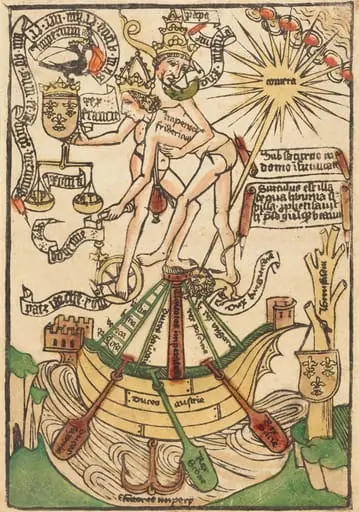 Allegory of the Meeting of Pope Paul II and Emperor Frederick III
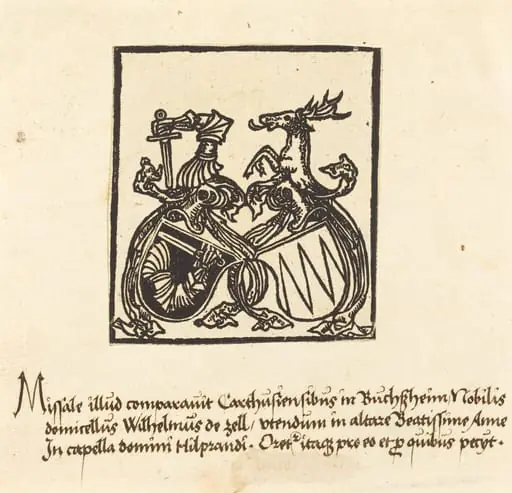 Bookplate of Wilhelm von Zell
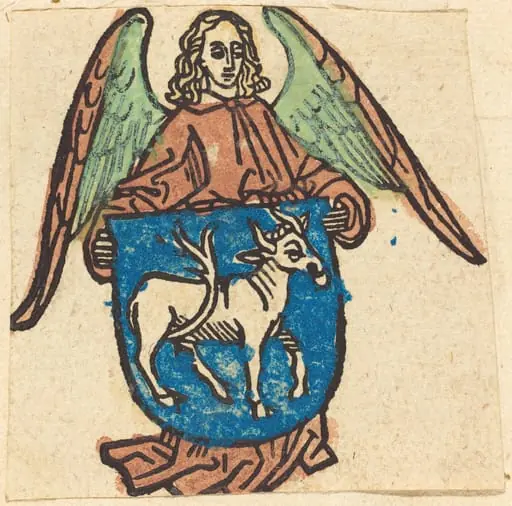 Bookplate of Hilprand Brandenburg of Bibrach
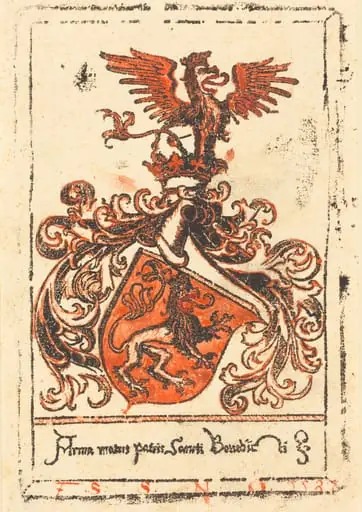 Bookplate of the Abbey of Ottobeuren
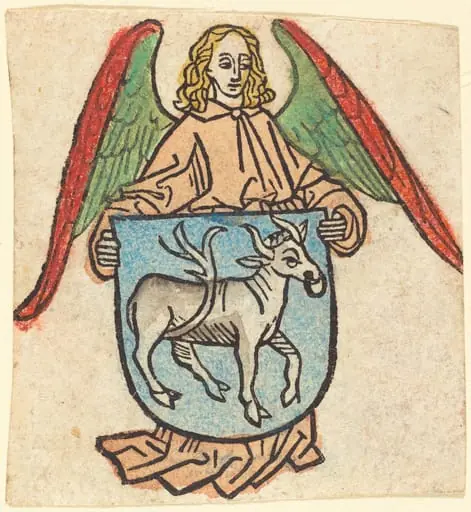 Bookplate of Hilprand Brandenburg of Bibrach
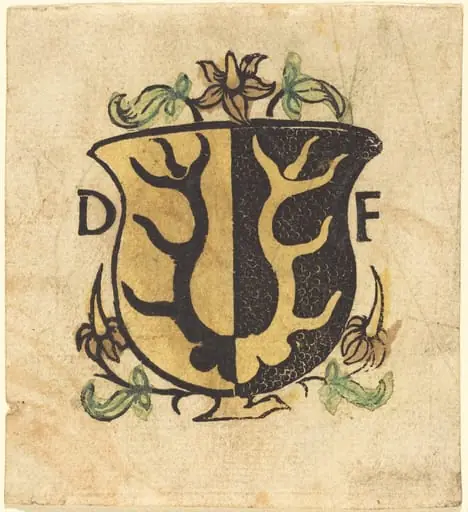 Bookplate of Dominicus Frauenfelder
![Studies for Six Figures (sheet from a model book) [recto], by German 15th Century](https://artifactworldgallery.com/img/german-15th-century--studies-for-six-figures-sheet-from-a-model-book-recto--4837429e0755bc3f-w320.webp) Studies for Six Figures (sheet from a model book) [recto]
Studies for Six Figures (sheet from a model book) [recto]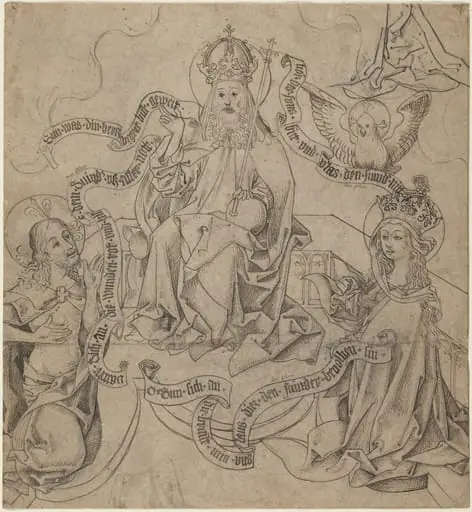 Christ and Mary Interceding with God the Father