Artwork
Dancing Nymphs and Satyrs
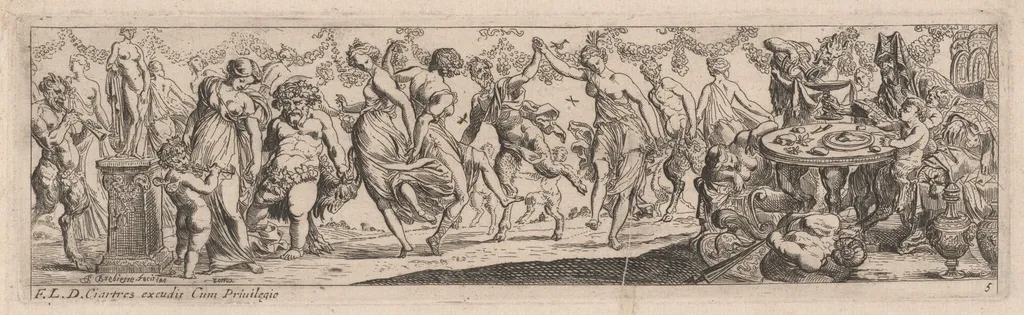
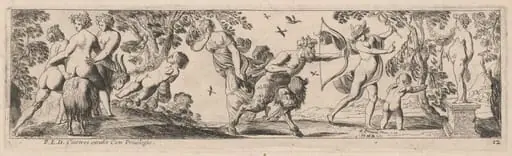
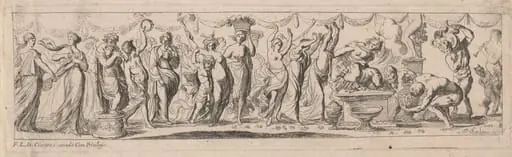
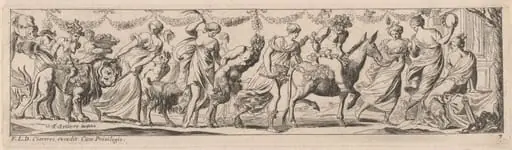
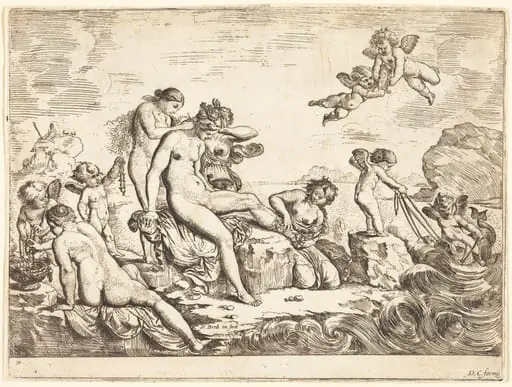
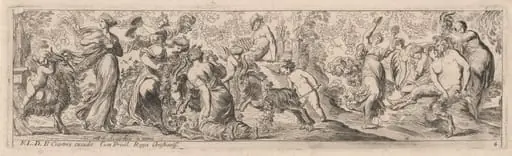
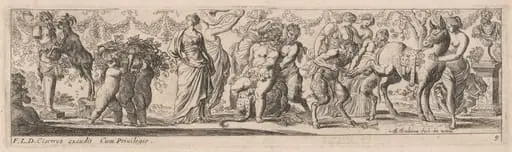
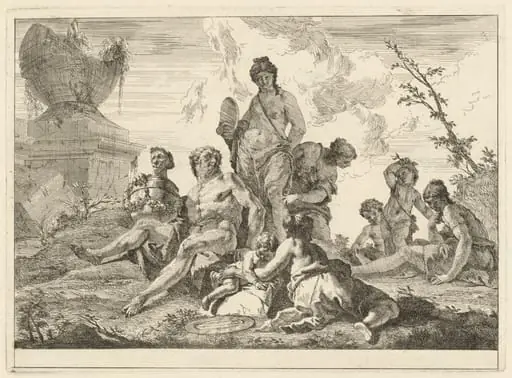
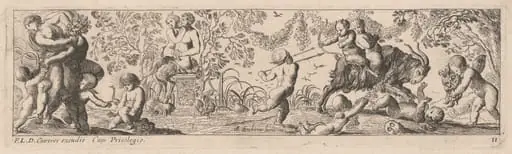
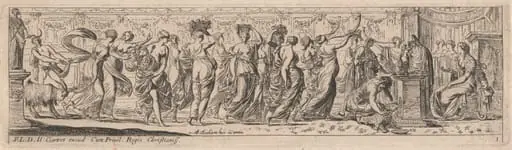
Dancing Nymphs and Satyrs is an ink print by the Baroque artist Pierre Brebiette. It dates from 1626 and is held in the collection of the National Gallery of Art.
About this work
Overview
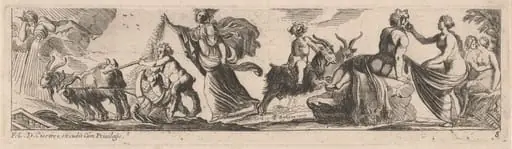
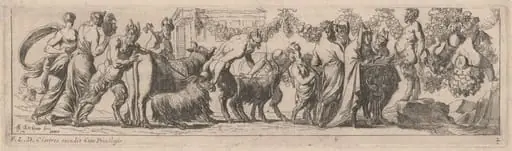
Pierre Brebiette’s 1626 etching presents a bustling woodland gathering where mythological nymphs and satyrs engage in music and dance. The composition follows a sinuous curve, guiding the eye across figures perched on rocks and pedestals, as well as those moving freely amid a dense backdrop of trees and foliage.
Subject & Meaning
The work illustrates a classic pastoral theme, juxtaposing the graceful, draped nymphs with the rustic, horned satyrs. Their interaction—musical performance, dancing, and revelry—conveys a sense of unrestrained joy, reflecting the Renaissance fascination with the harmony between nature’s gentler and more primal spirits.
Technique & Style
Executed as an etching on laid paper, the piece relies on fine, intersecting lines and nuanced hatching to render texture and volume. Contrasting areas of deep shadow with delicate highlights create a three‑dimensional effect, while the intricate detailing of foliage and clothing demonstrates Brebiette’s skill in manipulating line to suggest movement and atmosphere.
History & Provenance
Created in 1626, the print belongs to the early Baroque period when mythological subjects were popular in French graphic arts. Though specific ownership records are scarce, the work has appeared in several 19th‑century catalogues of French prints, indicating its circulation among collectors of early modern etchings.
Artist & collection