Artwork
Saint Andrew
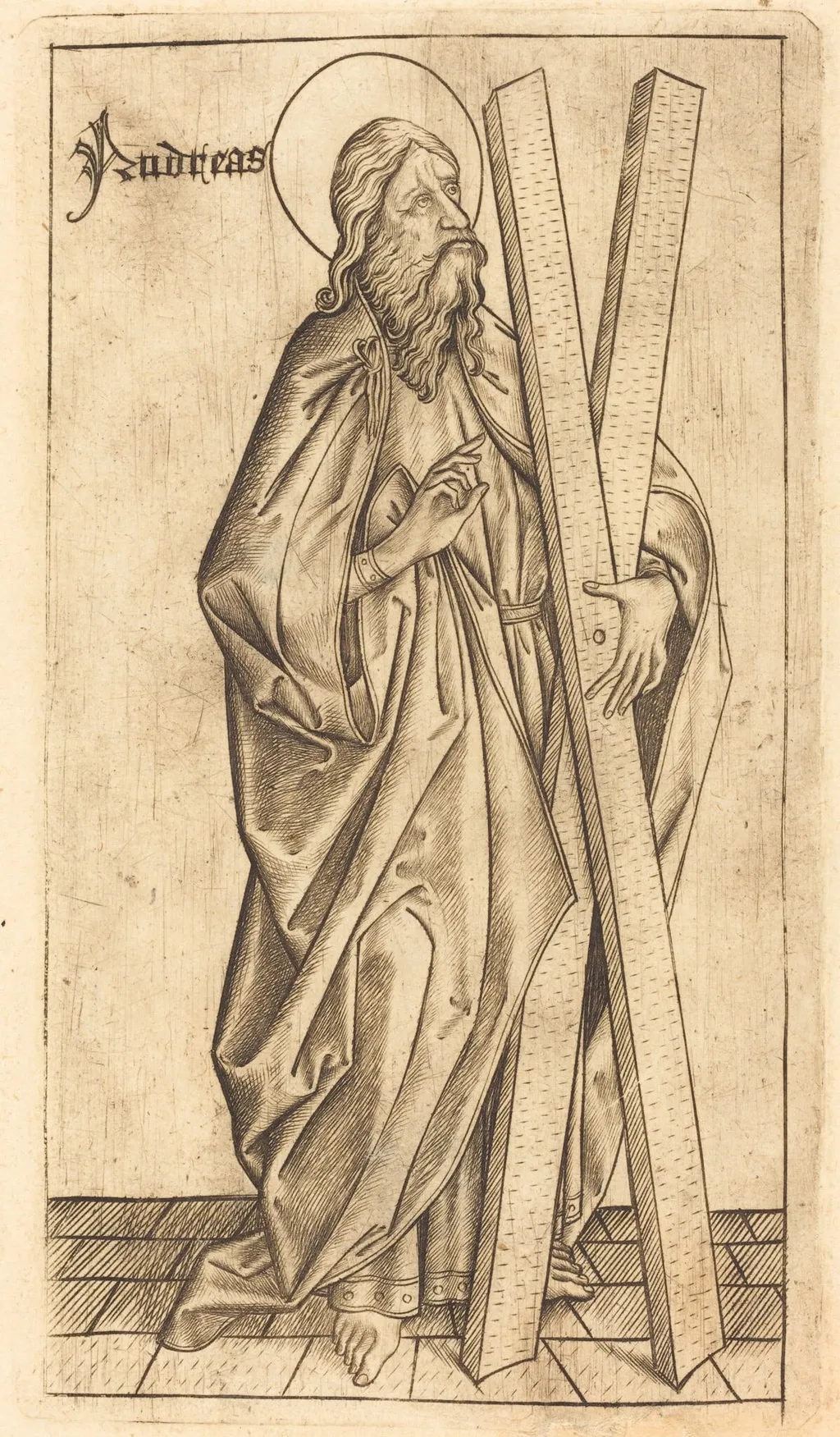
Saint Andrew is an ink print by the Renaissance artist Israhel van Meckenem. It dates from 1475 and is held in the collection of the National Gallery of Art.
About this work
Overview
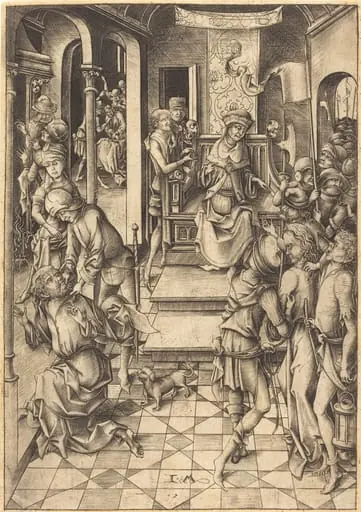
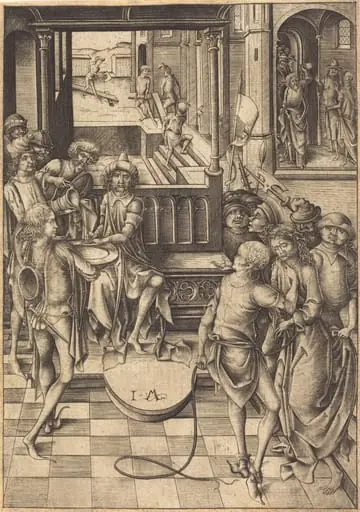
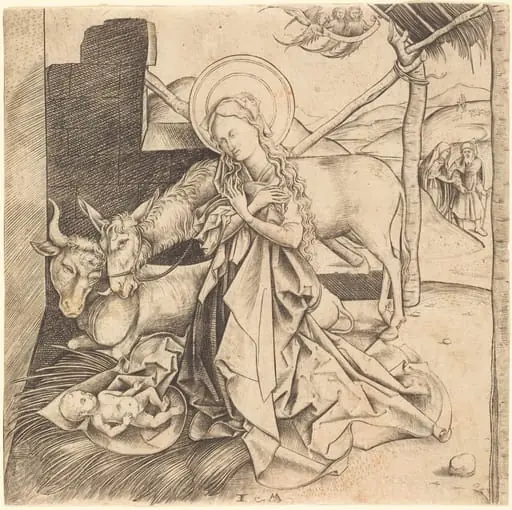
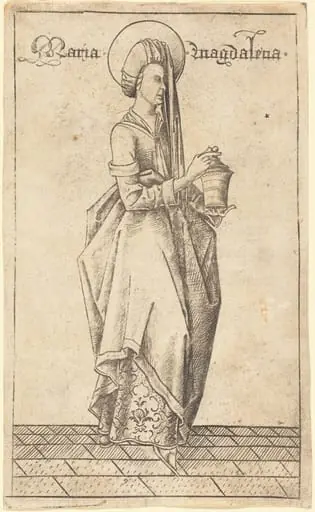
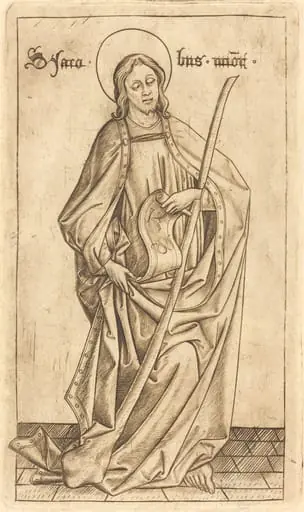
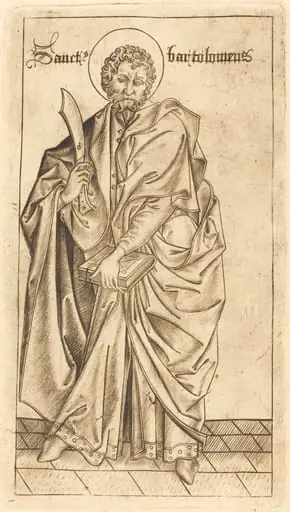
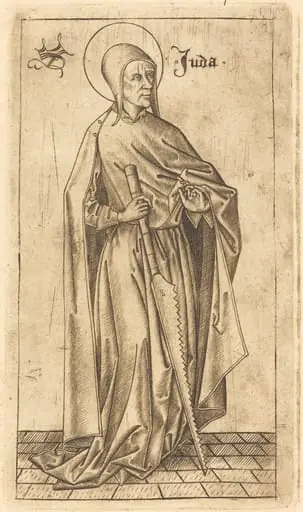
Created around 1475 by Israhel van Meckenem, this engraving on laid paper depicts Saint Andrew, one of Christ’s apostles. Van Meckenem, a German printmaker and goldsmith, was among the most productive engravers of the 15th century, producing over six hundred works. His prints often reinterpreted existing imagery, adapting religious subjects for wider audiences through the growing medium of print.
Subject & Meaning
The checkered floor beneath his feet suggests a structured, sacred space, reinforcing his spiritual significance within a domesticated, earthly setting.
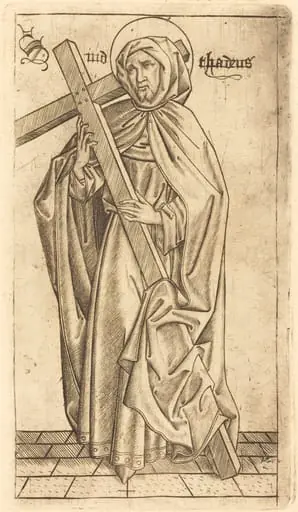
The figure of Saint Andrew is shown with a solemn expression and a halo, identifying him as a saint. He holds a large wooden cross, referencing his traditional martyrdom by crucifixion. The inscription 'Andreas' at the upper left confirms his identity. The checkered floor beneath his feet suggests a structured, sacred space, reinforcing his spiritual significance within a domesticated, earthly setting.
Technique & Style
Van Meckenem employed fine, precise lines to model form and texture, particularly in the folds of the saint’s robe. The use of hatching and cross-hatching created subtle gradations of light and shadow, a hallmark of Northern European engraving. The detailed rendering of fabric and the flat, patterned floor reflect a focus on tactile realism, typical of the period’s emphasis on craftsmanship and visual precision.
History & Provenance
The print originates from the late 15th century, a time when engraving was becoming a commercial art form in the Rhineland. Van Meckenem operated in Bocholt and later in Dortmund, producing prints for both devotional and market purposes. While the specific early ownership of this impression is unrecorded, its survival reflects the widespread circulation of religious prints among lay and clerical audiences.
Context
In the decades before the Reformation, religious imagery in print form served as accessible tools for private devotion. Van Meckenem’s work emerged within a network of Northern European artists who adapted panel paintings and illuminated manuscripts into engravings. His prints, often based on established compositions, helped standardize iconography and meet rising demand for affordable sacred images.
Legacy
Van Meckenem’s prolific output helped establish engraving as a respected medium beyond mere reproduction. His technical precision influenced later generations of printmakers, including Dürer. Though his works were often derivative, their clarity and consistency contributed to the dissemination of religious imagery across Europe, shaping how saints were visually understood in the late medieval period.
Artist & collection
Artist
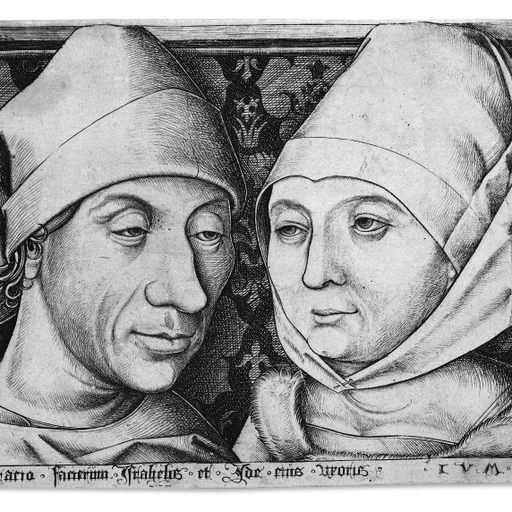
Israhel van Meckenem (c. 1445 – 10 November 1503), also known as Israhel van Meckenem the Younger, was a German printmaker and goldsmith, perhaps of a Dutch family origin. He was the most prolific engraver of the…