Artwork
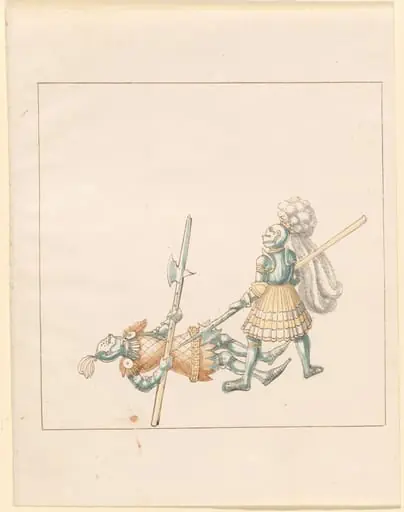
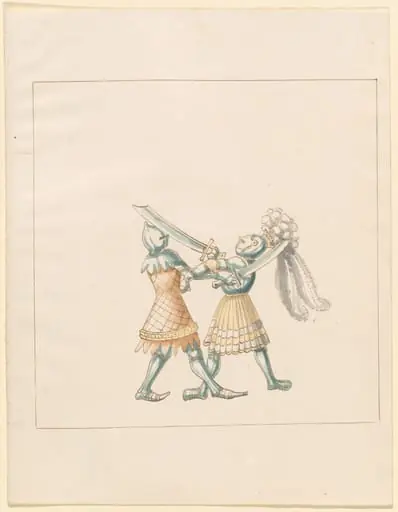
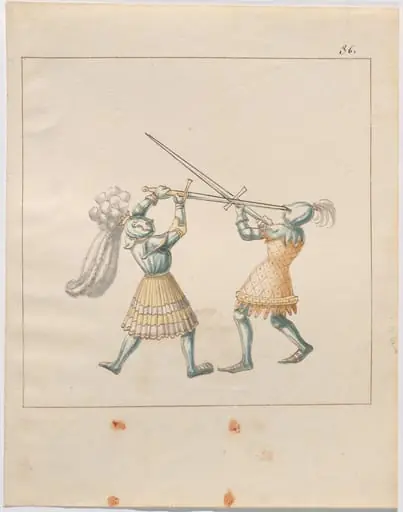
Foot Combat with Falchions
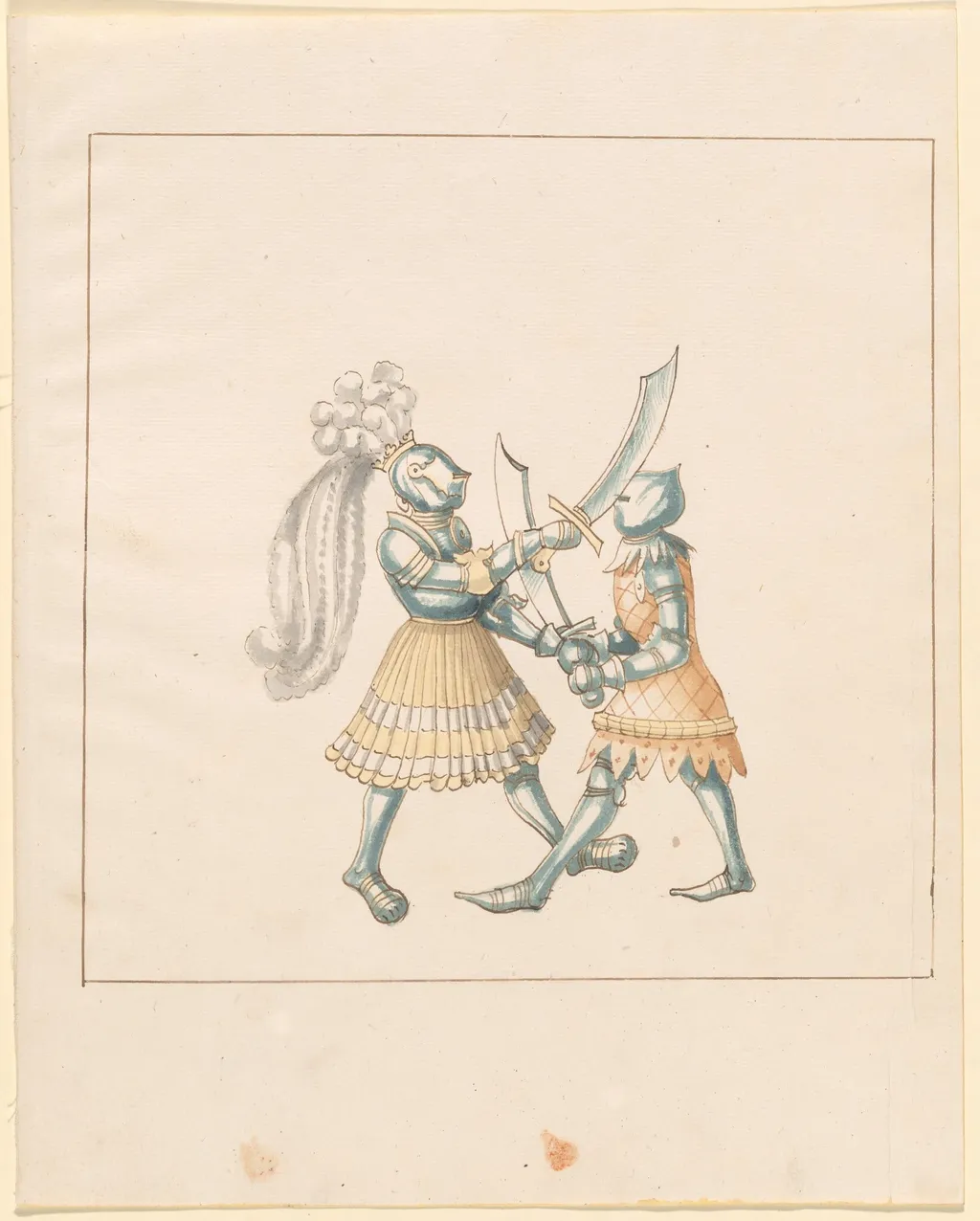
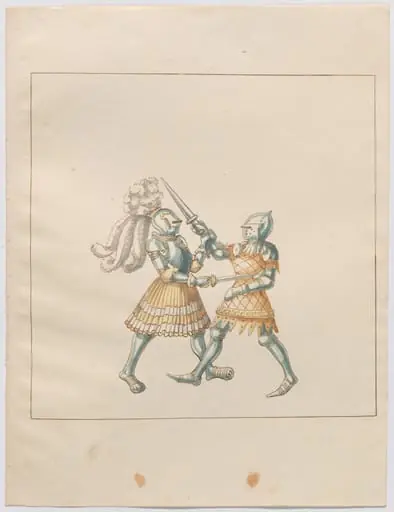
Foot Combat with Falchions is an ink drawing by the Renaissance artist German 16th Century. It dates from 1514 and is held in the collection of the National Gallery of Art.
About this work
Overview
Foot Combat with Falchions is a 16th-century drawing on laid paper, created with pen, black ink, and watercolor, measuring 32.8 × 26.2 cm. Attributed to an unknown German artist, it captures a dynamic moment of hand-to-hand combat.
Subject & Meaning
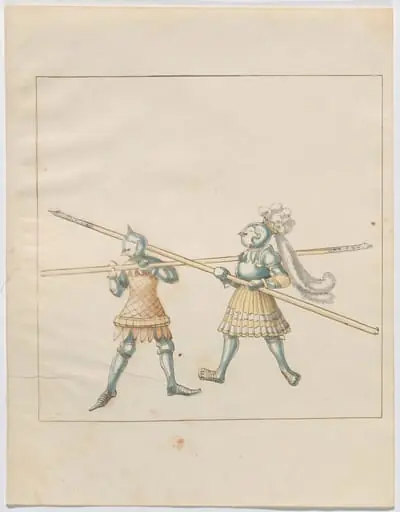
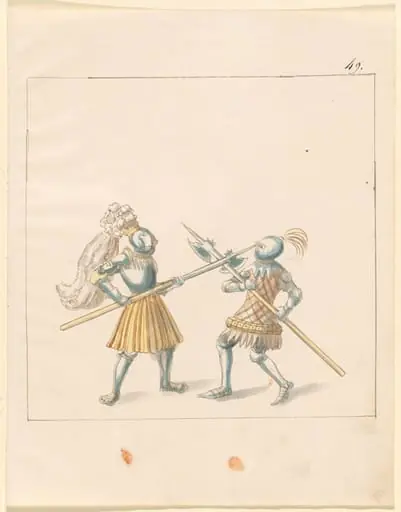
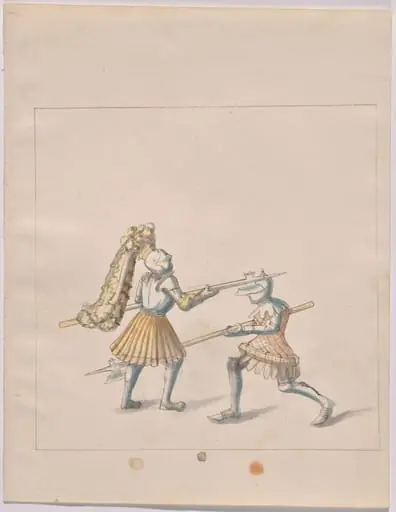
The drawing depicts two German foot soldiers engaged in intense battle, wielding falchions, a specific type of sword. The focus is on the immediacy and chaos of the combat moment, offering a glimpse into 16th-century warfare tactics and armor.
Technique & Style
Executed with meticulous detail, the piece combines the precision of pen and black ink for outlines and textures, enhanced by watercolor for added depth and realism, characteristic of German artistic practices of the time.
History & Provenance
Attributed to an unknown artist, the drawing's specific historical context beyond its 16th-century German origin is not detailed. It is now part of the collection at the National Gallery of Art, Washington.
Context
This artwork reflects the military practices and weaponry of 16th-century Germany, highlighting the use of falchions in close combat. It also exemplifies the artistic interest in depicting battle scenes during this period.
Legacy
While not attributed to a known artist, Foot Combat with Falchions contributes to the historical and artistic record of 16th-century German military life and artistic techniques, available for study at the National Gallery of Art.
Artist & collection

Artist
A German artist from the late 1500s drew lively scenes of knights clashing in parades and mock battles.

![Abraham Entertaining the Angels [verso], by German 16th Century](https://artifactworldgallery.com/img/german-16th-century--abraham-entertaining-the-angels-verso--69d1b25f4eba0a53-w320.webp)