Artwork
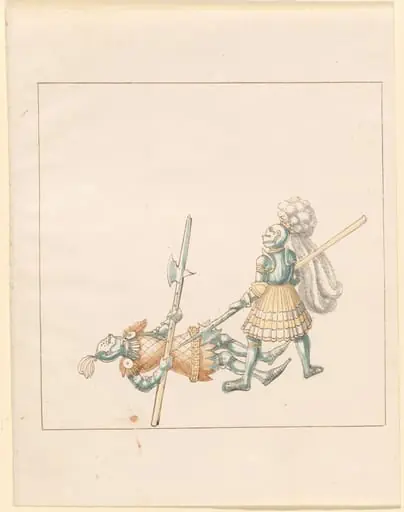
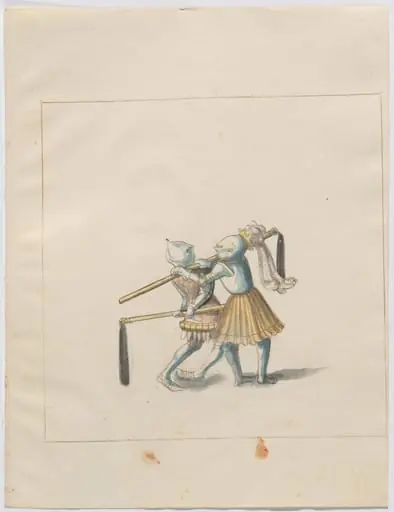
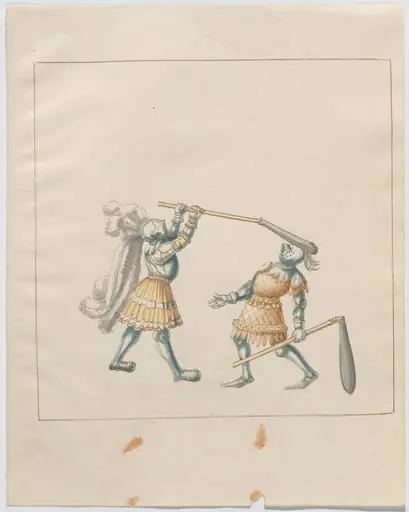
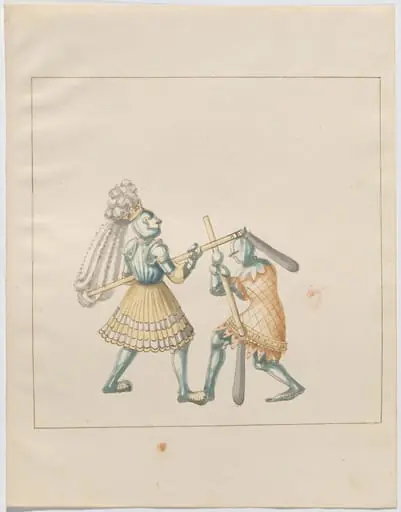
Foot Combat with Flails
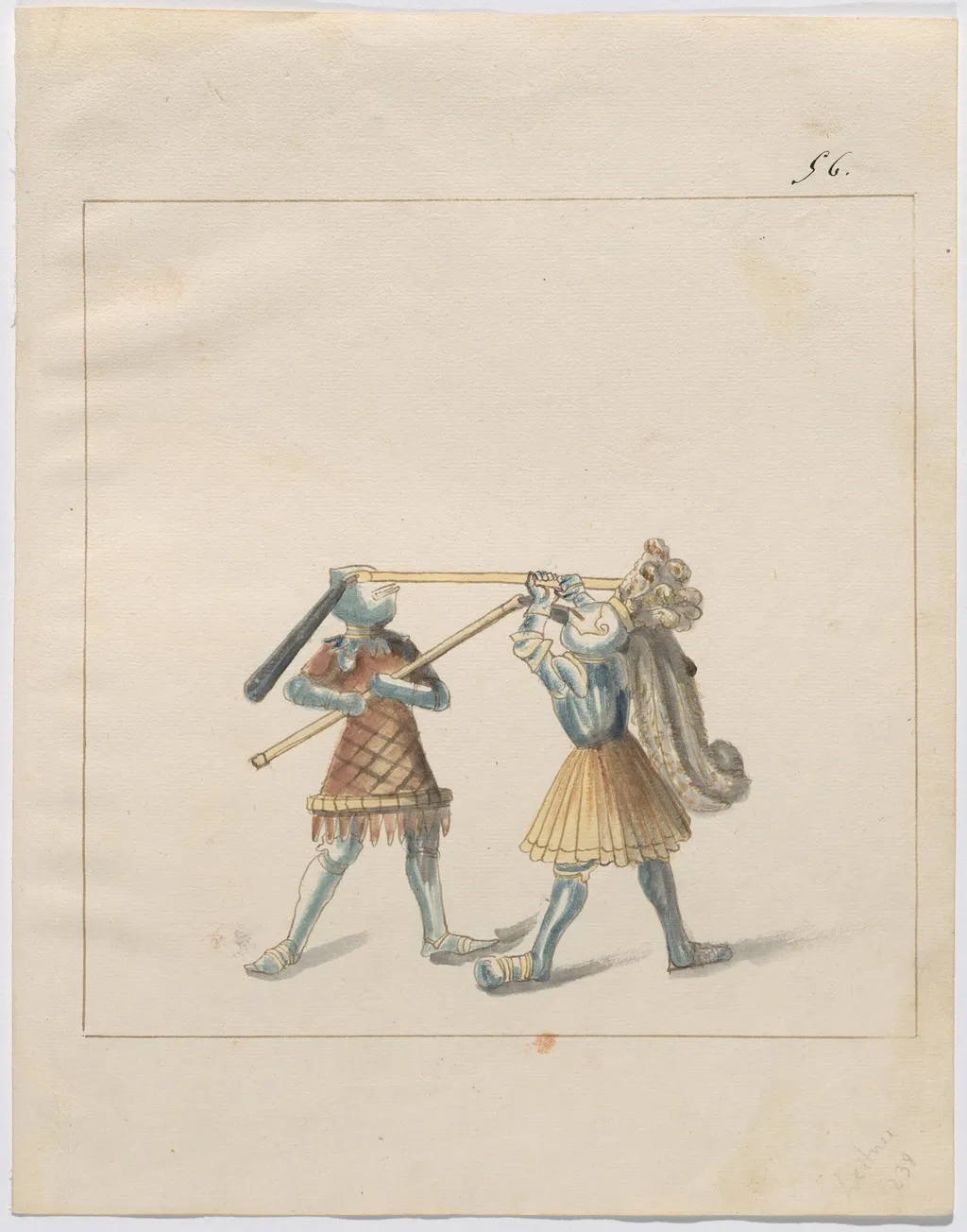
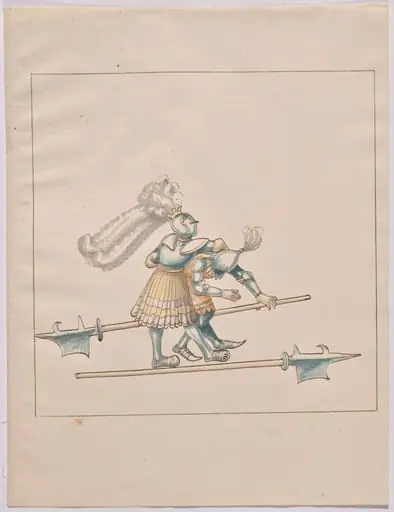
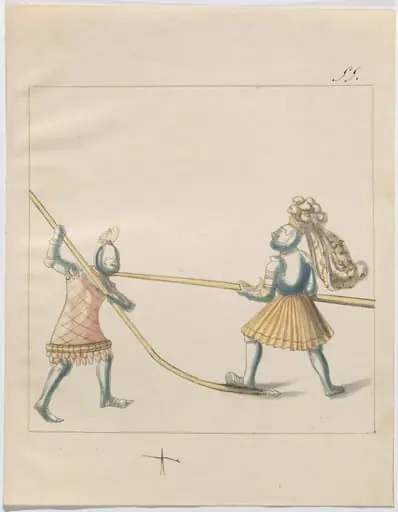
Foot Combat with Flails is an ink drawing by the Renaissance artist German 16th Century. It dates from 1514 and is held in the collection of the National Gallery of Art.
About this work
Overview
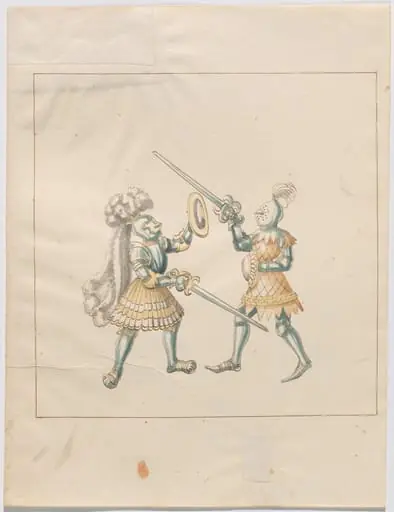
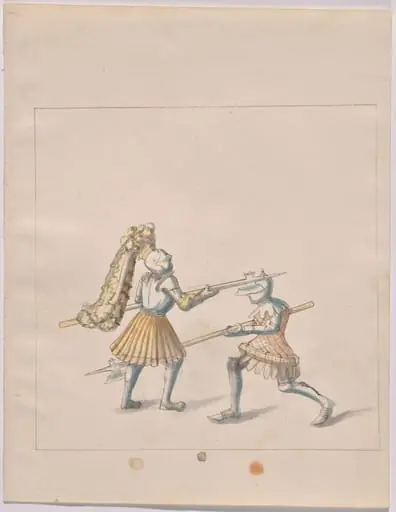
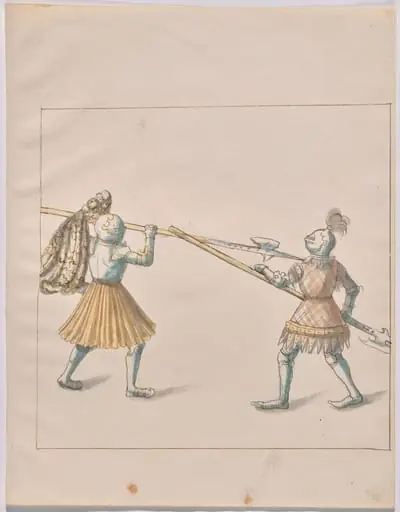
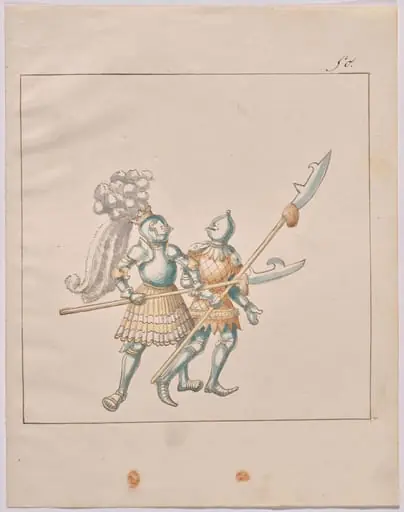
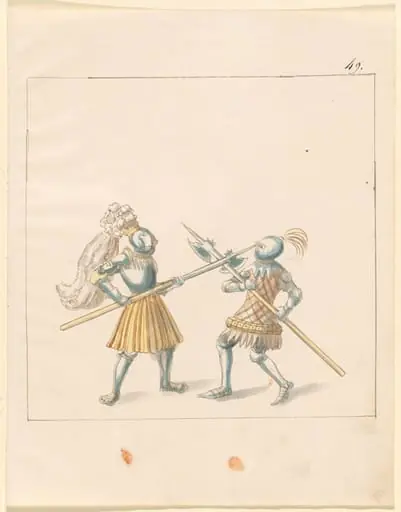
Foot Combat with Flairs is a 16th‑century German drawing executed in pen and black ink, enhanced with watercolor and corrected with white gouache on laid paper. The work measures roughly 34 × 26 cm and belongs to the Rosenwald Collection of the National Gallery of Art in Washington, D.C. It depicts a brief, intense encounter between two combatants wielding flails.
Subject & Meaning
The composition focuses on a pair of figures locked in close‑quarter battle, each brandishing a flail—a weapon that combines a striking head with a flexible handle. Their attire, cut in an older style, and the vigorous poses convey the physicality and danger of medieval martial practice, offering a visual record of a specific combat technique.
Technique & Style
The artist employed fine pen lines to outline the figures and their equipment, then applied watercolor washes to suggest volume and atmosphere. Areas where the initial drawing required adjustment were retouched with white gouache, creating highlights that accentuate the motion of the flails and the drapery of the clothing. The laid paper surface contributes a subtle texture to the overall effect.
History & Provenance
Originating in Germany during the 1500s, the drawing entered the Rosenwald Collection before being accessioned by the National Gallery of Art. Its dimensions have been recorded as 34 × 26.2 cm and 33.1 × 26.2 cm in different catalogues, reflecting slight variations in measurement or framing conventions over time.
Artist & collection

Artist
A German artist from the late 1500s drew lively scenes of knights clashing in parades and mock battles.

![Abraham Entertaining the Angels [verso], by German 16th Century](https://artifactworldgallery.com/img/german-16th-century--abraham-entertaining-the-angels-verso--69d1b25f4eba0a53-w320.webp)