Artwork
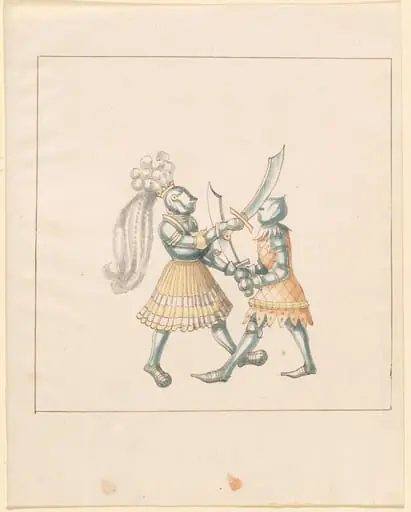
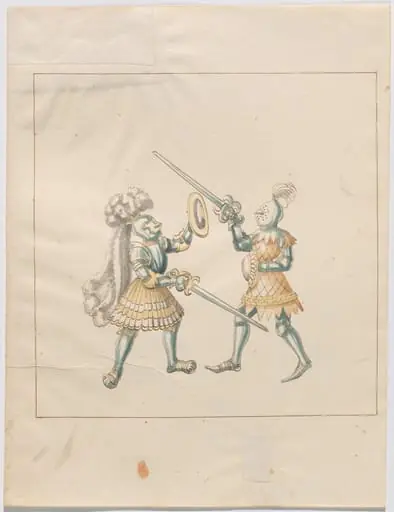
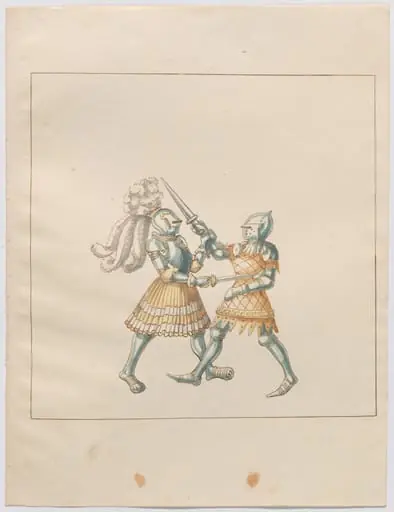
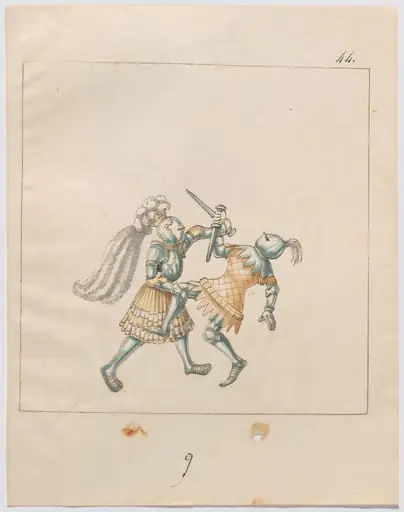
Foot Combat with Flails
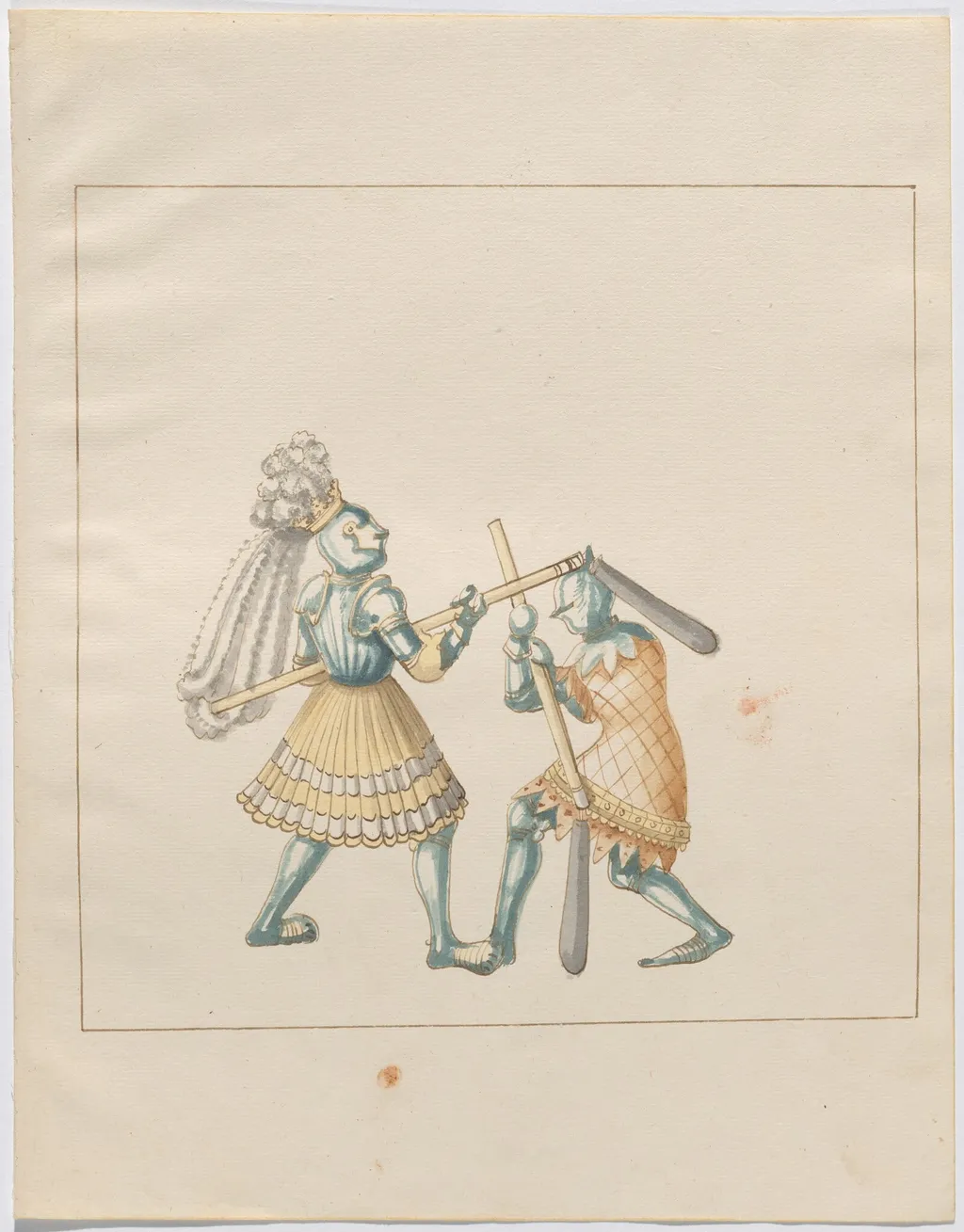
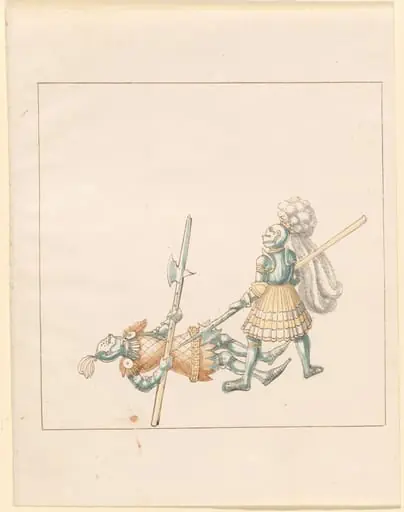
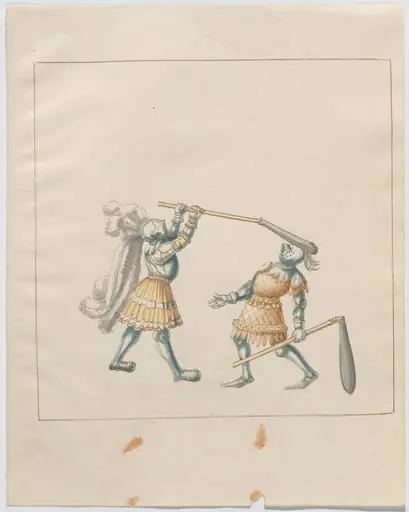
Foot Combat with Flails is an ink drawing by the Renaissance artist German 16th Century. It dates from 1514 and is held in the collection of the National Gallery of Art.
About this work
Overview
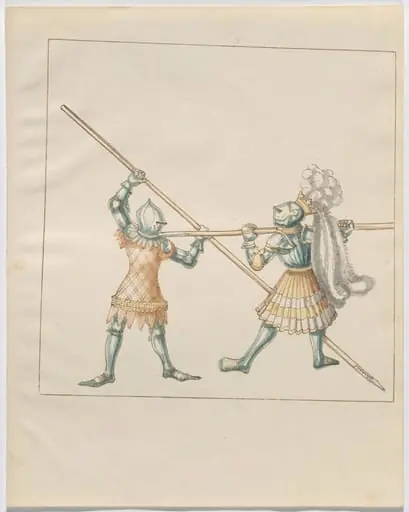
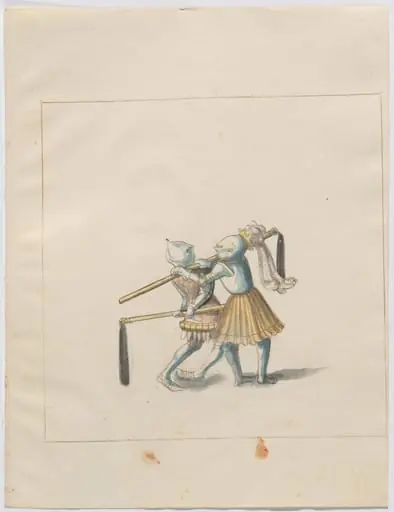
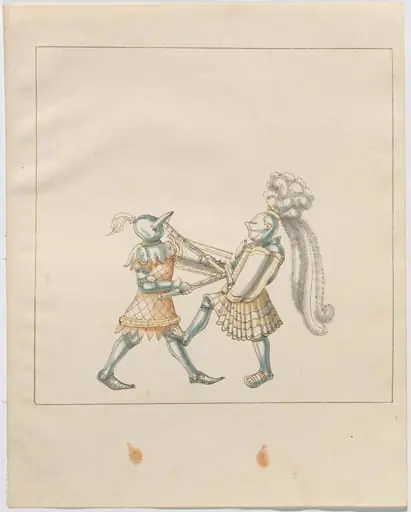
Foot Combat with Flails is a 16th‑century German drawing executed in pen, black ink and watercolor on laid paper. The work measures roughly 34 × 26 cm and is held in the Rosenwald Collection of the National Gallery of Art in Washington, D.C. It depicts a brief, dynamic encounter between two figures armed with flails.
Subject & Meaning
The composition centers on two men, minimally clothed, locked in a close‑quarters struggle with handheld flails. The empty background isolates the action, emphasizing the tension and kinetic energy of the fight. The straightforward portrayal suggests an interest in the mechanics of combat rather than narrative detail, inviting viewers to focus on the physicality of the encounter.
Technique & Style
The artist employs fine pen lines to delineate the figures and their weapons, while washes of watercolor provide subtle tonal variation and suggest movement. The use of laid paper contributes a textured surface that interacts with the ink’s crispness. Simple geometric shapes and restrained shading create a sense of immediacy, characteristic of German draftsmanship of the period.
History & Provenance
Since its acquisition by the Rosenwald Collection, the drawing has been part of the National Gallery of Art’s holdings. The museum’s records list the piece under its German origin, with dimensions recorded as 34 × 26.2 cm (alternatively 33.1 × 26.2 cm), reflecting slight variations in measurement across catalogues.
Artist & collection

Artist
A German artist from the late 1500s drew lively scenes of knights clashing in parades and mock battles.


![Abraham Entertaining the Angels [verso], by German 16th Century](https://artifactworldgallery.com/img/german-16th-century--abraham-entertaining-the-angels-verso--69d1b25f4eba0a53-w320.webp)