Artwork
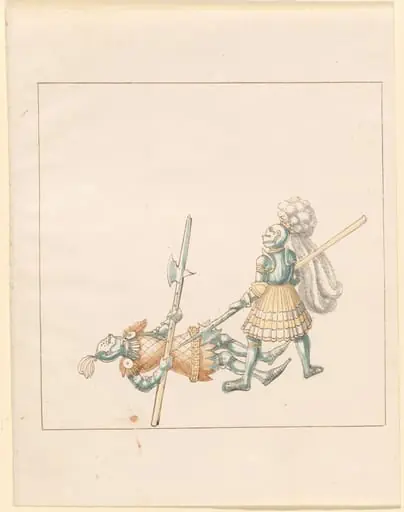
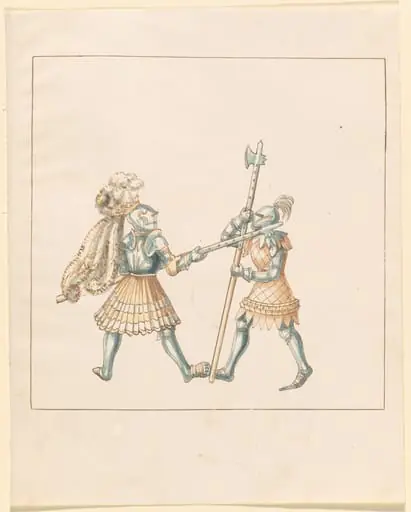
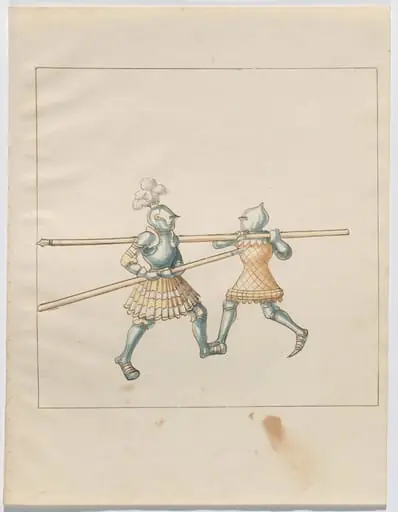
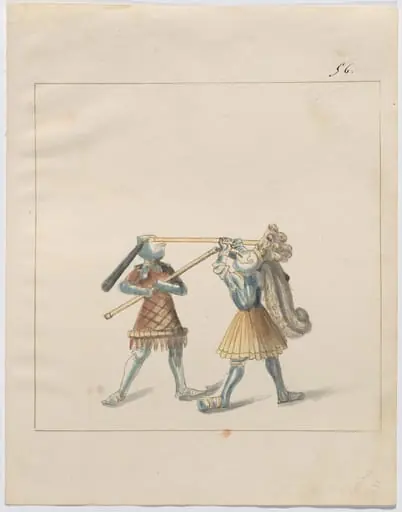
Foot Combat with Halberds
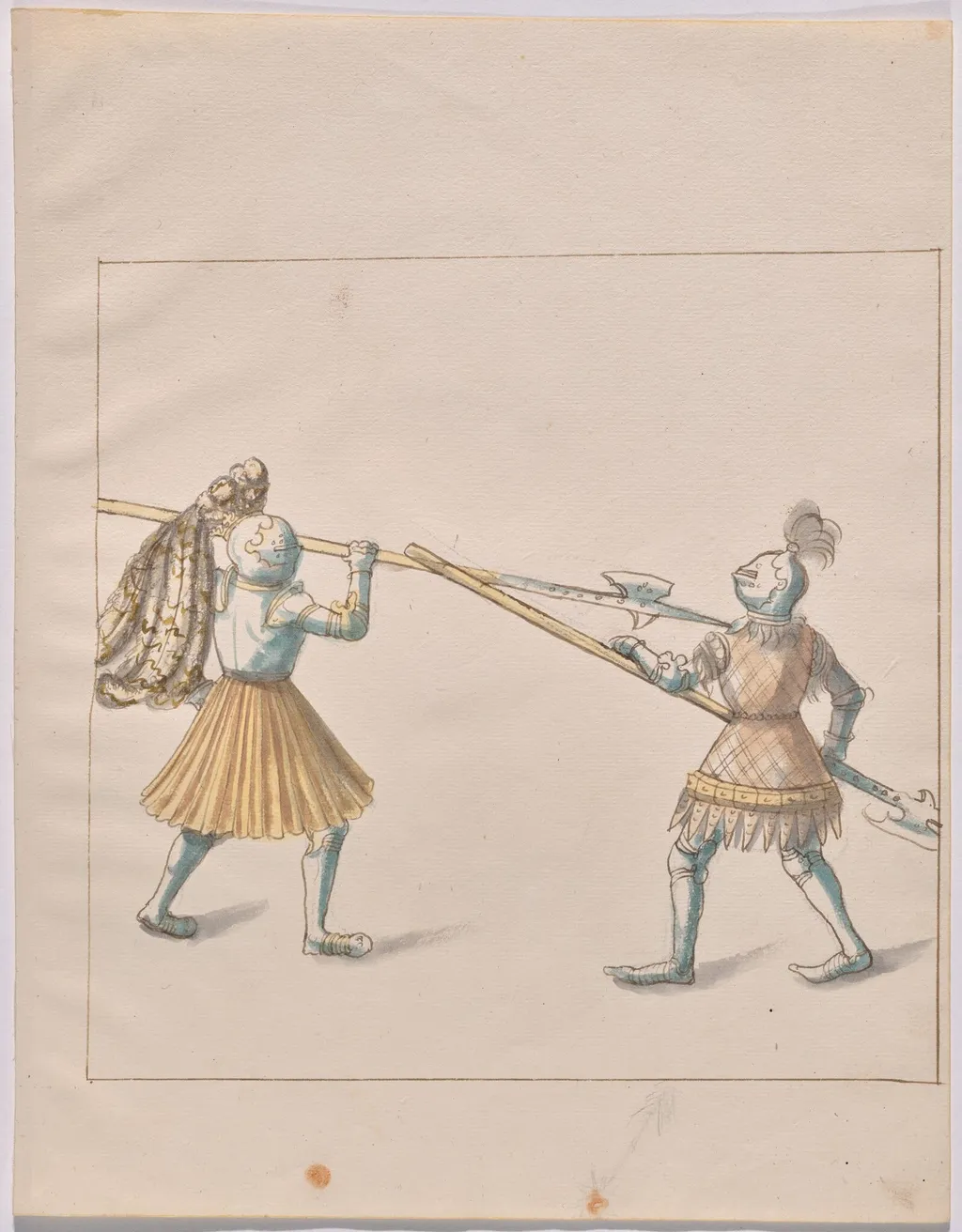
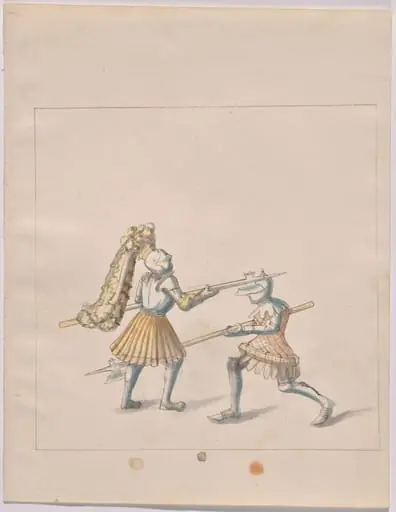
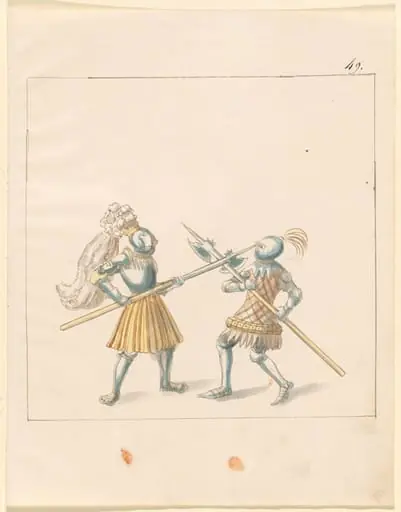
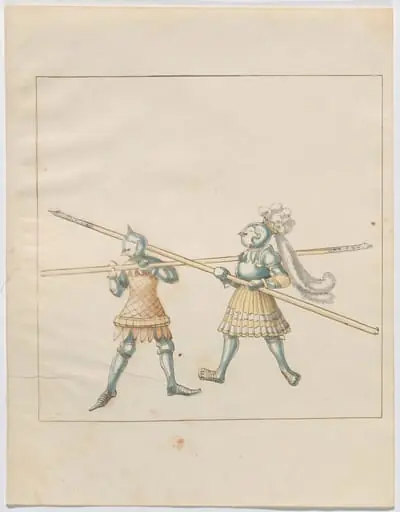
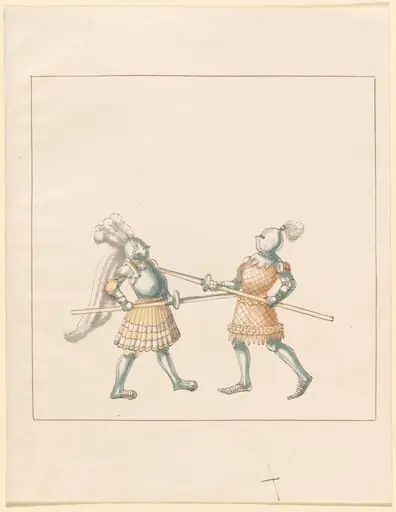
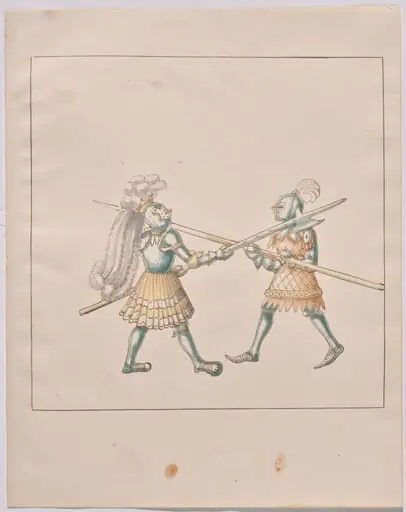
Foot Combat with Halberds is an ink drawing by the Renaissance artist German 16th Century. It dates from 1514 and is held in the collection of the National Gallery of Art.
About this work
Overview
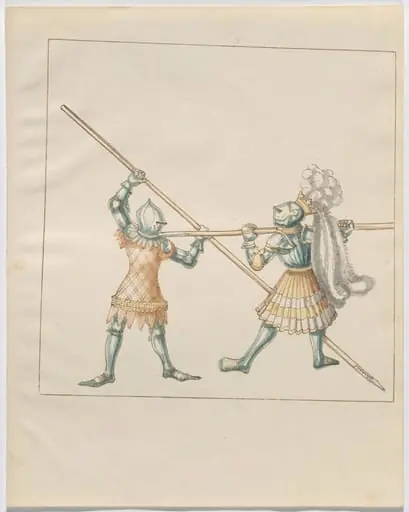
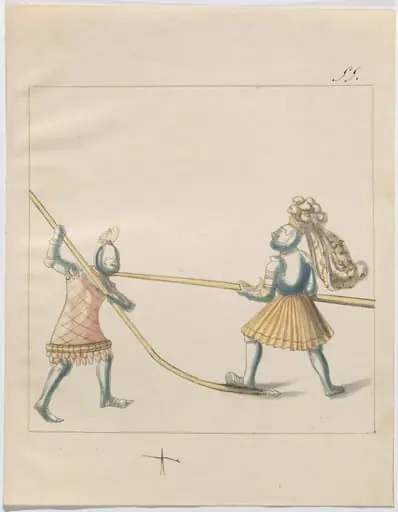
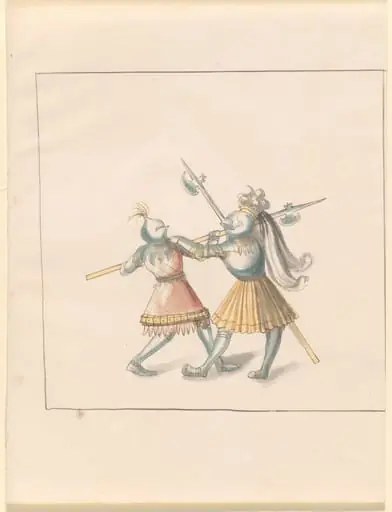
Foot Combat with Halberds is a 16th‑century German drawing measuring roughly 34 by 26 centimetres. Executed on laid paper, the work combines pen and black ink with watercolor applied over a black chalk ground. The composition presents two heavily armored figures locked in a halberd duel, their plumed helmets and shields rendered with precise detail.
Subject & Meaning
The scene illustrates a staged encounter between two knights, each wielding a halberd—a pole weapon common in the period. Rather than a narrative battle, the image functions as a visual drill, likely intended to demonstrate combat techniques for aristocratic trainees or military instructors, emphasizing posture, reach, and defensive maneuvers.
Technique & Style
The artist employed fine pen lines to delineate the intricate armor and weaponry, while watercolor washes soften the metallic surfaces and suggest depth. A preliminary layer of black chalk provides tonal contrast, allowing the ink to stand out sharply against the muted background, a method typical of German illustrative practices of the era.
History & Provenance
Created in the German lands during the 1500s, the drawing’s later ownership is not fully documented, but it now resides in the collection of the National Gallery of Art, Washington. Its survival on paper attests to the durability of the mixed media technique and the continued interest in historical martial instruction.
Artist & collection

Artist
A German artist from the late 1500s drew lively scenes of knights clashing in parades and mock battles.

![Abraham Entertaining the Angels [verso], by German 16th Century](https://artifactworldgallery.com/img/german-16th-century--abraham-entertaining-the-angels-verso--69d1b25f4eba0a53-w320.webp)