Artwork
Madonna of the Hernleberg
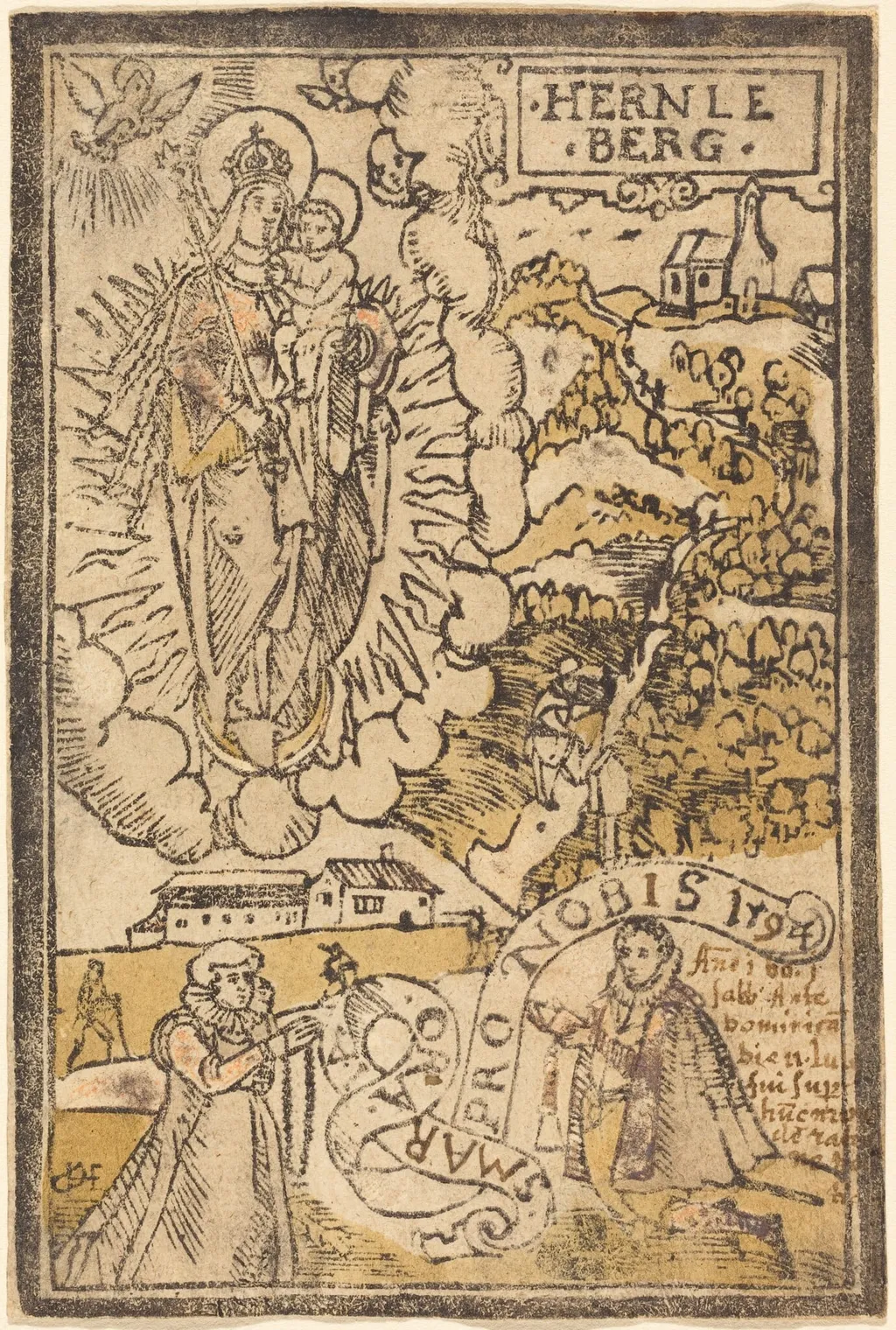
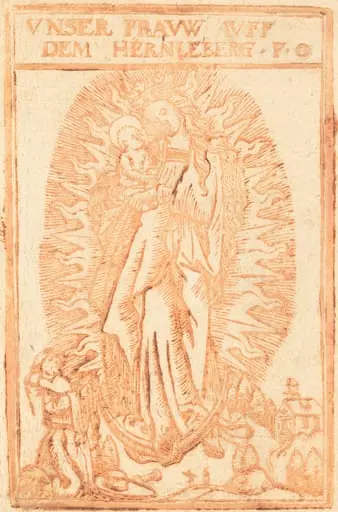
Madonna of the Hernleberg is an ink print by the Renaissance artist German 16th Century. It dates from 1592 and is held in the collection of the National Gallery of Art. The work is a hand‑colored woodcut portraying the Virgin Mary standing upon a cloud while cradling the infant Jesus.
About this work
In the foreground, a banner with the inscription "Nobis 1592" is visible, while a small figure of a man is shown kneeling in prayer at the bottom of the image.
The image depicts a woodcut painting of the Madonna and Child, with the Madonna standing on a cloud and holding the infant Jesus. The scene is set against a backdrop of a village, with a church and other buildings visible in the distance. The Madonna is surrounded by a halo, and the infant Jesus is shown reaching out to her.
In the foreground, a banner with the inscription "Nobis 1592" is visible, while a small figure of a man is shown kneeling in prayer at the bottom of the image. The overall effect is one of serenity and devotion, with the Madonna and Child at the center of the composition.
The use of woodcut and hand-coloring techniques adds a sense of texture and depth to the image. For more information on this style of art, look up the Renaissance movement.
Overview
The work is a hand‑colored woodcut portraying the Virgin Mary standing upon a cloud while cradling the infant Jesus. A small kneeling figure is shown in the lower foreground, and a banner bearing the date 1592 appears prominently. The composition is framed by a distant village scene that includes a church and other structures.
Subject & Meaning
The central figures represent the traditional Christian motif of the Madonna and Child, emphasizing maternal devotion and divine intercession. The halo surrounding Mary underscores her sanctity, while the infant’s outstretched hand conveys a tender, reciprocal bond.
Technique & Style
Executed as a woodcut, the image relies on carved lines to define forms, then receives hand‑applied color to enhance depth and texture. The combination of relief printing and manual coloration yields a tactile surface that distinguishes the figures from the background landscape.
History & Provenance
A dated inscription on the banner reads “Nobis 1592,” indicating the year of production. The presence of a kneeling supplicant suggests the print may have been intended for private devotional use or as a commissioned piece for a specific patron.
Context
Woodcut prints in the late sixteenth century were widely used for religious imagery, allowing broader distribution of sacred subjects beyond painted altarpieces. This work reflects that trend, presenting a familiar devotional scene in a format accessible to a lay audience.
Artist & collection

Artist
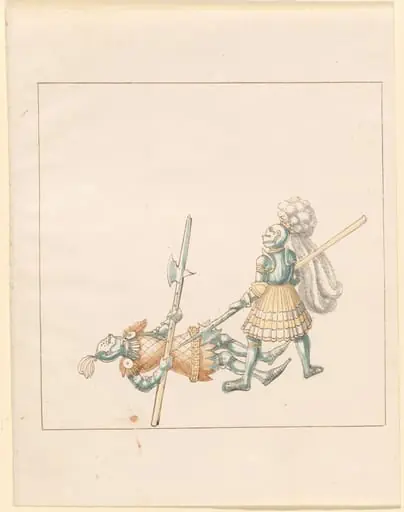
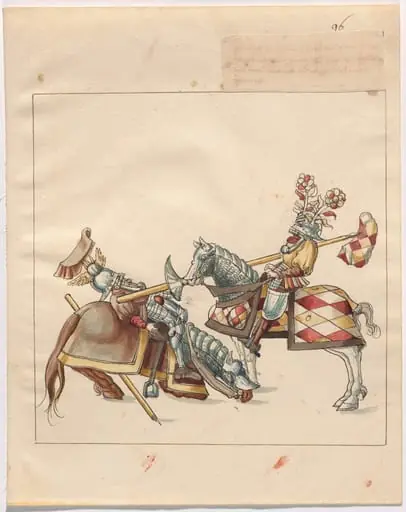
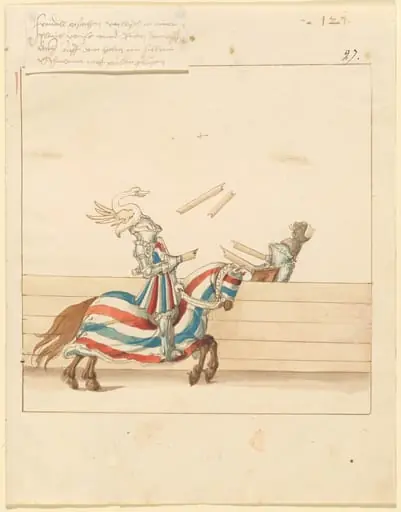
A German artist from the late 1500s drew lively scenes of knights clashing in parades and mock battles.

![Abraham Entertaining the Angels [verso], by German 16th Century](https://artifactworldgallery.com/img/german-16th-century--abraham-entertaining-the-angels-verso--69d1b25f4eba0a53-w320.webp)
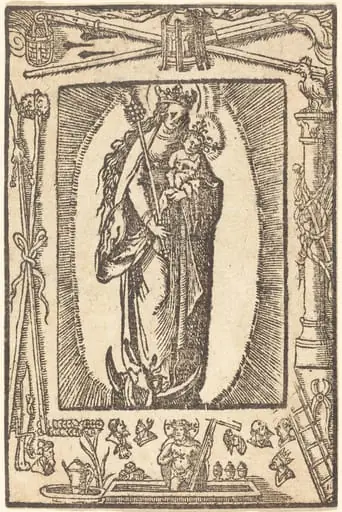 Madonna and Child
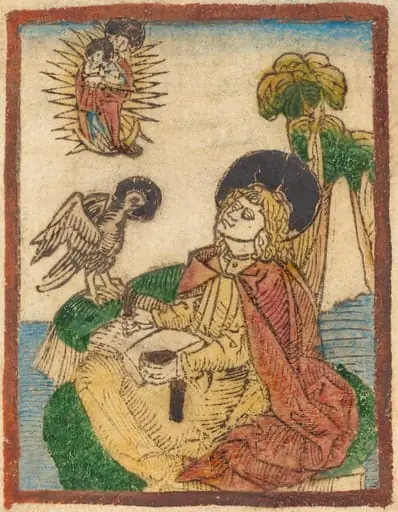 Saint John on the Island of Patmos
![Saint Agnes [verso], by German 15th Century](https://artifactworldgallery.com/img/german-15th-century--saint-agnes-verso--eb41977e5e7551cd-w320.webp) Saint Agnes [verso]
Saint Agnes [verso]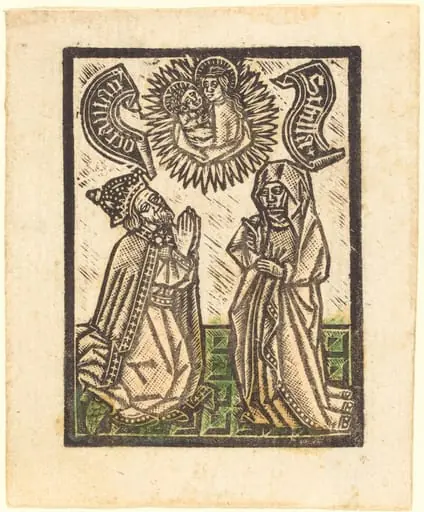 Emperor Octavian and the Sibyl
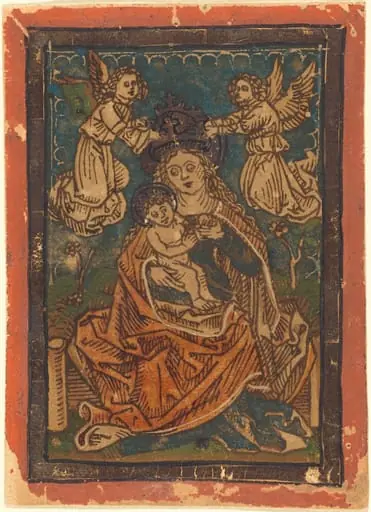 Madonna and Child Seated on a Grassy Bank with Angels
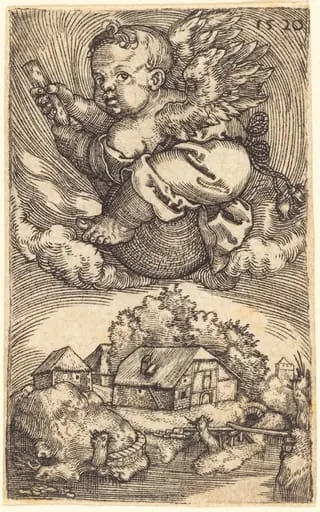 Genius on a Globe Floating in the Air
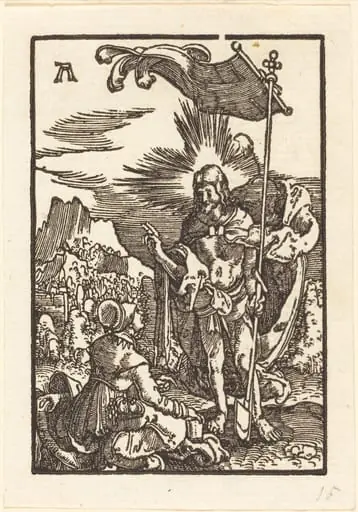 Noli me Tangere
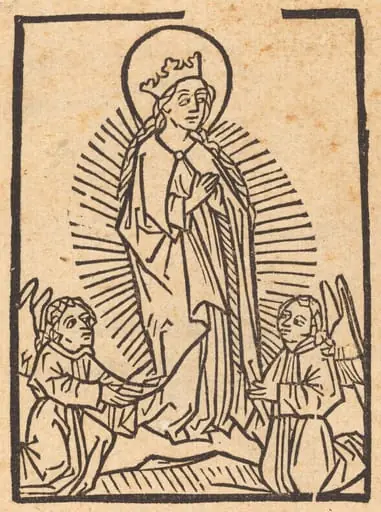 The Assumption of the Virgin
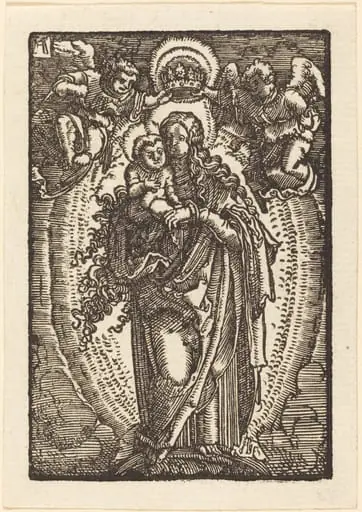 The Virgin and Child on a Crescent
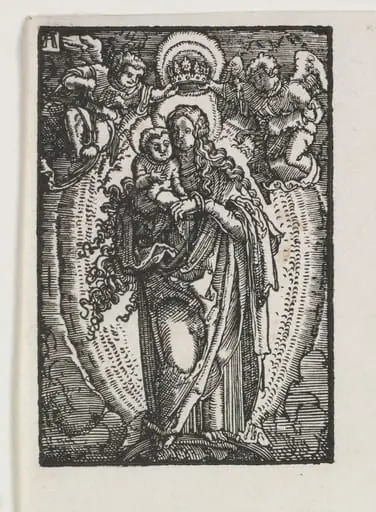 The Fall and Redemption of Man: The Virgin as Queen of Heaven
 Madonna of the Hernleberg
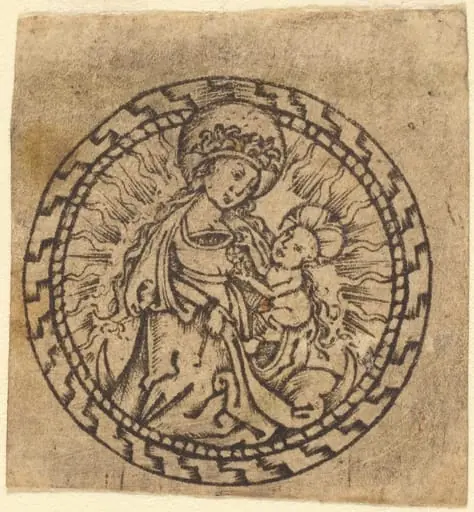 Madonna and Child