Artwork
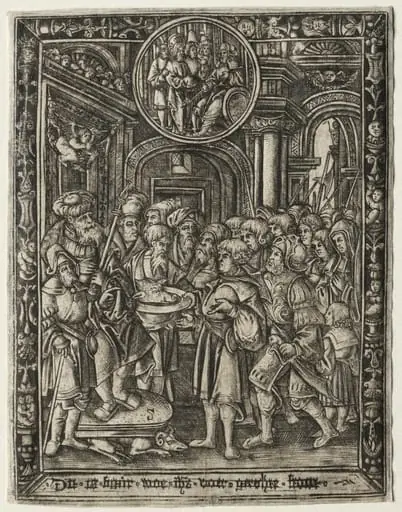
The High Priest before Pilate [verso]
![The High Priest before Pilate [verso], by German 16th Century, ink](https://artifactworldgallery.com/img/german-16th-century--the-high-priest-before-pilate-verso--0e55f00eccfecd8d-w1024.webp)
The High Priest before Pilate [verso] is an ink drawing by the Baroque artist German 16th Century. It is held in the collection of the National Gallery of Art.
About this work
Overview
' The medium suggests a study in tonal contrast and delicate line, typical of preparatory sketches from the early modern period.
A pen-and-brush drawing in black ink with gray wash and white highlights on gray prepared paper, this work is labeled as the verso of a sheet bearing the title 'The High Priest before Pilate.' The medium suggests a study in tonal contrast and delicate line, typical of preparatory sketches from the early modern period. Its physical state implies it was not intended as a finished piece but as a working image, possibly for a larger composition.
Subject & Meaning
The scene depicts a religious figure, likely a high priest, in dialogue with Pontius Pilate, a moment drawn from the New Testament trial of Jesus. The composition focuses on the tension between authority and supplication, rendered without overt drama. The absence of additional figures or architectural detail emphasizes the psychological weight of the encounter, inviting contemplation rather than narrative elaboration.
Technique & Style
The artist employed fine pen lines to define form, layered with soft gray washes to model volume and shadow. White pigment was sparingly applied to suggest highlights, enhancing the illusion of light on skin and fabric. The gray paper serves as a mid-tone foundation, allowing the ink and wash to modulate between deep shadow and luminous detail. The technique reflects a disciplined approach to chiaroscuro and restrained expression.
History & Provenance
The drawing’s origin remains undocumented, though its materials and handling align with early 17th-century European workshop practices. It likely belonged to a collector or artist’s studio, preserved for its compositional value rather than as a standalone work. No known exhibition or publication history precedes its current attribution, suggesting it was privately held for much of its existence.
Context
During the early 1600s, religious subjects dominated European draftsmanship, especially in regions influenced by Counter-Reformation piety. Artists often produced studies of biblical scenes to refine gesture and expression before executing larger paintings or prints. This drawing fits within that tradition, serving as a focused exploration of a pivotal moment in Christian narrative, stripped of embellishment.
Legacy
As a fragmentary work, it offers insight into the working methods of artists who prioritized compositional clarity over finish. Its survival underscores the value placed on preparatory drawings, even when unattributed. Though not widely known, it contributes to understanding how religious themes were visually distilled in private practice during a period of intense doctrinal and artistic redefinition.
Artist & collection

Artist
A German artist from the late 1500s drew lively scenes of knights clashing in parades and mock battles.

![Abraham Entertaining the Angels [verso], by German 16th Century](https://artifactworldgallery.com/img/german-16th-century--abraham-entertaining-the-angels-verso--69d1b25f4eba0a53-w320.webp)
![The Adoration of the Kings [recto], by German 16th Century](https://artifactworldgallery.com/img/german-16th-century--the-adoration-of-the-kings-recto--d7f3fbf5ae8063c3-w320.webp) The Adoration of the Kings [recto]
The Adoration of the Kings [recto]![Christ Healing the Lame [verso], by German 16th Century](https://artifactworldgallery.com/img/german-16th-century--christ-healing-the-lame-verso--5970f592c4661e14-w320.webp) Christ Healing the Lame [verso]
Christ Healing the Lame [verso] Christ Disputing with the Doctors
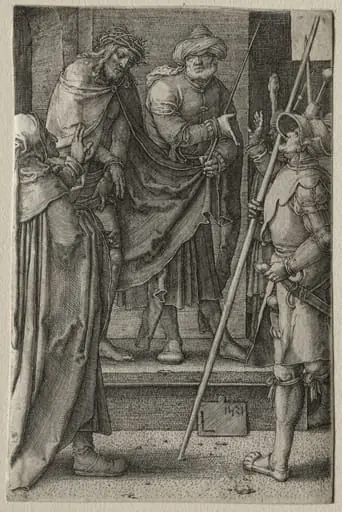 The Passion: Christ Presented to the People
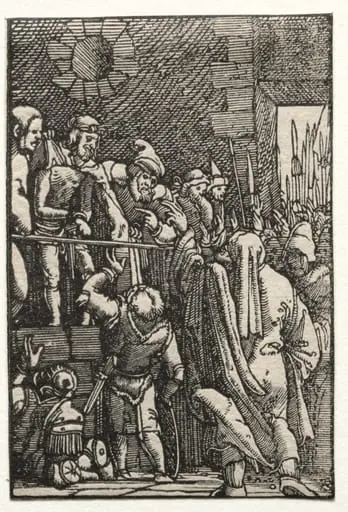 The Fall and Redemption of Man: Ecce Homo
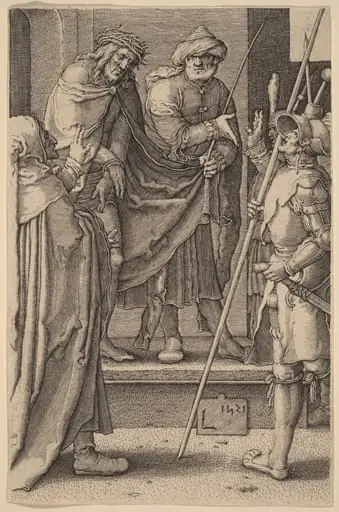 Ecce Homo
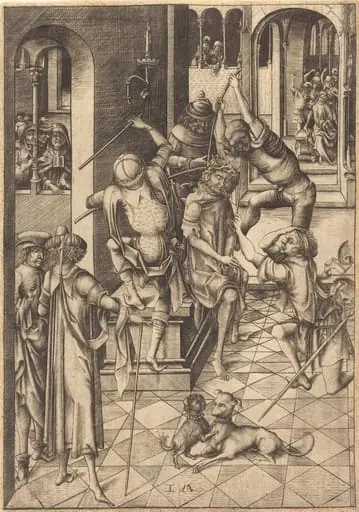 The Crowning with Thorns
 The Old King on His Throne
 The Triumphs of Caesar: The Senators
 The Passion: Christ Taken Captive