Artwork
The Fall and Redemption of Man: Ecce Homo
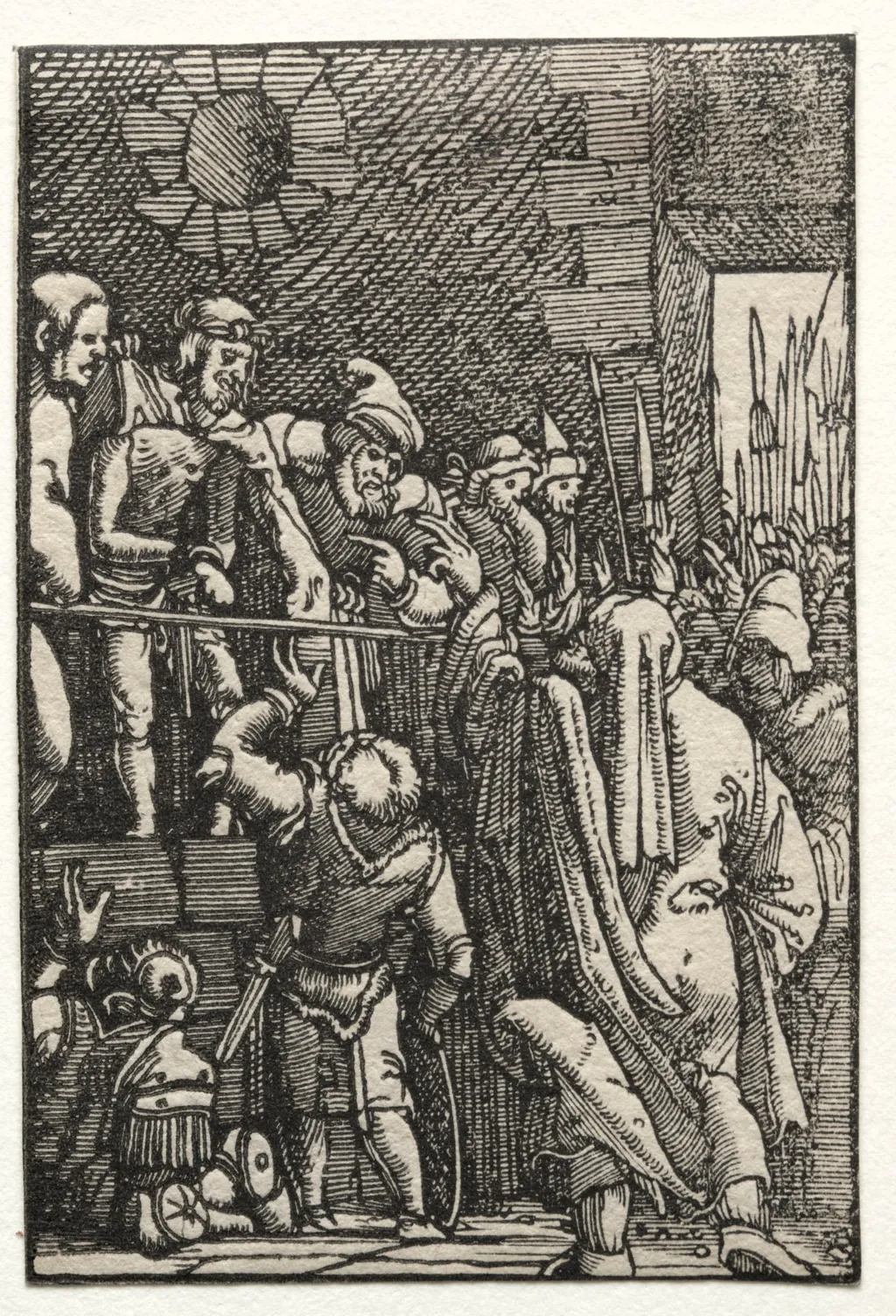
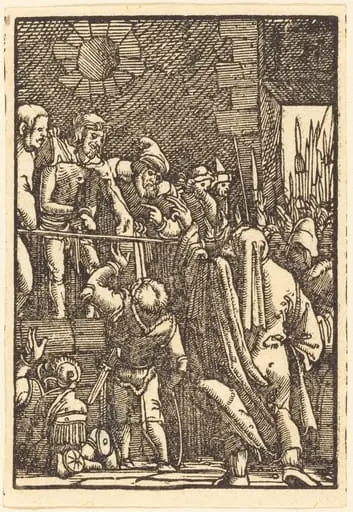
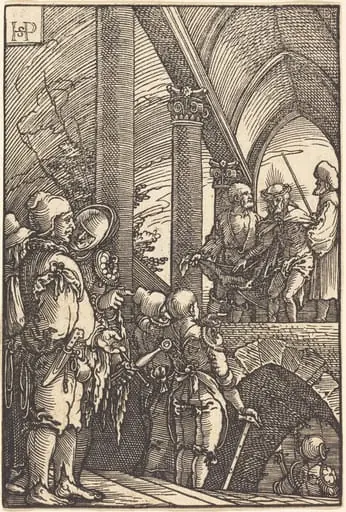
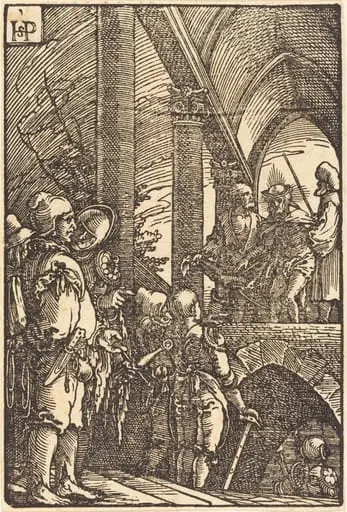
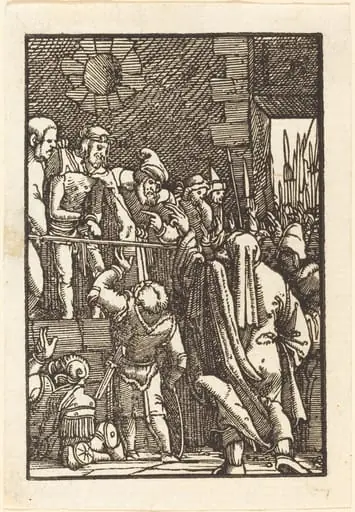
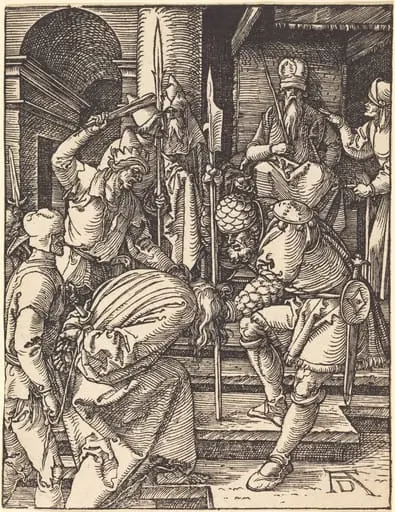
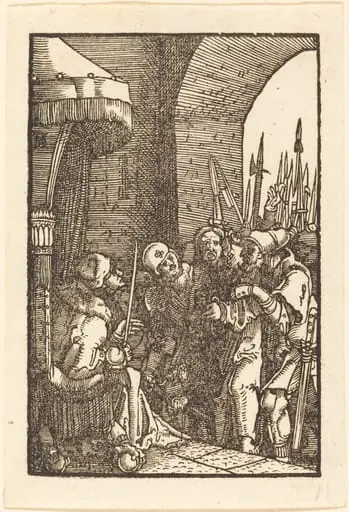
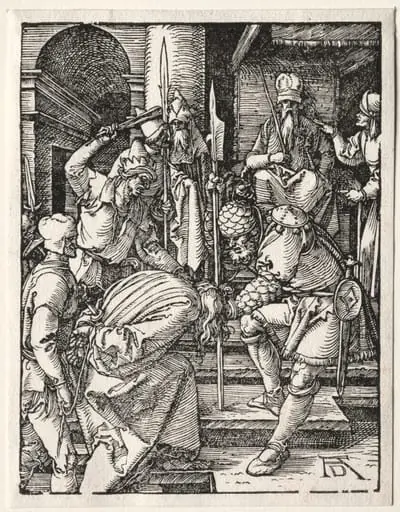
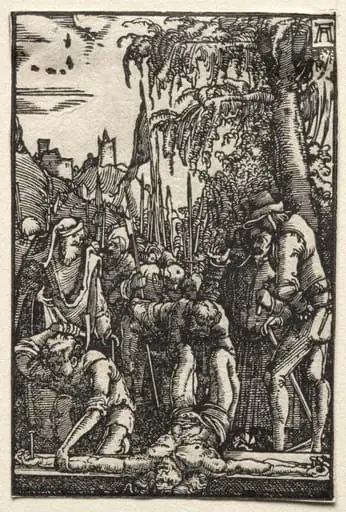
The Fall and Redemption of Man: Ecce Homo is a print by the Renaissance artist Albrecht Altdorfer. It dates from 1515 and is held in the collection of the Cleveland Museum of Art.
About this work
Overview
As a key member of the Danube School, Altdorfer merged religious narrative with immersive natural settings.
Created around 1515 by Albrecht Altdorfer, this etching combines two biblical episodes—the expulsion from Eden and Christ’s presentation before the crowd—within a single, densely composed scene. As a key member of the Danube School, Altdorfer merged religious narrative with immersive natural settings. The work’s small scale belies its complexity, showcasing his skill in etching fine lines to convey movement, emotion, and spatial depth within a confined format.
Subject & Meaning
The image juxtaposes the fall of humanity through Adam and Eve’s sin with Christ’s suffering as a path to redemption. Christ, crowned with thorns and standing on a raised stone, is surrounded by a turbulent crowd, some recoiling, others reaching toward him. Below him, a fallen figure—possibly a symbol of fallen man—lies prostrate, while a soldier looms nearby. The pairing suggests a theological parallel: human failure and divine sacrifice intertwined in one moment of judgment and grace.
Technique & Style
Altdorfer employed sharp, incised lines to build texture and contrast, using chiaroscuro to direct attention toward Christ’s figure. The background is rendered with dense, swirling strokes that suggest both a stormy sky and a sea of onlookers, blurring the boundary between nature and human chaos. His meticulous control of etching allowed for intricate detail in robes, gestures, and landscape elements, characteristic of the Nuremberg Little Masters’ precision despite the small format.
History & Provenance
The print was produced during Altdorfer’s time in Regensburg, where he served as a city architect and artist. Though few early records survive, the work aligns with his known output from the early 1510s, a period when he increasingly fused spiritual themes with landscape. It likely circulated among educated patrons and clergy familiar with theological allegory, reflecting the devotional culture of southern German humanist circles.
Context
In the years before the Reformation, religious imagery often served as moral instruction. Altdorfer’s integration of nature as an active, emotional force reflected a broader shift in Northern Renaissance art, where landscapes were no longer mere backdrops but carriers of spiritual meaning. His approach resonated with contemporary theological debates on sin, mercy, and human frailty, offering viewers a visual meditation on redemption.
Legacy
Altdorfer’s synthesis of biblical narrative and expressive landscape influenced later generations of printmakers, particularly in Germany. His ability to convey psychological depth and cosmic scale within a small etching set a precedent for narrative compression in printmaking. Though less widely known than contemporaries like Dürer, his work remains a significant example of how landscape could embody theological tension in early 16th-century art.
Artist & collection
Artist
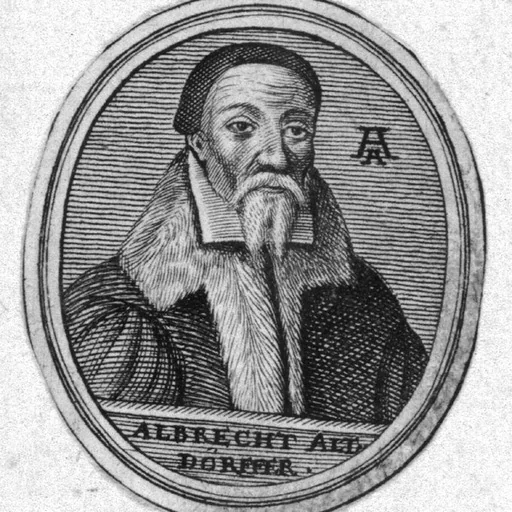
Albrecht Altdorfer (c. 1480 – 12 February 1538) was a German painter, engraver and architect of the Renaissance working in Regensburg. Along with Lucas Cranach the Elder and Wolf Huber he is regarded to be the main…