Artwork
Krönung von Eleonora von Gonzaga, Gemahlin Kaiser Ferdinands III., zur Römisch-Deutschen Kaiserin ; Ansicht von Regensburg (Coronation of Eleonora von Gonzaga, wife of Emperor Ferdinand II, as Empress, with a View of Regensburg)
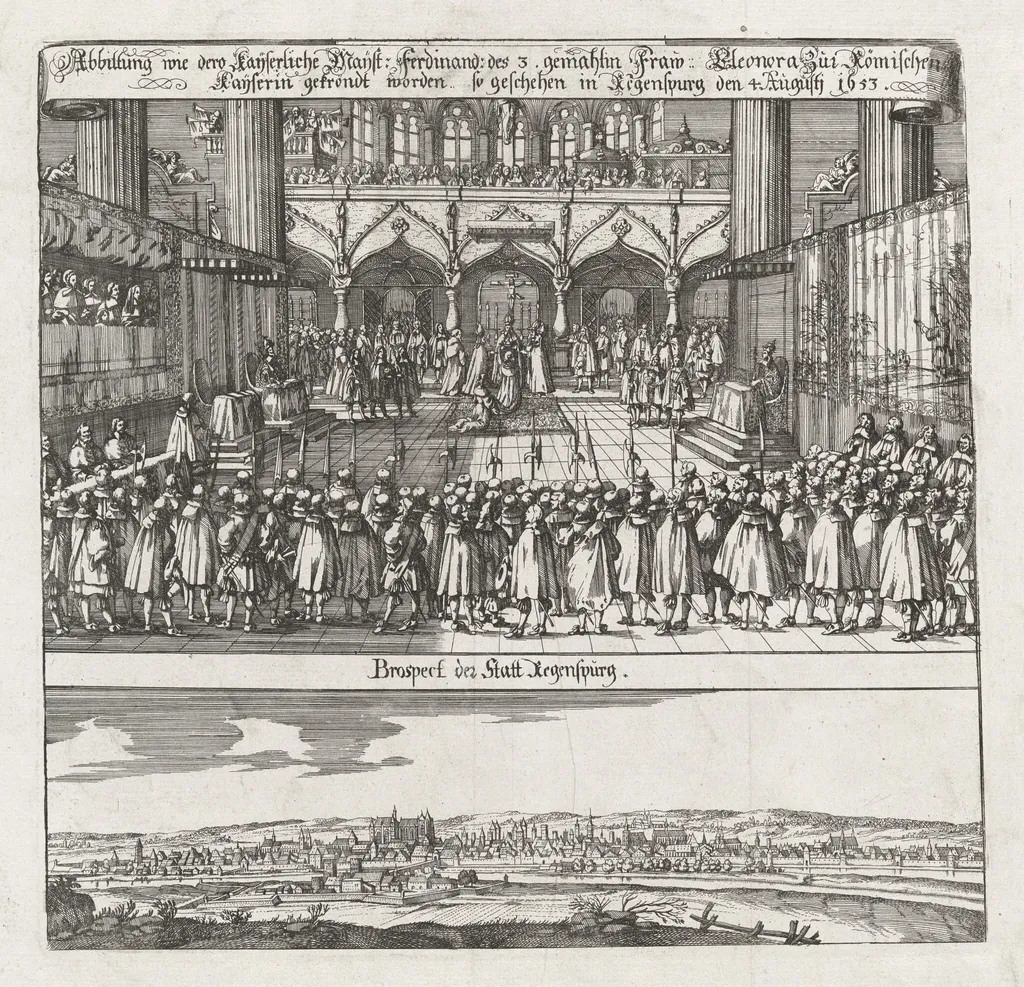
Krönung von Eleonora von Gonzaga, Gemahlin Kaiser Ferdinands III., zur Römisch-Deutschen Kaiserin ; Ansicht von Regensburg (Coronation of Eleonora von Gonzaga, wife of Emperor Ferdinand II, as Empress, with a View of Regensburg) is an ink print by the Baroque artist German 17th Century. It dates from 1663 and is held in the collection of the National Gallery of Art. The work is an etching on laid paper portraying the coronation of Eleonora Gonzaga, consort of Emperor Ferdinand II, as Holy Roman Empress.
About this work
Overview
The work is an etching on laid paper portraying the coronation of Eleonora Gonzaga, consort of Emperor Ferdinand II, as Holy Roman Empress. The composition presents a spacious hall filled with a multitude of figures in formal dress, while a distant cityscape with river and buildings frames the scene, suggesting a view of Regensburg.
Subject & Meaning
The print records the ceremonial elevation of Eleonora Gonzaga, emphasizing the grandeur of imperial ritual and the collective presence of court officials, clergy, and spectators. By situating the event within an architectural interior that opens onto a recognizable urban landscape, the image links the personal triumph of the empress with the civic identity of Regensburg, the imperial capital at the time.
Technique & Style
Executed in the etching medium, the artist exploits the fine lines of the process to render intricate textures on fabrics, armor, and architectural details. The contrast between densely hatched areas and lighter washes creates a sense of depth, while the laid‑paper surface adds a subtle tonal variation that enhances the atmospheric perspective of the distant city.
Context
Created during the early seventeenth century, the print reflects the Baroque fascination with elaborate court ceremonies and the visual documentation of political power. Regensburg, as the seat of the Imperial Diet, frequently served as a backdrop for such events, and the work would have circulated among elite patrons interested in commemorating imperial milestones.
Artist & collection

Artist
This artist worked in 17th-century central Europe, turning myth and history into small bronze and ink scenes.

![Allegorical Female Figure in a Landscape [recto], by German 17th Century](https://artifactworldgallery.com/img/german-17th-century--allegorical-female-figure-in-a-landscape-recto--0263f304d6fc0dc9-w320.webp)
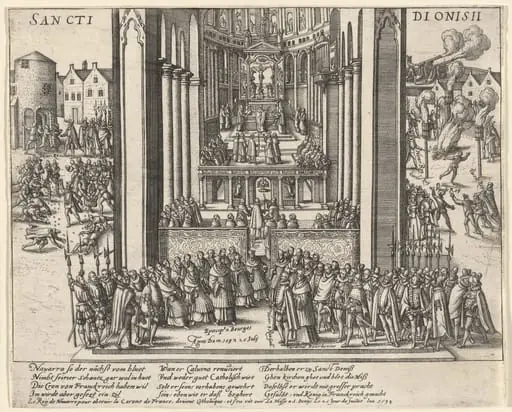 Composite Image Depicting Actions of Henri IV, King of France, upon His Abjuration of the Protestant Faith
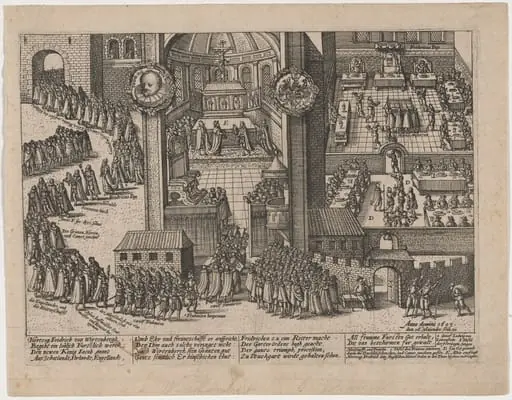 Frederick VI, Duke of Wurtenberg
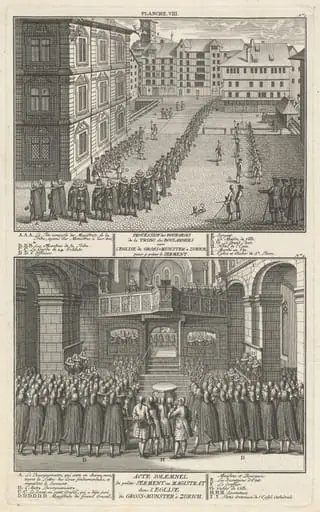 Procession des Bourgeois de la Tribu des Boulangers vers l’Eglise du Grossmunster à Zurich, pour y prêter le Serment; Acte Solemnel de prêter Serment au Magistrat dans l’eglise du Grossmunster à Zurich (Procession and Sermon at the Grossmunster)
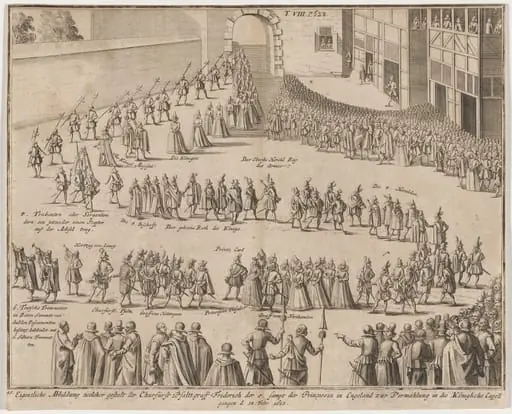 Marriage of Elizabeth to Frederick V of Bohemia, February 14, 1613
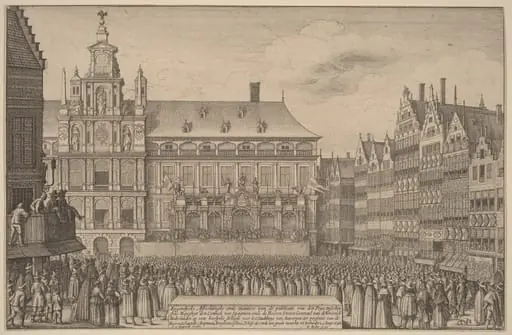 The Peace of Munster
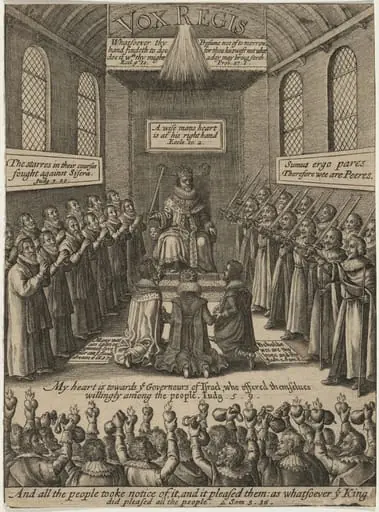 Vox Regis, by Thomas Scott
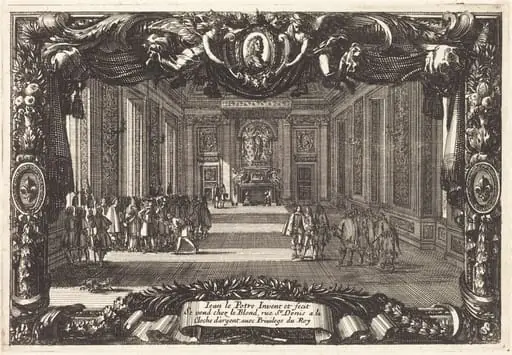 Title Page
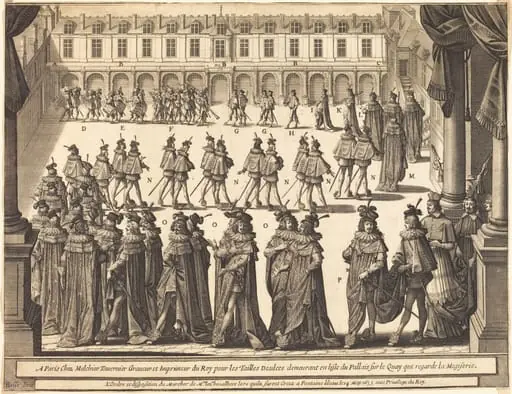 March of the King and Knights of the Holy Spirit in the Courtyard at Fontainebleau
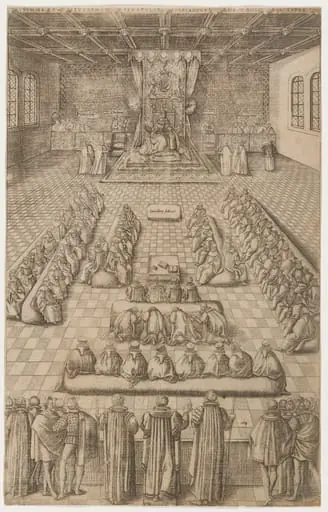 James I in Parliament
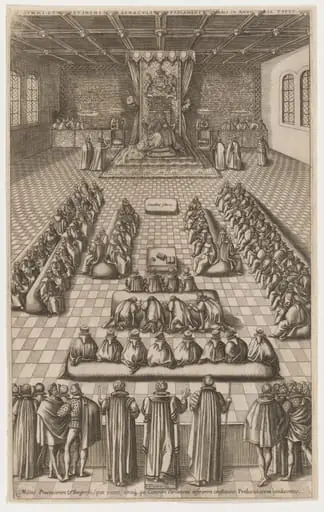 Queen Elizabeth in Parliament
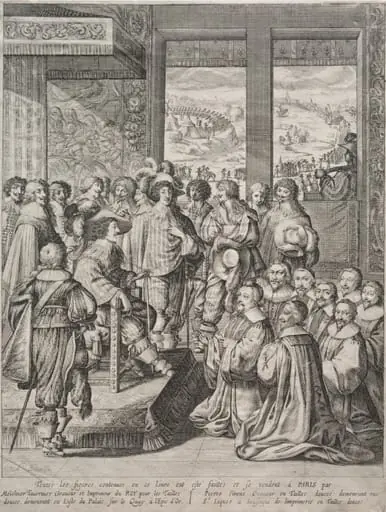 Louis XIII Receiving a Deputation of Magistrates
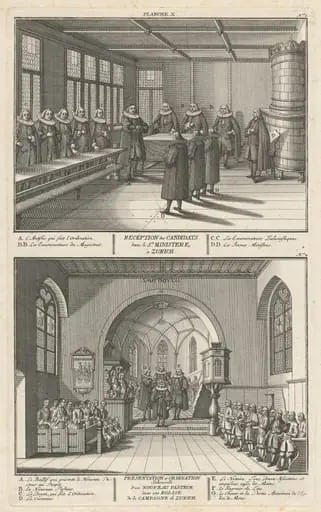 Reception des Candidats dans le St. Ministere, à Zurich; Presentation et Ordination Solemnelle d’un Nouveau Pasteur dans une Eglise de la Campagne de Zurich (Reception of the Candidates and Presentation and Ordination of a New Pastor)