Artwork
Lot and His Daughters
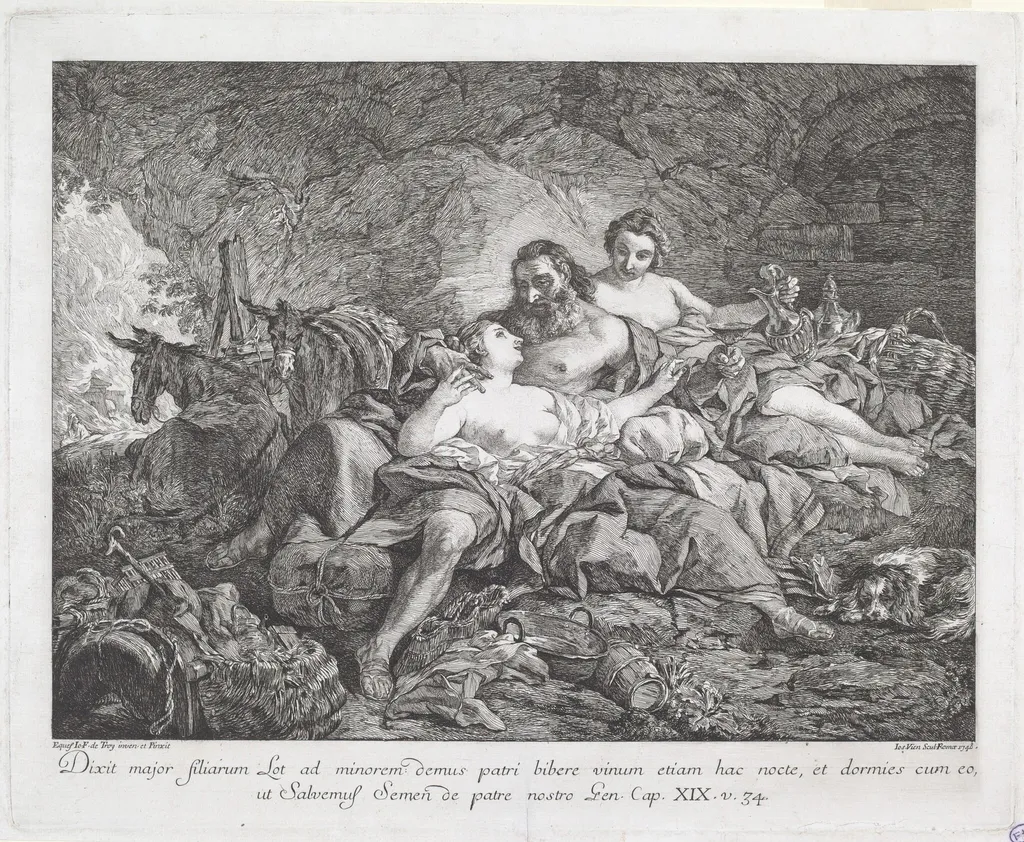
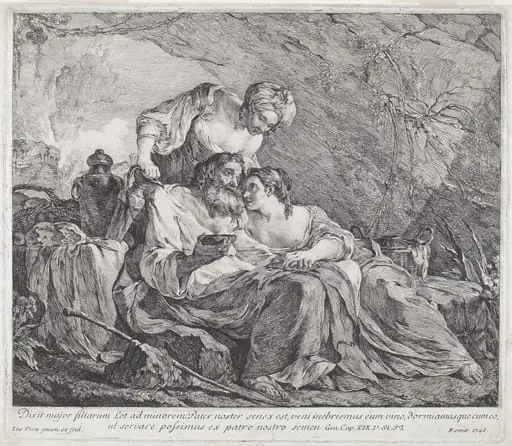
Lot and His Daughters is an ink print by the Baroque artist Joseph-Marie Vien. It dates from 1748 and is held in the collection of the National Gallery of Art.
About this work
Overview
Lot and His Daughters, created by Joseph-Marie Vien in 1748, is an etching on laid paper depicting a scene of three figures in a rugged landscape. The work exemplifies Vien's affinity for classical themes.
Subject & Meaning
The etching illustrates a moment from a narrative, likely biblical given the Latin inscription, showing a bearded man (Lot) flanked by two women (his daughters), one of whom is bare-chested, amidst a dramatic, rocky backdrop. The composition suggests themes of family and survival.
Technique & Style
Executed in etching, the piece showcases intricate, carved lines characteristic of the medium. Vien's style in this work, with its emphasis on classical subject matter and detailed rendering, would later influence the development of Neoclassical art.
History & Provenance
Produced in 1748, *Lot and His Daughters* was part of Vien's output during his rise to prominence, culminating in his appointment as Premier peintre du Roi from 1789 to 1791. The specific provenance of the etching is not detailed here.
Context
This etching reflects 18th-century artistic interests in classical and biblical narratives. Vien's engagement with such subjects contributed to the broader artistic transition towards Neoclassicism in the late 18th century.
Legacy
*Lot and His Daughters* contributes to Vien's legacy as a precursor to Neoclassical art, demonstrating how his classical themes and techniques paved the way for later artistic movements.
Artist & collection
Artist
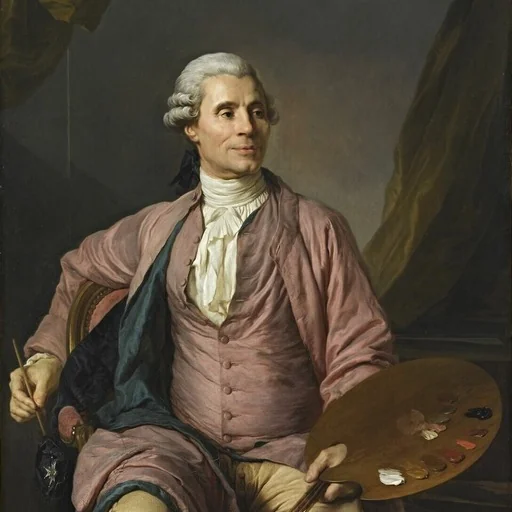
Joseph-Marie Vien (18 June 1716 – 27 March 1809) was a French painter. He was the last holder of the post of Premier peintre du Roi, serving from 1789 to 1791, before it was abolished during the French Revolution.

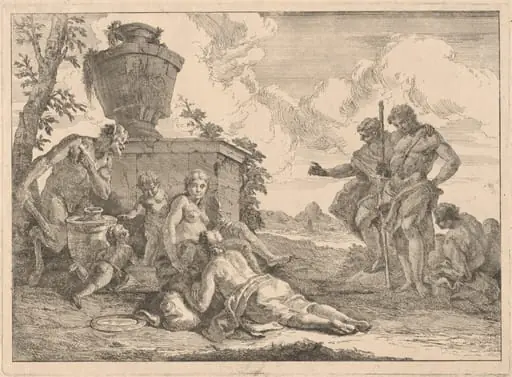 A Satyr with a Staff and Seven Other Figures
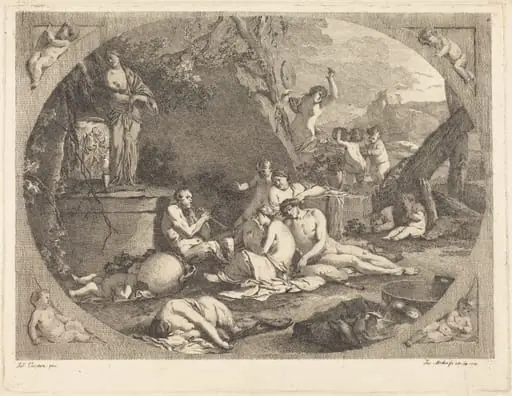 Bacchanal
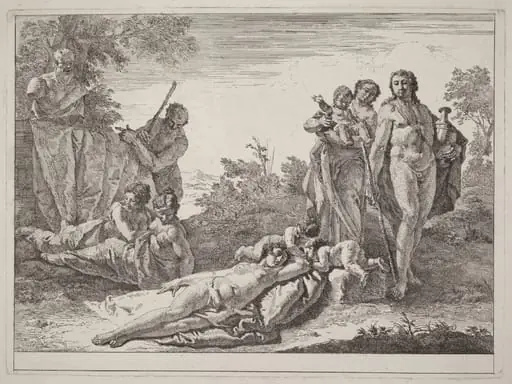 Apollo and Nymphs in a Landscape with a Bust of Pan
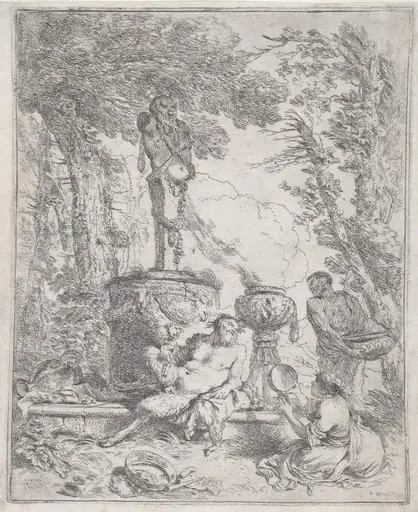 Pan Reclining before a Herm
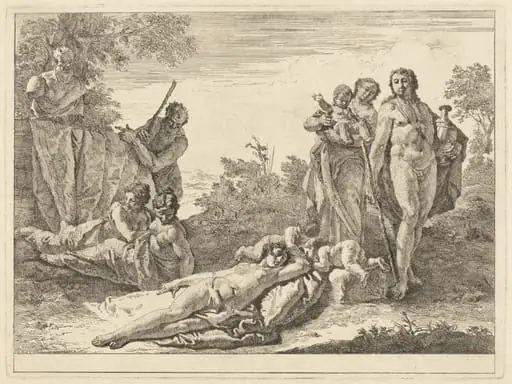 Nine Figures around a Herm of Pan
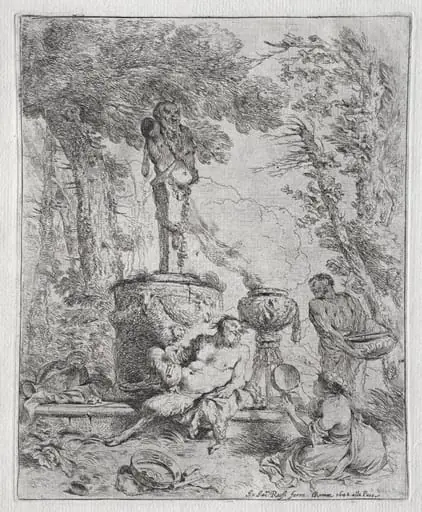 Fete of Pan
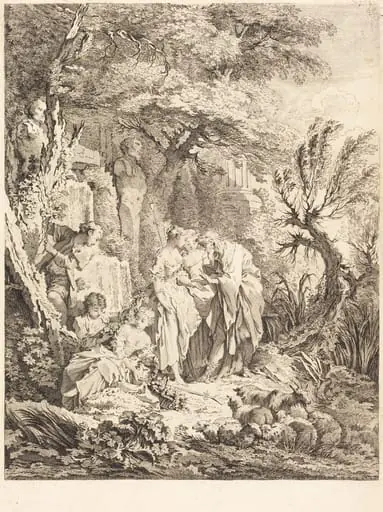 La Bonne Aventure
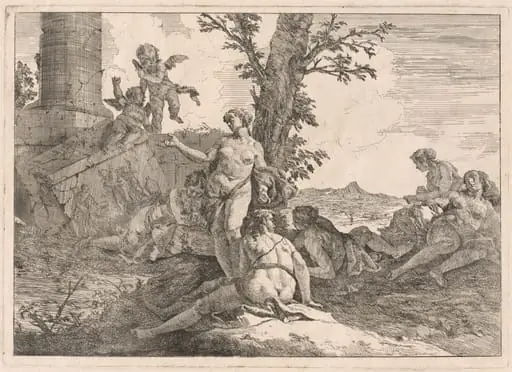 Six Nymphs and Two Cupids in a Landscape
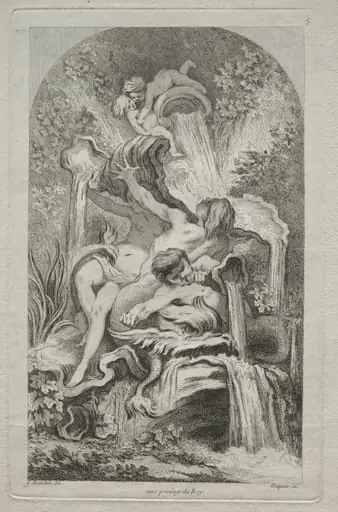 Book of Fountains: No. 5
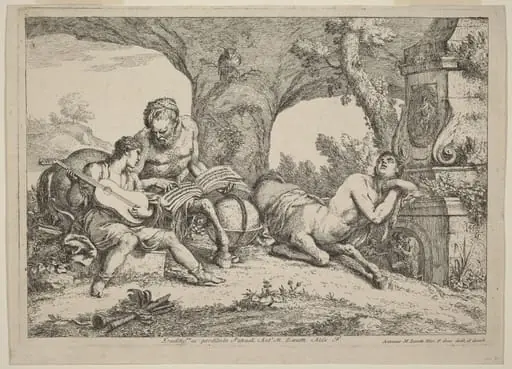 Chiron Teaching Music to Achilles
 Venus and Adonis
 Lot and His Daughters