Artwork
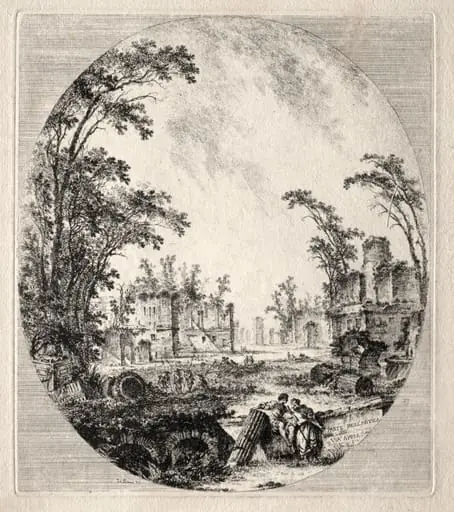
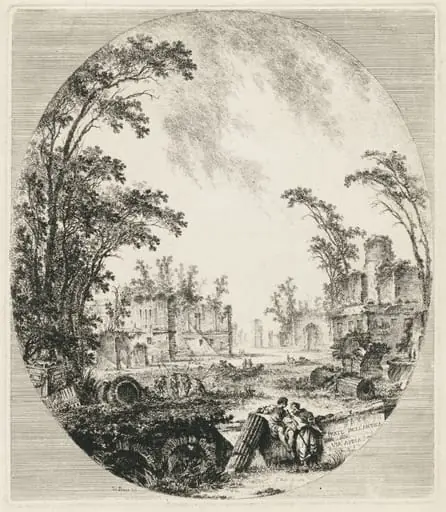
Vue de Ruines et de fragments de Construction antique...de l'ancienne Capoue
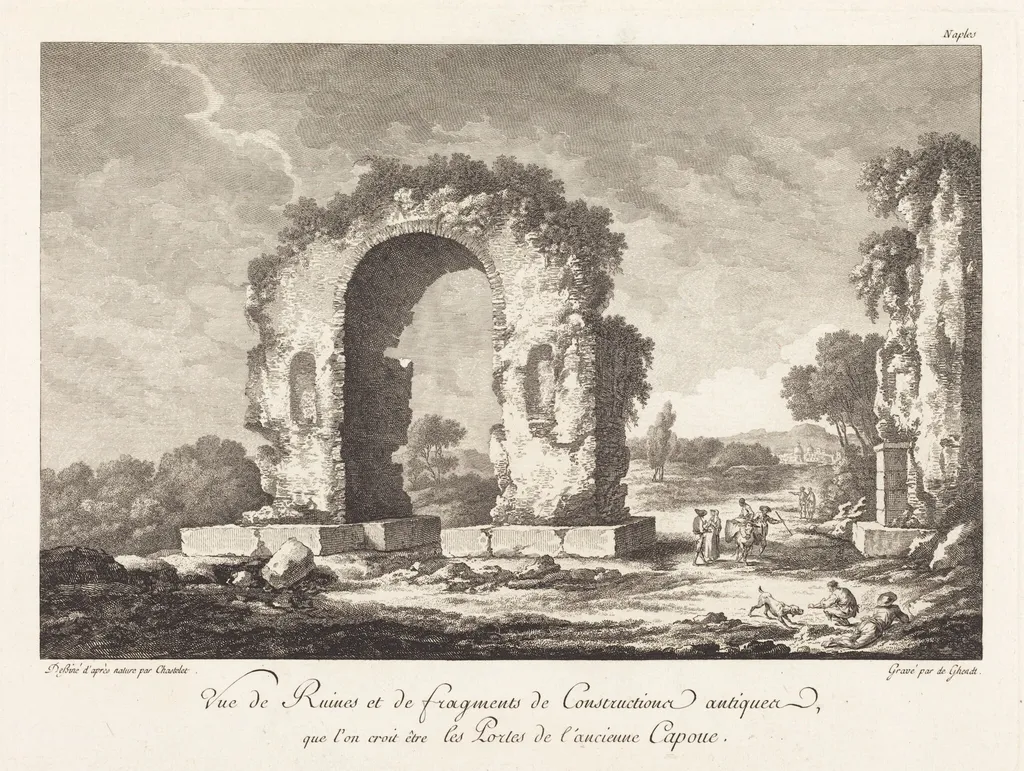
Vue de Ruines et de fragments de Construction antique...de l'ancienne Capoue is an ink print by the Baroque artist Emmanuel Jean Nepomucène de Ghendt. It dates from 1784 and is held in the collection of the National Gallery of Art.
About this work
Overview
Created in 1784, this print by Emmanuel‑Jean‑Nepomucène de Ghendt depicts the remnants of an ancient Roman city, identified as the former Capua. Executed on laid paper, the work presents a landscape of deteriorated columns and fractured arches, underscored by a solitary figure that emphasizes the scale of the ruins.
Subject & Meaning
The composition foregrounds the decay of classical architecture, suggesting themes of impermanence and the passage of time. The lone individual, rendered in muted tones, serves as a visual reference point, highlighting the contrast between human frailty and the enduring yet crumbling stone structures.
Technique & Style
Ghendet employed traditional intaglio etching, incising lines into a copper plate before applying ink and pressing the image onto paper. Complementary dry‑point work adds softer, velvety shadows where the needle directly scratches the metal, creating a subtle tonal depth that distinguishes the shaded areas from the crisp etched lines.
History & Provenance
The print entered the collection of the National Gallery of Art in Washington, where it remains part of the institution’s holdings of 18th‑century French prints. Its documentation traces back to the artist’s workshop records, confirming the 1784 date of execution.
Context
Produced during the late Enlightenment, the image reflects contemporary fascination with antiquity and the Grand Tour, when European artists frequently documented classical ruins as symbols of cultural heritage and scholarly inquiry.
Artist & collection

Artist
Emmanuel Jean Nepomucène de Ghendt
Emmanuel Jean Nepomucène de Ghendt (1738–1815) was an artist.

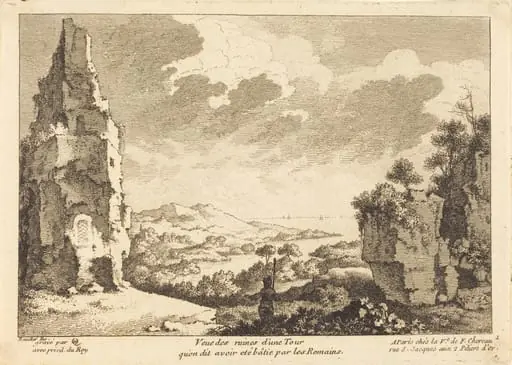 Veue des ruines d'une Tour qu'on dit avoir ete batie par les Romains
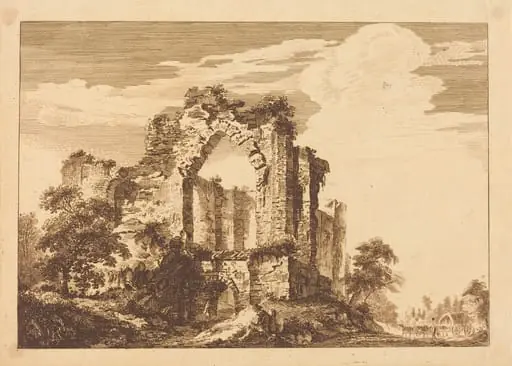 Ruins with a Seated Man, and a Covered Wagon in the Distance
 Part of the Old Appian Way
 Parte dell'antica via Appia (Section of the Old Appian Way)
 Old Woman Seated
 Views of Rome: The So-called Tempio della Tosse, near Tivoli
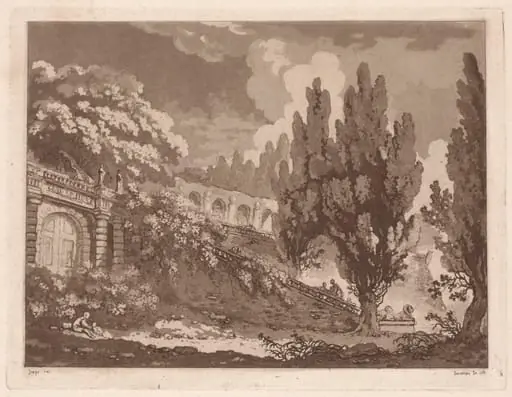 Stairs in an Italian Garden
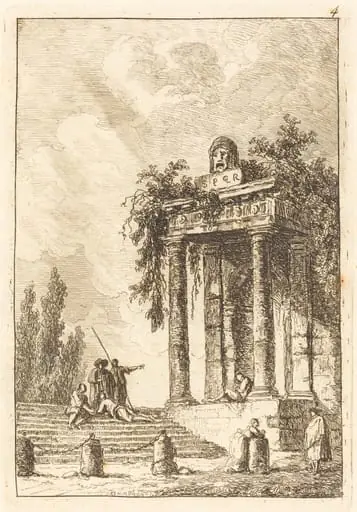 Steps to the Four Landmarks
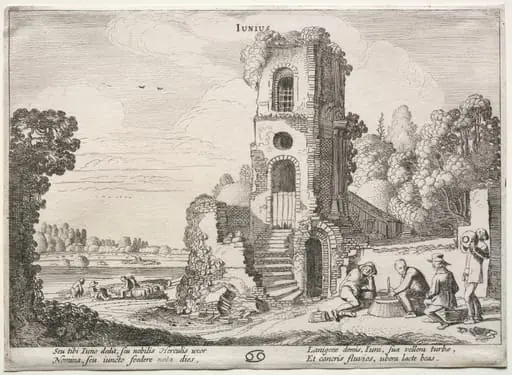 The Twelve Months: June