Artwork
Old Woman Seated
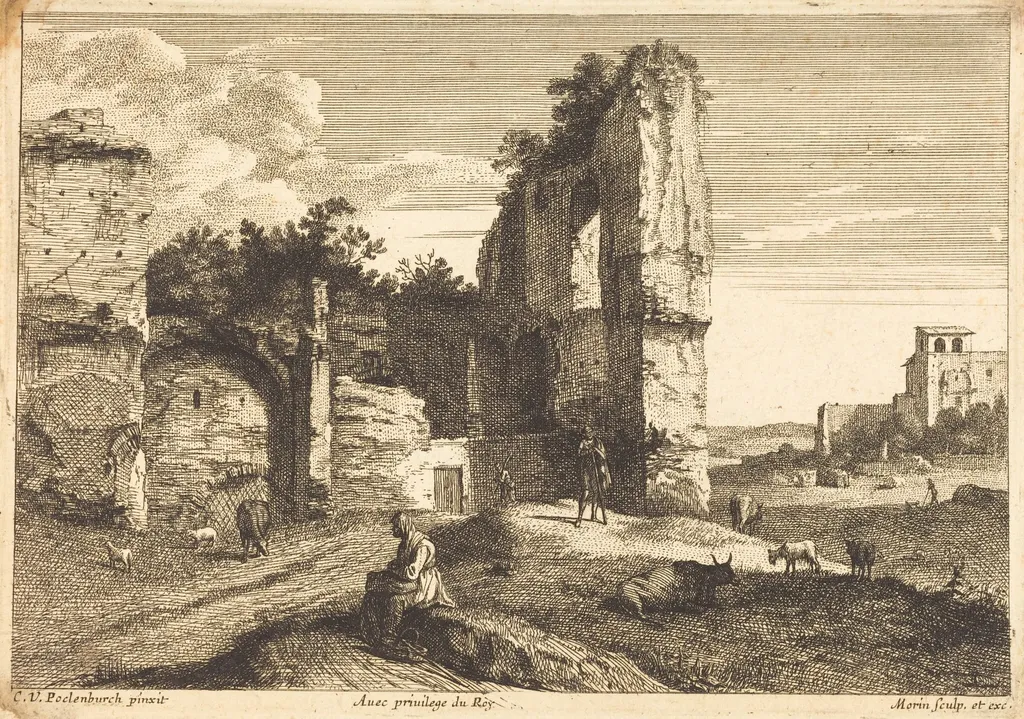
Old Woman Seated is an ink print by the Baroque artist Jean Morin. It dates from 1625 and is held in the collection of the National Gallery of Art.
About this work
Overview
Created in 1625 by the French printmaker Jean Morin, *Old Woman Seated* is a black-and-white print combining engraving and etching on a single copper plate.
Created in 1625 by the French printmaker Jean Morin, *Old Woman Seated* is a black-and-white print combining engraving and etching on a single copper plate. Morin, known for his technical innovation, blended these two methods to achieve nuanced tonal variation and detailed texture. The work belongs to a small body of prints that reflect his interest in everyday subjects rendered with quiet precision, distinguishing his approach from the grander themes common among his contemporaries.
Subject & Meaning
The image portrays an elderly woman seated amid the remnants of a classical ruin, surrounded by grazing sheep and sparse vegetation. Her simple attire and solitary posture suggest a life shaped by time and labor. The decaying architecture may imply the passage of history or the quiet endurance of the human condition. Rather than dramatizing the scene, Morin presents it with restraint, inviting contemplation over narrative.
Technique & Style
Morin employed fine, controlled lines from engraving to define form and structure, while etching allowed for softer, more fluid textures in the stone and foliage. The contrast between sharp contours and atmospheric washes creates a sense of depth and weathered materiality. The monochrome palette enhances the play of light and shadow, characteristic of Baroque printmaking, where tonal gradation replaced color to evoke mood and volume.
History & Provenance
The print was produced during Morin’s active years in Paris, when he was refining his hybrid technique. Few of his works survive in significant numbers, and *Old Woman Seated* is among the better-documented examples. Early collections in France and the Netherlands included his prints, though his reputation remained modest compared to contemporaries like Rembrandt. The work’s survival reflects its appeal to collectors interested in technical experimentation over subject matter.
Context
In early 17th-century France, printmaking was gaining status as an independent art form. Morin’s fusion of engraving and etching aligned with broader European trends toward technical innovation, though he focused on modest, non-religious scenes. His work existed alongside more theatrical Baroque imagery but offered a quieter alternative, rooted in observation rather than spectacle, reflecting a growing interest in the ordinary.
Legacy
Morin’s integration of engraving and etching influenced later printmakers who sought greater expressive range on the plate. Though not widely celebrated in his lifetime, his methods contributed to the evolution of etching as a medium capable of both precision and subtlety. *Old Woman Seated* stands as a quiet testament to his technical curiosity and his preference for understated, contemplative subjects over grand narratives.
Artist & collection
Artist
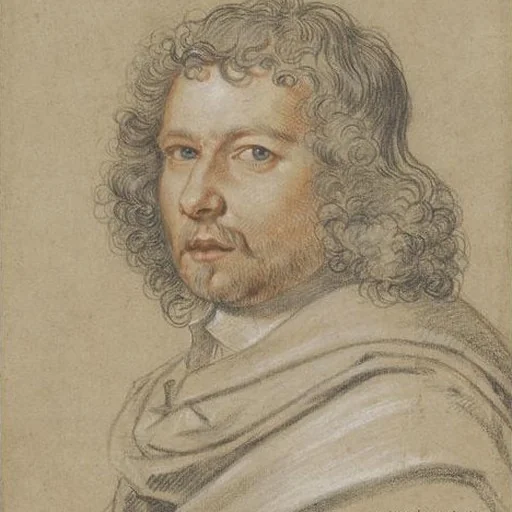
Jean Morin (c.1595 or 1605 – 1650) was a French baroque painter, printmaker, painter, etcher, engraver and publisher.

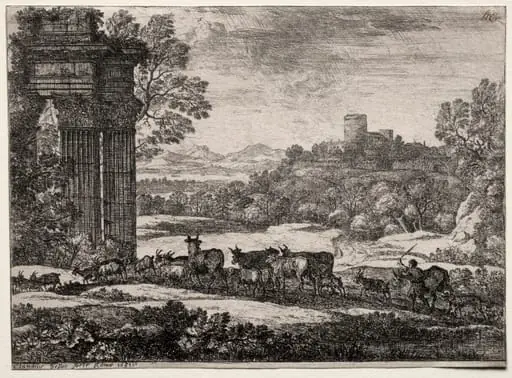 The Herd Returning in Stormy Weather
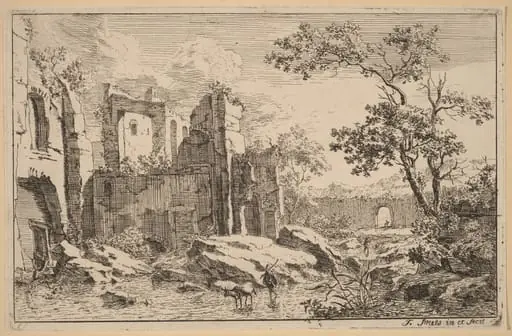 Man and Ox in a River
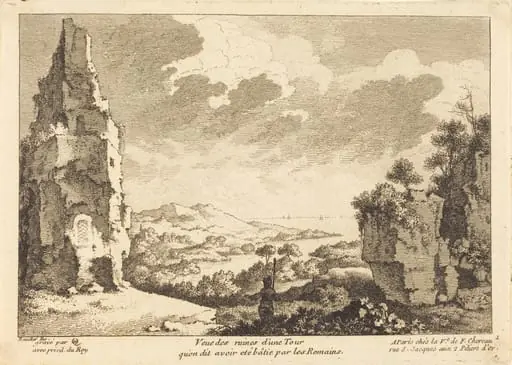 Veue des ruines d'une Tour qu'on dit avoir ete batie par les Romains
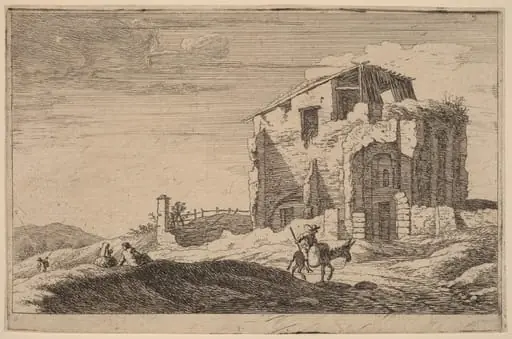 View of a Ruined Building
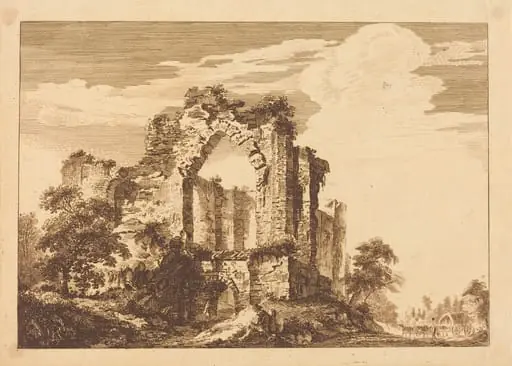 Ruins with a Seated Man, and a Covered Wagon in the Distance
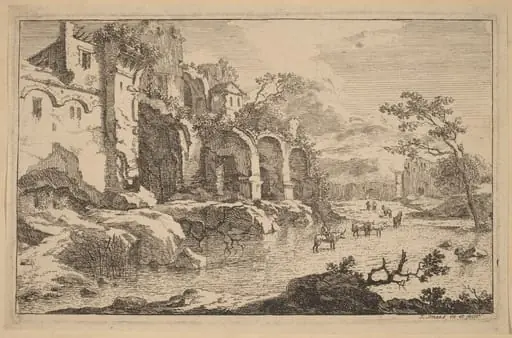 Building in Ruins at the Side of a River
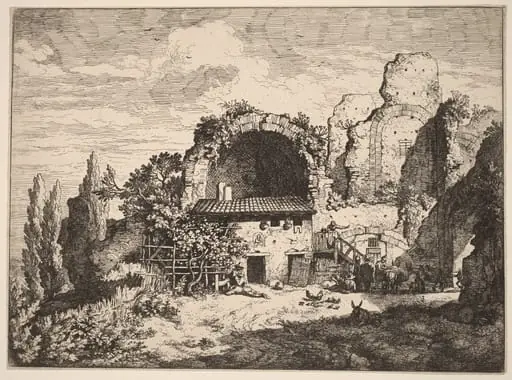 The Muleteers' Inn
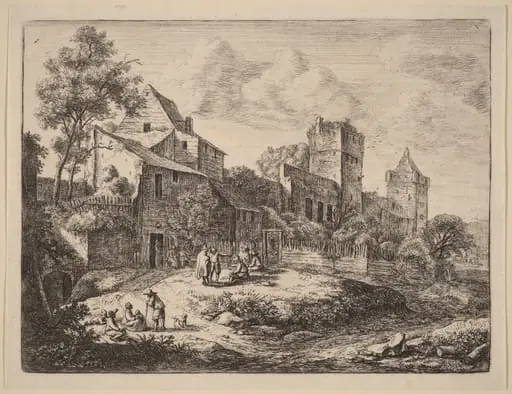 Square in Front of an Inn
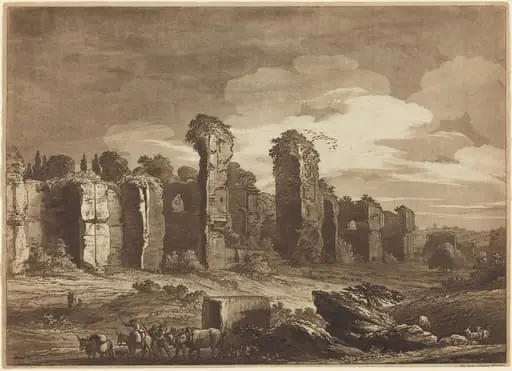 View of the Remains of Caracalla's Baths, Taken from the Jesuits Gardens at Rome
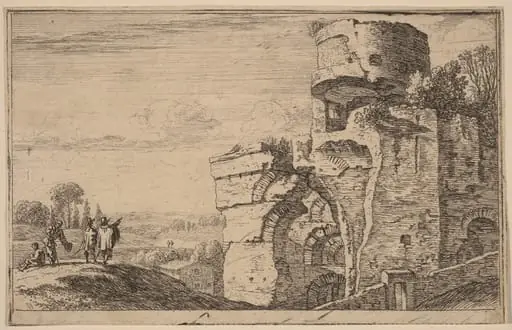 Ruins on the Palatine Hill
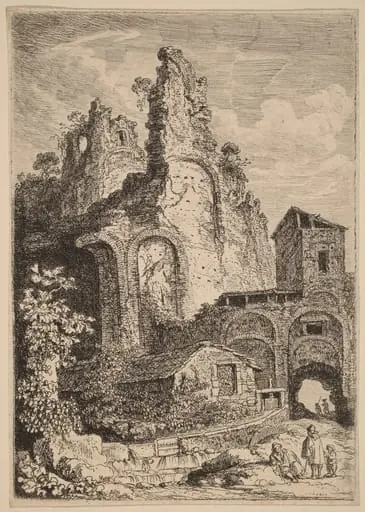 The Old Palace at Tivoli
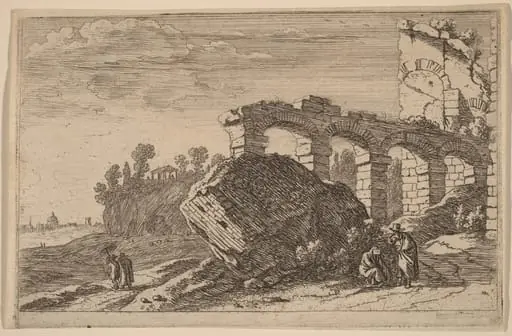 The Four Ruined Arches