Artwork
Parte dell'antica via Appia (Section of the Old Appian Way)
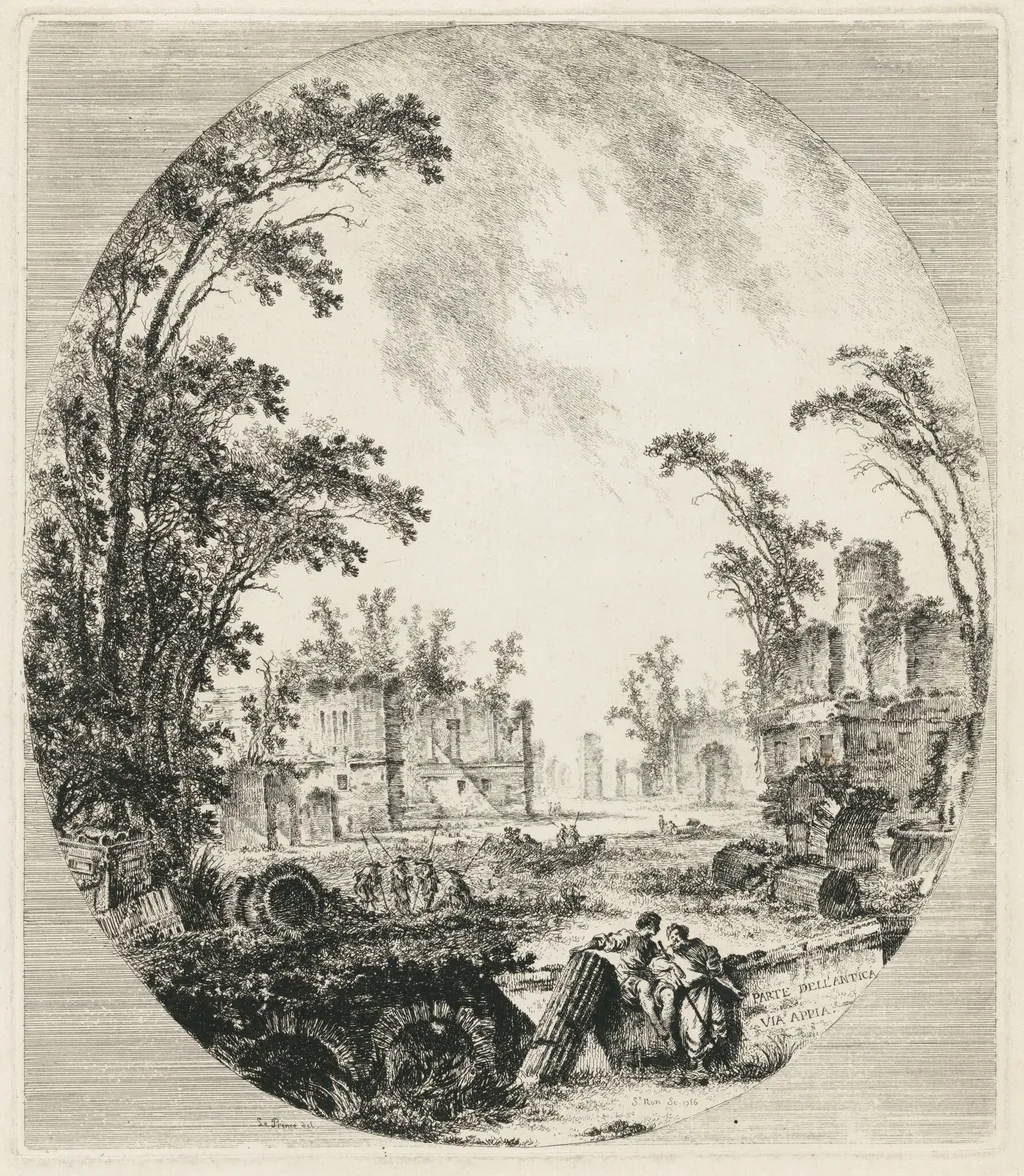
Parte dell'antica via Appia (Section of the Old Appian Way) is an ink print by the Romanticist artist Jean-Claude-Richard, Abbé de Saint-Non. It dates from 1756 and is held in the collection of the National Gallery of Art. Created in 1756 by the French abbé Jean‑Claude‑Richard Saint‑Non, this etching depicts a tranquil segment of the ancient Appian Way.
About this work
Overview
Created in 1756 by the French abbé Jean‑Claude‑Richard Saint‑Non, this etching depicts a tranquil segment of the ancient Appian Way. Executed on laid paper, the print presents a quiet landscape where a historic Roman road is framed by trees, ruins, and a modest bench occupied by two figures. The composition balances foreground intimacy with a receding vista of crumbling architecture.
Subject & Meaning
The scene captures a moment of repose along the venerable Appian Way, once a principal artery of the Roman Empire.
The scene captures a moment of repose along the venerable Appian Way, once a principal artery of the Roman Empire. By placing travelers in a shaded niche, the artist invites contemplation of the passage of time, juxtaposing human presence with the enduring, though deteriorating, remnants of antiquity. The title, rendered in Italian, underscores the work’s focus on a specific stretch of the historic route.
Technique & Style
Rendered through etching, Saint‑Non employed fine, incised lines to convey the texture of bark, stone, and foliage. The use of laid paper enhances the tonal subtlety, allowing delicate gradations that suggest depth and atmosphere. The artist’s meticulous line work emphasizes architectural detail—broken walls and columns—while maintaining a soft, almost lyrical quality in the surrounding landscape.
History & Provenance
The print originates from mid‑eighteenth‑century France, a period when antiquarian interest in Roman ruins was flourishing. Though specific ownership records are scarce, works by Saint‑Non were often circulated among collectors of topographical prints, reflecting contemporary fascination with classical heritage and travel.
Context
During the Enlightenment, European artists frequently documented ancient sites, merging scientific observation with aesthetic representation. This etching aligns with that tradition, offering a visual record of the Appian Way’s condition in the 1700s, a time when the road’s medieval decay was becoming a subject of scholarly and artistic interest.
Artist & collection

Artist
Jean-Claude-Richard, Abbé de Saint-Non
Saint-Non, Jean-Claude-Richard, Abbé de (1727–1791) was an artist.

 A Gardener and a Gentleman
 Interior of a Roman Villa
 Le concert
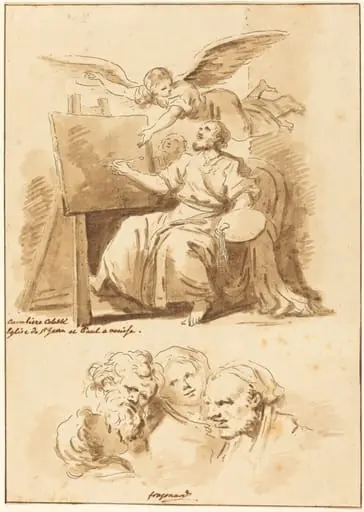 Saint Luke at His Easel and Four Expressive Heads
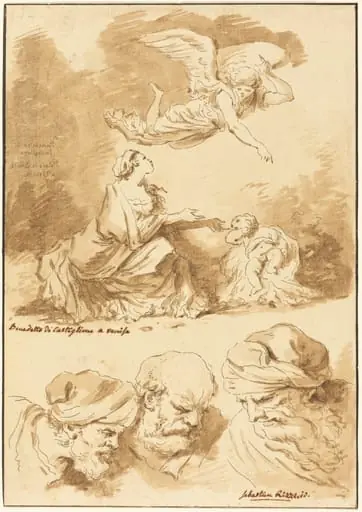 Hagar Consoled by an Angel (from a painting by Castiglione) and Three Heads of Old Men (from a painting by Ricci of Jesus and the Adultress)
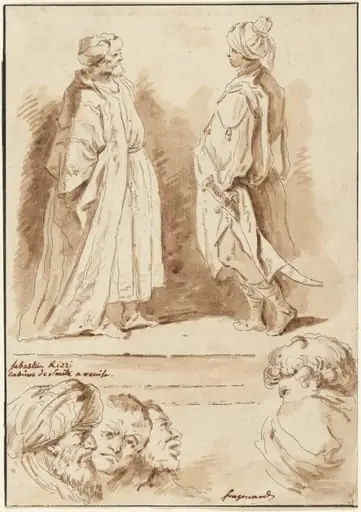 Details from "The Adoration of the Magi" and "The Pool at Bethesda"
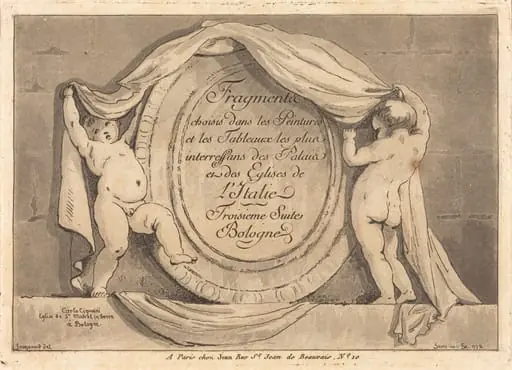 Title Page: Oval Design from the Church of San Michele de Bosco, Bologna
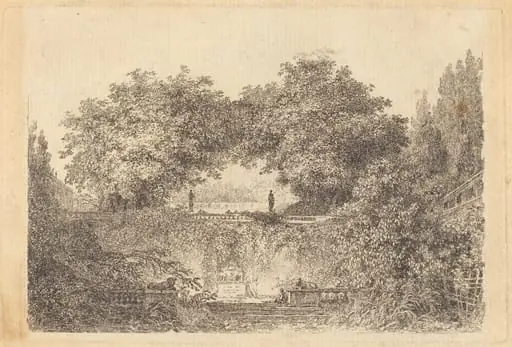 Le Petit Parc
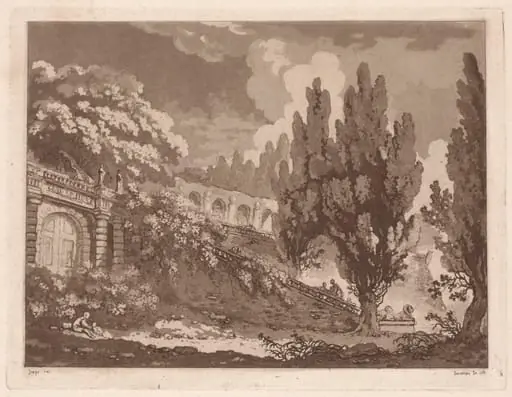 Stairs in an Italian Garden
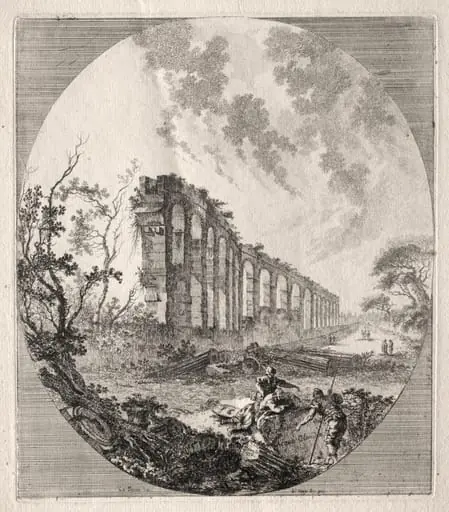 Ancient Ruins: Ancient Aqueduct
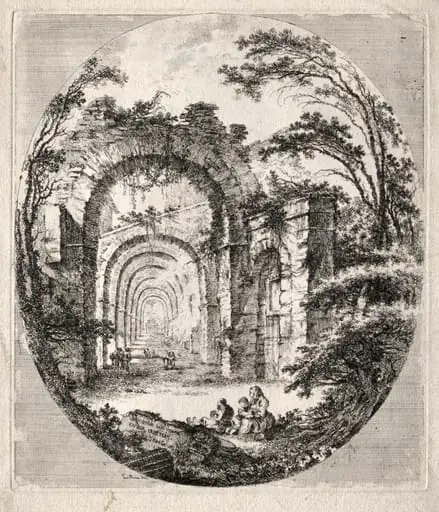 Ancient Ruins
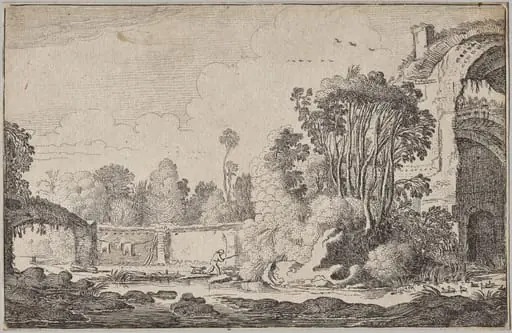 Landscapes, part III: Roman Ruins in Wooded Surroundings
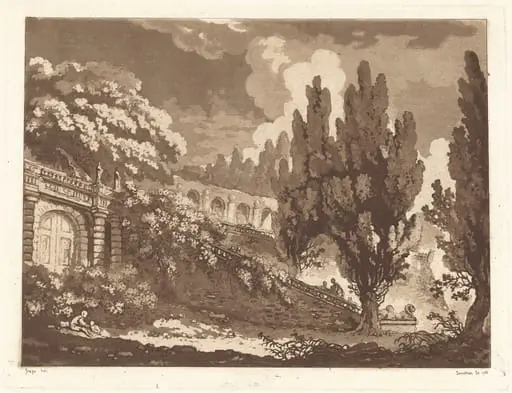 Stairway in an Italian Garden
![Landscape with Tower and Two Ruined Pillars [left], by Canaletto](https://artifactworldgallery.com/img/canaletto--landscape-with-tower-and-two-ruined-pillars-left--60d58ba162fec5aa-w320.webp) Landscape with Tower and Two Ruined Pillars [left]
Landscape with Tower and Two Ruined Pillars [left]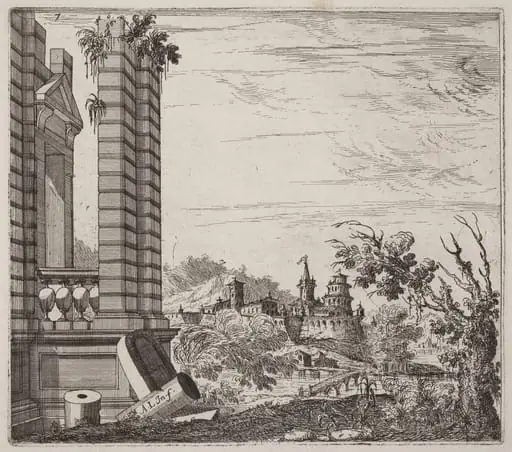 Fantastic River Landscape with Ruins and a Castle
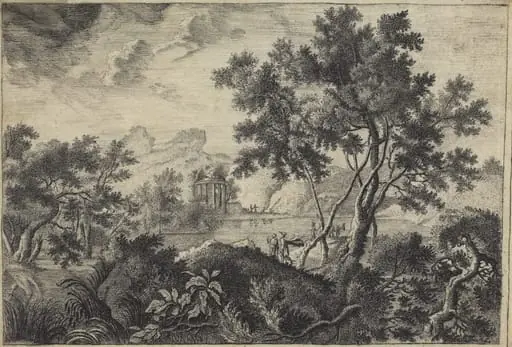 Classical Landscape with a Tempietto
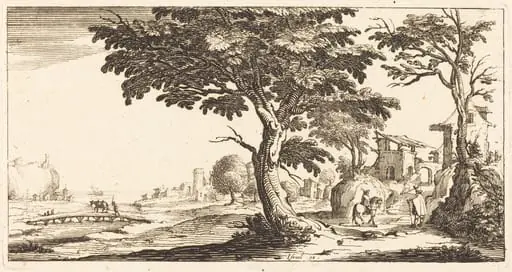 Landscape
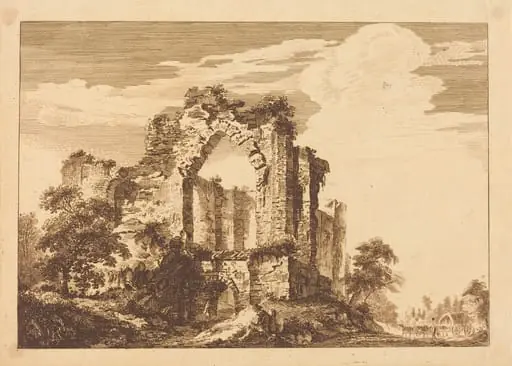 Ruins with a Seated Man, and a Covered Wagon in the Distance
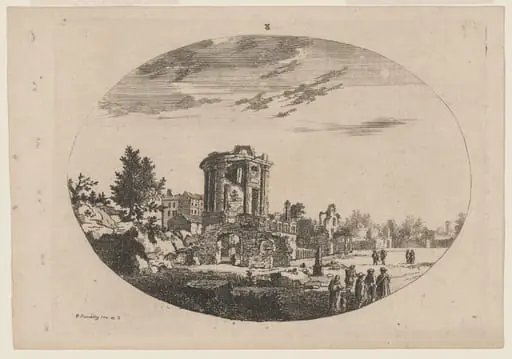 Ruined Circular Temple
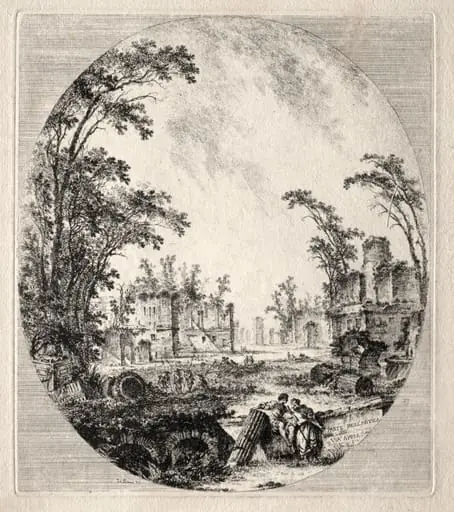 Part of the Old Appian Way