Artwork
Iisus Hristos Pantocrator
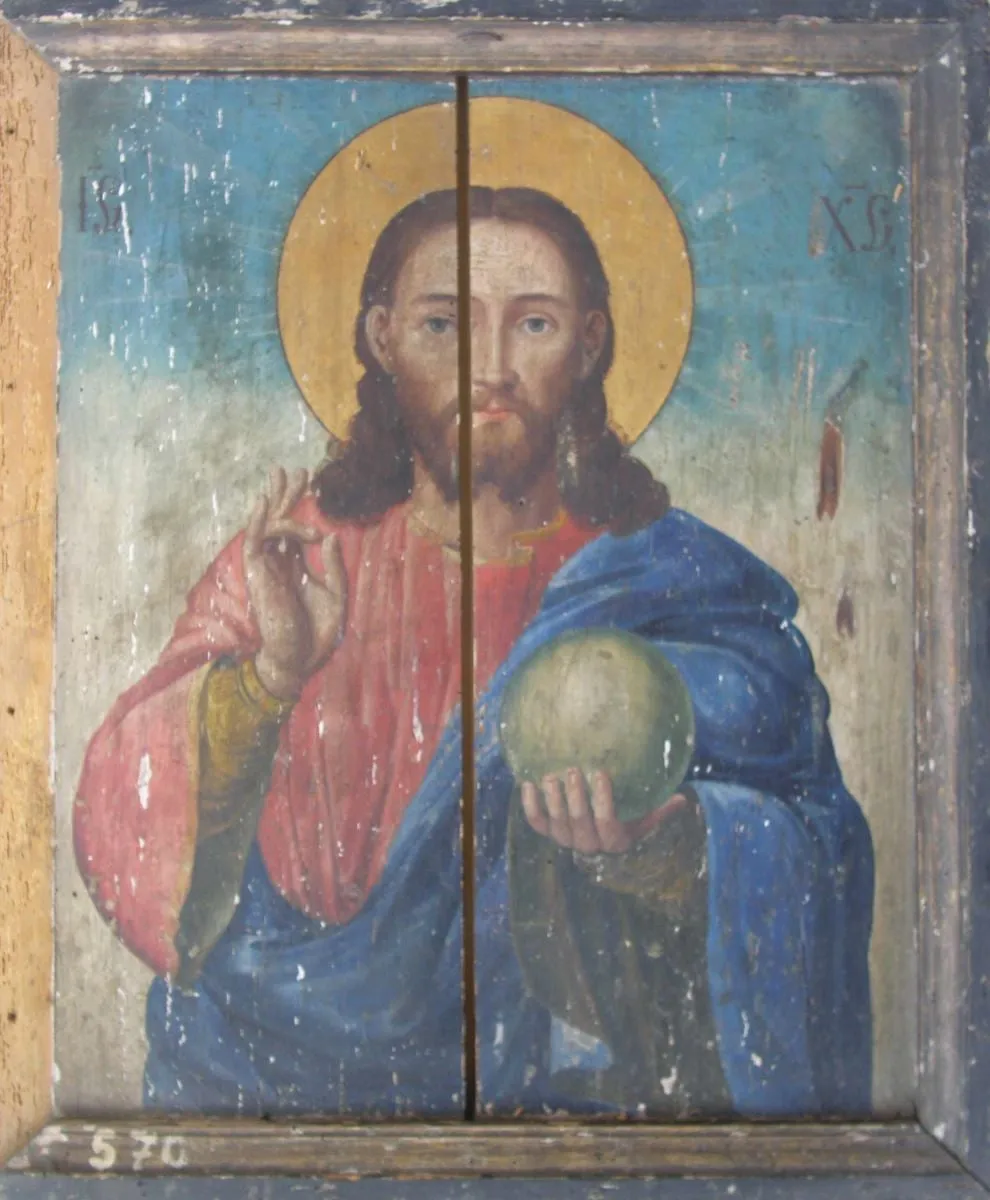
Iisus Hristos Pantocrator is an unspecified painting by the Byzantine icon painting artist Ioan Morar din Laz. It dates from 1860 and is held in the collection of the Alba Iulia Orthodox Archdiocese.
About this work
Overview
Created in 1860 by Ioan Morar din Laz, the work titled Iisus Hristos Pantocrator is part of the collection of the Museum of Ethnography. It presents a frontal figure of a bearded man with a golden halo, dressed in a red garment over a blue mantle, and set against a uniform blue background.
Subject & Meaning
The central figure represents Christ as Pantocrator, a traditional iconographic type emphasizing divine authority. The golden halo denotes sanctity, while the green orb held in his right hand symbolizes the world under his governance. The subtle hand gesture on the left side suggests a blessing or a call to contemplation.
Technique & Style
Executed in a flat, decorative manner, the painting relies on vivid primary colors—red, blue, and gold—that have since softened with age. The absence of strong modeling indicates a reliance on symbolic color rather than chiaroscuro, a common approach in 19th‑century religious imagery intended for didactic purposes.
History & Provenance
The piece was produced in the mid‑19th century by the Romanian artist Ioan Morar din Laz and later entered the holdings of the Museum of Ethnography. Its acquisition date is not recorded, but it has remained in the museum’s collection, serving as an example of regional religious art from that period.
Artist & collection
Artist
A Transylvanian church artist of the mid-1800s, Ioan Morar din Laz filled altarpieces with bold colors and flowing gold in Arhanghelul Mihail (1845) and Iisus Hristos Pantocrator (1860).
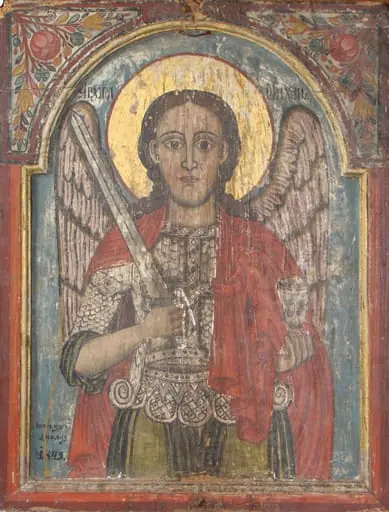
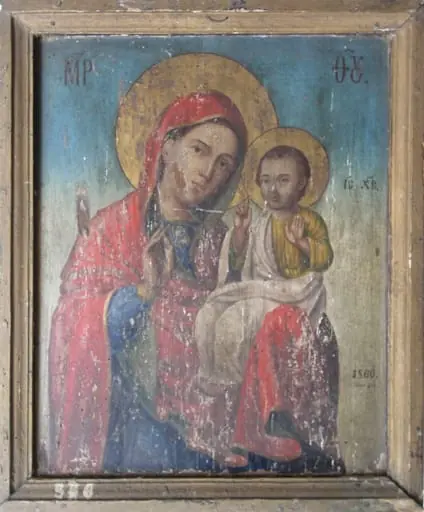
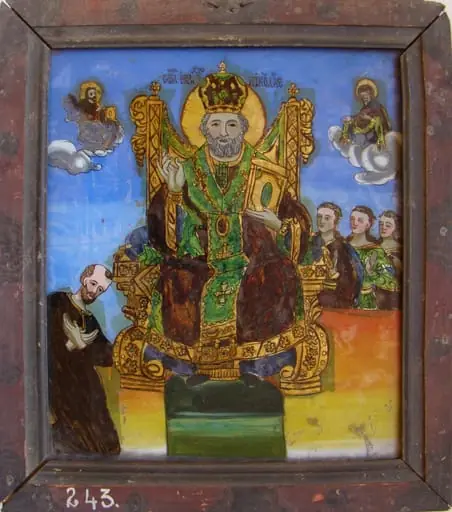
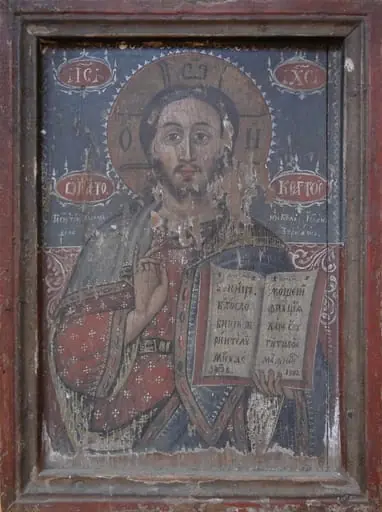 Iisus Hristos Pantocrator
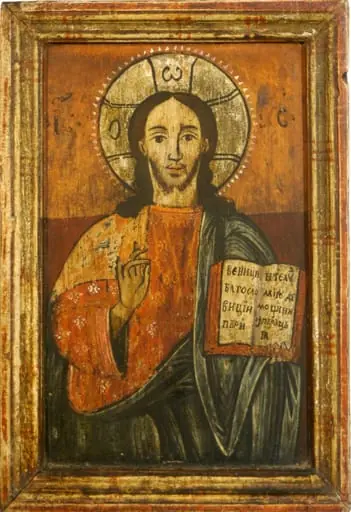 Iisus Hristos Pantocrator
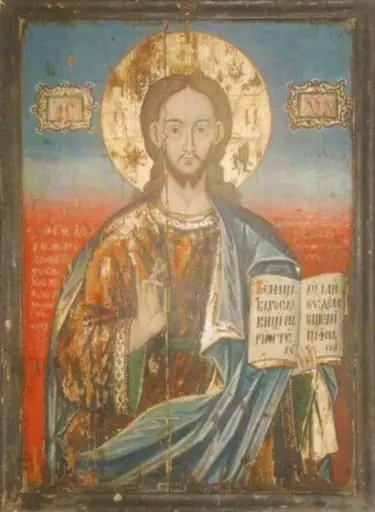 Iisus Hristos Pantocrator
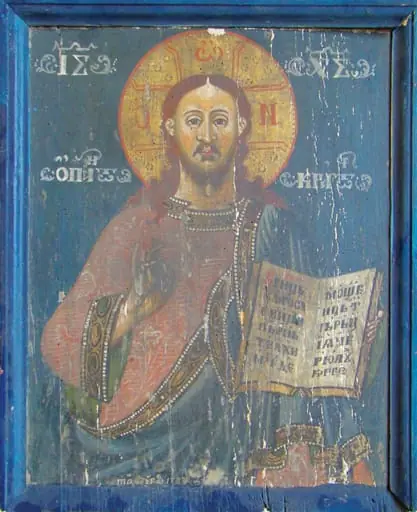 Iisus Hristos Învățător
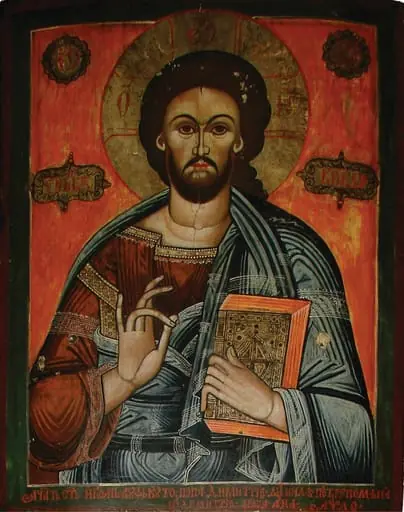 Iisus Hristos Învățător
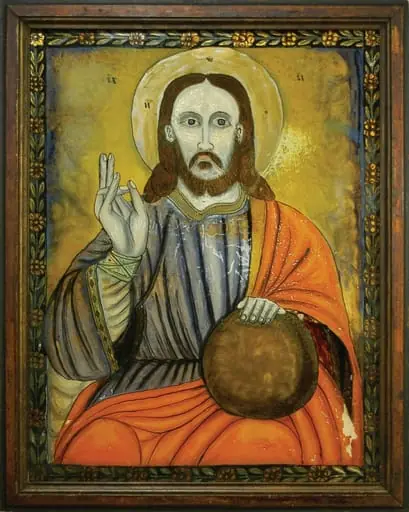 Iisus Hristos Pantocrator
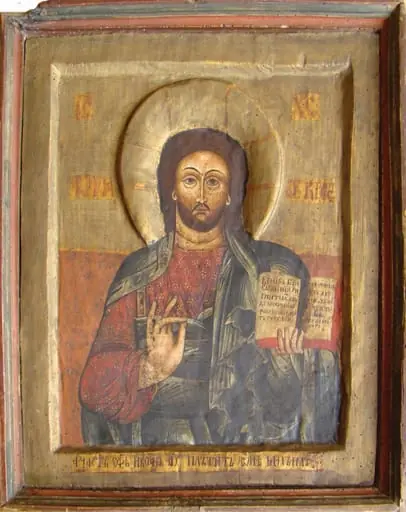 Iisus Hristos Învățător
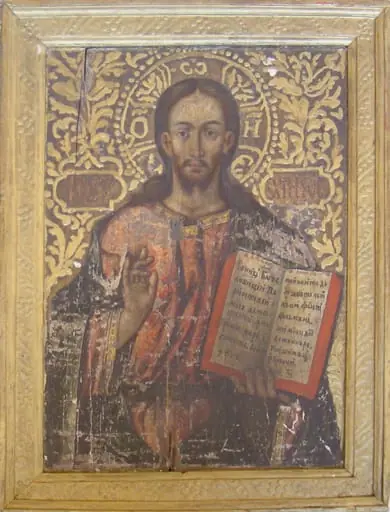 Iisus Hristos Învățător
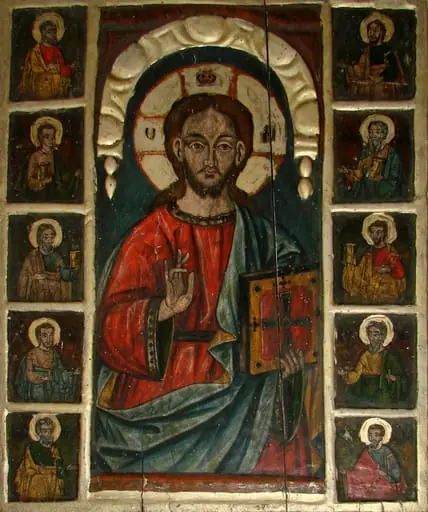 Iisus Hristor Învățător, flancat de apostoli
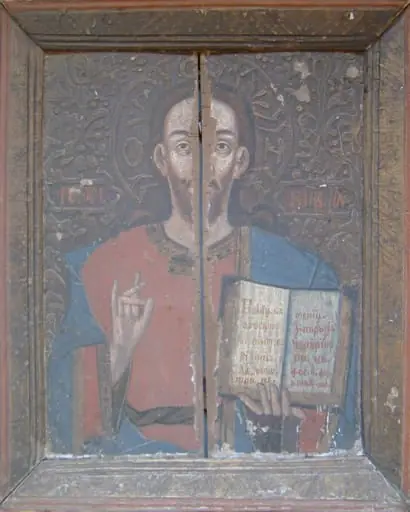 Iisus Hristos Învățător
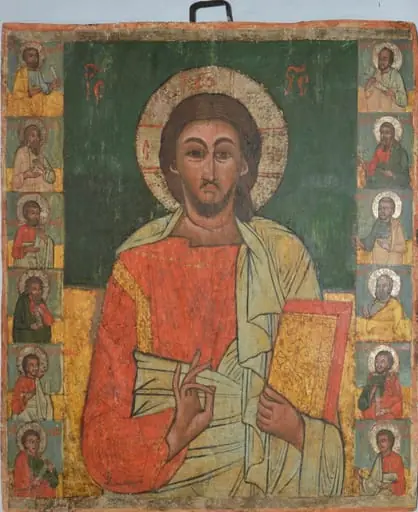 Iisus Hristos Învățător, flancat de apostoli
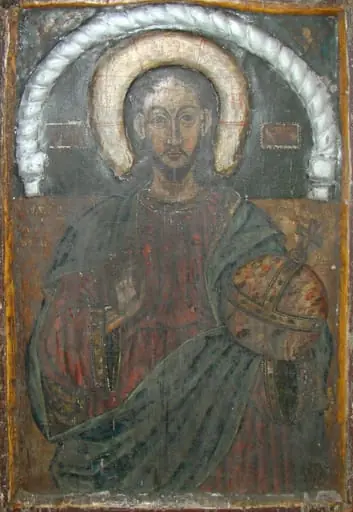 Isus Hristos Pantocrator