Artwork
Hl. Magdalena
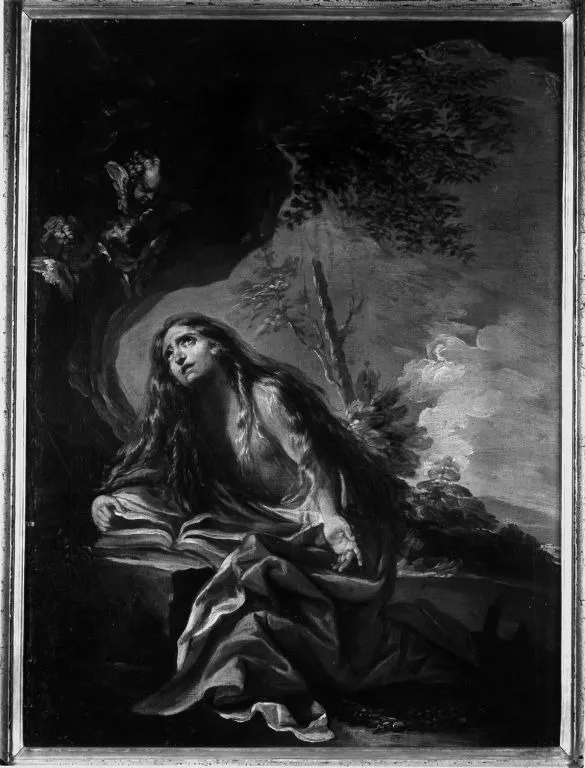
Hl. Magdalena is an unspecified painting by the Early Baroque Italian artist Giacinto Brandi. It dates from 1656 and is held in the collection of the Bavarian State Painting Collections.
About this work
Overview
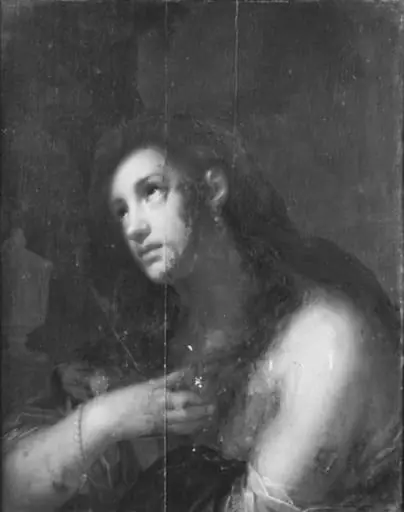
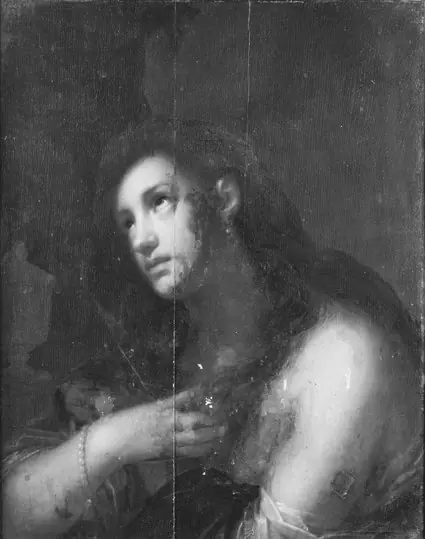
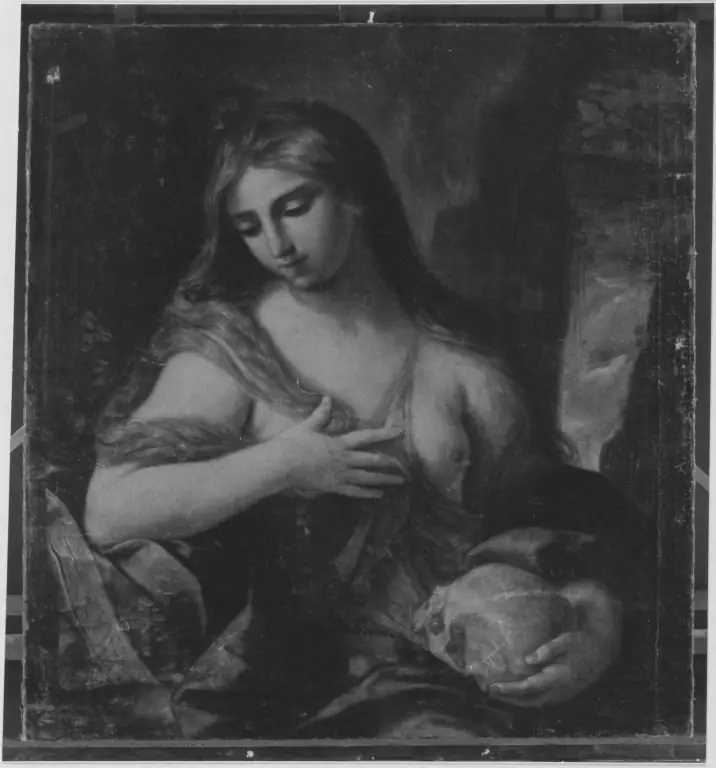
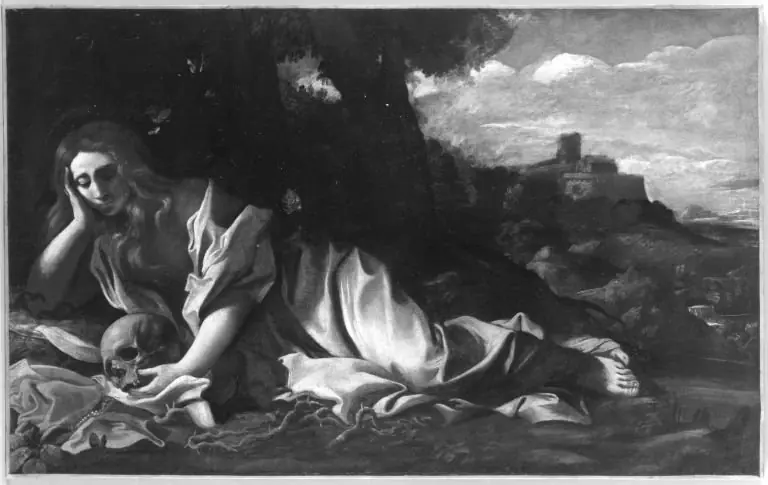
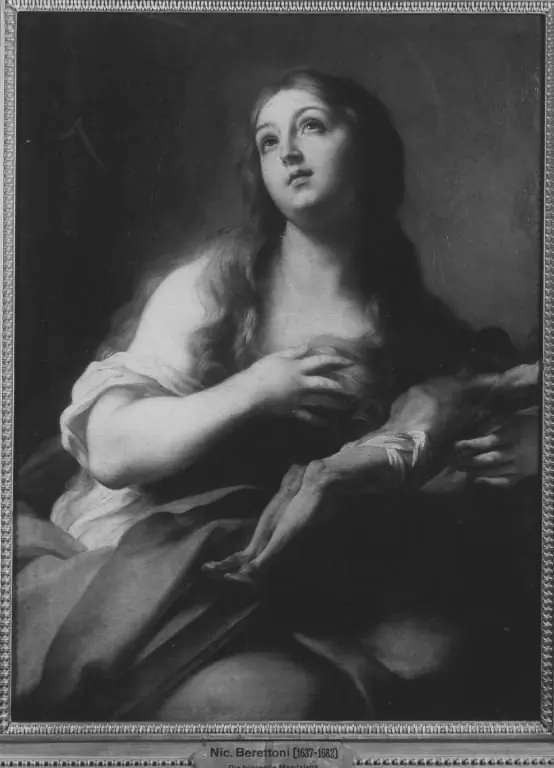
Painted in 1656 by Giacinto Brandi, this work portrays Mary Magdalene as a figure of quiet introspection. Executed in oil on canvas, it is part of the Alte Pinakothek’s collection in Munich. The composition centers on the saint seated alone, her posture and gaze suggesting inner reflection. The dark, atmospheric background isolates her form, emphasizing her spiritual solitude.
Subject & Meaning
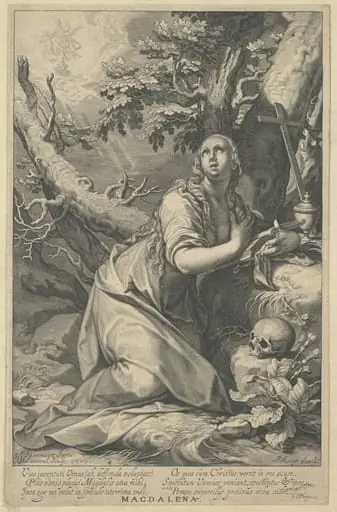
Mary Magdalene is depicted not in moments of dramatic revelation, but in stillness — a common Renaissance and Baroque interpretation of her penitent devotion. The open book implies scriptural contemplation, while her upward gaze hints at divine communion. The cherub, barely visible behind the tree, subtly signals heavenly presence without disrupting the scene’s solemnity.
Technique & Style
Brandi employs chiaroscuro to model the figure with soft, directional light, enhancing the volume of her robe and the contours of her face.
Brandi employs chiaroscuro to model the figure with soft, directional light, enhancing the volume of her robe and the contours of her face. The dark, unbroken background heightens the sense of intimacy and focus. Delicate brushwork renders her flowing hair and the translucent fabric of her garment, while the faint landscape elements recede into shadow, reinforcing the psychological depth of the scene.
History & Provenance
The painting entered the Alte Pinakothek’s holdings in the 19th century, likely through the Bavarian royal collection’s broader acquisition of Italian Baroque works. Its attribution to Brandi has been consistently supported by stylistic analysis and archival records. No significant alterations or restorations are documented, preserving its original tonal balance and composition.
Context
Created during the height of Counter-Reformation piety, the image aligns with Catholic efforts to promote contemplative saints as models of devotion. Brandi, trained in Rome, absorbed the dramatic lighting of Caravaggio and his followers, adapting it to a more restrained, intimate scale suited to private devotion. This work reflects a trend toward psychological realism in religious portraiture of the mid-17th century.
Legacy
Though not widely exhibited outside Germany, the painting remains a representative example of Italian Baroque devotional art in Northern European collections. It contributes to scholarly understanding of how Roman-trained artists like Brandi translated theatrical religious themes into quiet, personal moments, influencing regional interpretations of sacred figures beyond Italy.
Artist & collection