Artwork
The Penitent Magdalene
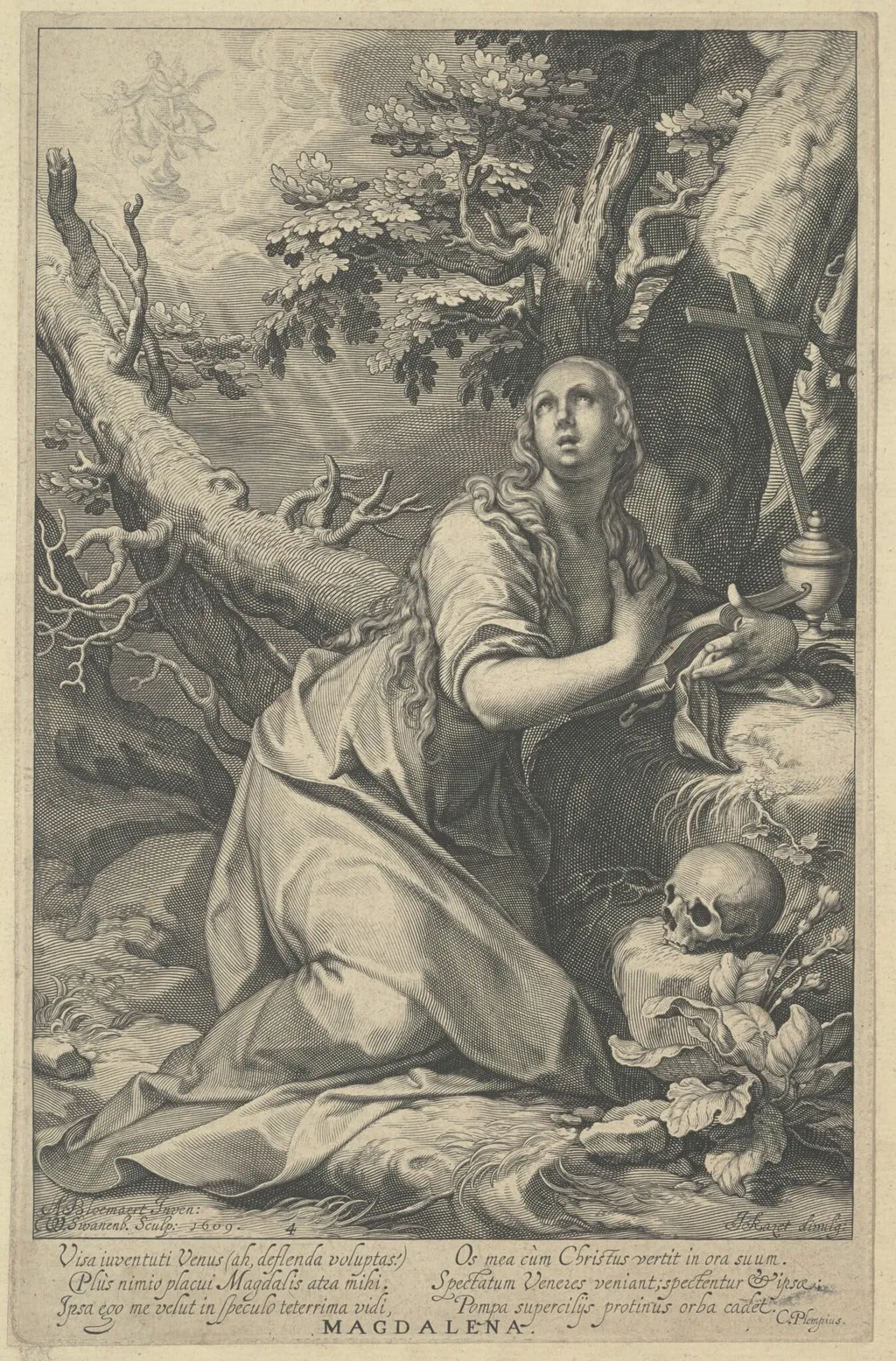
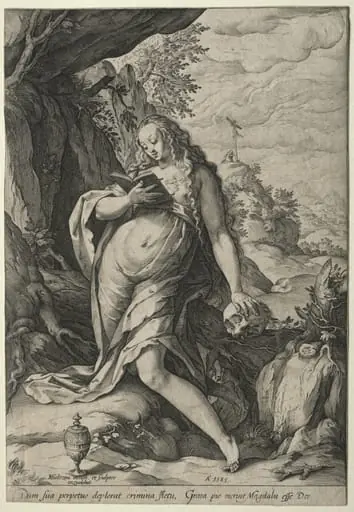
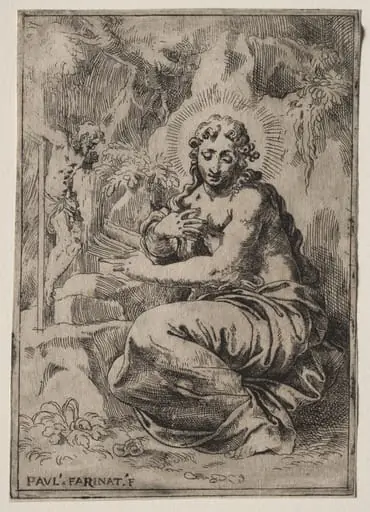
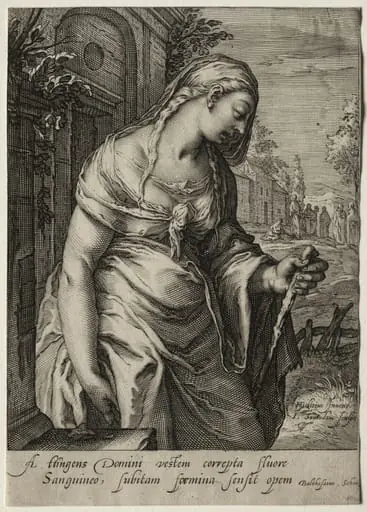
The Penitent Magdalene is an ink print by the Baroque artist Willem van Swanenburgh. It dates from 1609 and is held in the collection of the National Gallery of Art.
About this work
Overview
Willem van Swanenburgh’s engraving titled *The Penitent Magdalene* dates to 1609 and is part of the collection of the National Gallery of Art in Washington, D.C. Executed on laid paper, the work exemplifies the early‑17th‑century Dutch print tradition, combining precise line work with symbolic narrative.
Subject & Meaning
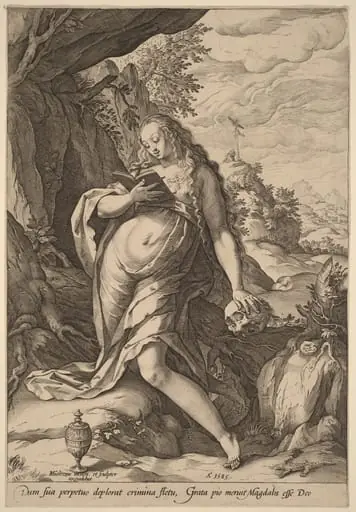
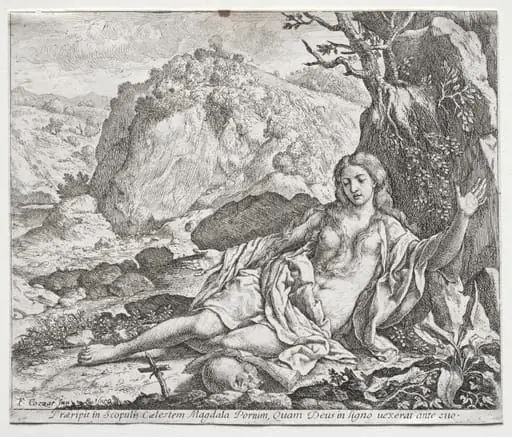
The image presents a solitary woman, her long hair coiled around her head, seated on the ground. She cradles a skull in one hand and a small jar in the other, conventional emblems of mortality and penitence. The inclusion of Latin inscription reinforces a contemplative, moralizing tone, inviting viewers to reflect on the transience of earthly life.
Technique & Style
Van Swanenburgh employs fine, sharply cut lines to render textures—hair, flesh, bark, and crashing waves—with a high degree of contrast. The engraving’s use of laid paper, with its visible ribbing, adds subtle tonal variation, while the intricate hatching creates depth and shadow across the figure and surrounding foliage.
History & Provenance
Created in the early 1600s, the print entered the National Gallery of Art’s holdings through acquisition in the 20th century, though earlier ownership records remain sparse. Its survival in good condition attests to the durability of the copper plate and careful handling over four centuries.
Context
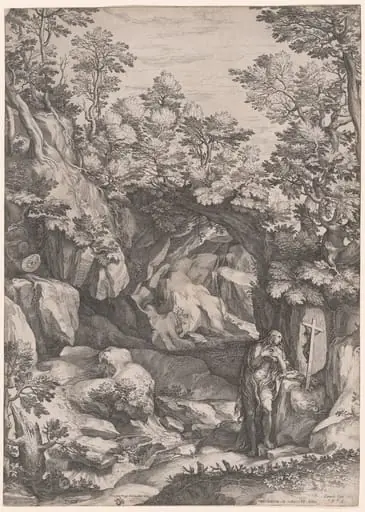
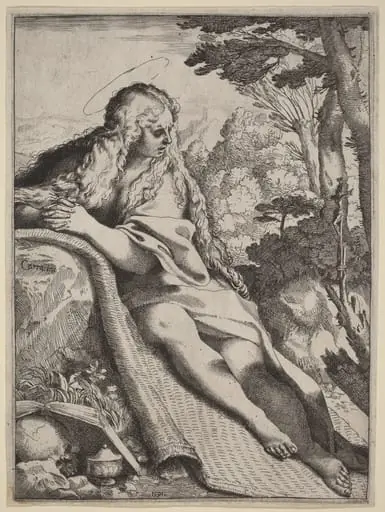
The composition aligns with contemporary devotional prints that depicted Mary Magdalene in a state of repentance, a popular motif in post‑Reformation Northern Europe. The juxtaposition of natural elements—flowers, vines, and sea—reflects the period’s interest in integrating symbolic flora and landscape to amplify spiritual messages.
Artist & collection