Artwork
Vertical Decorative Floral Band
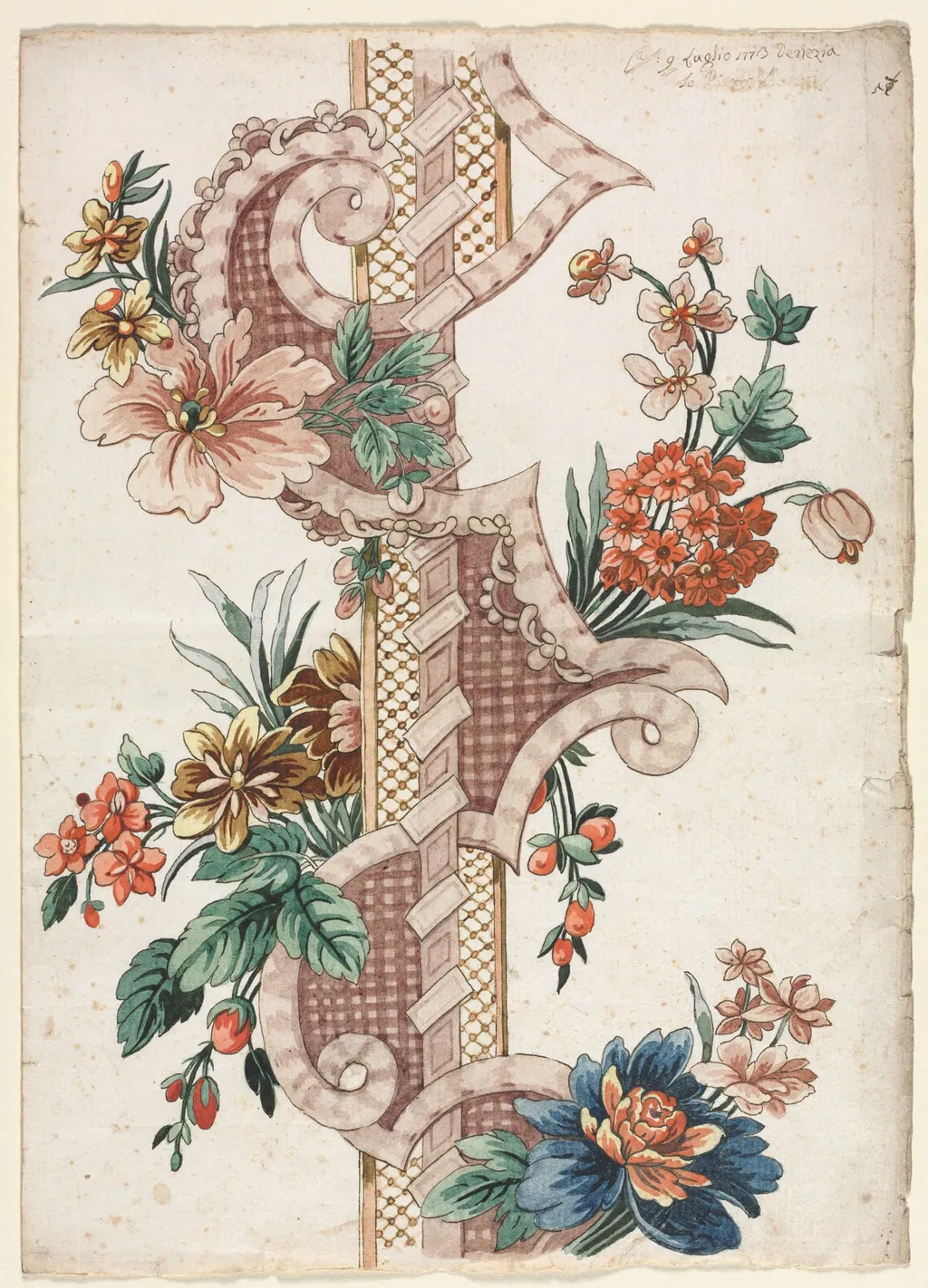
Vertical Decorative Floral Band is a drawing by the Romanticist artist Giacomo Cavenezia. It dates from 1773 and is held in the collection of the Cleveland Museum of Art.
About this work
Overview
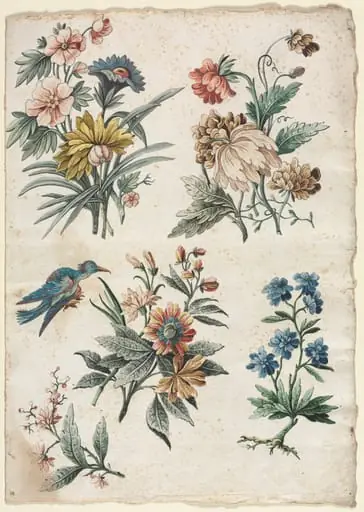
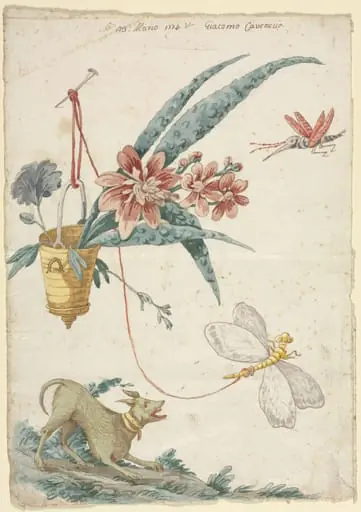
Created in 1773 by Giacomo Cavenezia, this drawing is a vertical composition dominated by an ornamental arrangement of flora. Executed in fine detail, it functions as a decorative study rather than a narrative piece. The work is part of the collection at The Cleveland Museum of Art, where it is preserved as an example of 18th-century ornamental draftsmanship.
Subject & Meaning
The subject consists of an elongated band of stylized flowers and foliage, arranged in a rhythmic, repeating pattern. There is no symbolic or religious narrative; instead, the focus lies in the aesthetic arrangement of natural forms. The composition reflects an interest in botanical accuracy and decorative harmony, typical of ornamental design in the late Enlightenment period.
Technique & Style
The effect is one of gentle depth, enhancing the lifelike quality of the botanical elements without overt chiaroscuro.
The drawing employs precise linework and subtle tonal gradations to render petals and leaves with delicate realism. While the description mentions sfumato, a technique associated with oil painting, this work likely achieves its soft transitions through layered pencil or ink washes. The effect is one of gentle depth, enhancing the lifelike quality of the botanical elements without overt chiaroscuro.
History & Provenance
The drawing entered the collection of The Cleveland Museum of Art through documented acquisition, though its earlier ownership history remains unrecorded in public sources. Its survival since 1773 suggests it was valued as a study or pattern reference, possibly used in textile or architectural design. No significant alterations or restorations are noted in museum records.
Context
In the late 18th century, detailed botanical drawings were widely used in decorative arts, from wallpaper to ceramics. Cavenezia’s work aligns with a European tradition of naturalistic ornamentation, influenced by Enlightenment-era scientific illustration. Such pieces often served as templates for artisans, bridging the gap between natural observation and applied design.
Legacy
Though not widely exhibited, the drawing contributes to the understanding of decorative arts practices in pre-industrial Europe. It exemplifies how artists engaged with nature not for portraiture or symbolism, but as a source of formal structure. Its preservation underscores the historical value placed on craftsmanship in ornamental design.
Artist & collection

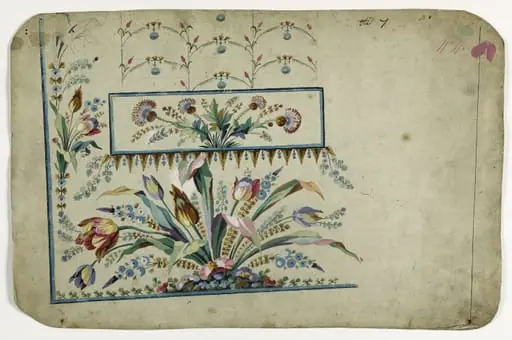 Gilet décor bouquet de tulipes, projets de broderies de gilet, XVIIIème siècle
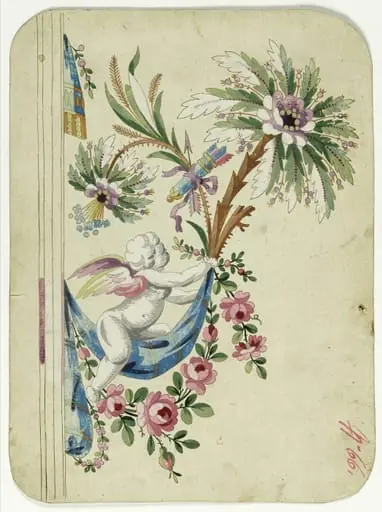 Décor de putti sur palmier, projets de broderies de gilet, XVIIIème siècle
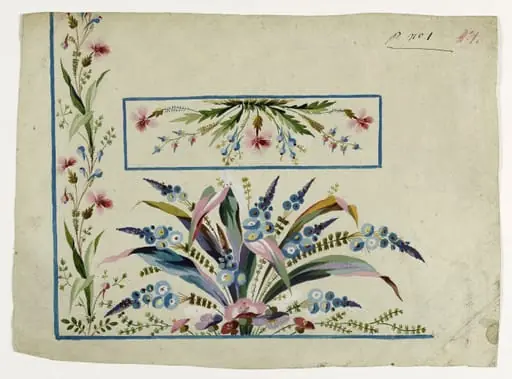 Gilet décor bouquet de bleuets et d'oeillets, projets de broderies de gilet, XVIIIème siècle
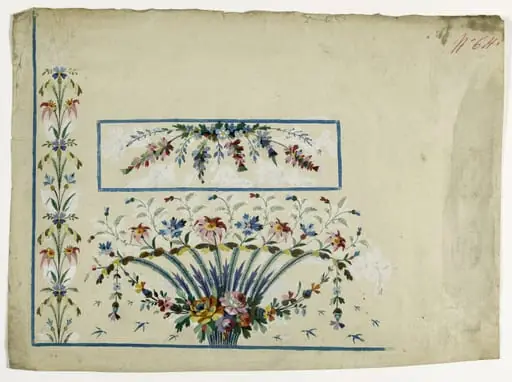 Gilet décor bouquet oeillets et églantines, projets de broderies de gilet, XVIIIème siècle
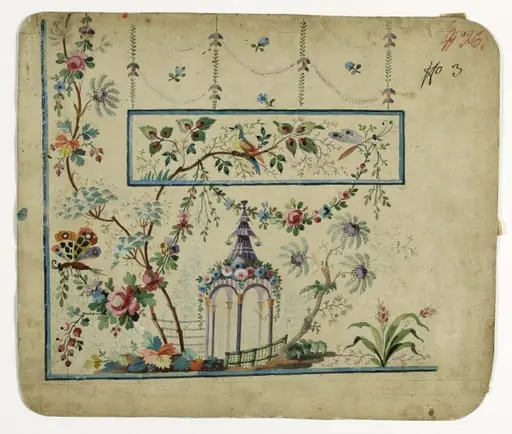 Gilet décor pagode, projets de broderies de gilet, XVIIIème siècle
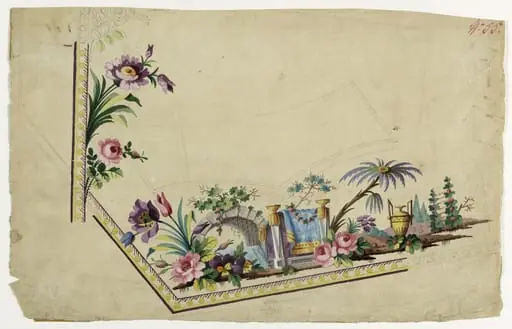 Paysage à pont en pierre, projets de broderies de gilet, XVIIIème siècle
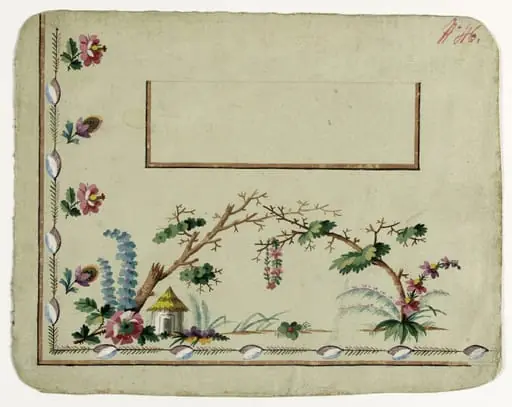 Gilet décor petite chaumière, projets de broderies de gilet, XVIIIème siècle
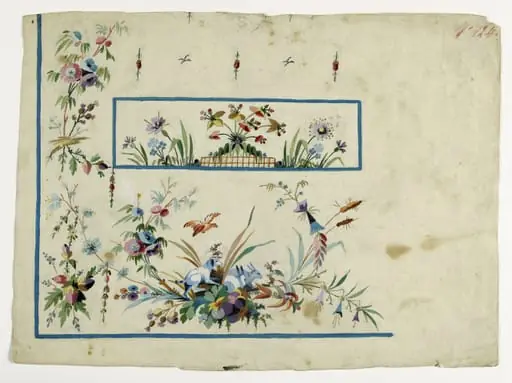 Gilet décor fleurs et fruits avec chien et lapins, projets de broderies de gilet, XVIIIème siècle
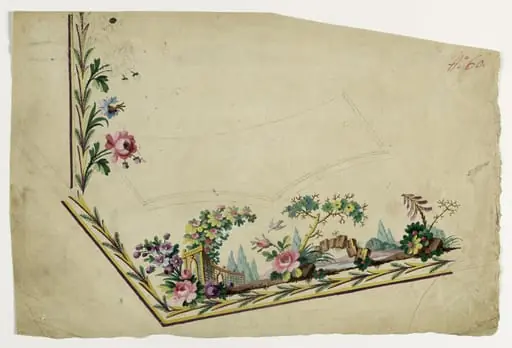 Gilet motif paysage aux rochers, projets de broderies de gilet, XVIIIème siècle