Artwork
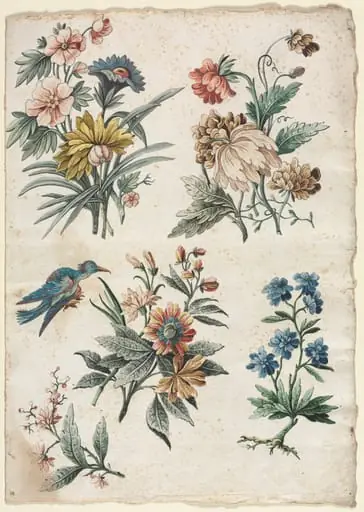
Floral Designs with Two Birds
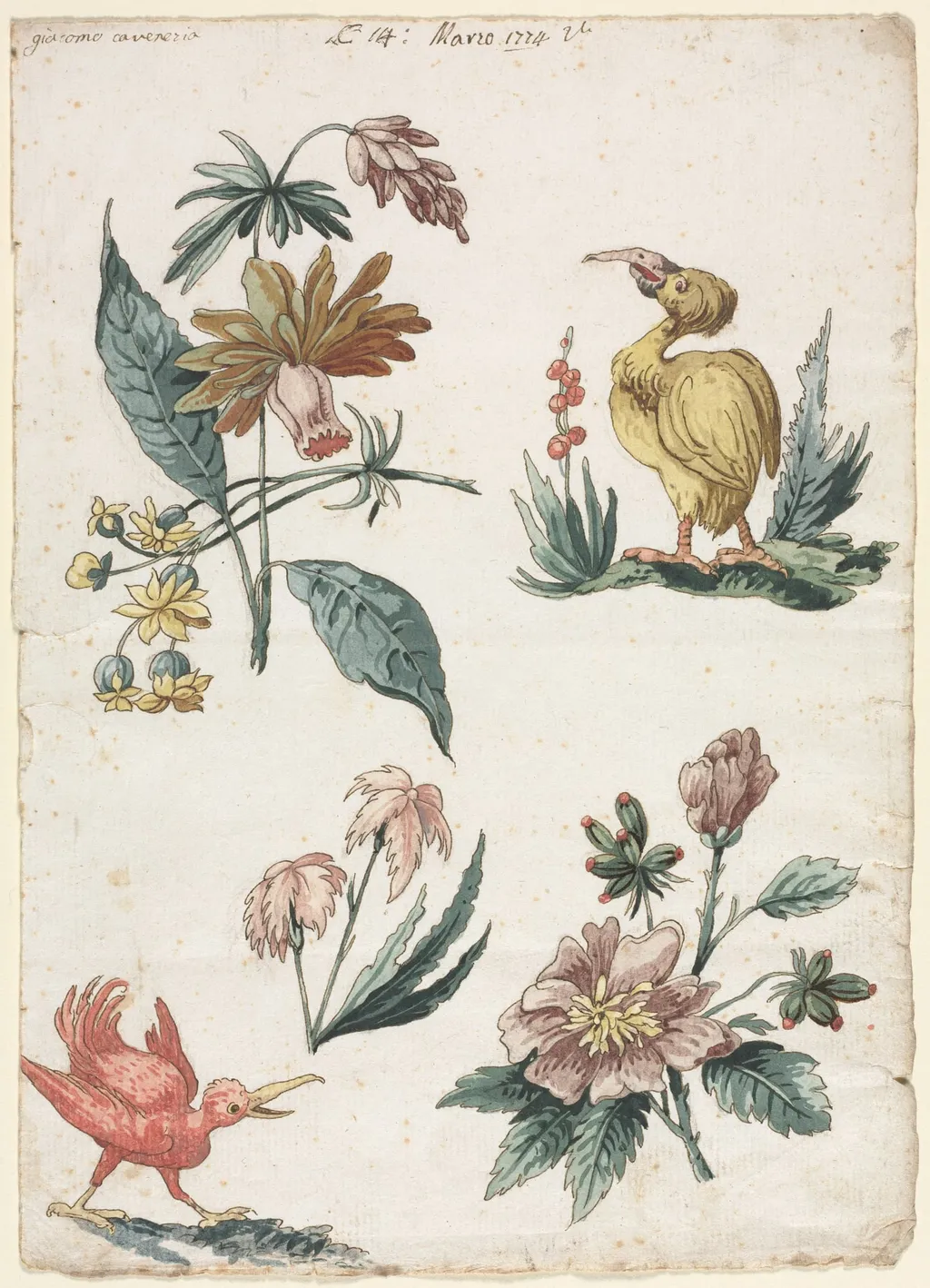
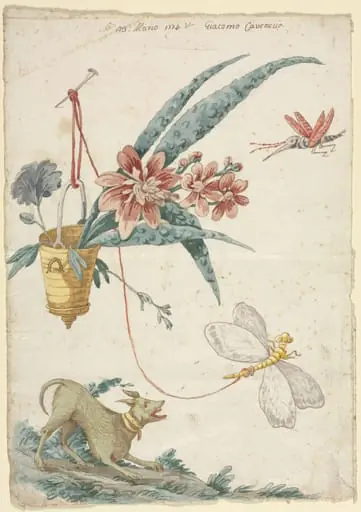
Floral Designs with Two Birds is a drawing by the Romanticist artist Giacomo Cavenezia. It dates from 1774 and is held in the collection of the Cleveland Museum of Art.
About this work
Overview
Its scale and medium suggest it was intended as a study or private observation rather than a public display.
Created in 1774 by Giacomo Cavenezia, this drawing belongs to The Cleveland Museum of Art’s collection. It presents a quiet composition of wildflowers and two birds, rendered with restrained elegance. The work is executed in pencil and watercolor, emphasizing natural forms without ornamental excess. Its scale and medium suggest it was intended as a study or private observation rather than a public display.
Subject & Meaning
The drawing depicts a cluster of native flowers—pinks, yellows, and greens—in loose, unstructured arrangement, alongside two birds in profile, facing opposite directions. Neither bird nor flora is labeled or symbolic; their presence seems observational rather than allegorical. The composition invites contemplation of nature’s quiet rhythms, reflecting an 18th-century interest in natural history and the aesthetic of the unadorned.
Technique & Style
Cavenezia employs fine pencil lines and translucent watercolor washes to suggest texture and color without heavy definition. The flowers are rendered with soft edges, their forms suggested rather than detailed. Birds are simplified to essential contours, perched on minimal grass patches. The technique favors delicacy over precision, aligning with a tradition of naturalist drawing that values observation over dramatic effect.
History & Provenance
The work entered The Cleveland Museum of Art’s collection through documented acquisition, though its earlier ownership remains unrecorded in public archives. Created in 1774, it likely originated in Italy, where Cavenezia was active. Its survival as a standalone drawing, rather than part of a larger manuscript or album, suggests it was valued for its aesthetic qualities even in its time.
Context
In the late 18th century, European artists increasingly turned to nature as a subject worthy of quiet study, influenced by Enlightenment ideals and the rise of natural science. While not part of the Romantic movement, Cavenezia’s work shares its sensitivity to natural detail. This drawing reflects a broader trend among illustrators and amateur naturalists who documented flora and fauna with precision and reverence.
Legacy
Though Cavenezia is not widely known today, this drawing contributes to the understanding of minor Italian draftsmen who documented nature with subtlety. Its preservation in a major museum underscores the historical value placed on such works as records of visual inquiry. It stands as an example of how natural observation, unembellished and calm, held artistic merit in its own right.
Artist & collection

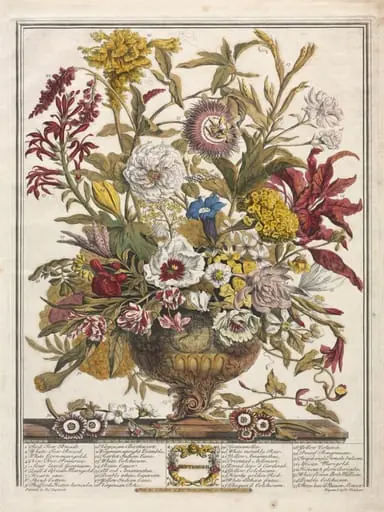 Twelve Months of Flowers: September
 New Suite of Portfolios of Flowers Ideal to Use for Designing and Painting: Floral Fantasies
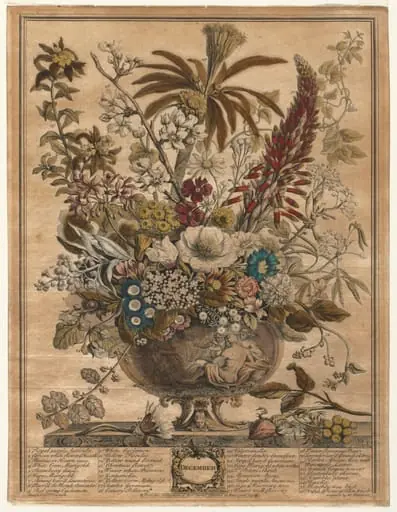 Twelve Months of Flowers: December
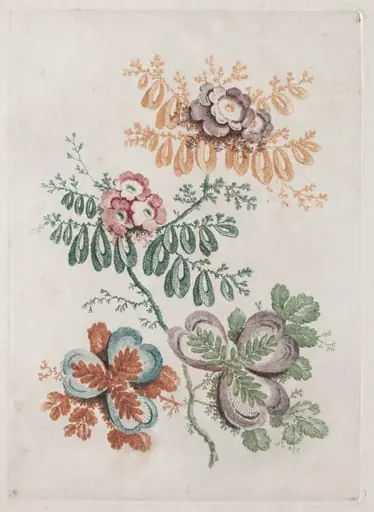
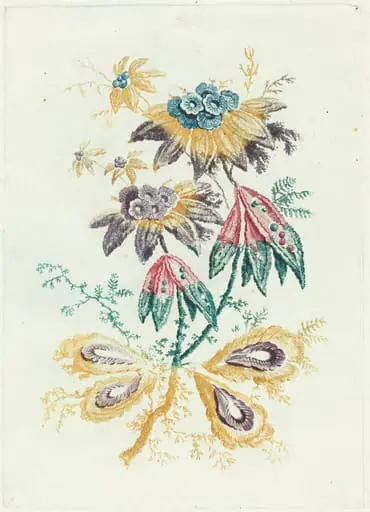 Fantastic Flowers with Peapod Leaves
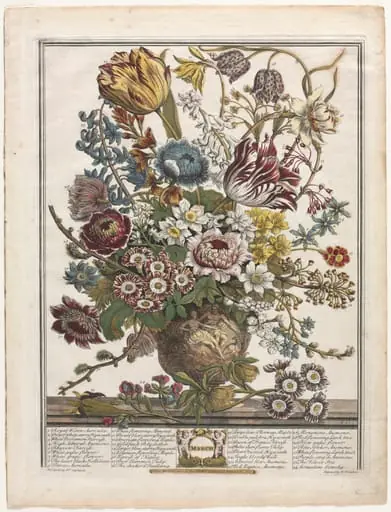 Twelve Months of Flowers: March
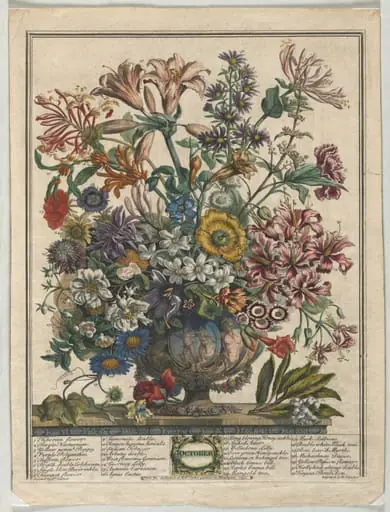 Twelve Months of Flowers: October
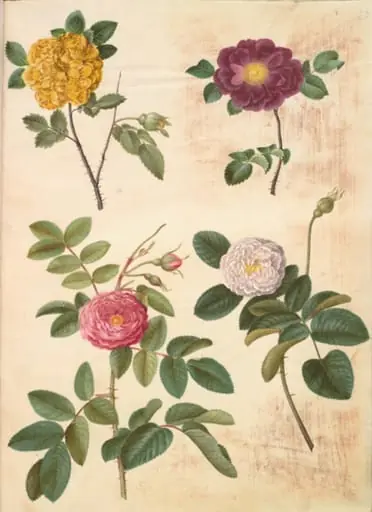 Rosa hemisphaerica (svovlgul rose); Rosa gallica (fløjls-rose); Rosa ×damascena (damascener-rose)
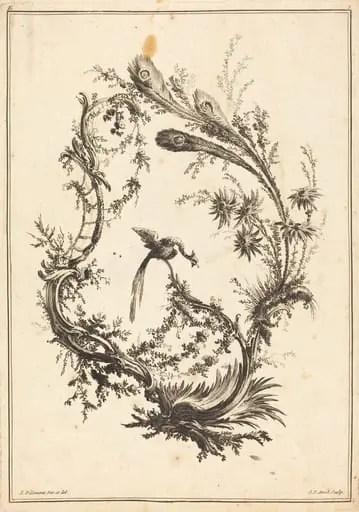 Ornament with a Peacock