Artwork
Bacchus and Ariadne
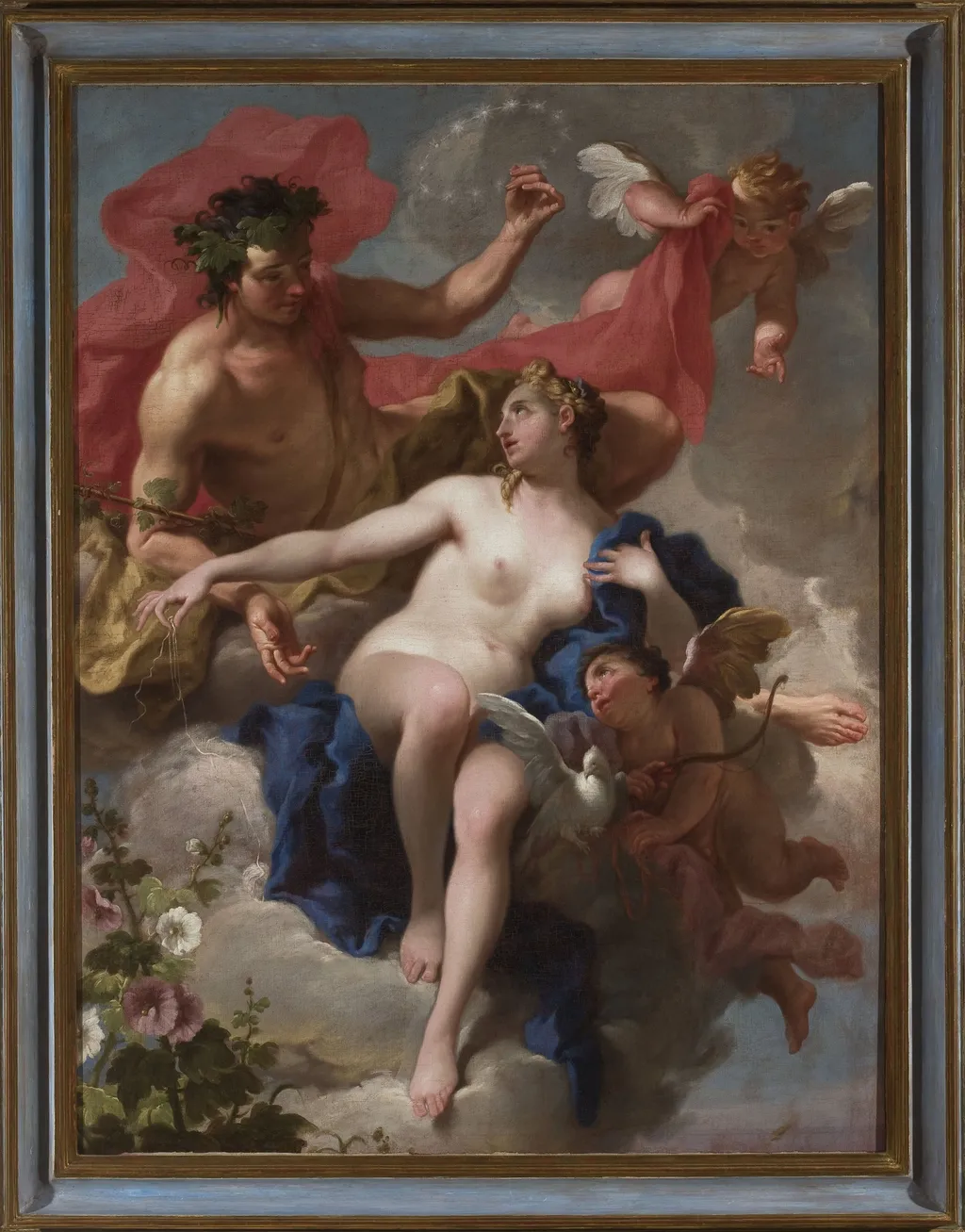
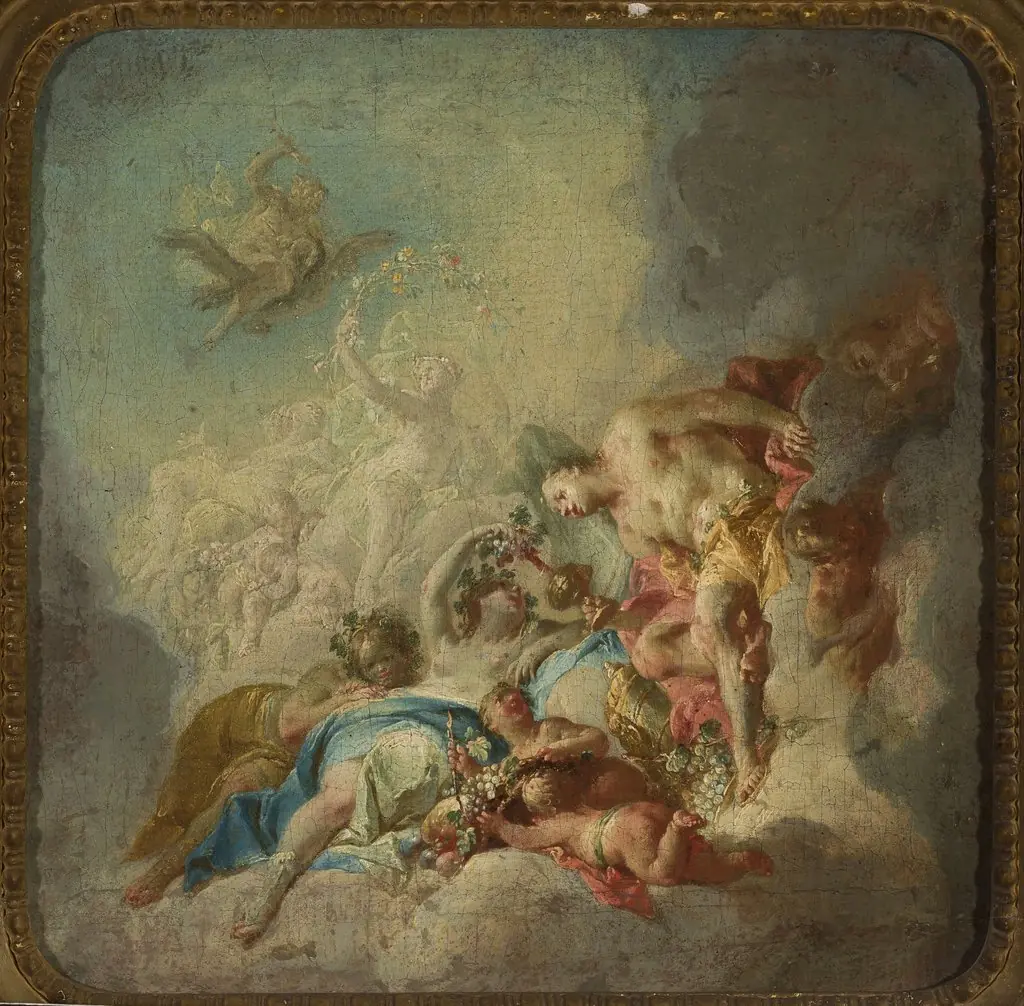
Bacchus and Ariadne is an oil painting by the Early Baroque Italian artist Giambattista Pittoni. It dates from 1717 and is held in the collection of the National Museum in Warsaw.
About this work
Overview
Bacchus and Ariadne is a 1717 oil painting by Giambattista Pittoni, a Venetian artist associated with the late Baroque to Rococo transition. The work is part of the National Museum in Warsaw's collection.
Subject & Meaning
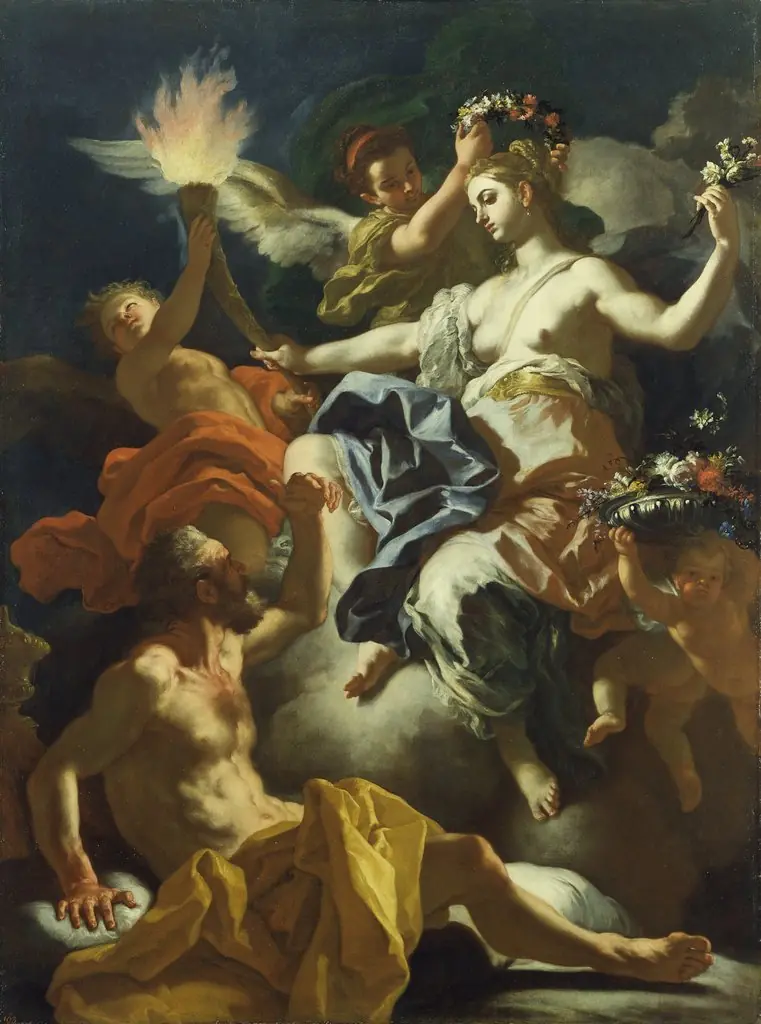
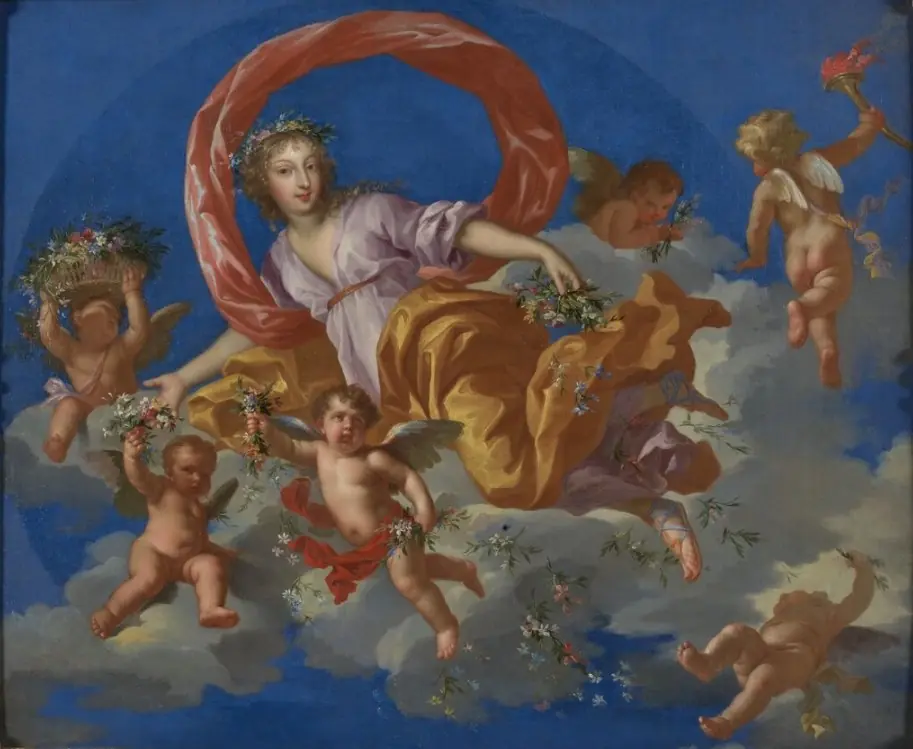
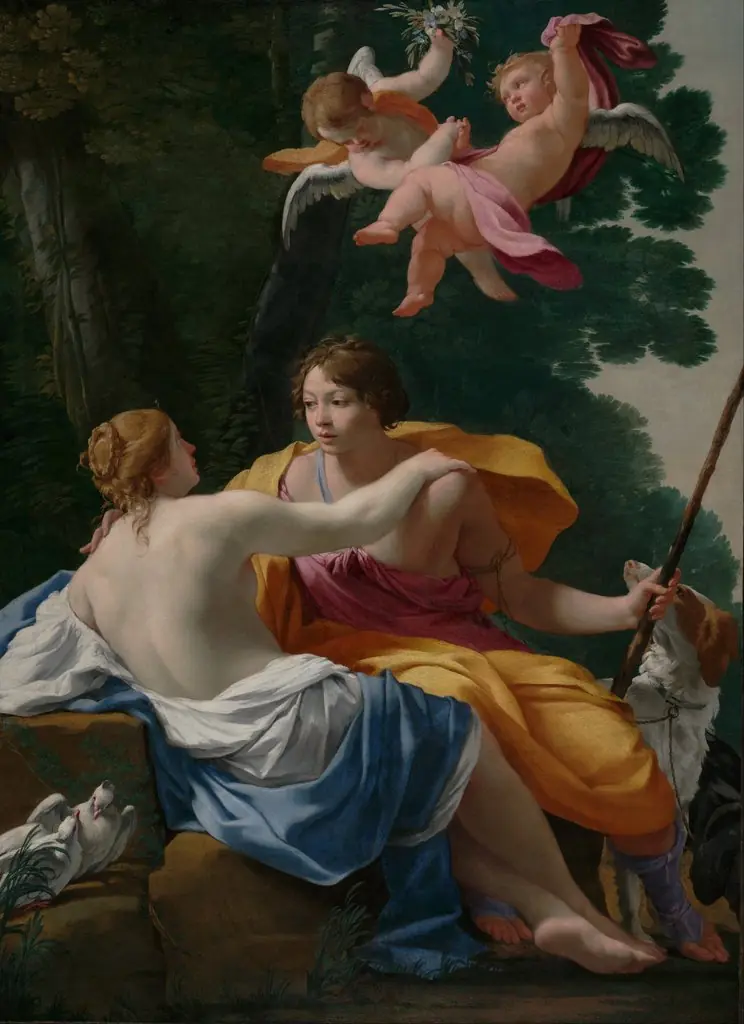
The painting depicts a mythological scene featuring four figures: Bacchus (identified by a branch and laurel leaves in his hair) and the nude Ariadne (partially draped in blue), accompanied by two cherubs above, one holding a red cloth and the other a bow and arrow. The arrangement conveys a narrative from classical mythology.
Technique & Style
Pittoni employs a dynamic composition, centralizing the main figures amidst surrounding elements like flowers and vines. The palette combines blues, pinks, and golds, characteristic of the Venetian Baroque's expressive use of color and light.
History & Provenance
Created in 1717, the painting's early history is not detailed here, but it is now part of the National Museum in Warsaw's holdings, indicating its eventual acquisition by the museum.
Context
While attributed to the early Baroque Italian movement in some sources, the painting's style reflects Pittoni's position in the late Baroque to Rococo period, characterized by elegance and movement.
Legacy
Bacchus and Ariadne serves as a representative work of Giambattista Pittoni's artistic approach, highlighting his interpretation of mythological themes through Baroque-Rococo aesthetics.
Artist & collection
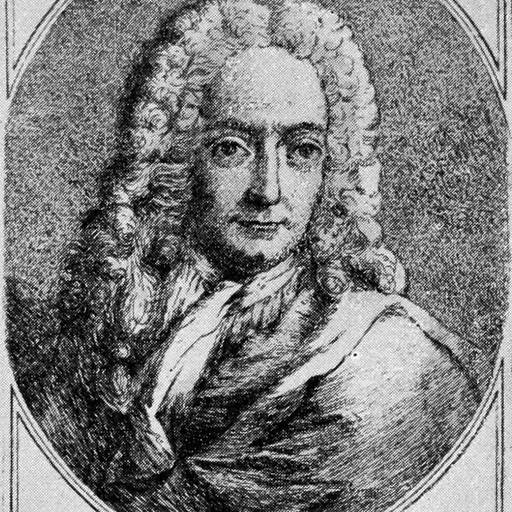
Artist
Giambattista Pittoni or Giovanni Battista Pittoni (6 June 1687 – 6 November 1767) was a Venetian painter of the late Baroque or Rococo period.